Saint Library
Byzantine Christianity 14 September13 November27 January3...patristicUniversal

John Chrysostom

Doctor of the Church

Sanctified Life

347407

Roman Syria, Roman Empire

Patronage

Constantinople,education,epilepsy

""

John Chrysostom (; Koine Greek: Ἰωάννης ὁ Χρυσόστομος, romanized: Iōánnēs ho Chrysóstomos, IPA: [i.oˈannis o xryˈsostomos]; Latin: Ioannes Chrysostomus, Ecclesiastical Latin: [joˈannes kriˈzɔstomus]; c. 347 – 14 September 407) was an important Church Father who served as Archbishop of Constantinople. He is known for his preaching and public speaking, his denunciation of abuse of authority by both ecclesiastical and political leaders, his Divine Liturgy of Saint John Chrysostom, and his ascetic sensibilities. He was also the author of Adversus Judaeos and was strongly opposed to Judaism. The epithet Χρυσόστομος (Chrysostomos, anglicized as Chrysostom) means "golden-mouthed" in Greek and denotes his celebrated eloquence.

John Chrysostom
Historical Legacy

Historical Journey

Historical Context
John Chrysostom (c. 347–407), whose epithet means 'Golden-Mouthed' in Greek, is considered the greatest preacher in the history of the Eastern Church and one of the most prolific authors of early Christianity. His surviving works — including over 700 homilies, numerous commentaries on Scripture, and hundreds of letters — constitute the largest body of writing from any Church Father. Born into an aristocratic family in Antioch, one of the great cities of the Roman East, John studied rhetoric under the famous pagan orator Libanius, who reportedly said on his deathbed that John would have been his successor 'if the Christians had not stolen him.' After his baptism around 370, John spent six years as a monk in the mountains near Antioch, practicing extreme asceticism that permanently damaged his health. Returning to Antioch, he was ordained a deacon and then a priest, quickly gaining renown for his preaching. His homilies 'On the Statues' (387), delivered during a crisis when the people of Antioch feared imperial retribution for destroying the emperor's statues, demonstrated his extraordinary ability to comfort, instruct, and inspire. In 397, John was taken against his will to Constantinople to serve as Archbishop — the most prestigious bishopric in the Eastern Empire. There, his fearless denunciation of corruption among the clergy, the excesses of the imperial court, and the extravagance of the wealthy earned him powerful enemies, including Empress Eudoxia, whom he is said to have compared to Jezebel. His calls for social justice and his insistence that the wealth of the Church belonged to the poor made him beloved among the common people but increasingly isolated at court. Deposed through the machinations of Archbishop Theophilus of Alexandria and exiled twice, John died on a forced march to a remote outpost on the eastern shore of the Black Sea on September 14, 407, his last words being 'Glory be to God for all things.' His remains were returned to Constantinople in 438 with great ceremony. The Divine Liturgy of Saint John Chrysostom remains the most frequently celebrated Eucharistic liturgy in the Eastern Orthodox and Eastern Catholic churches to this day.
Canonization: saint
Learn More on Wikipedia

Historical Depiction

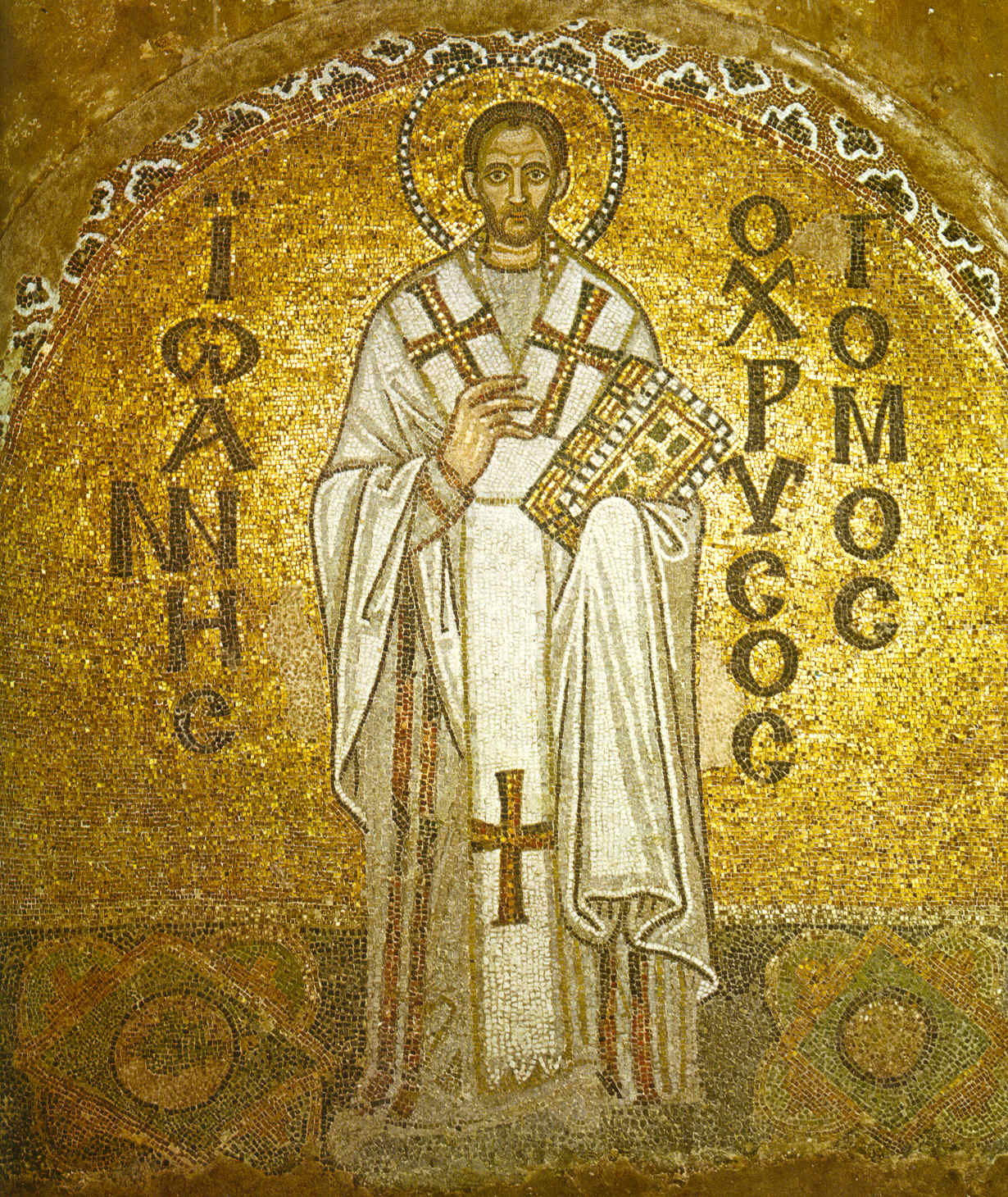
Historical depiction of John Chrysostom

Wikimedia Commons Source

Titles & Roles

TODO

Gallery

Johnchrysostom
1 / 10

Johnchrysostom

Unknown • Unknown

Public domain

Sacred Symbols

vested as_a_bishop

Vested as a bishop

holding a_gospel_book_or_scroll

holding a Gospel Book or scroll

right hand_raised_in_blessing._he_is_depicted_as_emaciated_from_fasting

right hand raised in blessing. He is depicted as emaciated from fasting

Life Journey

347

Born in Roman Syria, Roman Empire

Born in Roman Syria, Roman Empire

407

Died in Diocese of Pontus, Eastern Ro...

Died in Diocese of Pontus, Eastern Roman Empire