Sanctified Life
AD 451 — AD 525
Birthplace: Dundalk, Ireland
Also Known As
"I should like a great lake of beer for the King of Kings."
One of Ireland's three patron saints alongside Patrick and Columba. Born to a pagan chieftain and a Christian slave woman, she founded the double monastery of Kildare — housing both monks and nuns — and was renowned for giving away food, clothing, and household goods to the poor, reportedly to her father's repeated frustration.

Interactive Lesson
The Illustrated Life
Brigid of Kildare's story in 13 illustrated moments — tap any scene to begin there.
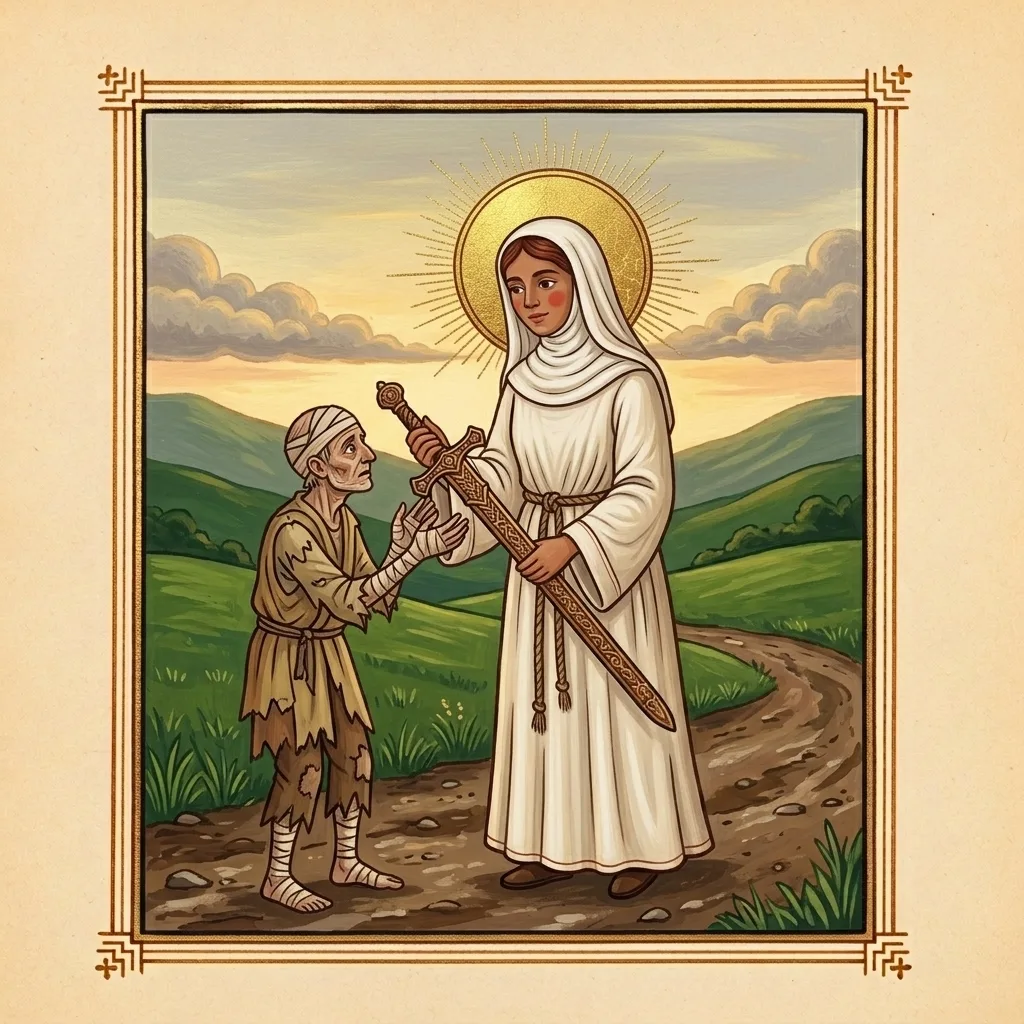 1
1She once gave away her father's sword to a leper. Just handed it over — an ancient, costly weapon — without a flicker of hesitation. Her father was furious. The leper walked away bewildered. That was Brigid. Ireland has never quite recovered from her.
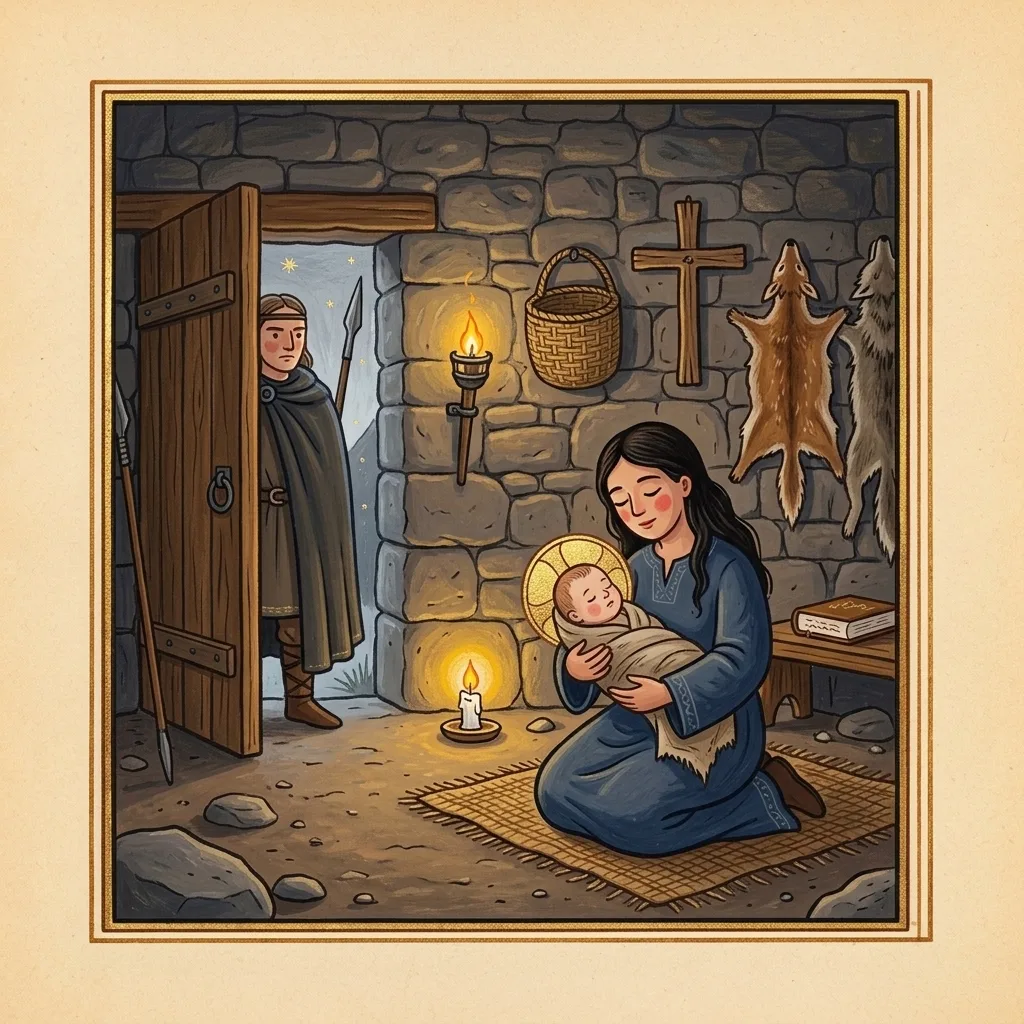 2
2Born around 451 near Dundalk, Brigid came into the world caught between two lives: her father was Dubhthach, a pagan chieftain; her mother Brocca was an enslaved Christian woman. From her first breath, she straddled two worlds that should never have touched.
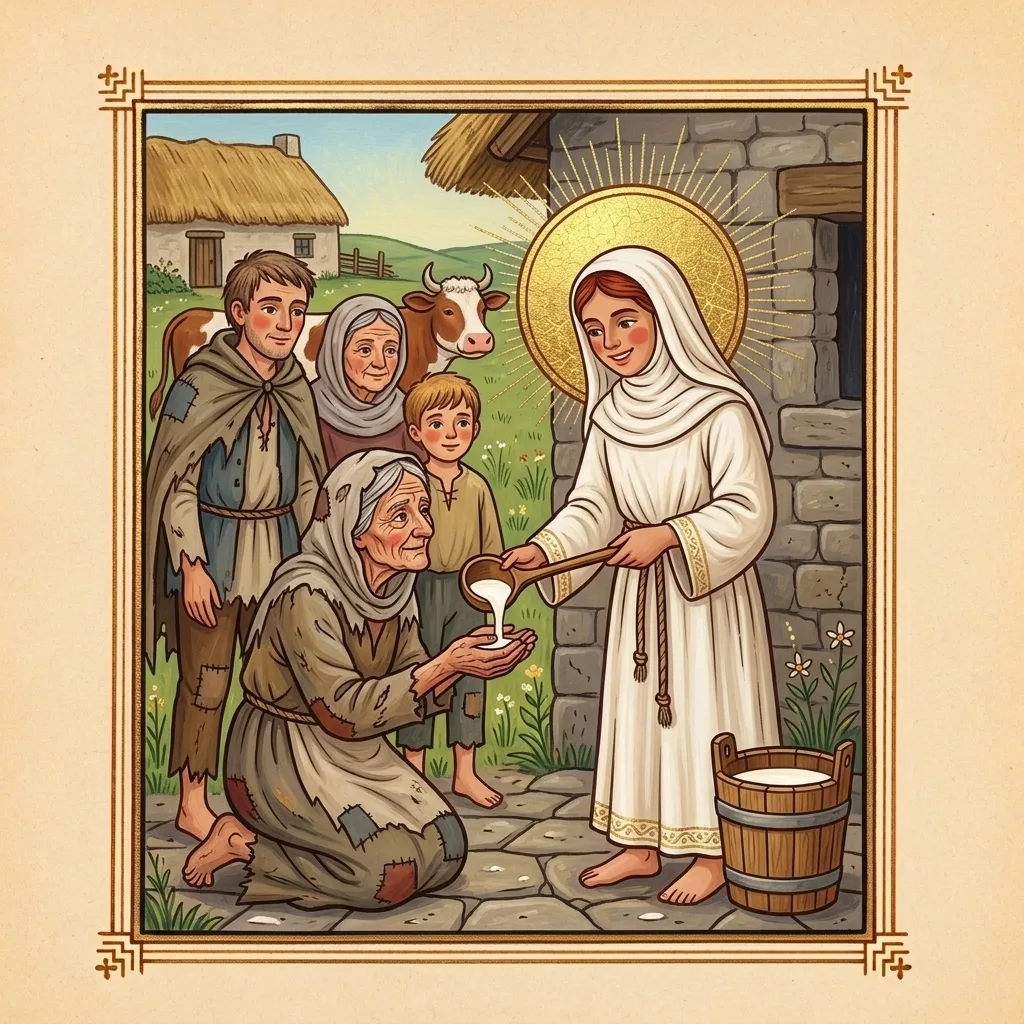 3
3As a girl given charge of the dairy, Brigid gave away every drop of milk and every pat of butter to anyone who looked hungry. The poor always left full. Her father's pantry was perpetually bare. He began to suspect his daughter was ungovernable — and he was right.
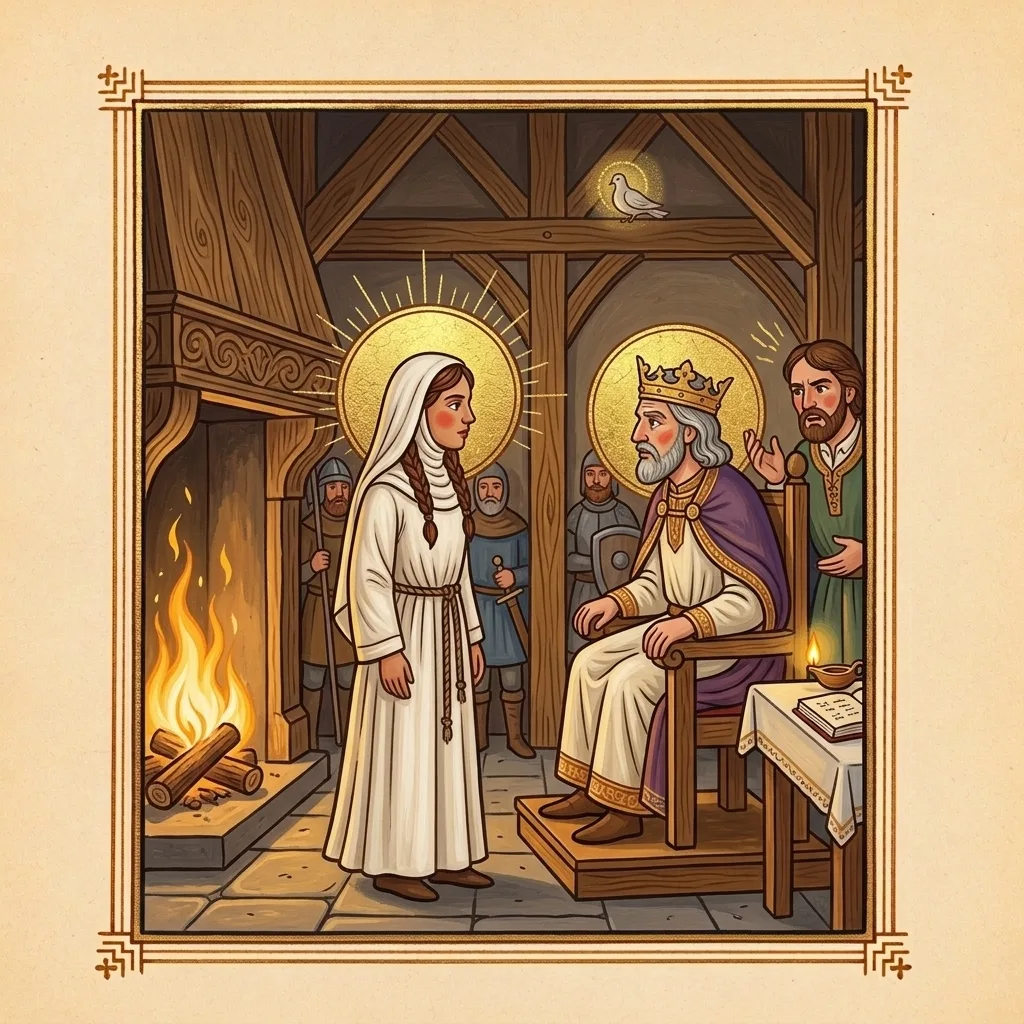 4
4Her father arranged a marriage to a man of good family. Brigid refused. To make her answer unmistakable, she gave away his finest sword to a passing leper. Furious, her father hauled her before the King of Leinster, hoping royal authority would succeed where his had failed.
 5
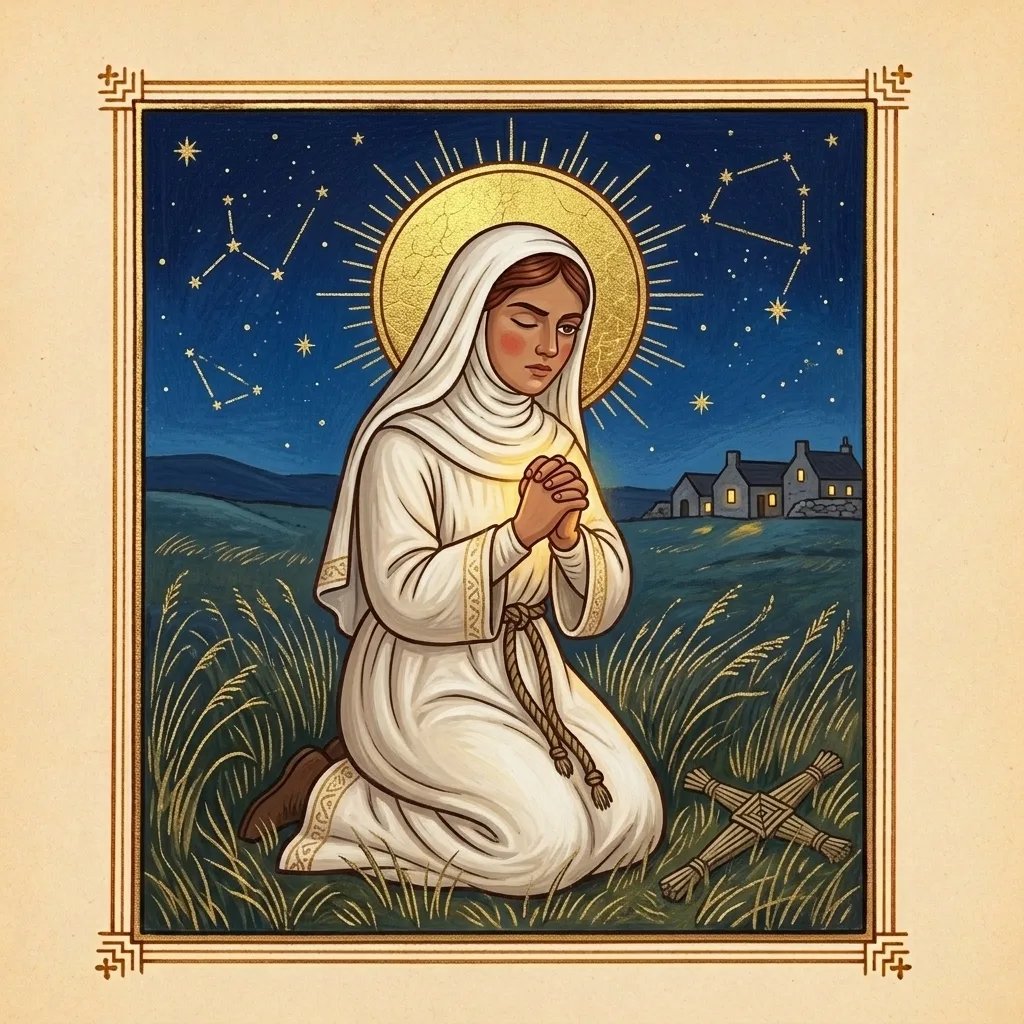
5Even the King of Leinster could not move her. According to legend, Brigid prayed that God would make her too plain for marriage — and one eye swelled shut. The king released her immediately. Her father freed her to follow God. The eye healed the moment she took her vow.
 6
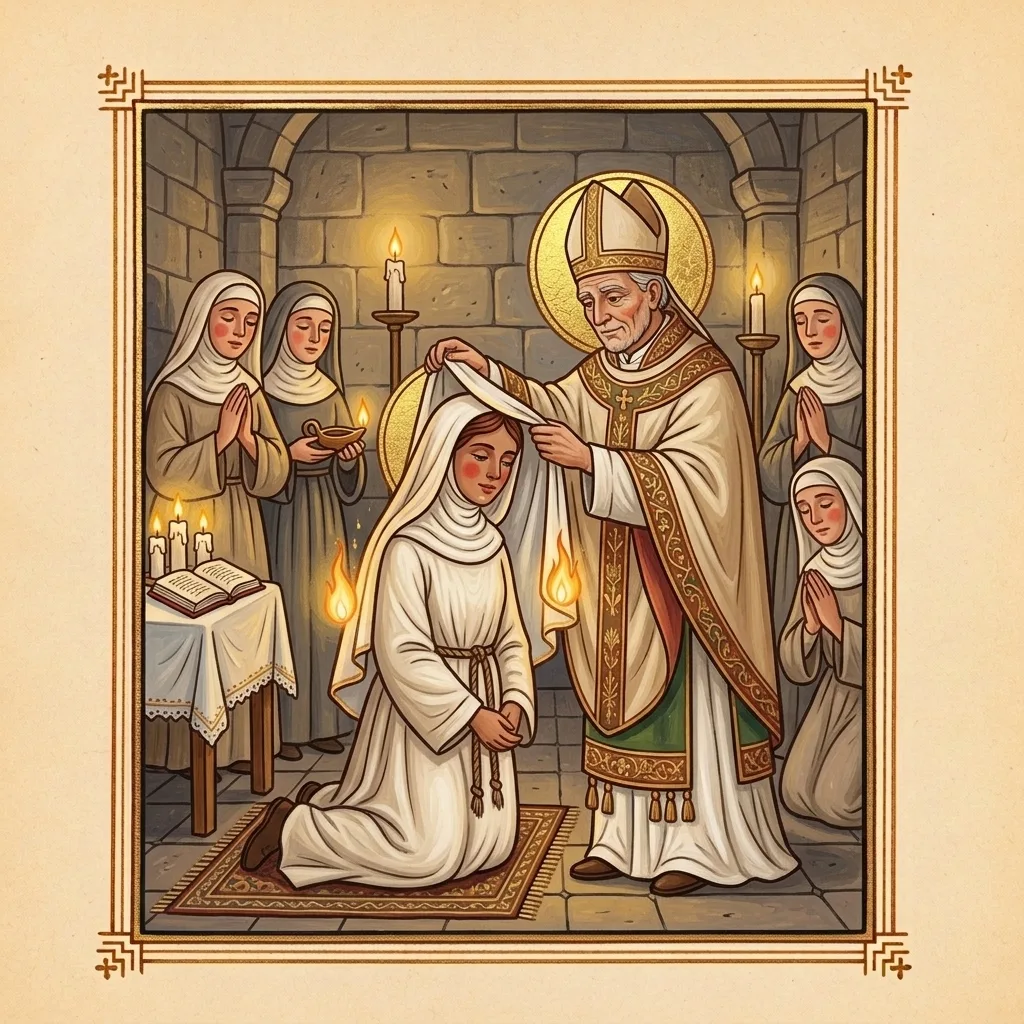
6Around 470, Brigid finally took the veil in a ceremony led by Bishop Mel of Armagh. According to legend, as the rite of consecration was spoken, the cloth of her veil burst into quiet flame — then went out, unmarked. Even creation recognized the weight of what was happening.
 7
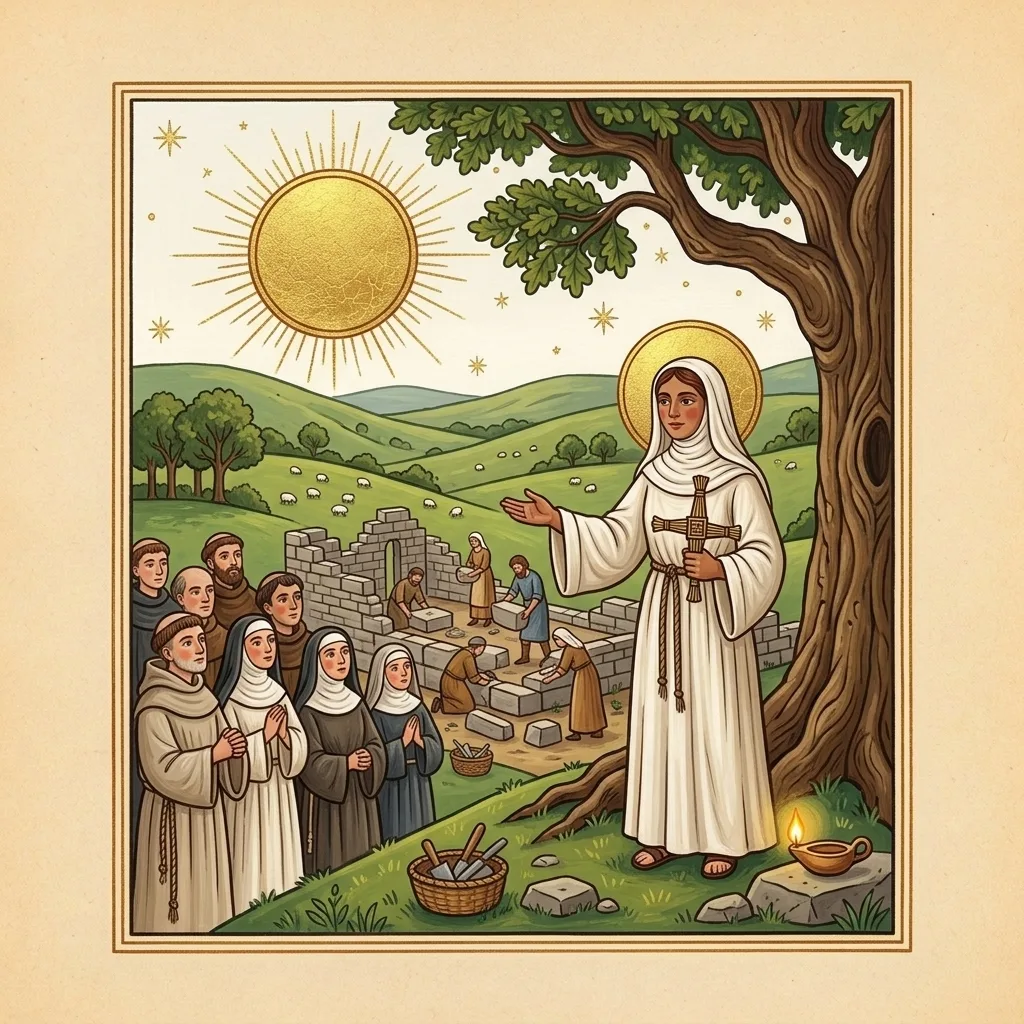
7She founded a double monastery at Kildare — 'Church of the Oak' — with monks on one side and nuns on the other, and herself as abbess over both. In fifth-century Ireland, a woman holding spiritual authority over men was almost without precedent. She did it anyway.
 8
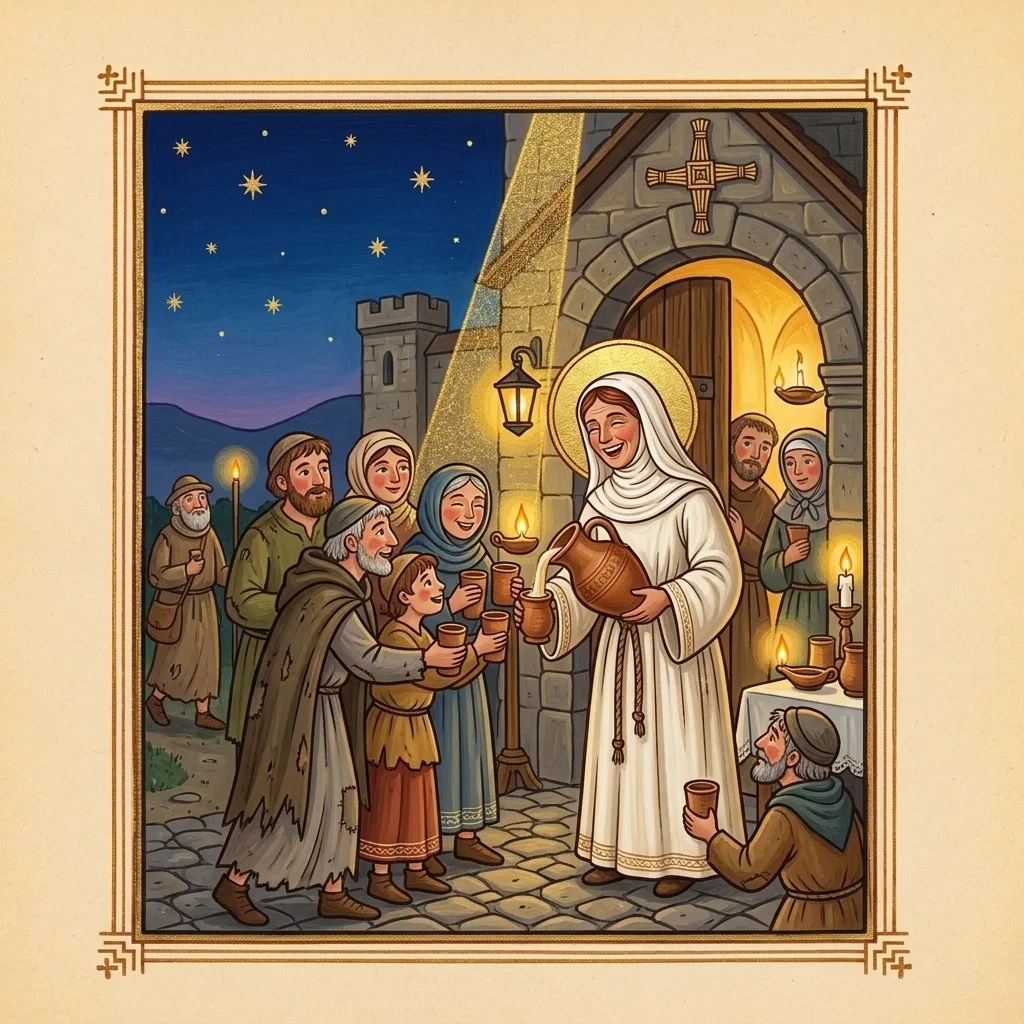
8She once prayed: 'I'd like a great lake of beer for the King of Kings, and the whole host of heaven drinking it through time eternal.' This was Brigid's vision of paradise — not quiet clouds, but an endless feast with the doors thrown permanently open.
 9
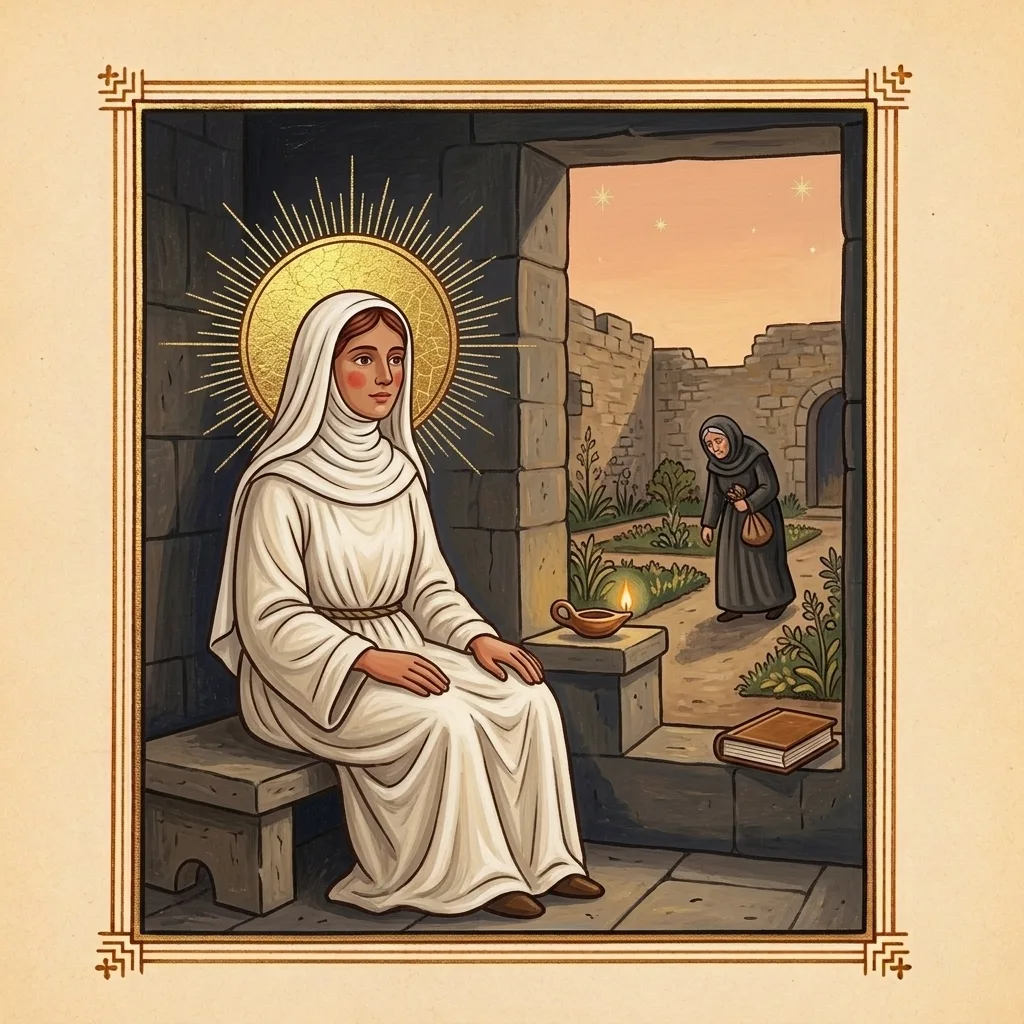
9Despite all her power, Brigid could not free her mother from slavery. Brocca remained enslaved even as her daughter's monastery drew thousands. Born to a woman in chains, Brigid built a kingdom — but the weight of that wound never entirely left her.
 10
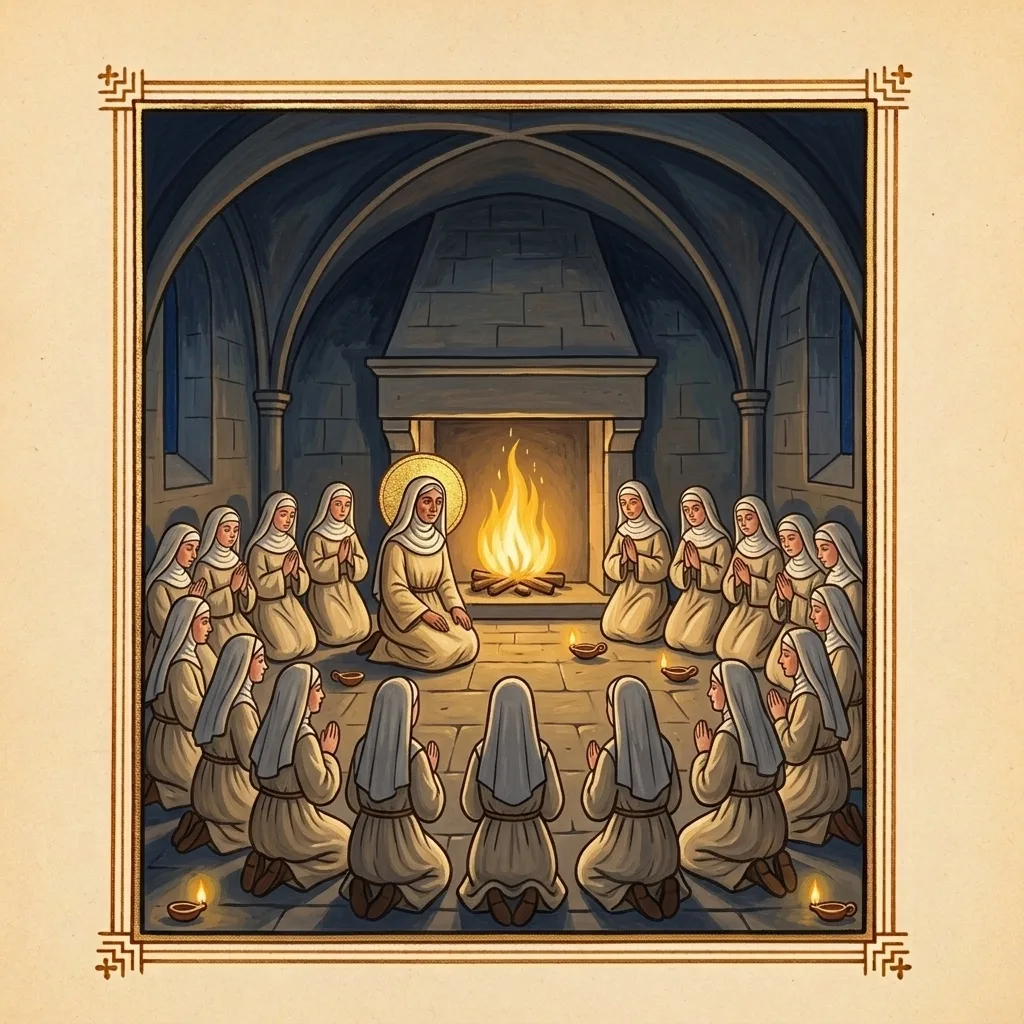
10At Kildare, Brigid established a sacred fire tended by nineteen nuns who took turns through the night, never letting it go out. The flame burned for centuries after her death. She understood something essential: some fires, once lit, must never be allowed to die.
 11
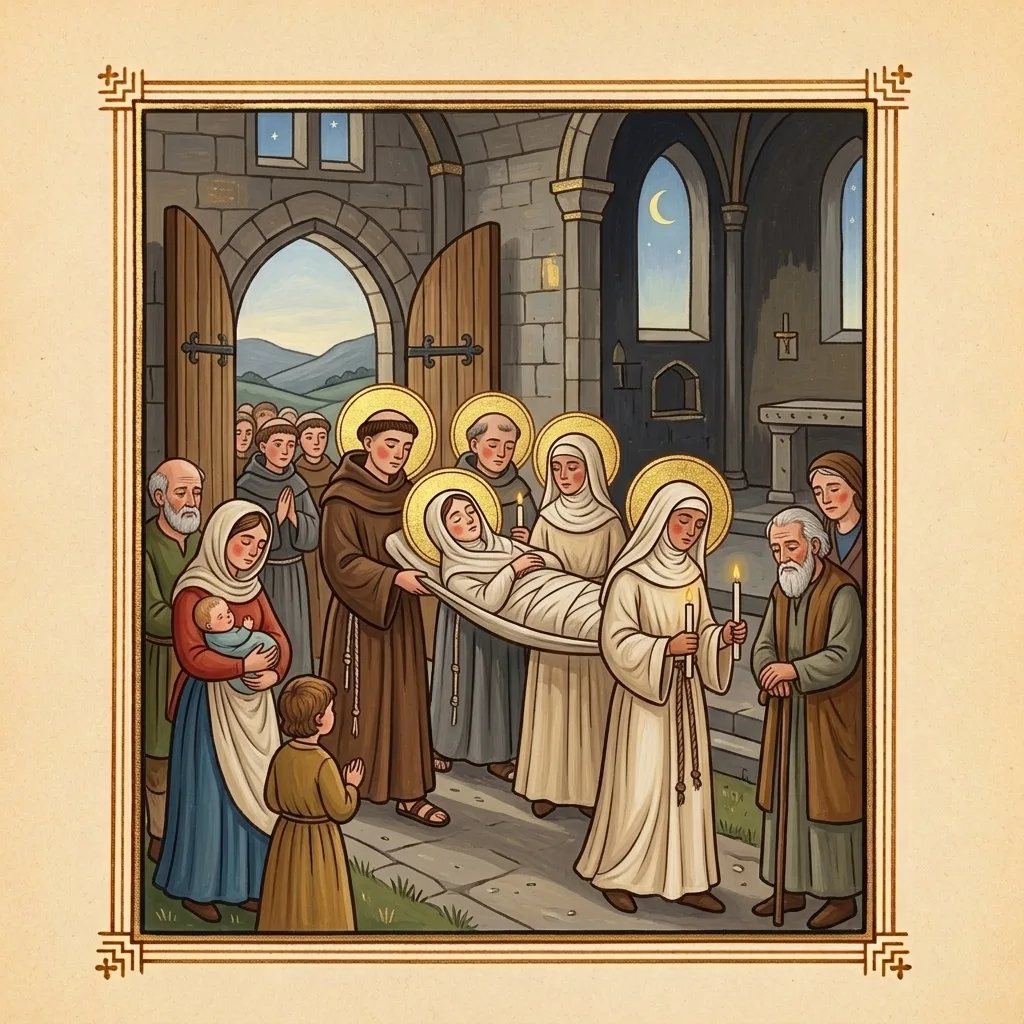
11Brigid died at Kildare around 525, after more than fifty years of building, giving, and praying. She was carried to Downpatrick, where Patrick and Columba were also laid to rest — Ireland's three patron saints, together at last in the same dark Irish earth.
 12
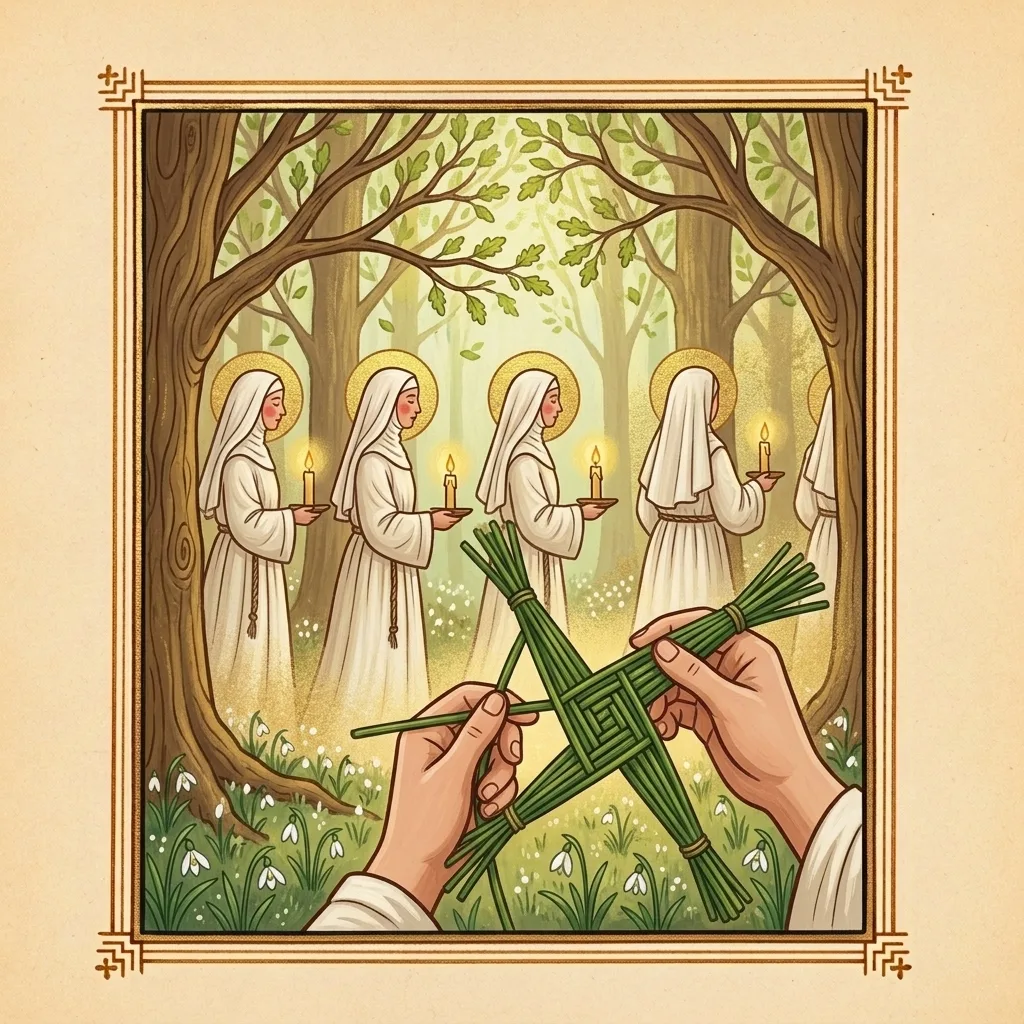
12February 1 — her feast day — is now a public holiday in Ireland. It falls on the same date as Imbolc, the ancient Celtic festival marking the first stir of spring. Brigid stands at that threshold: Christian abbess and folk memory, patron saint and symbol of renewal.
 13
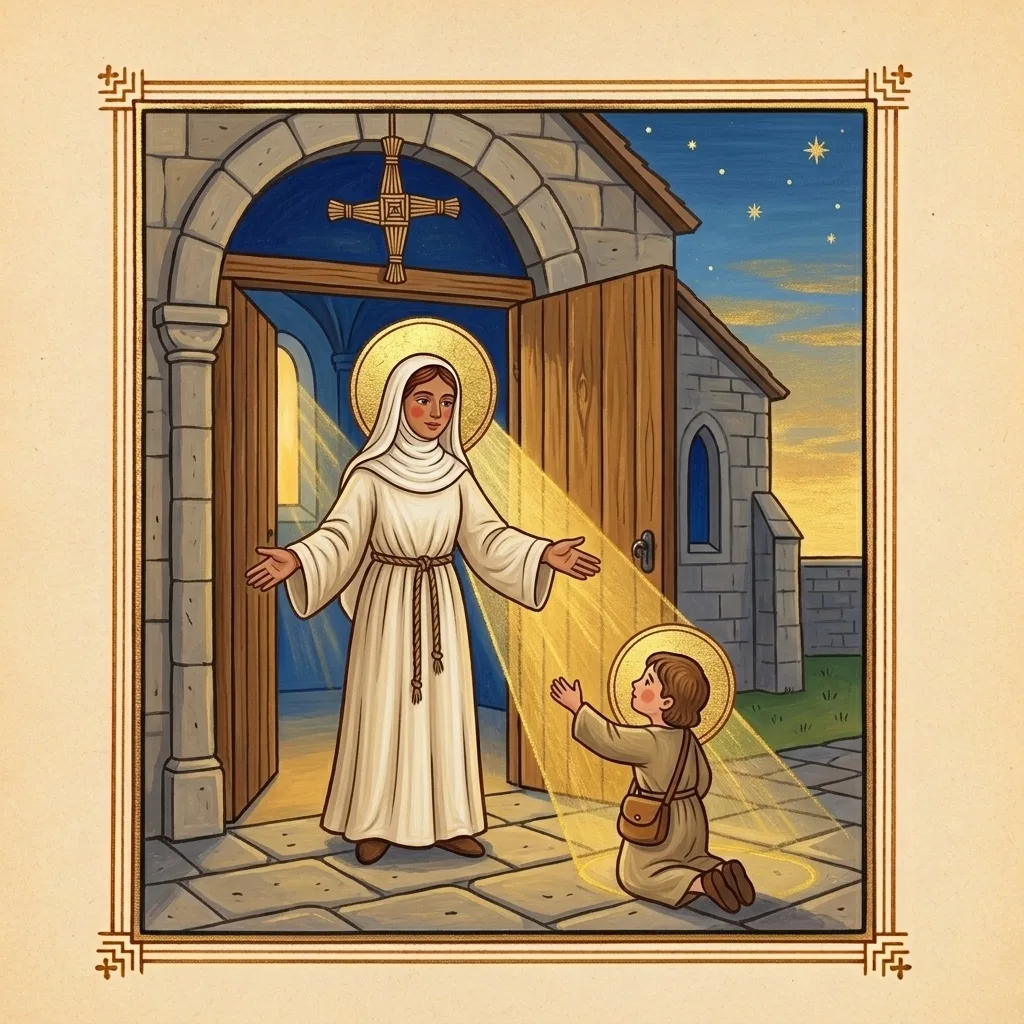
13Brigid's secret was the simplest and most demanding one: she never held anything back. Not the milk. Not the sword. Not her whole life. She gave before she was asked and kept giving when she had nothing left. Generosity is not losing yourself — it is how you find out who you are.
Life & Times
Early Life
Worked as a dairy maid in a druid's household; gave away food, clothing, and livestock to the poor from childhood.
Turning Point
She refused her father's marriage arrangements and took the veil under Bishop Mel, committing fully to religious life.
Legacy
Founded the double monastery at Kildare, which became one of the most important centres of learning, art, and spirituality in early medieval Ireland.
Historical Context
Sources & historical notes
Dates and later-life details are left uncertain where the sources do not establish them. Historical summaries are secondary overviews; Scripture and Church documents are linked separately where available.
Words & Wisdom
I should like a great lake of beer for the King of Kings. I should like the angels of Heaven to be drinking it through time eternal. I should like excellent meats of belief and pure piety. I should like the men of Heaven at my house. I should like barrels of peace at their disposal. I should like for them cellars of mercy. I should like cheerfulness to be their drinking. I should like Jesus to be there among them. I should like the three Marys of illustrious renown to be with us. I should like the people of Heaven, the poor, to be gathered around from all parts.
Related Saints
Connections in the communion of saints
Brendan the Navigator
Two great saints of early Irish Christianity who shaped Celtic monasticism together.
Kevin of Glendalough
Kevin and Brigid were near-contemporaries at the height of Ireland's first monastic century — both founders of major communities, both exemplars of the integration of radical asceticism and pastoral care that defined the Irish tradition.
David of Wales
Brigid of Kildare and David of Wales were near-contemporaries at the height of Celtic Christianity's first flowering — two foundational figures whose austere monastic communities became the spiritual centers of their respective peoples.