"Listen carefully, my son, to the master's instructions, and attend to them with the ear of your heart."
Benedict of Nursia fled the moral disorder of Rome as a young man to live as a hermit in a cave at Subiaco. His reputation for holiness drew followers, and he founded twelve monasteries in the Subiaco valley before settling at Monte Cassino around 529. There he composed his Rule — a guide for communal life built on prayer, work, moderation, and stability — which became the foundation of Western monasticism and shaped the transmission of learning and culture through the early medieval centuries.

Interactive Lesson
The Illustrated Life
Benedict of Nursia's story in 13 illustrated moments — tap any scene to begin there.
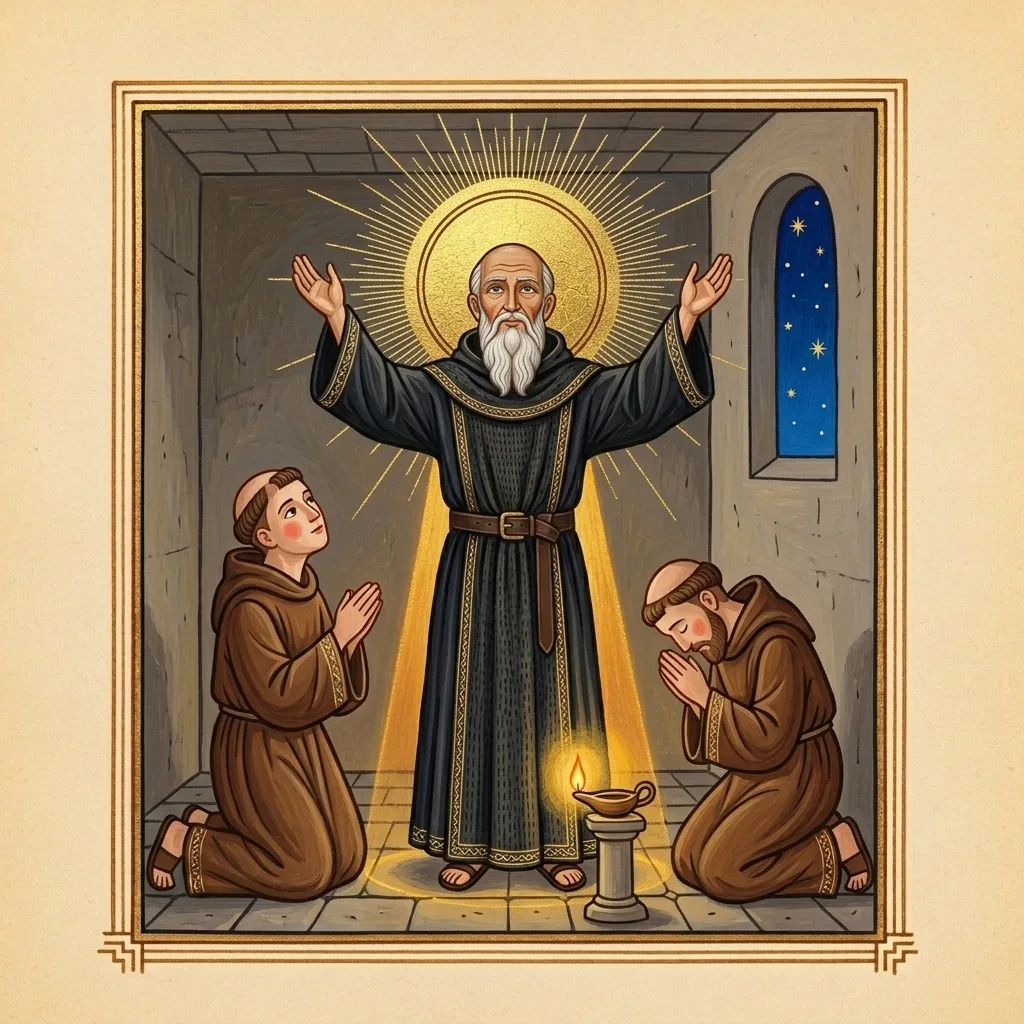 1
1A man dies standing up — arms raised, eyes open — and nobody in the room is surprised. This is Benedict of Nursia. He stood against Rome's rot, his own comfort, and the forgetting of God. He saved Western civilization, one prayer at a time.
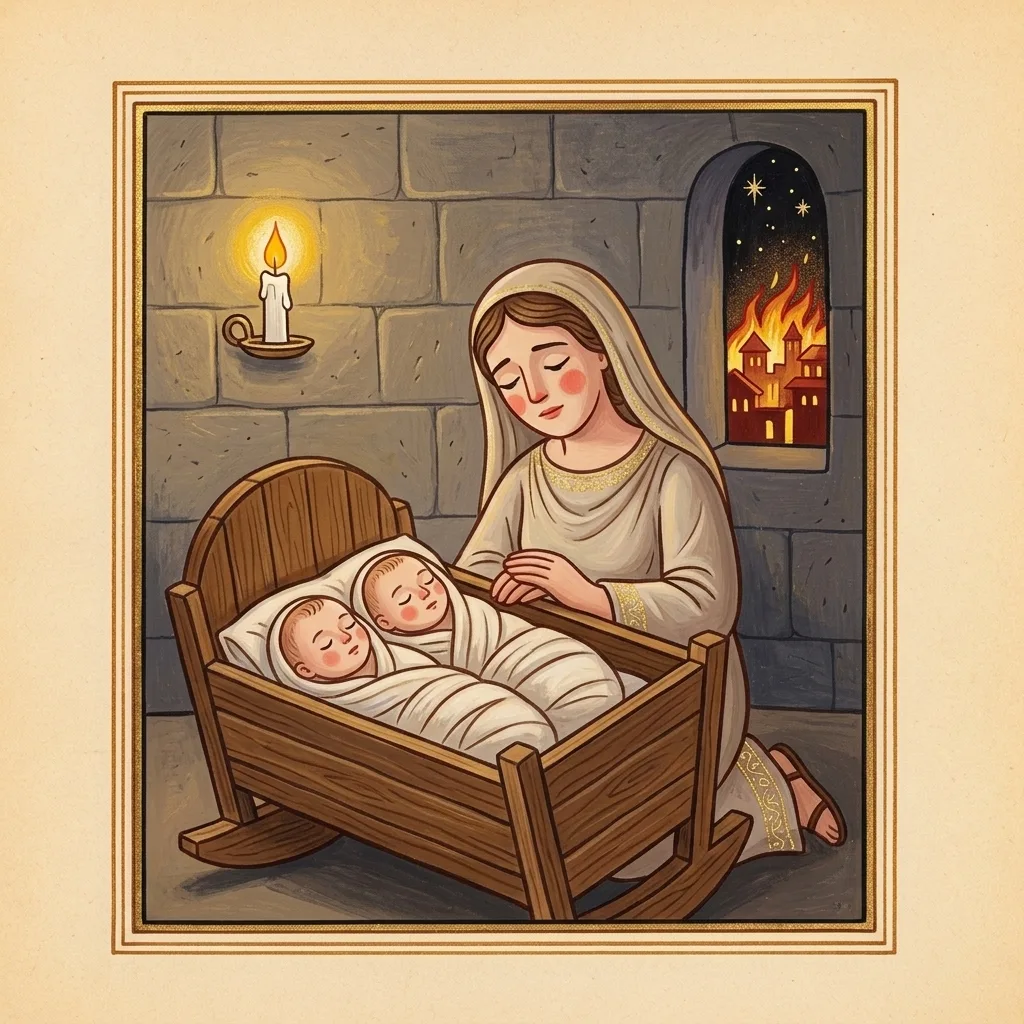 2
2The year is 480. The Western Roman Empire has just collapsed. Barbarian armies are reshaping Europe by sword and fire. Into this unraveling world, twin children are born in the small mountain town of Nursia — a boy and a girl. Their names are Benedict and Scholastica. History will remember them both.
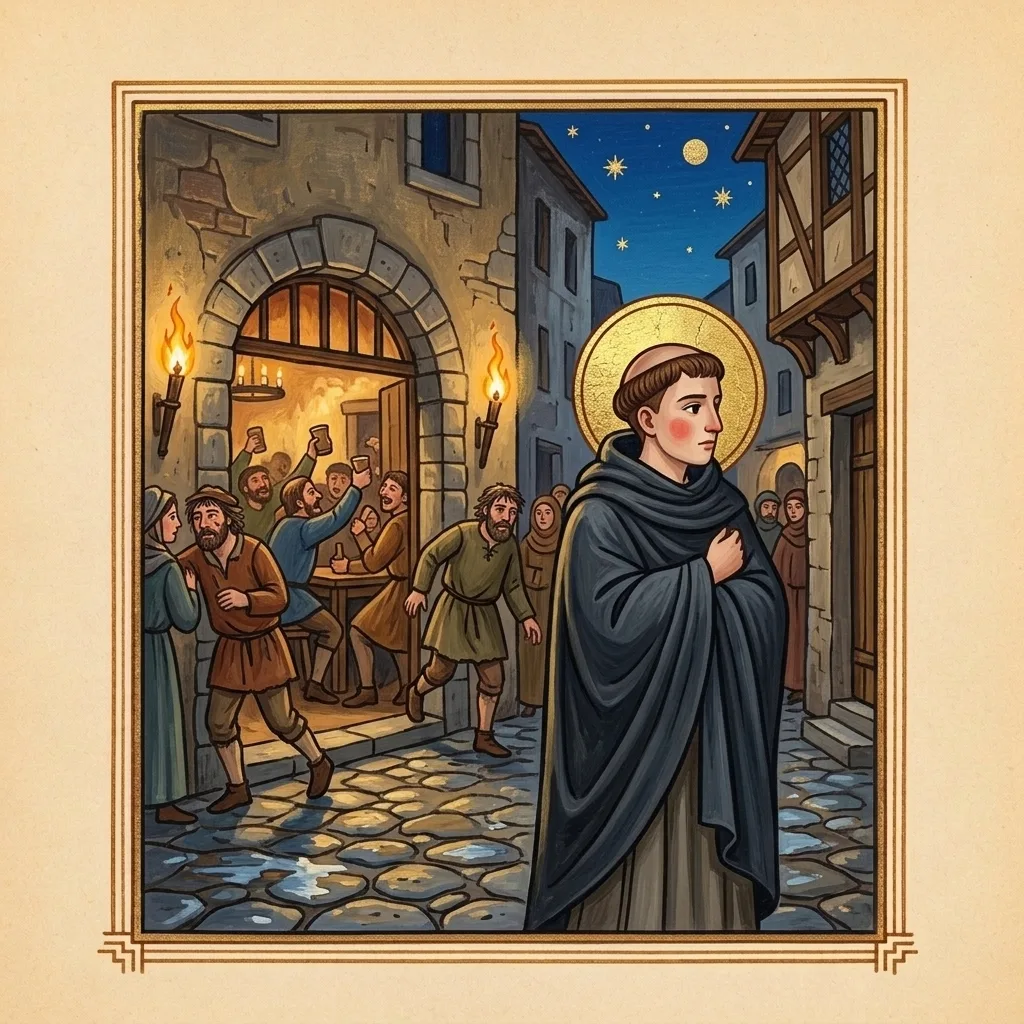 3
3Benedict arrives in Rome for his education and finds a city in moral free fall — drunk, cruel, shameless. The young man from the quiet mountains stares at all of it. Something hardens in his chest. He turns around and walks away.
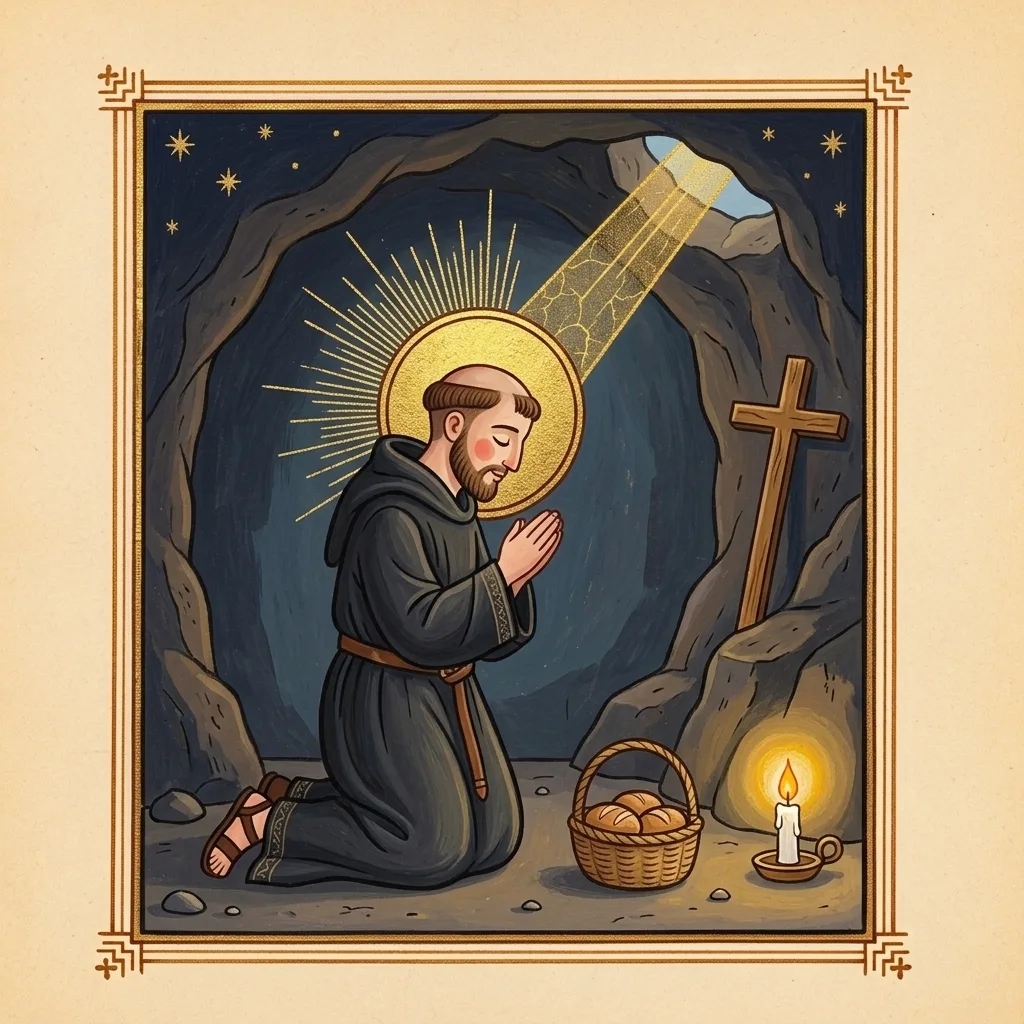 4
4He finds a cave above Subiaco, east of Rome. For three years he lives there alone — no books, no crowds, no career. A monk named Romanus lowers bread on a rope. Silence becomes his teacher. Something extraordinary is being forged in the dark.
 5
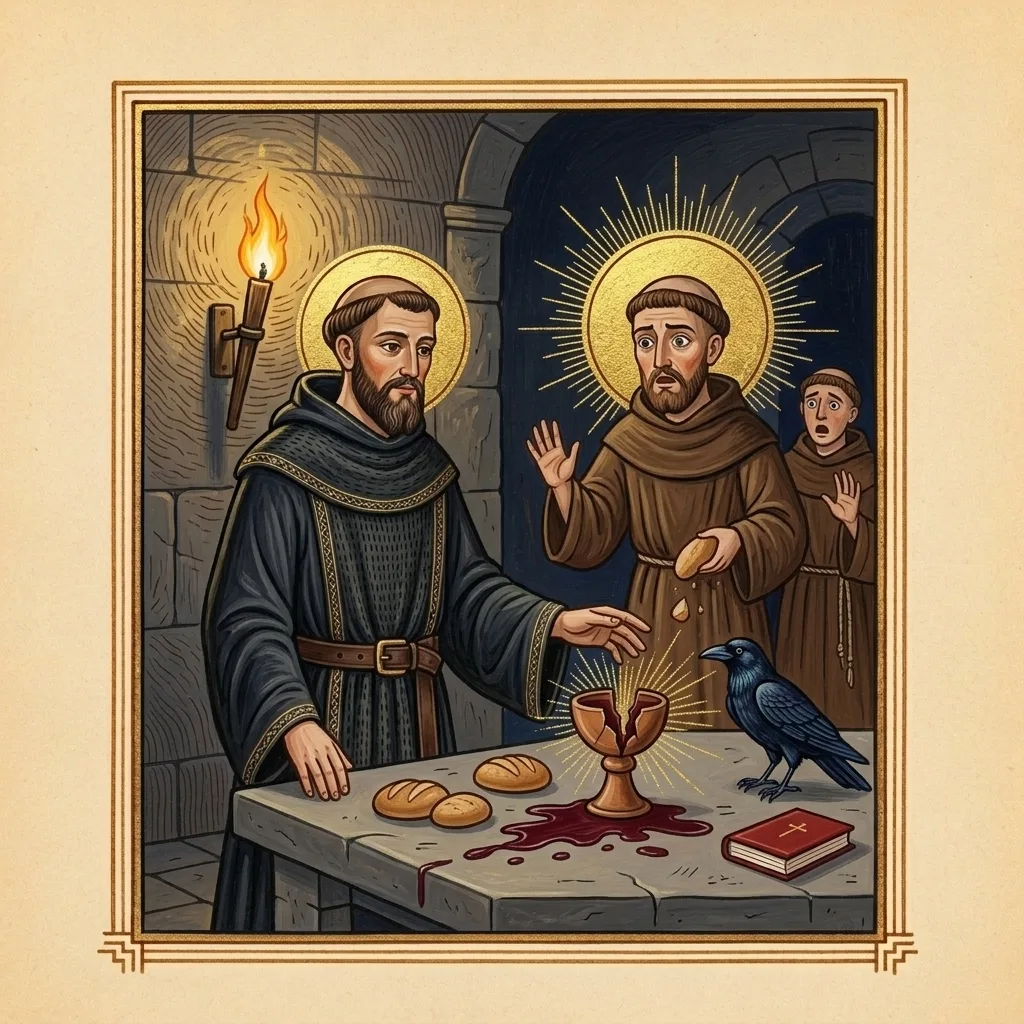
5A nearby monastery begs Benedict to lead them. He warns he'll be strict. They insist. When he holds them to their vows, they put poison in his wine. He blesses the cup — it shatters in his hand. He walks away. Quietly. Without anger.
 6
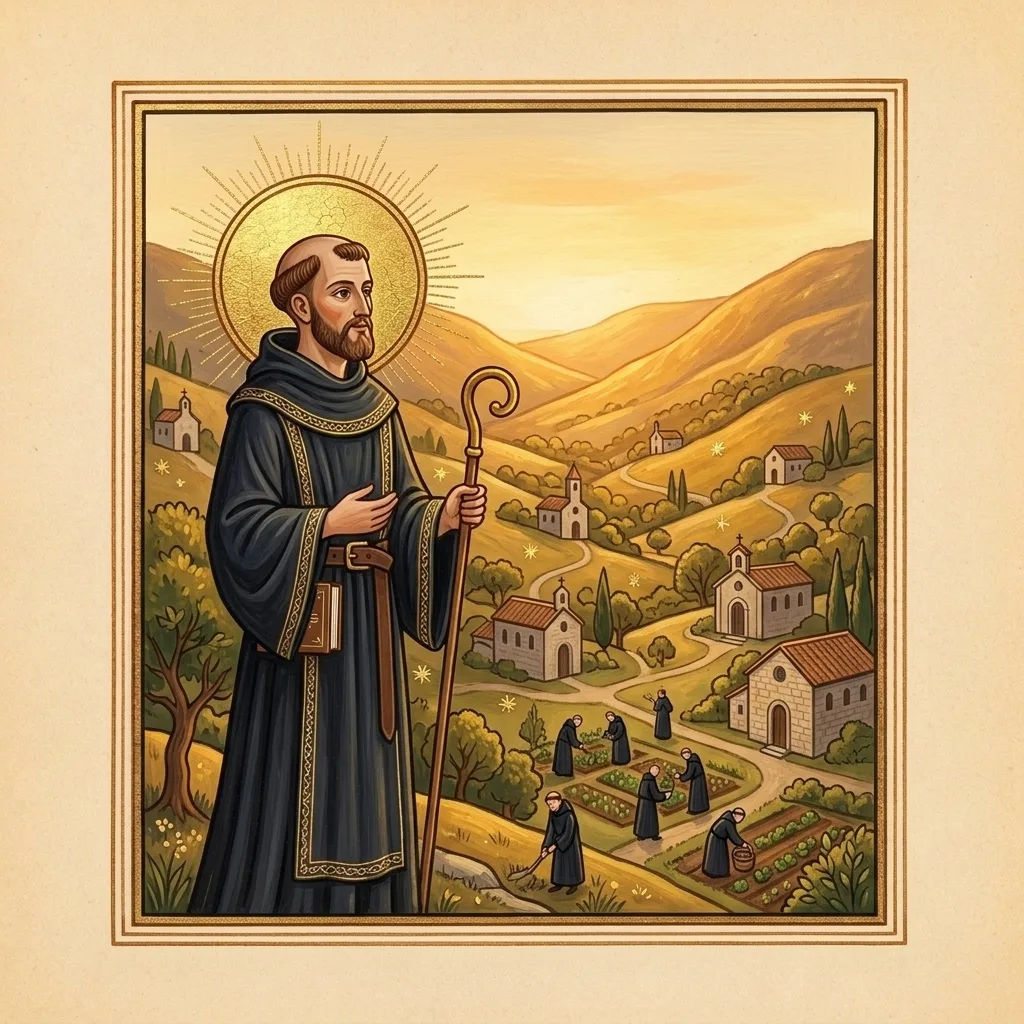
6Disciples flood back to Subiaco — not dozens, hundreds. Benedict builds twelve monasteries and begins to see it clearly: holiness needs structure, rhythm, community. He starts imagining a way of life that holds all of it without crushing the human spirit.
 7
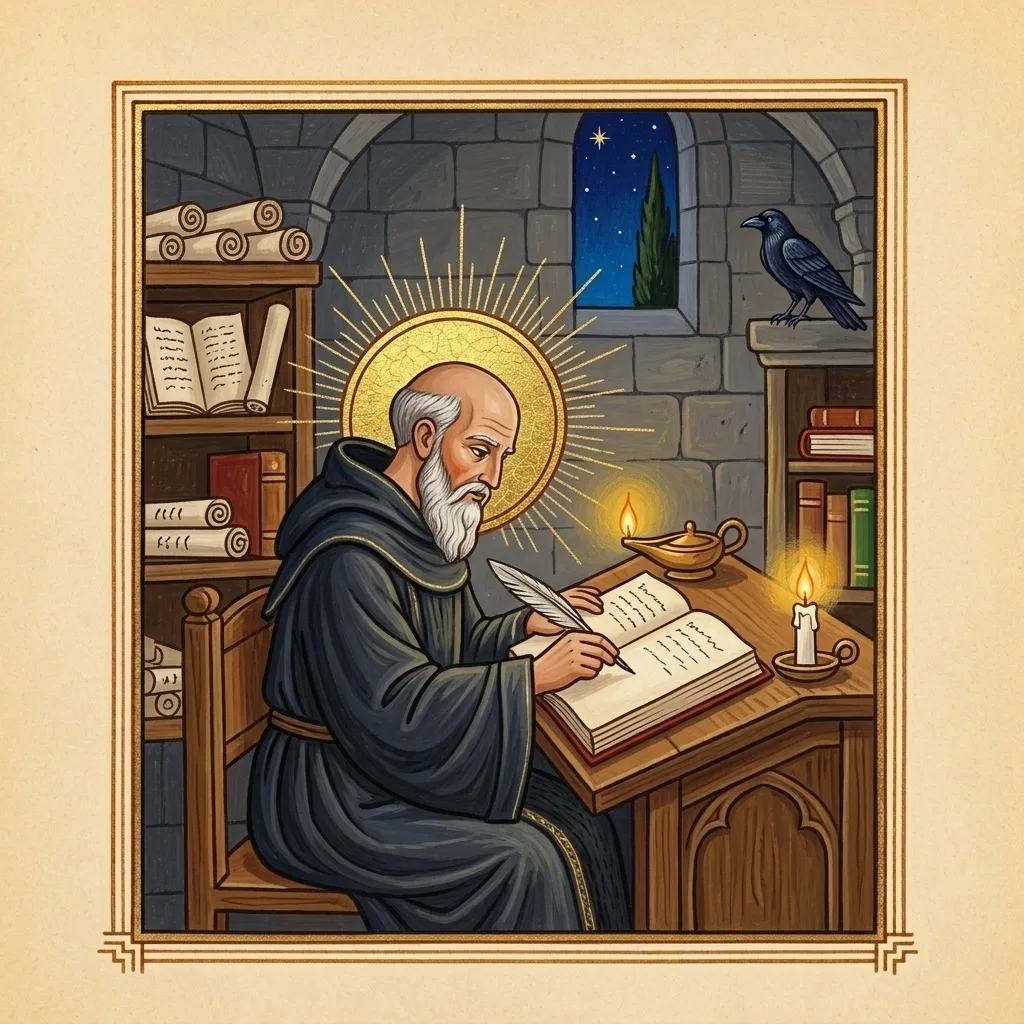
7Around 530, Benedict writes the thing that will outlive every kingdom of his era: the Rule. Seventy-three short chapters. 'Pray and work.' Rest enough. Eat enough. Welcome strangers as Christ. A blueprint not just for monks — for what it means to be human.
 8
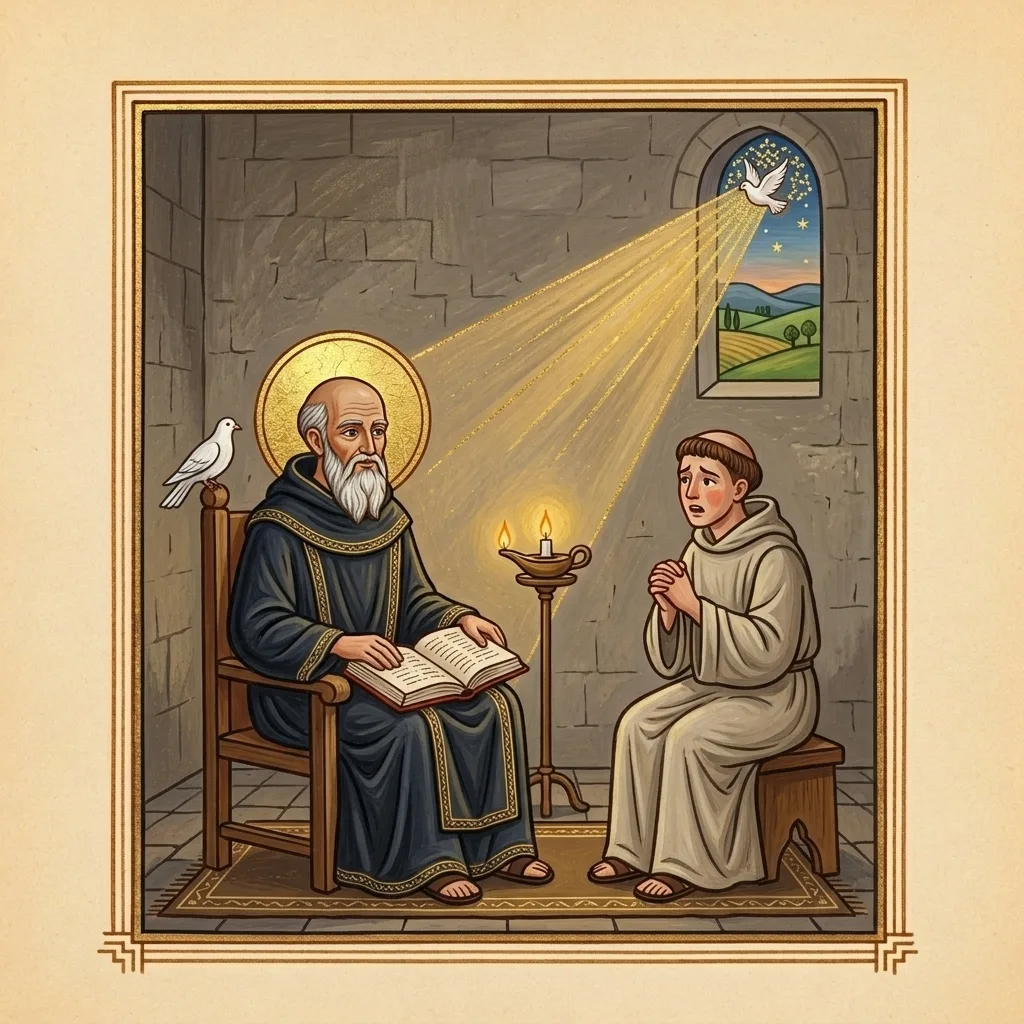
8Benedict's Rule is not severe — it's kind. Abbots must not be harsh. Monks get enough sleep. Wine is allowed. Workloads bend for the sick. In an age of self-starvation, Benedict said: care for the body God gave you. His holiest word may have been 'enough.'
 9
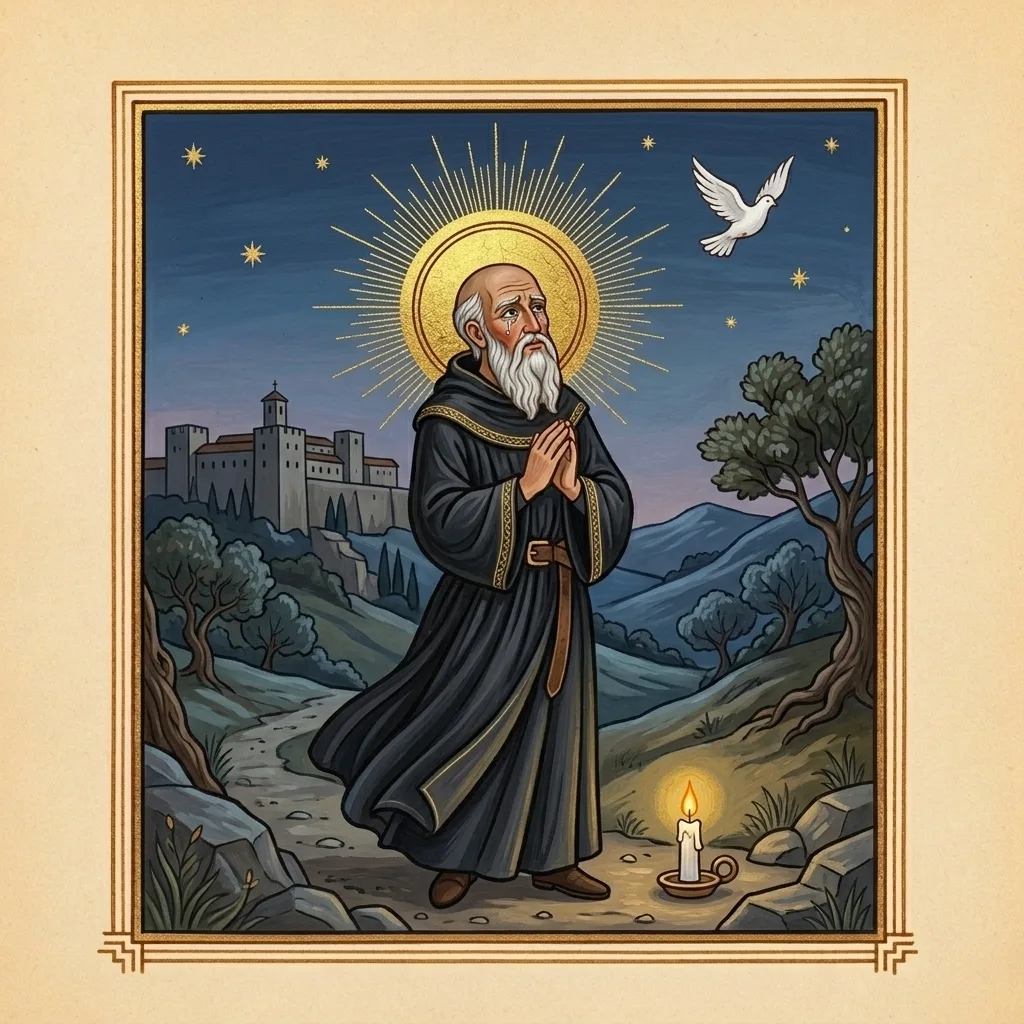
9Then his twin sister Scholastica dies. They had met just once a year to talk of God. When she goes, Benedict sees her soul rise as a white dove. The man who built monasteries across a broken Europe stands at his window and weeps. Even saints grieve.
 10
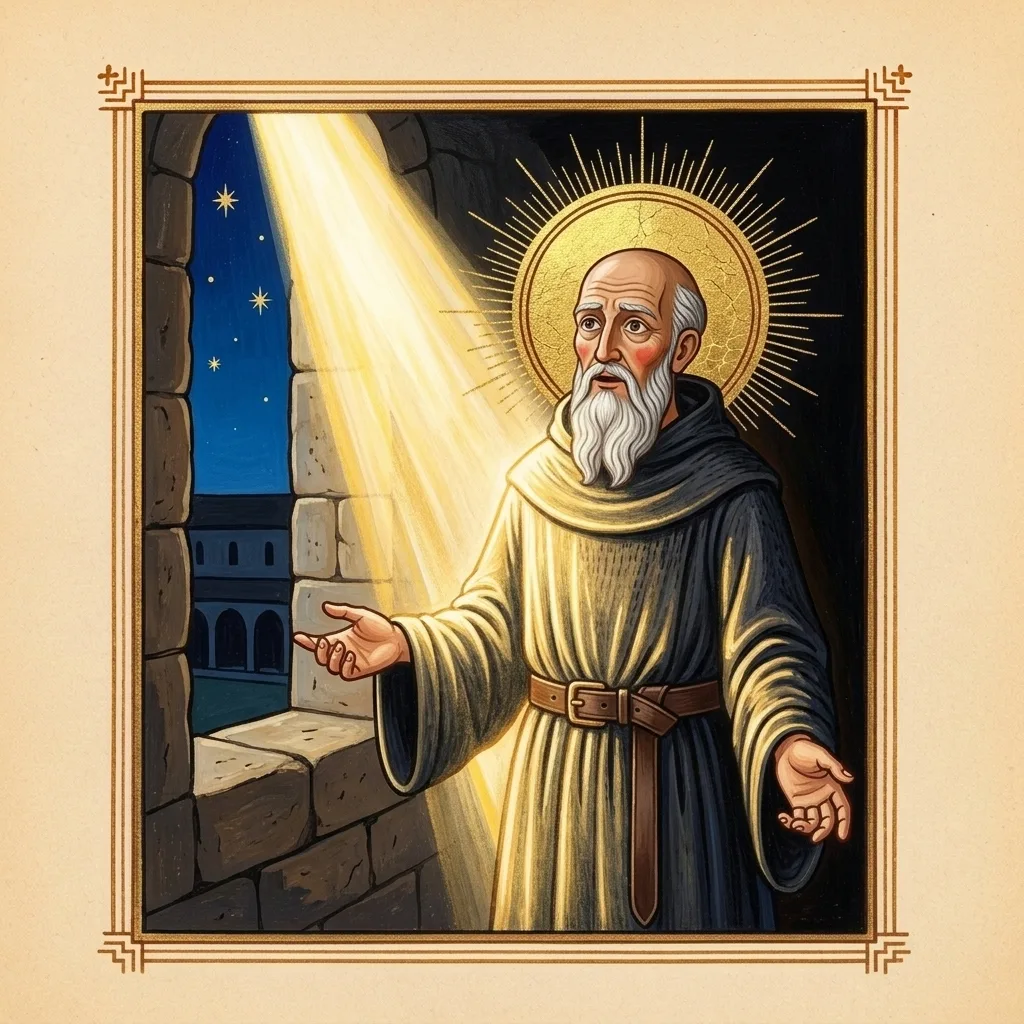
10One night, while his monks slept, Benedict prayed at his window. The darkness became blinding light — and in it, he saw the whole world held in a single ray of sun. Not a vision of escape. A vision of love: everything seen, everything lit from within.
 11
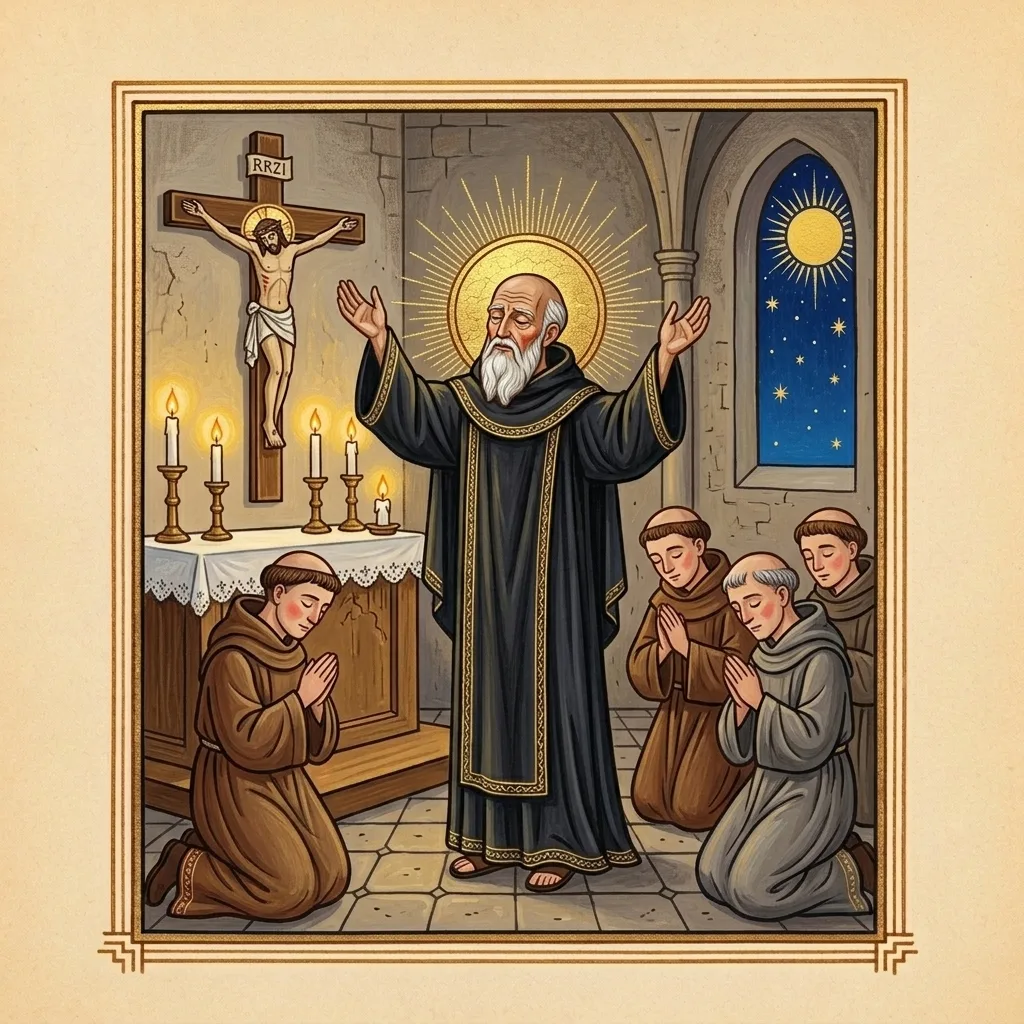
11In spring 547, Benedict asks to be carried to the chapel. He receives the Eucharist — then stands unsupported, arms raised, face turned upward, and dies. Still standing. He is buried beside Scholastica in the same tomb. Brother and sister, together again.
 12
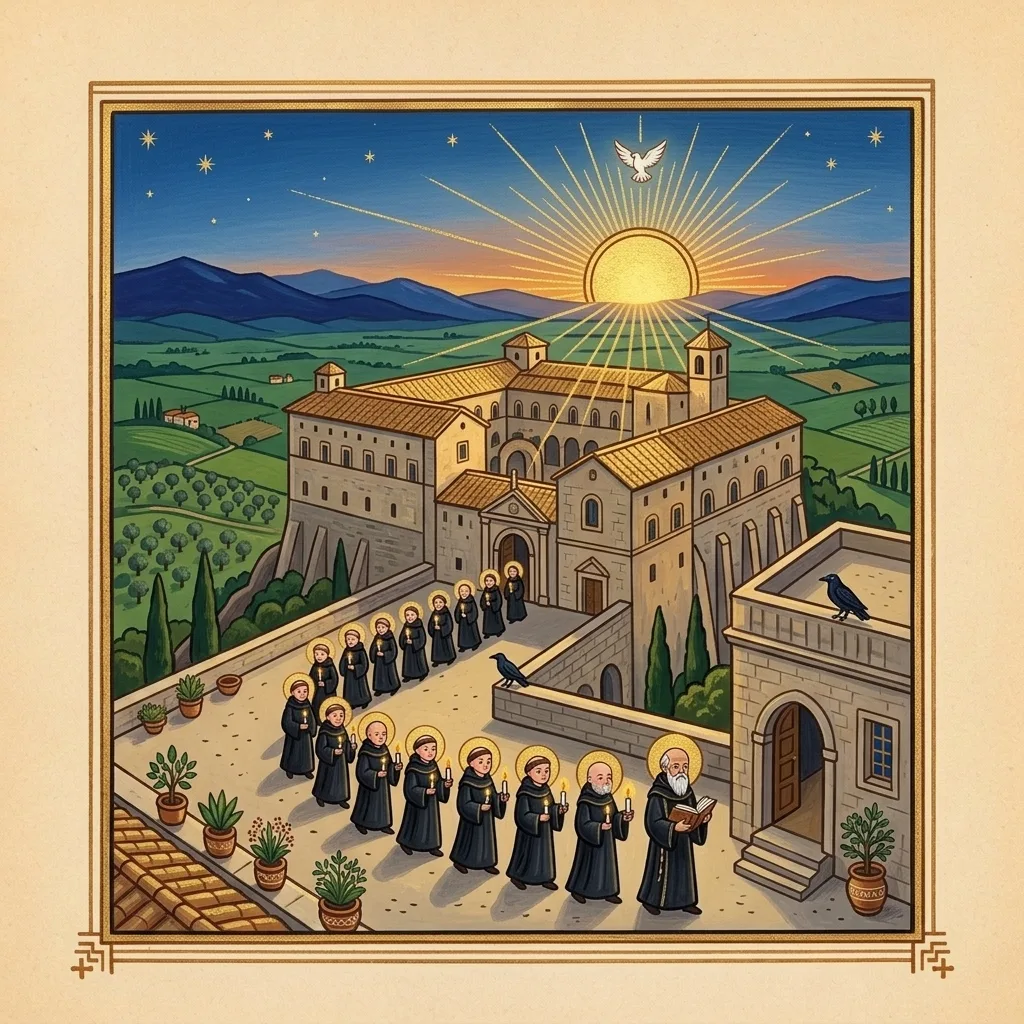
12After his death, Benedictine monasteries become Europe's libraries, hospitals, and farms. Monks copy Virgil, Cicero, and Scripture — saving them from oblivion. They drain swamps, shelter pilgrims, teach farmers. The man who fled civilization ended up saving it.
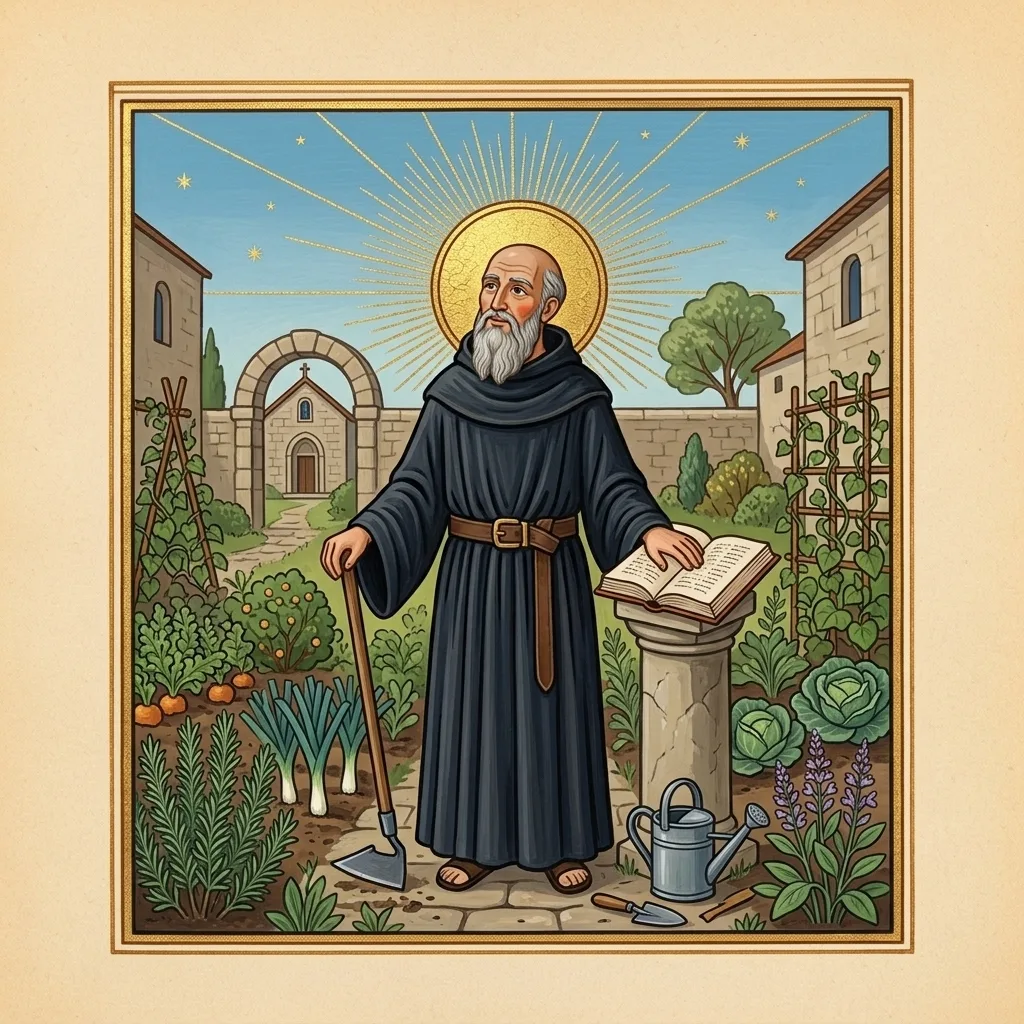 13
13Benedict's gift is simple and hard: Ora et Labora — pray and work. Both. Your ordinary day — the meals, the emails, the tasks — can be prayer if you bring your whole self to it. You don't need a cave. You need intention. That, he says, is enough.
Life & Times
Early Life
Born 480 in Nursia. Sent to Rome for his education, he was so troubled by the city's disorder that he withdrew to the wilderness of Subiaco to live as a hermit.
Turning Point
After a period of solitary prayer at Subiaco, monks sought him as their abbot; according to Gregory the Great, they resisted his rule and attempted to poison him. He returned to Subiaco and built twelve monastic communities before moving to Monte Cassino.
Legacy
Founded the abbey of Monte Cassino around 529, where he composed his Rule and died in the chapel, fortified by the Eucharist, with hands raised to heaven.
Historical Context
Sources & historical notes
Dates and later-life details are left uncertain where the sources do not establish them. Historical summaries are secondary overviews; Scripture and Church documents are linked separately where available.
The Saint's Path
Words & Wisdom
“Prefer nothing whatever to Christ.”
“Always we begin again.”
The Rule of St. Benedict
The foundational blueprint for Western monasticism, balancing prayer and work.
Read MoreGracious and Holy Father, give us the wisdom to discover You, the intelligence to understand You, the diligence to seek after You, the patience to wait for You, eyes to behold You, a heart to meditate upon You, and a life to proclaim You, through the power of the Spirit of Jesus, our Lord. Amen.
May the most holy, most sacred, most adorable, most incomprehensible and unutterable Name of God be always praised, blessed, loved, adored and glorified in Heaven, on earth, and under the earth, by all the creatures of God, and by the Sacred Heart of Our Lord Jesus Christ, in the Most Holy Sacrament of the Altar. Amen.
Related Saints
Connections in the communion of saints
Bernard of Clairvaux
Bernard's Cistercians reformed Benedictine monasticism toward stricter observance of the Rule.
Gregory I
Gregory wrote Benedict's biography in his Dialogues and spread Benedictine monasticism across Europe.
Hildegard of Bingen
Hildegard was a Benedictine abbess whose visionary mysticism flourished within Benedict's monastic tradition.