Sanctified Life
AD 1098 — AD 1179
Also Known As
Patronage
"All living creatures are sparks from the radiation of God's brilliance."
A Benedictine abbess and polymath born in the Rhineland in 1098, Hildegard experienced visions from childhood and, at forty-three, received a divine command to record them. She founded two monasteries, corresponded with emperors and popes, composed more surviving chants than any other medieval composer, and wrote on theology, medicine, and natural science — the range captured in her epithet 'Sibyl of the Rhine.'

Interactive Lesson
The Illustrated Life
Hildegard of Bingen's story in 13 illustrated moments — tap any scene to begin there.
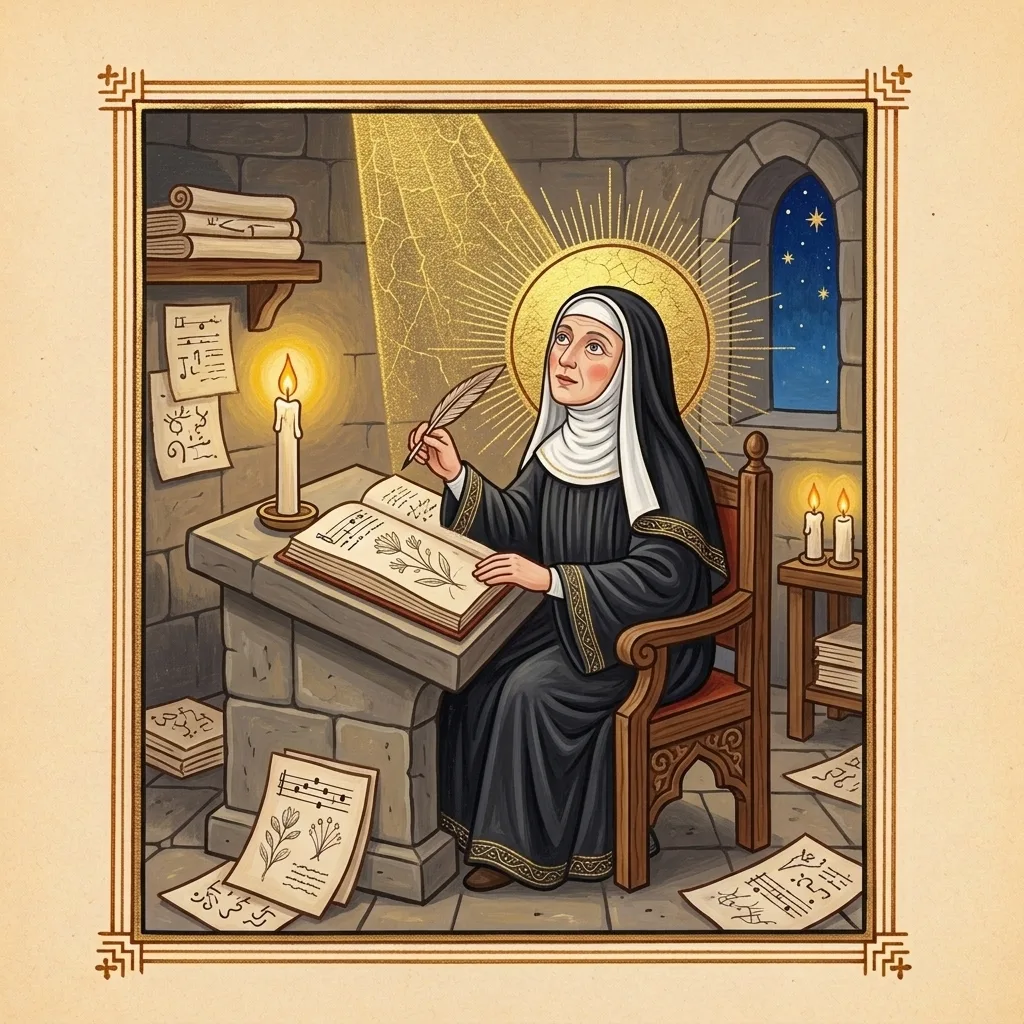 1
1She wrote music that sounds like nothing else on earth. She advised popes. She invented a language. She did it all in the 12th century — as a woman. Meet Hildegard.
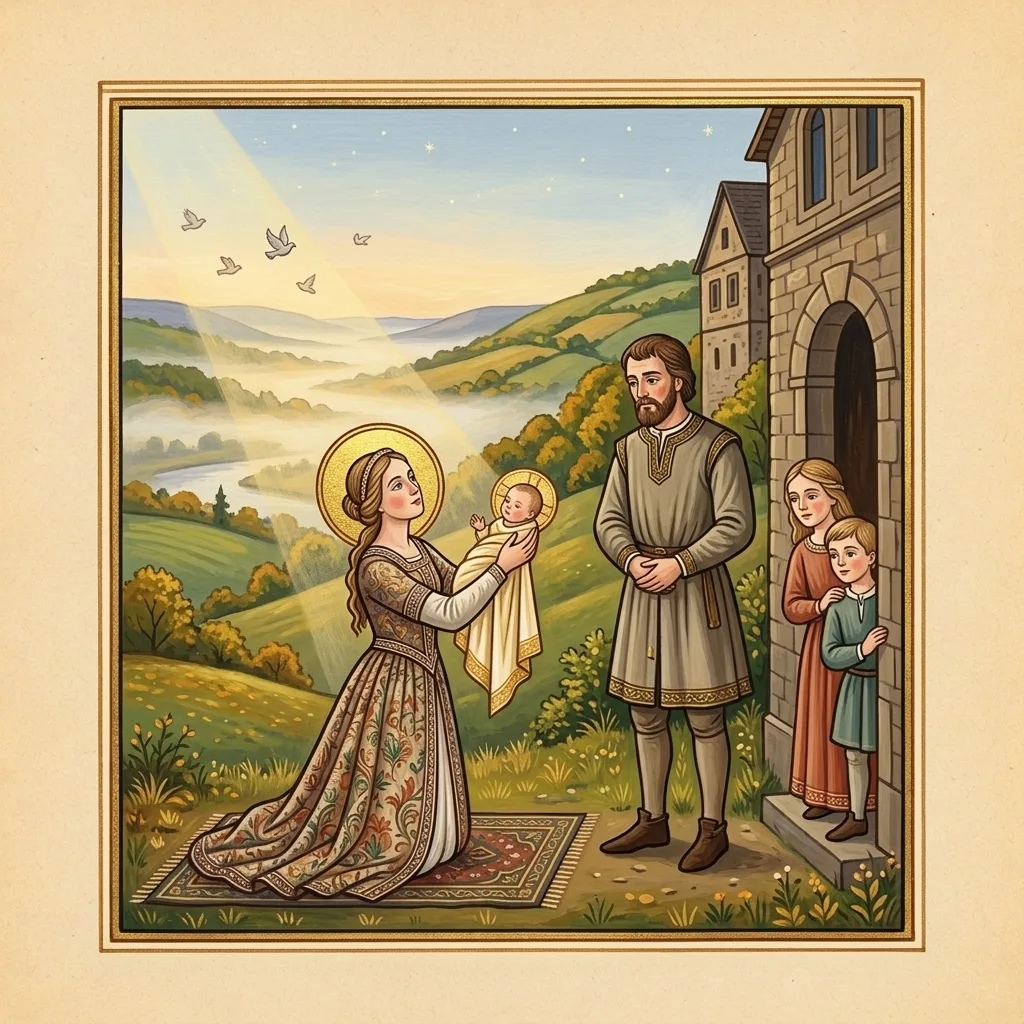 2
2Born in 1098 in the green Rhineland hills, Hildegard was the tenth child of a noble family. The tenth child — given to God, like a tithe.
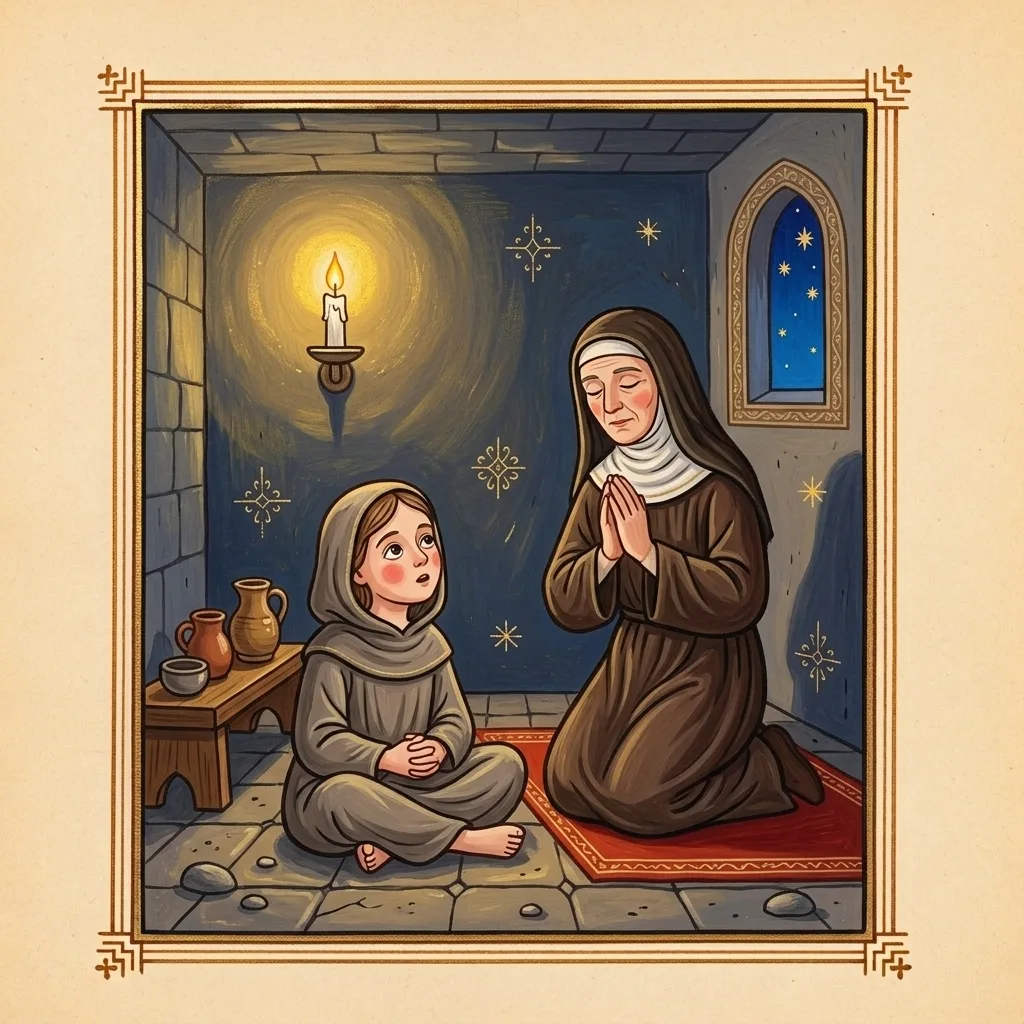 3
3At age eight, Hildegard is handed to a monastery. Enclosed in a stone cell with a holy woman named Jutta, she begins to see things — visions of blazing light.
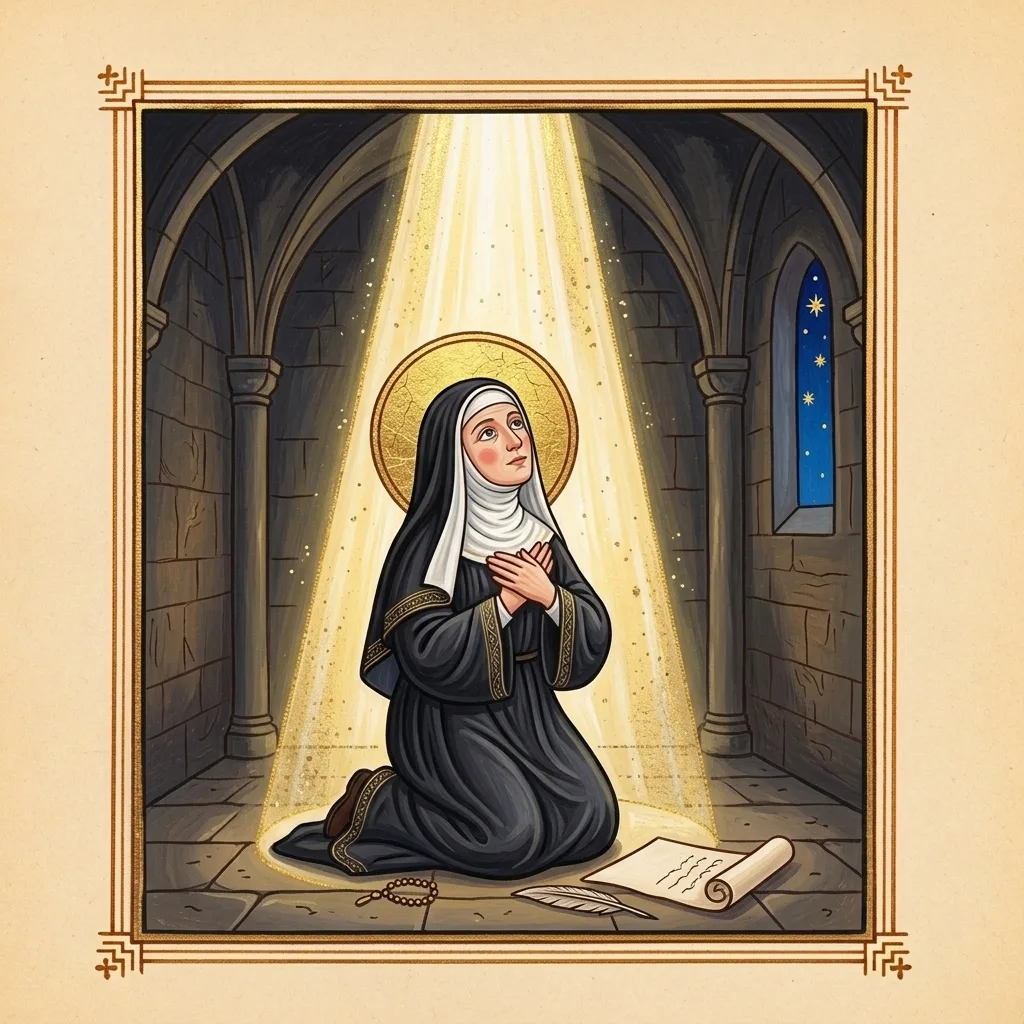 4
4For thirty years she keeps the visions secret. Then, at age 42, a voice tears through her like thunder: 'Write what you see and hear.' She cannot refuse.
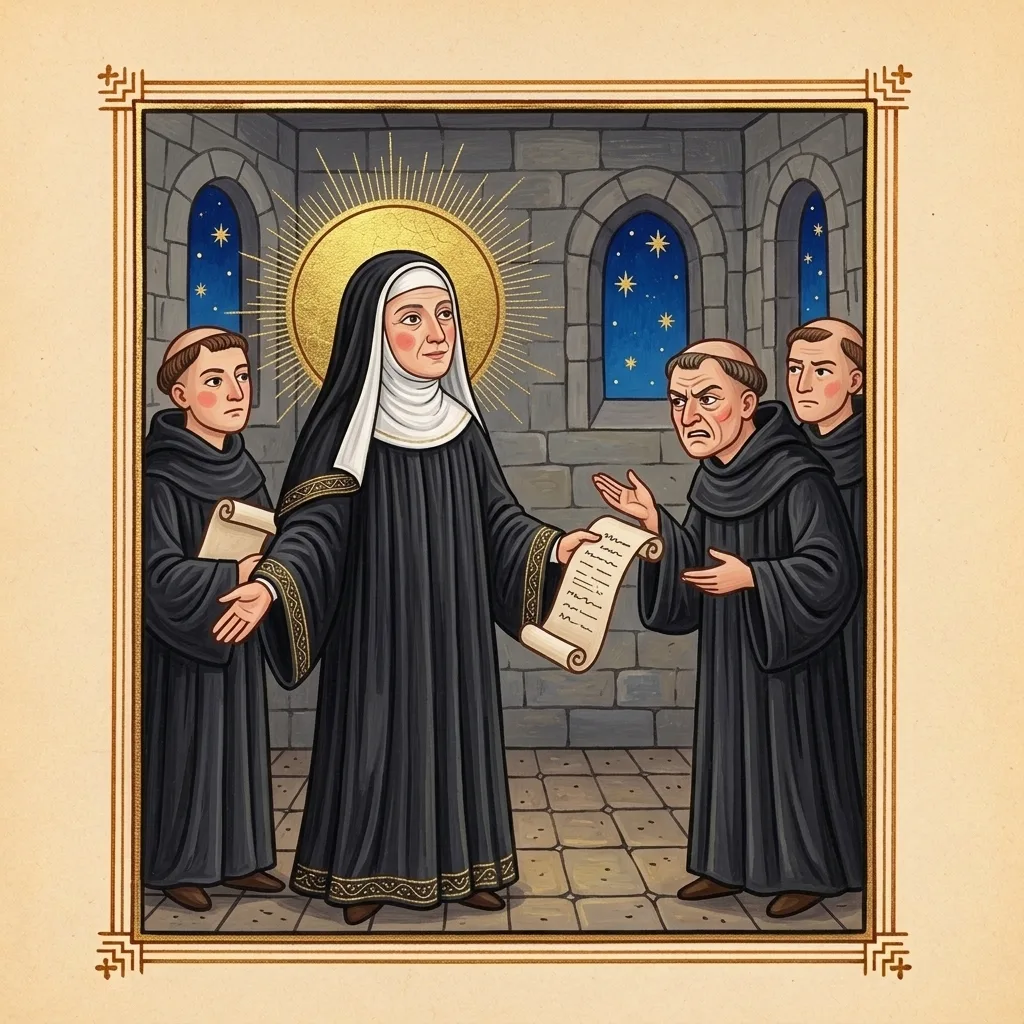 5
5But who will believe her? A woman preaching, teaching, writing theology — it was unthinkable. The monks at Disibodenberg resist her at every turn.
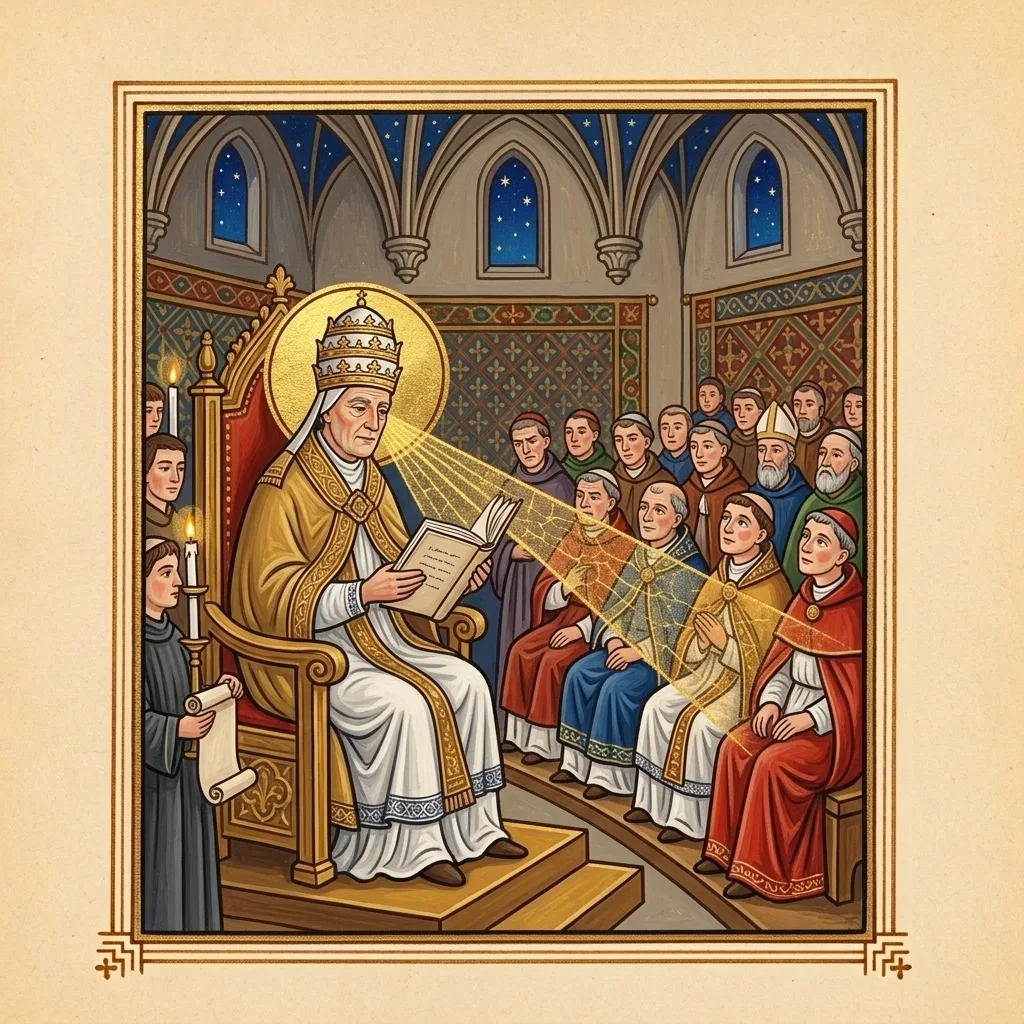 6
6She fights — and wins. Pope Eugenius reads her visions aloud at a council and approves them. Hildegard doesn't just survive opposition. She overcomes it.
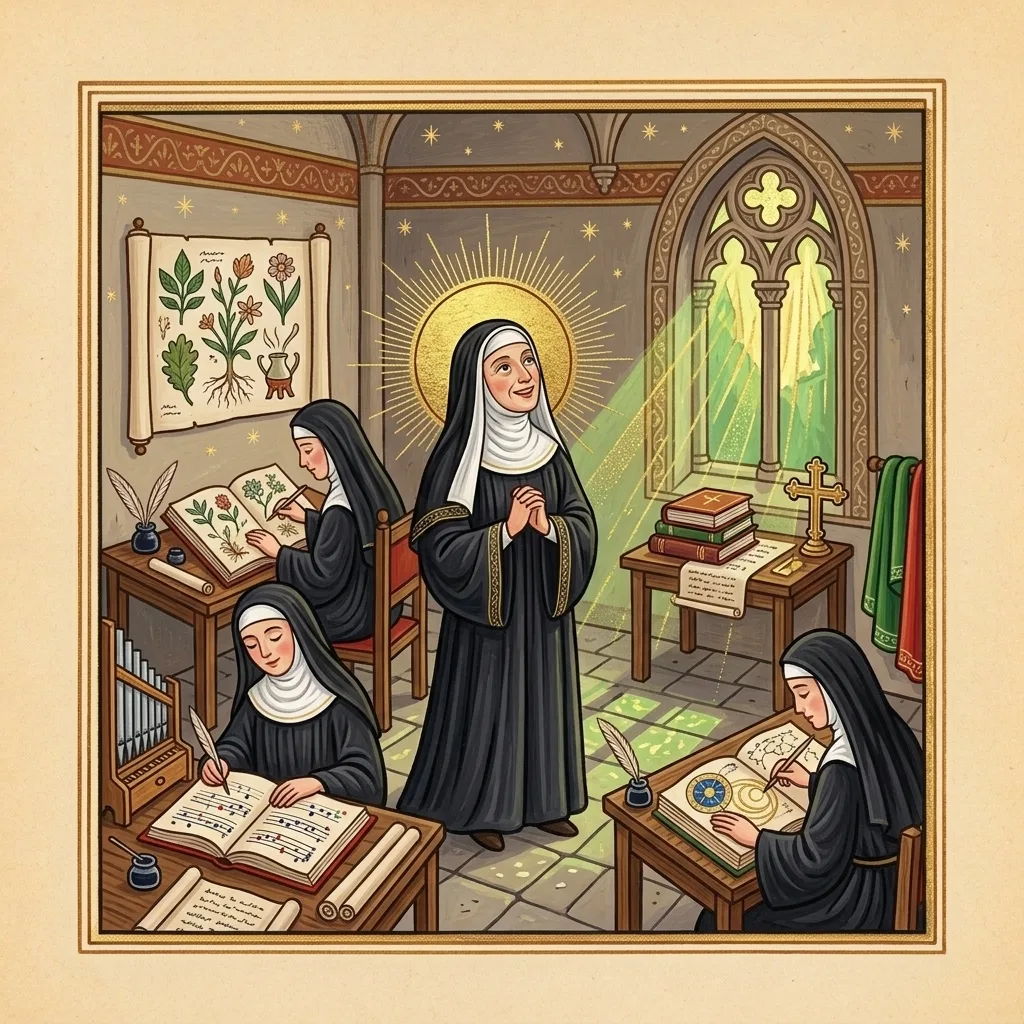 7
7She composes over seventy pieces of sacred music — haunting, soaring, like nothing before. She writes medicine, theology, science. She is a universe in one person.
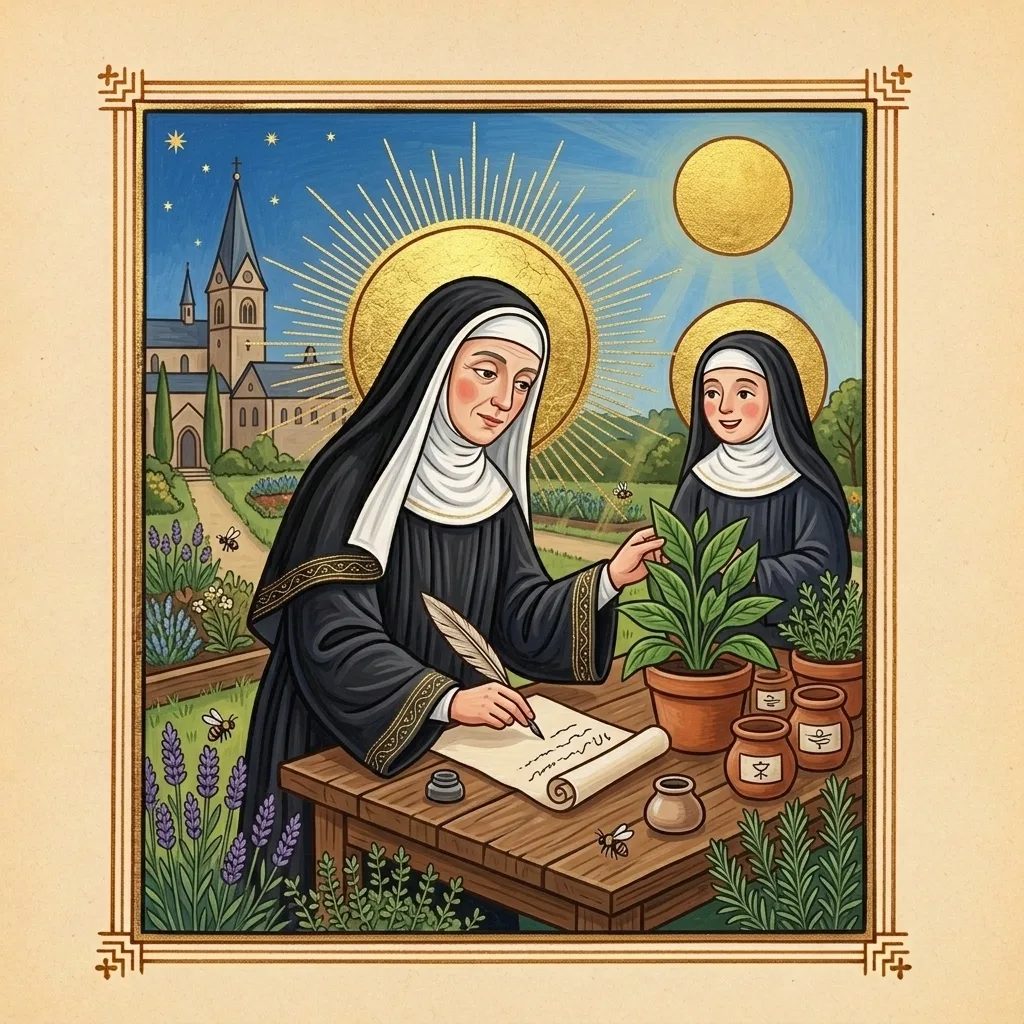 8
8Here's the surprise: she also wrote about plants, stones, fish, and the human body — a medical encyclopedia centuries ahead of its time. The mystic was also a scientist.
 9
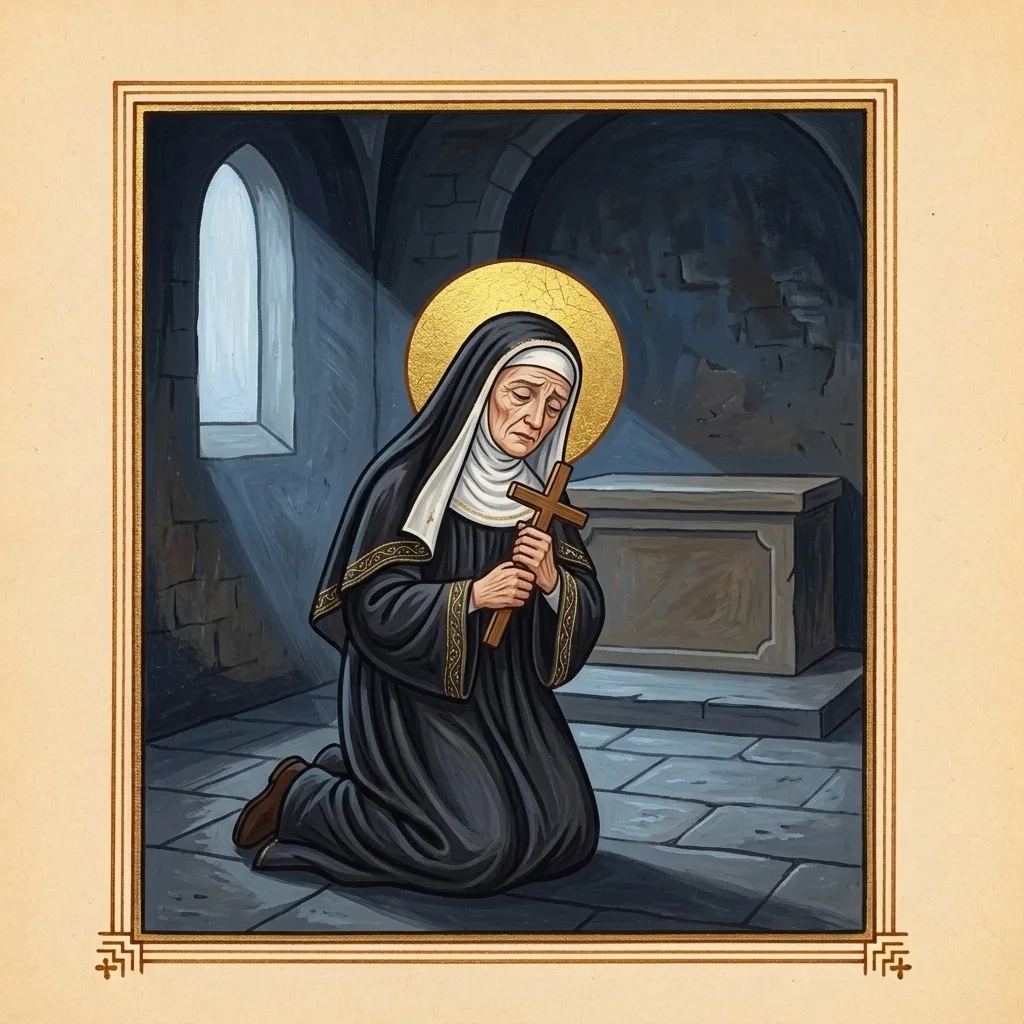
9Near death, her monastery is placed under interdict — no sacraments, no music, no Mass. For Hildegard, this is worse than illness. She fights it until her last breath.
 10
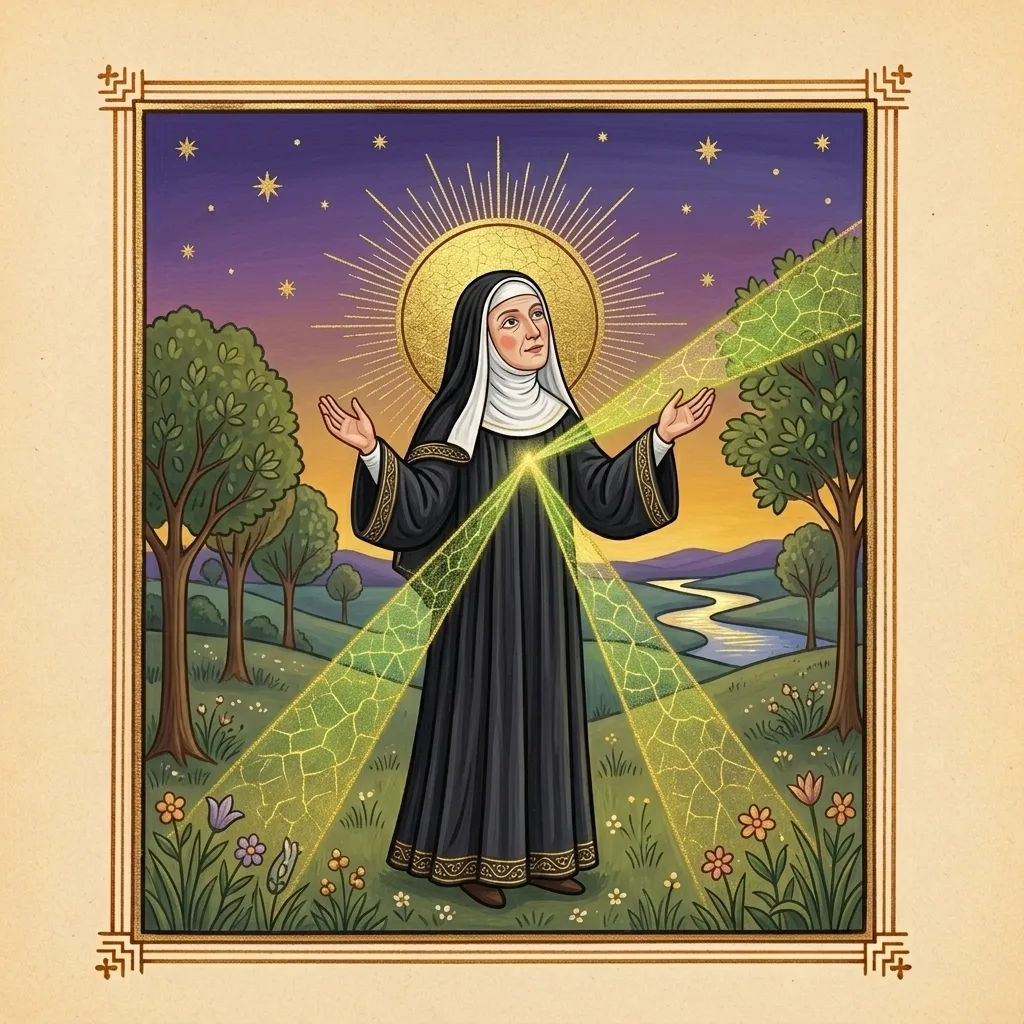
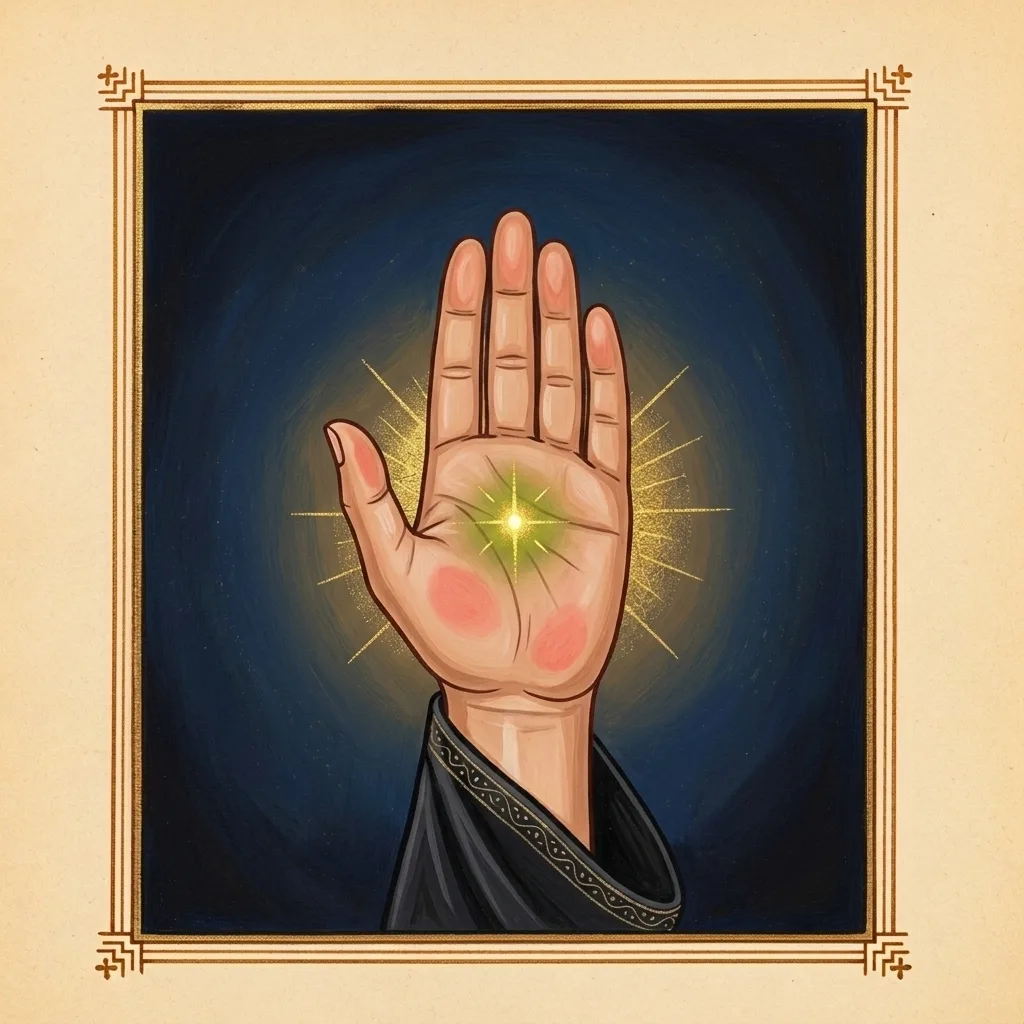
10'All living creatures are sparks from the radiation of God's brilliance.' She called this viriditas — the greening power of God alive in everything. She saw it everywhere.
 11
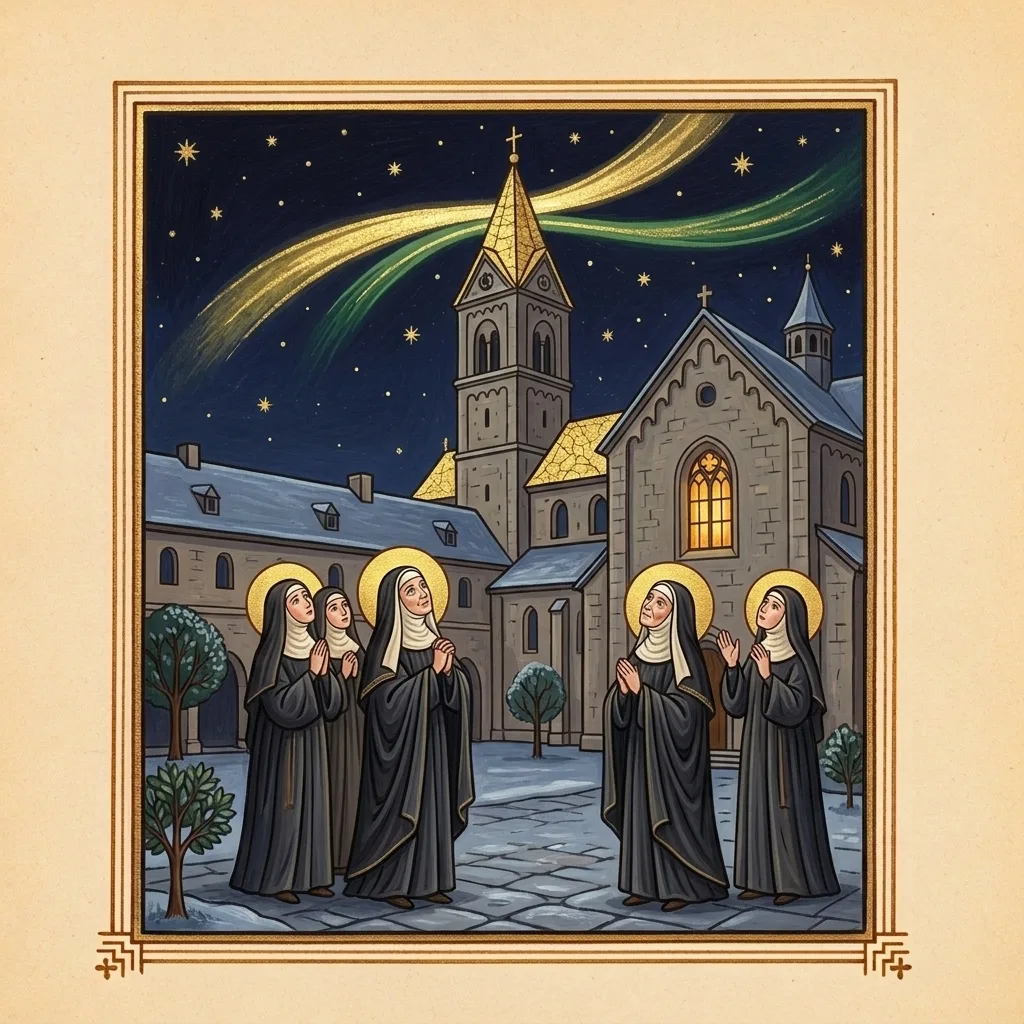
11She dies in 1179 at 81 — writing until nearly the end. Witnesses say two streams of colored light crossed the sky above Rupertsberg the moment she passed.
 12
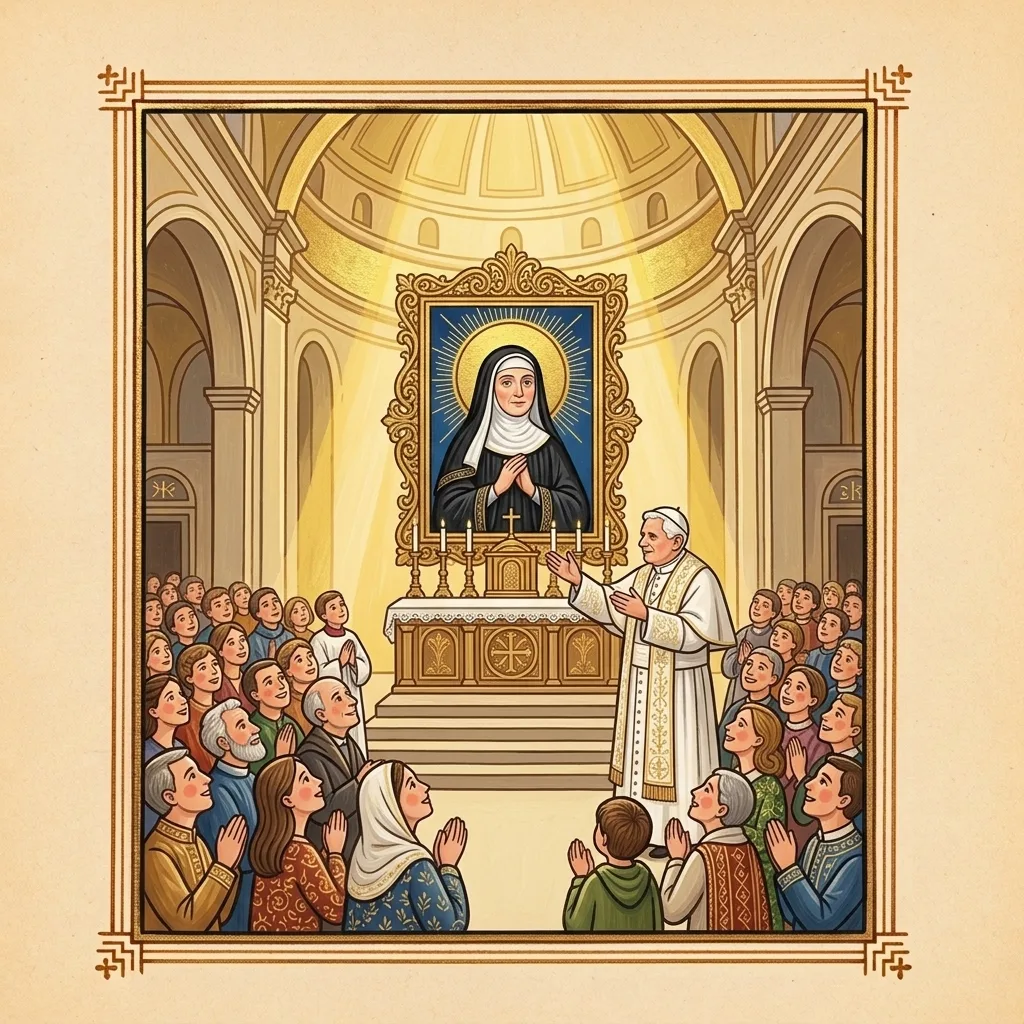
12In 2012, Pope Benedict XVI named her a Doctor of the Church — only the fourth woman ever. Nine centuries late, but the Church finally said: she was right all along.
 13
13Hildegard's gift to you: the world is charged with God's green fire. Pay attention to what you love most deeply — it may be exactly where God is asking you to begin.
Life & Times
Early Life
Born the tenth child to a noble family; given to the Church at age eight as a tithe. Raised by the anchoress Jutta at Disibodenberg monastery, experiencing visions from early childhood.
Turning Point
At age 43, receives a divine command to 'write what you see and hear,' beginning her prophetic ministry and authorship of theological works.
Legacy
Founds her own monastery at Rupertsberg; undertakes preaching tours despite opposition; writes on theology, medicine, natural science, and composes sacred music until her death at 81.
Historical Context
Sources & historical notes
Dates and later-life details are left uncertain where the sources do not establish them. Historical summaries are secondary overviews; Scripture and Church documents are linked separately where available.
Life Locations
Words & Wisdom
O Vis Aeternitatis
A mystical sequence from the Symphonia corpus, addressed to Divine Wisdom and the Holy Spirit.
Related Saints
Connections in the communion of saints
Teresa of Ávila
Two great women mystics and Doctors of the Church whose visions shaped Catholic spirituality.
Benedict of Nursia
Hildegard was a Benedictine abbess whose monasticism flowed from Benedict's Rule.
Bernard of Clairvaux
Contemporary mystics who corresponded. Bernard encouraged Hildegard's visions and helped secure papal approval.