A tax collector at his booth in Capernaum, Matthew left his post the moment Jesus said 'Follow me' — then hosted a feast for fellow outcasts that scandalized the Pharisees. His Gospel, the most Jewish of the four, reads Jesus' life as the deliberate fulfillment of the Hebrew scriptures, structured around five great discourses that echo the five books of Moses.

Interactive Lesson
The Illustrated Life
Matthew the Apostle's story in 13 illustrated moments — tap any scene to begin there.
 1
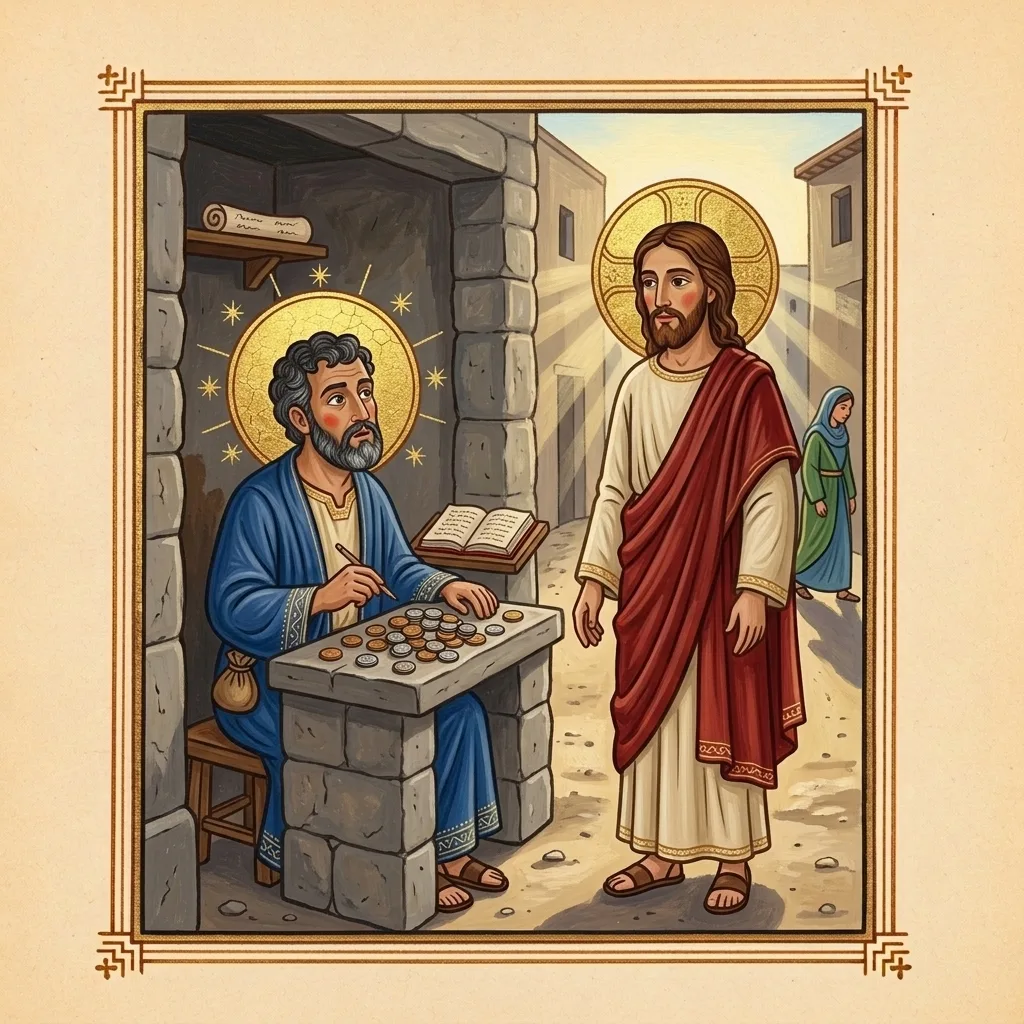
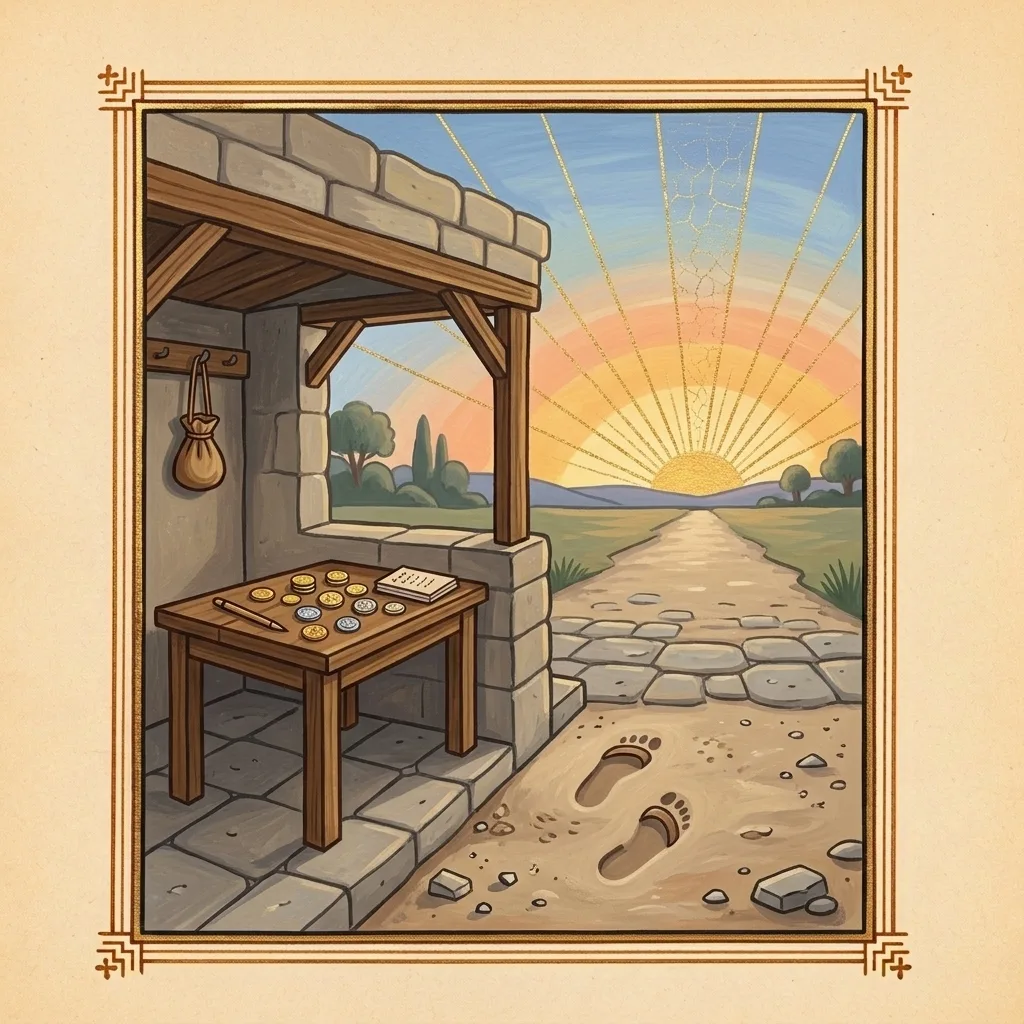
1A man sits at a stone table by the Capernaum road, counting Rome's coins under a bright Galilean sun. Every Jew who passes looks away. Then a stranger stops, meets his eyes, and says two words: 'Follow me.' Everything changes in an instant.
 2
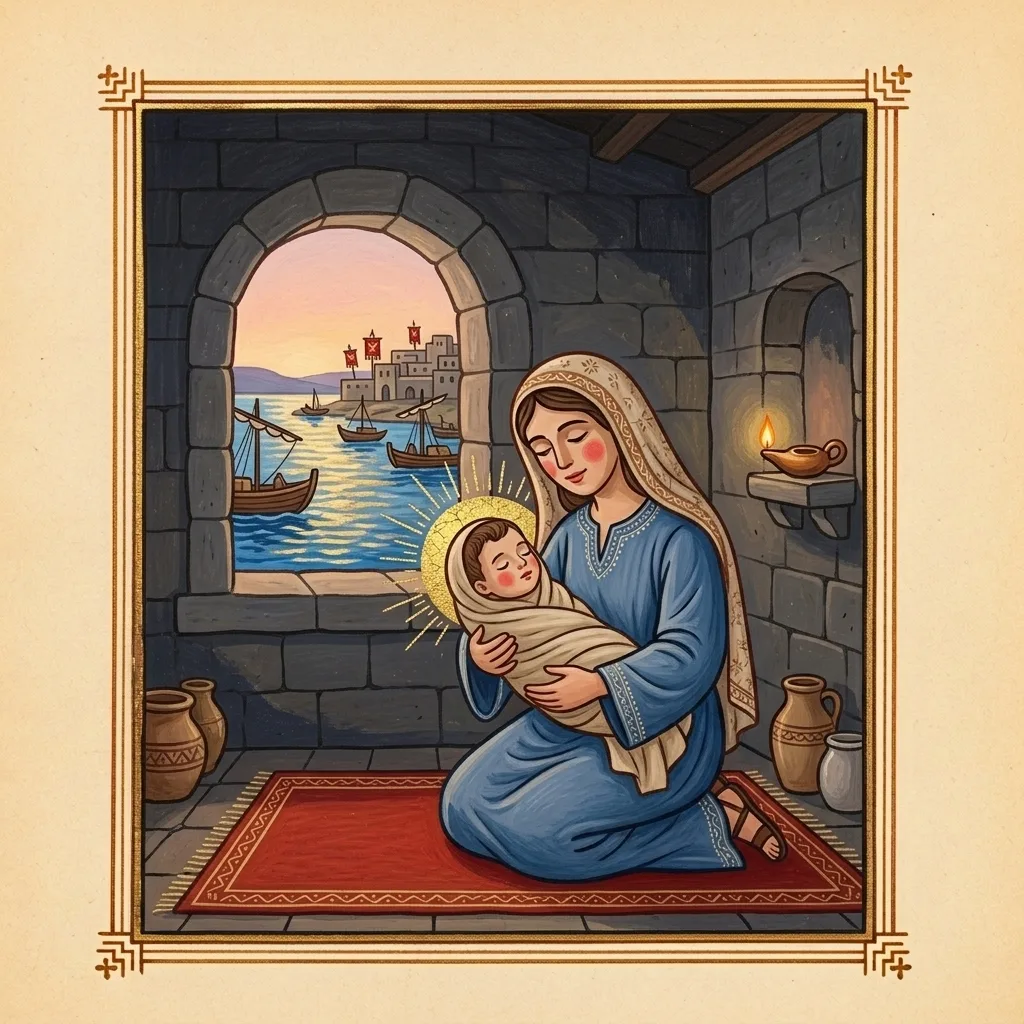
2He is born Levi, son of Alphaeus, in Capernaum on the northern shore of the Sea of Galilee — a fishing town that smells of brine and commerce. From birth, his world hums with trade routes, Roman soldiers, and sharp social lines no one dares cross.
 3
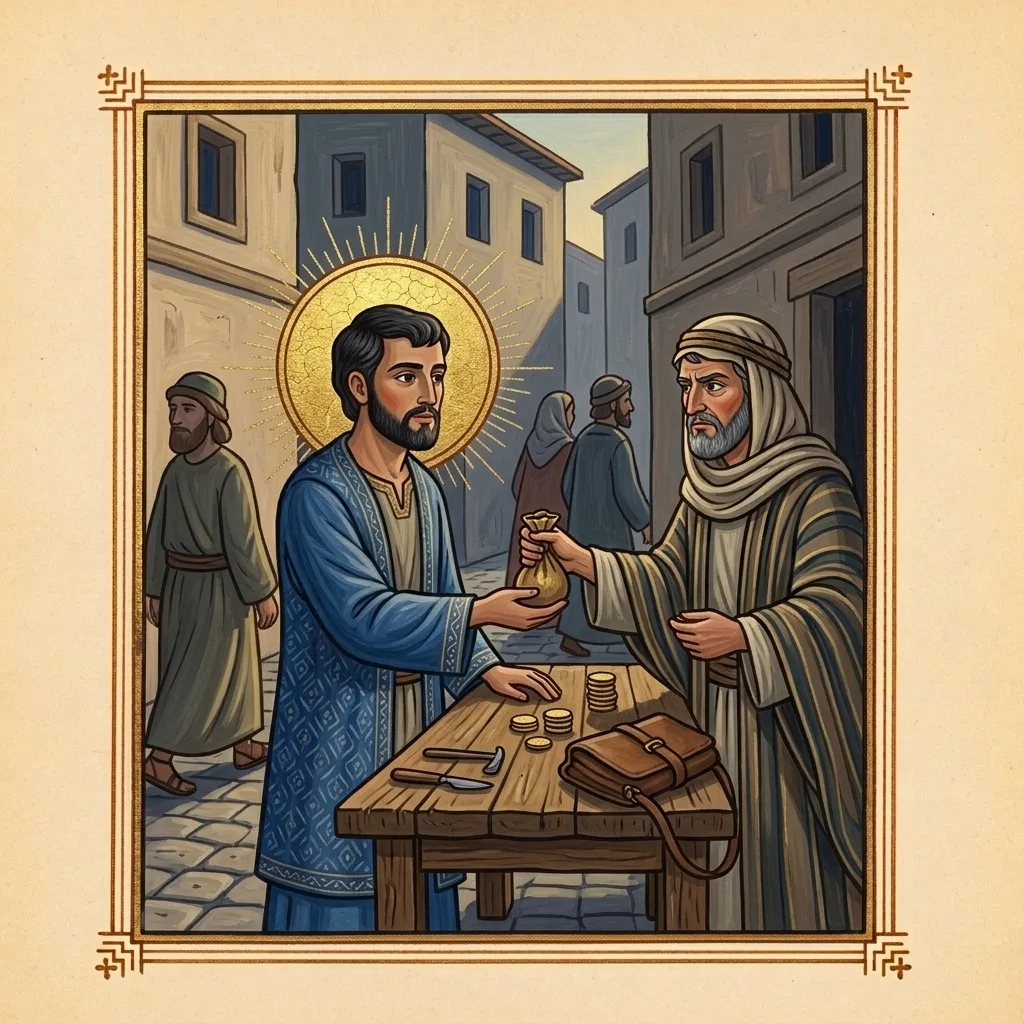
3Young Levi grows up reading Torah, dreaming of a different life than fishing. But somewhere he takes a road most Jews despise — he becomes a tax collector for Rome. It pays well. It costs him everything else: his name, his community, his honor.
 4
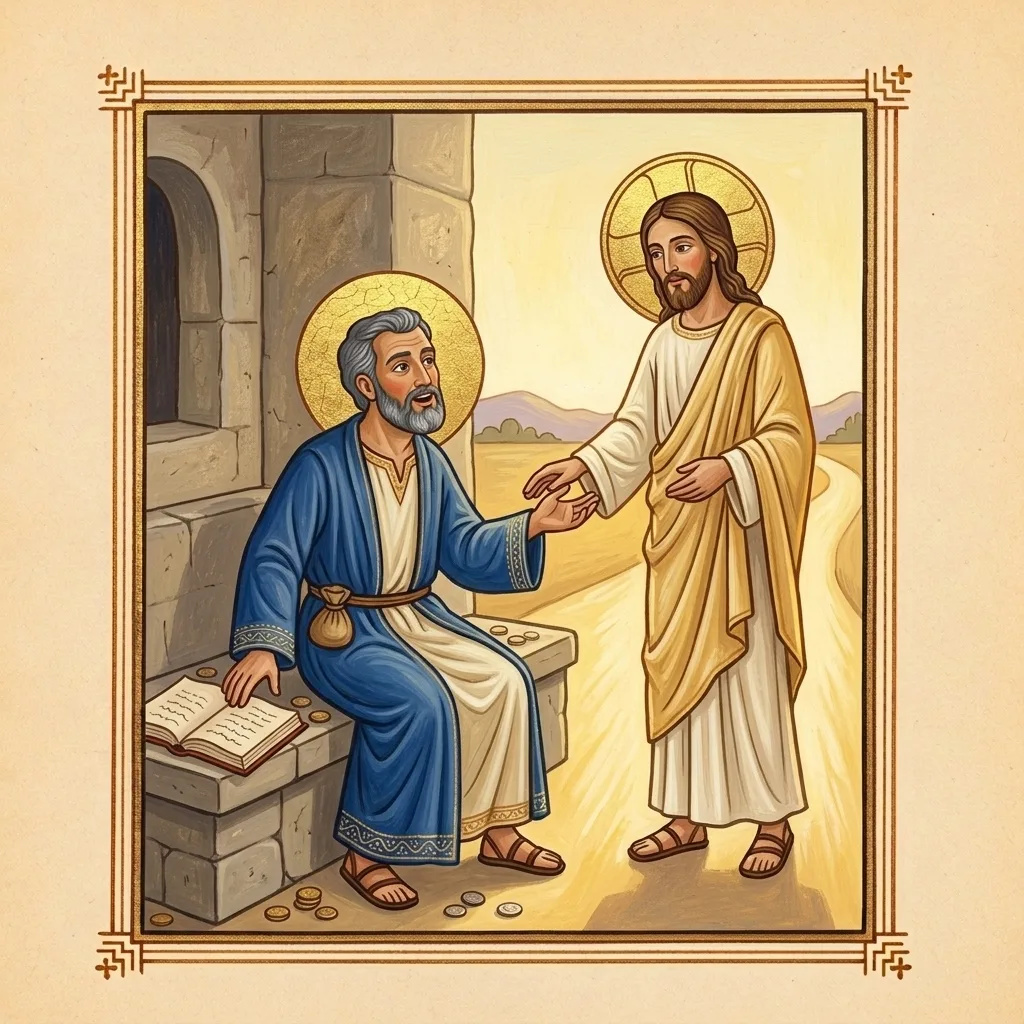
4One ordinary morning at his booth, Jesus of Nazareth walks up and says simply, 'Follow me.' Matthew does not bargain, does not ask about salary or destination. He rises, leaves the coins where they sit, and walks away from everything he has built.
 5
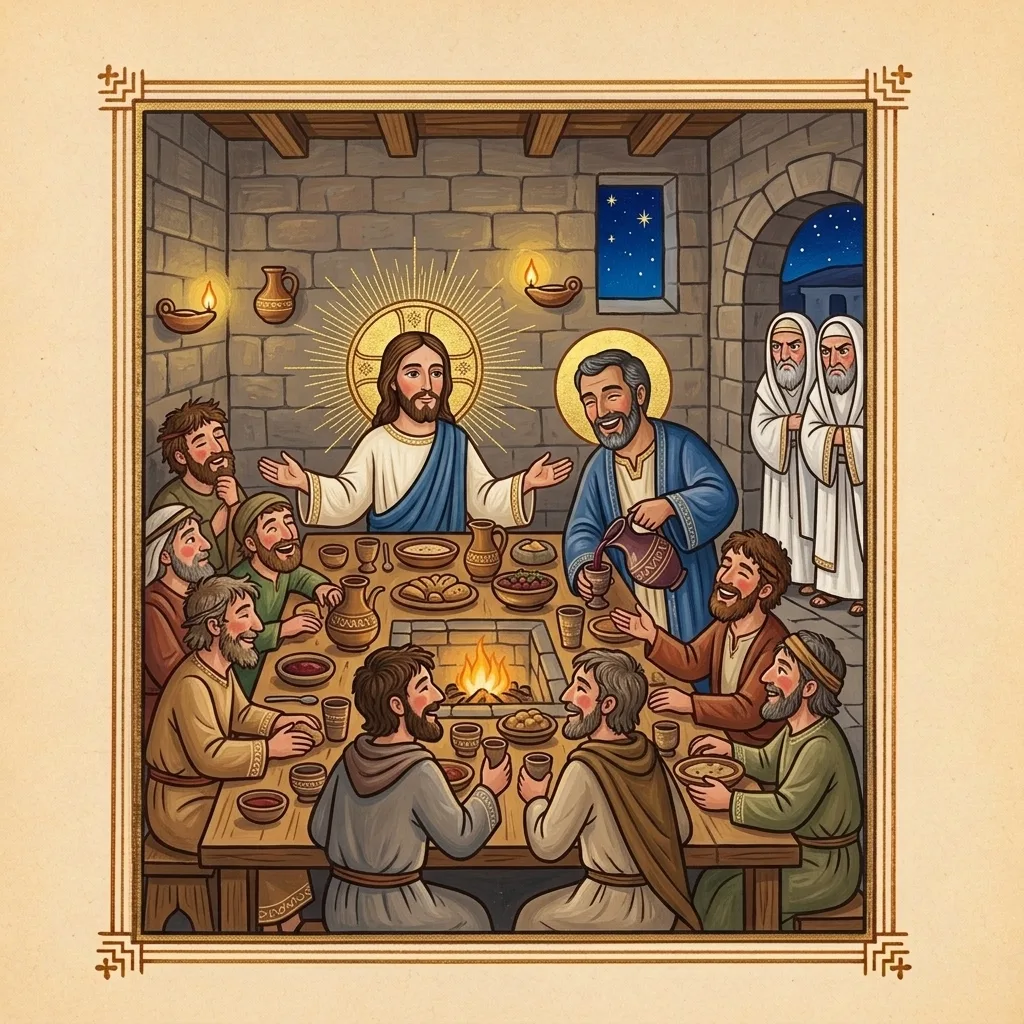
5That same evening, Matthew throws open his house and fills it with every outcast he knows — fellow tax collectors, sinners, the wrong kind of people. The Pharisees are watching from outside and they are furious. Jesus stays at the table anyway.
 6
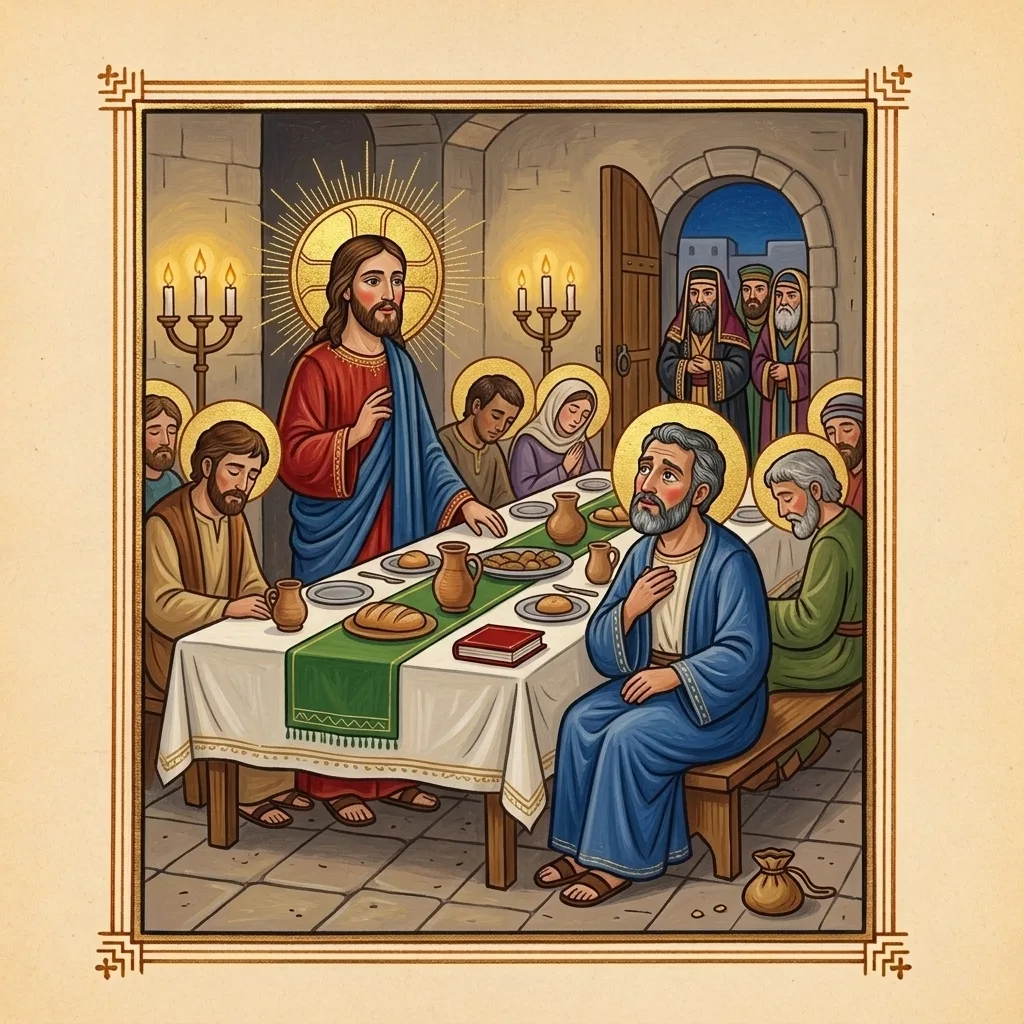
6Jesus answers the Pharisees from inside the feast: 'I came not to call the righteous, but sinners.' Matthew hears this and understands that his whole broken past is not a disqualification — it is the very reason he was chosen. That changes a man.
 7
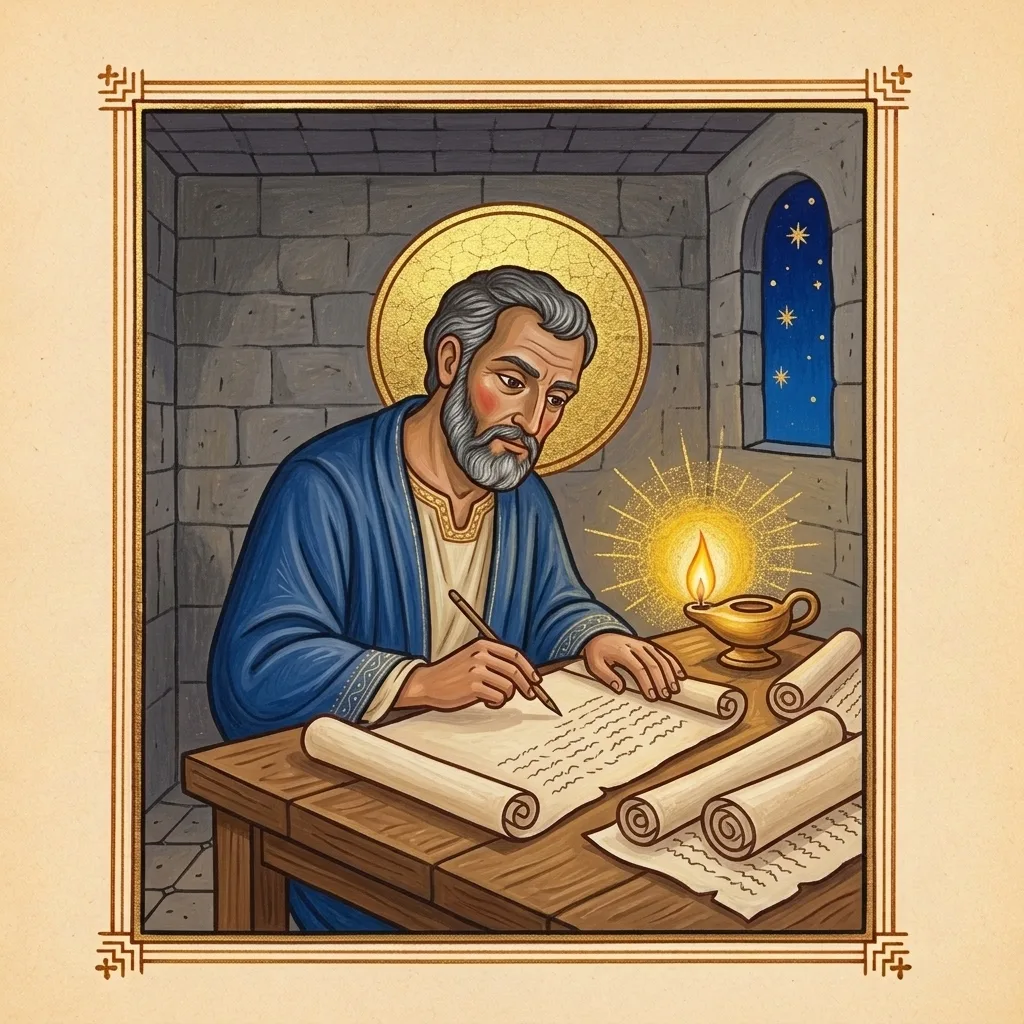
7Years later, Matthew writes a Gospel unlike any other. He structures it like the Torah — five great discourses, Moses reborn in Jesus. Every line reaches back into the Hebrew scriptures and says: 'Here. This is who he was. This was always the plan.'
 8
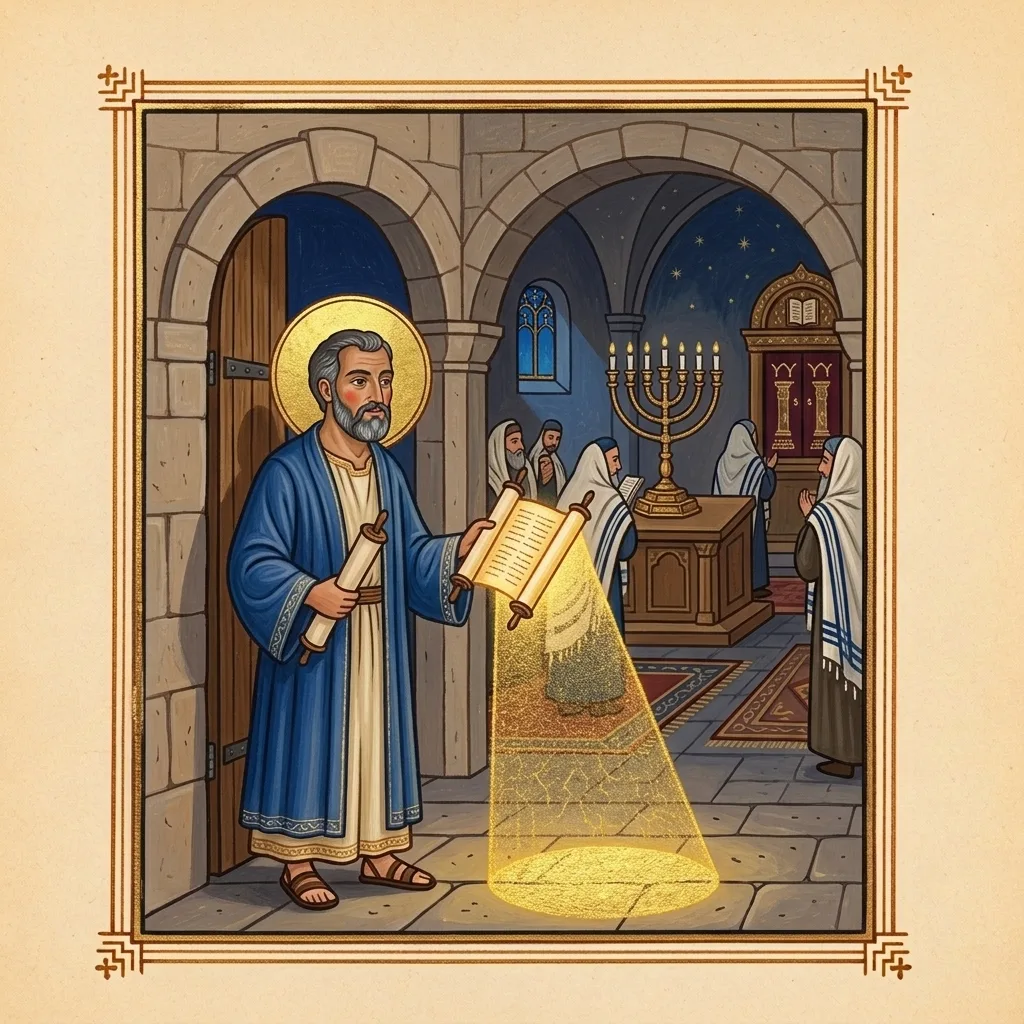
8The surprise: the most powerful Gospel about Jesus the Jewish Messiah was written by a man his people considered a traitor. God chose the one no synagogue would seat to pen the book that would open the Kingdom to all nations. The margins matter.
 9
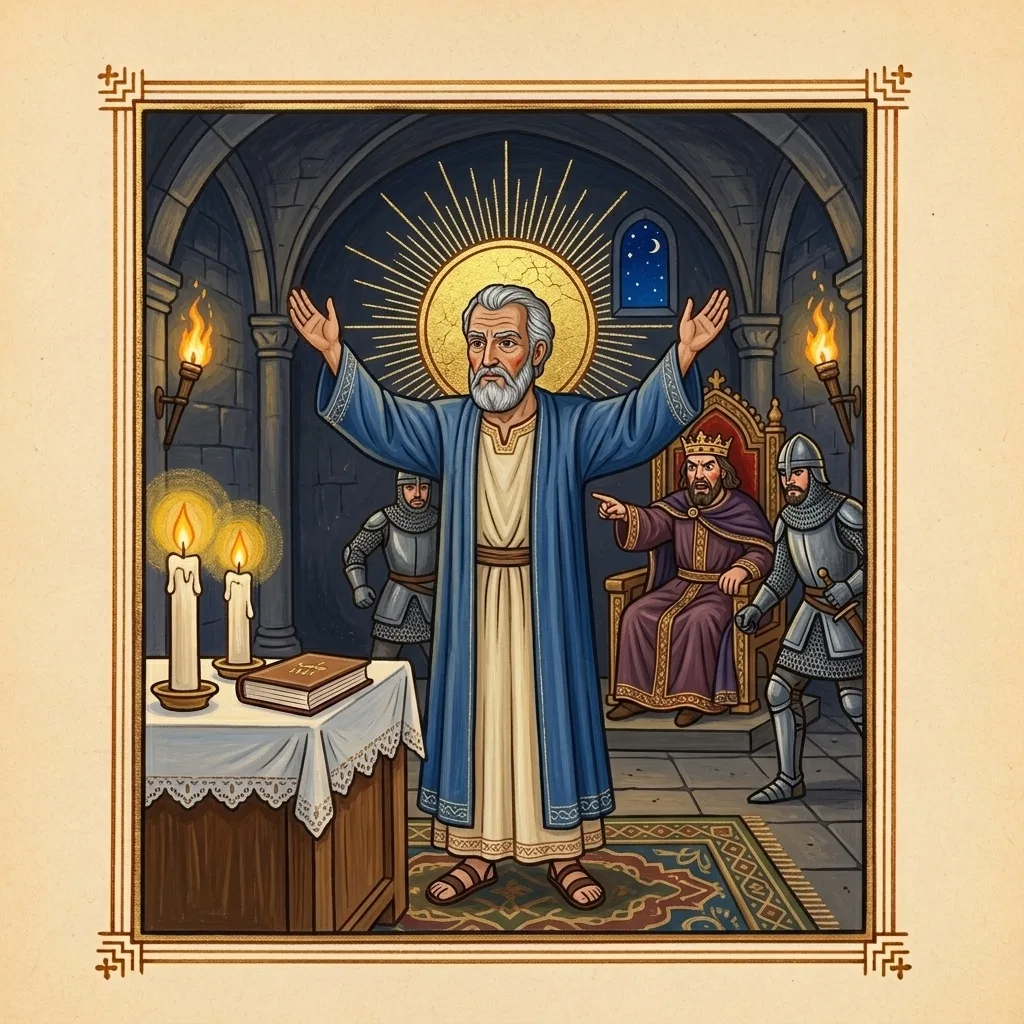
9Tradition carries him far from Capernaum — east through Judea, then beyond into the foreign lands ancient writers call 'Ethiopia.' Alone, aging, in an alien court, he rebukes a king who wants him to betray a consecrated woman. The king's guards draw their swords.
 10
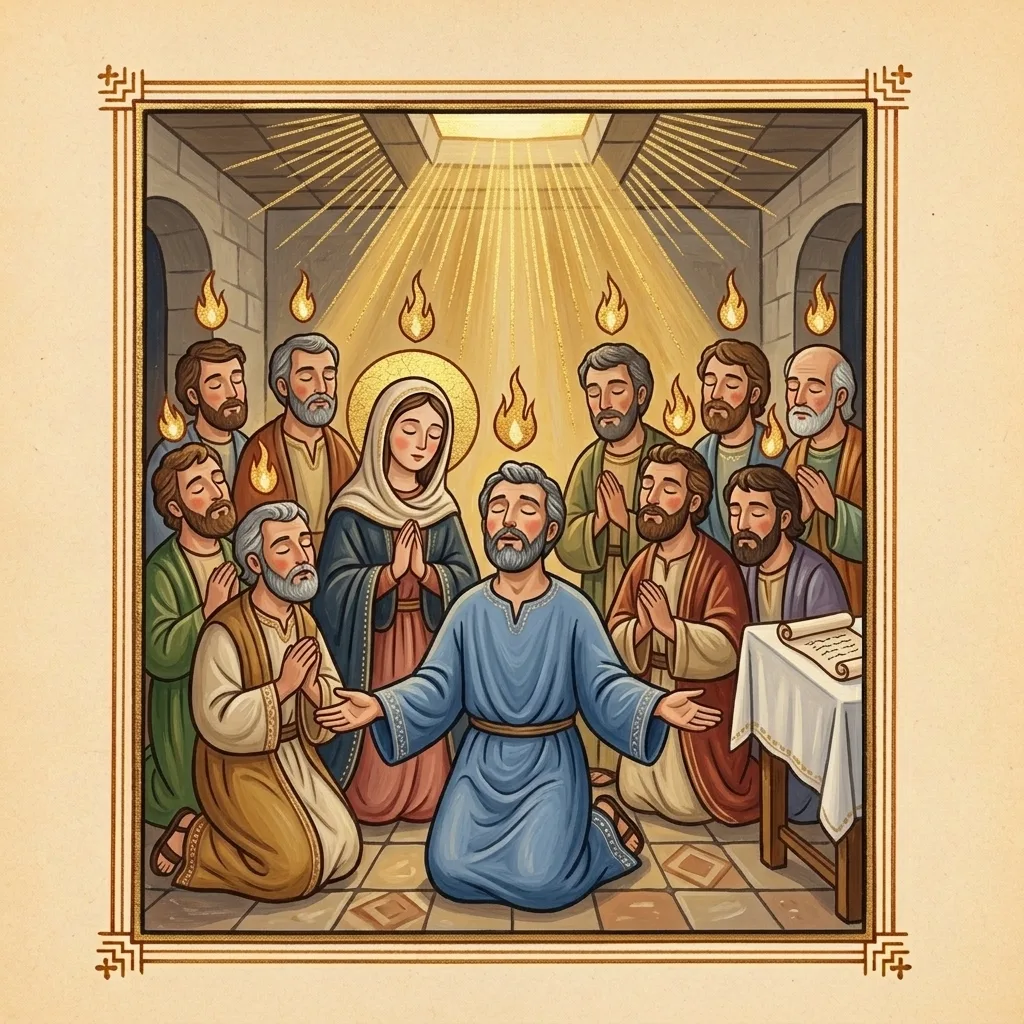
10In the Upper Room at Pentecost, the Holy Spirit falls like fire and Matthew is changed from the inside. The man who once traded in Caesar's coins now carries something no treasury can hold: a witness that death could not contain, and a mission no border can stop.
 11
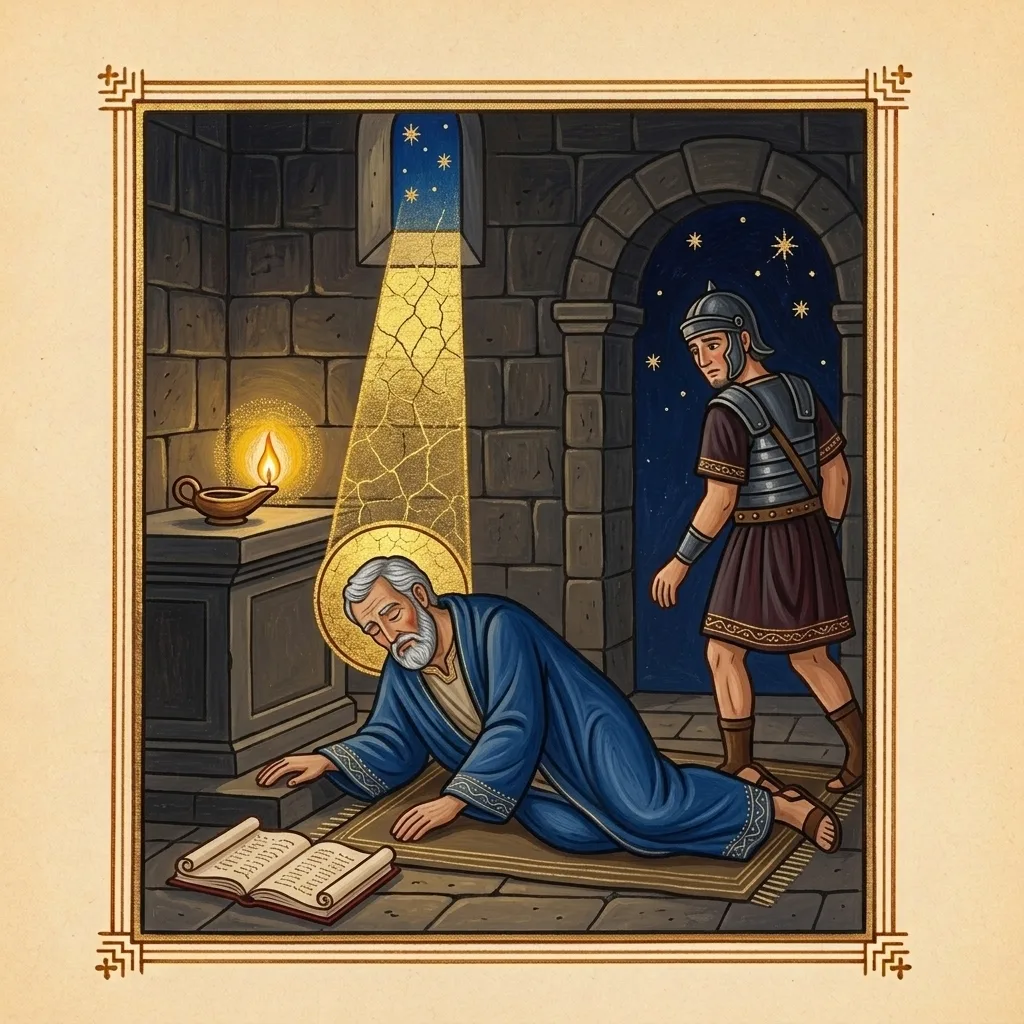
11He dies at the altar, cut down for refusing to betray what he loves. The tax collector who once served Caesar's empire falls serving a different King. He is remembered as a martyr — though the place of his death, like his life, resists easy categories.
 12
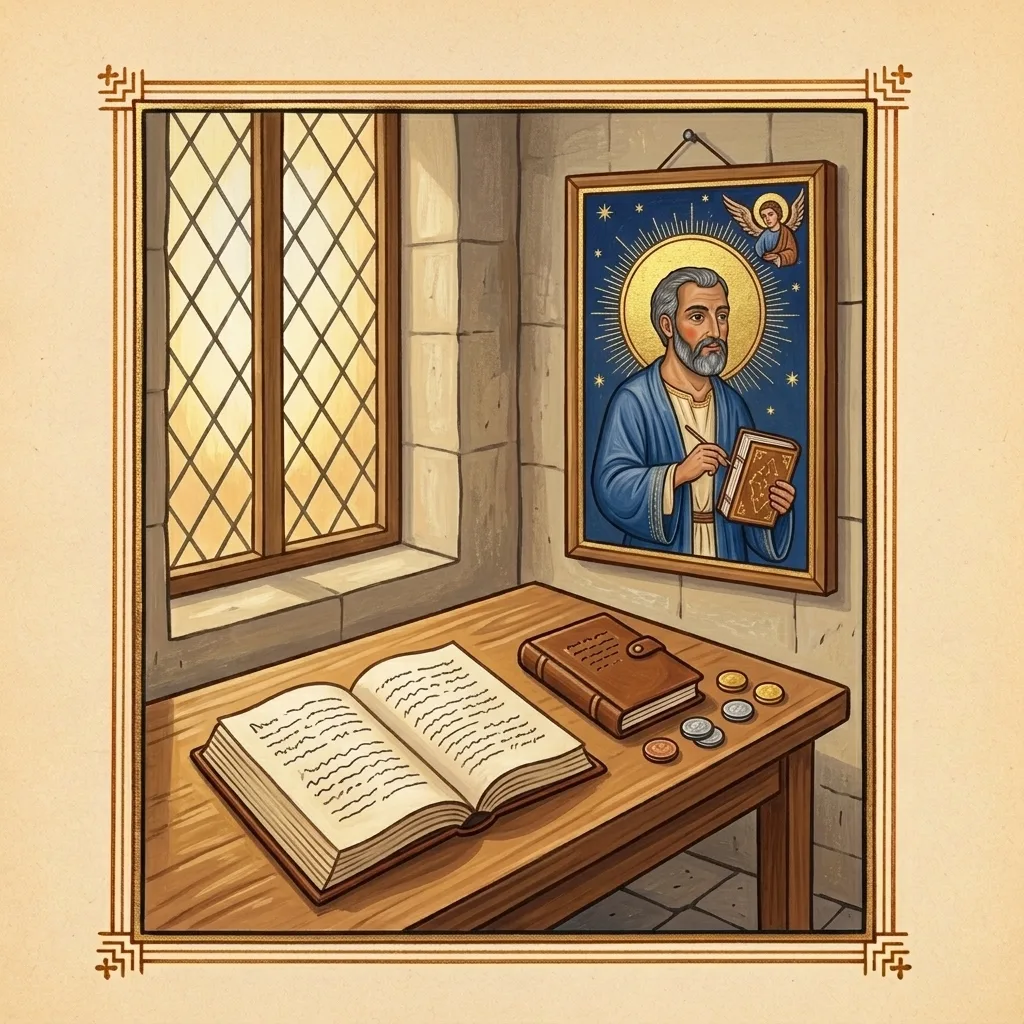
12The Church keeps his feast on September 21st. Accountants, bankers, and tax collectors claim him as patron. His Gospel opens every New Testament ever printed. The outcast at the customs table turned out to be the one who would introduce Jesus to the world.
 13
13Matthew's whole life says this: you are never too far gone to be called. Your past is not your prison. The thing you are most ashamed of may be exactly what God uses to tell the greatest story ever told. Rise. Follow. The table is already set for you.
Life & Times
Early Life
Born as Levi in Capernaum. Worked as a tax collector for Rome — a position that made him a social outcast among his fellow Jews — until Jesus called him from his customs post.
Turning Point
He immediately abandoned his booth, hosted a great feast for Jesus and fellow outcasts, and was numbered among the Twelve Apostles.
Legacy
Tradition, recorded by Irenaeus and Clement of Alexandria, says he preached to Jewish communities in Judea before traveling abroad. He is venerated as a martyr, though the place and manner of his death remain disputed.
Historical Context
Sources & historical notes
Dates and later-life details are left uncertain where the sources do not establish them. Historical summaries are secondary overviews; Scripture and Church documents are linked separately where available.
Life Locations
Words & Wisdom
O God, who with untold mercy were pleased to choose as an Apostle Saint Matthew, the tax collector, grant that, sustained by his example and intercession, we may merit to hold firm in following you. Through our Lord Jesus Christ, your Son, who lives and reigns with you in the unity of the Holy Spirit, one God, for ever and ever. Amen.
Related Saints
Connections in the communion of saints