Sanctified Life
AD 1347 — AD 1380
Birthplace: Siena, Italy
Also Known As
"Nothing great is ever achieved without much enduring."
A lay Dominican mystic, political counselor, and Doctor of the Church, Catherine of Siena persuaded Pope Gregory XI to return the papacy to Rome from Avignon after nearly seventy years in France. She dictated her theological masterpiece 'The Dialogue of Divine Providence' and left nearly 400 letters to popes, rulers, and ordinary sinners alike.

Interactive Lesson
The Illustrated Life
Catherine of Siena's story in 13 illustrated moments — tap any scene to begin there.
 1
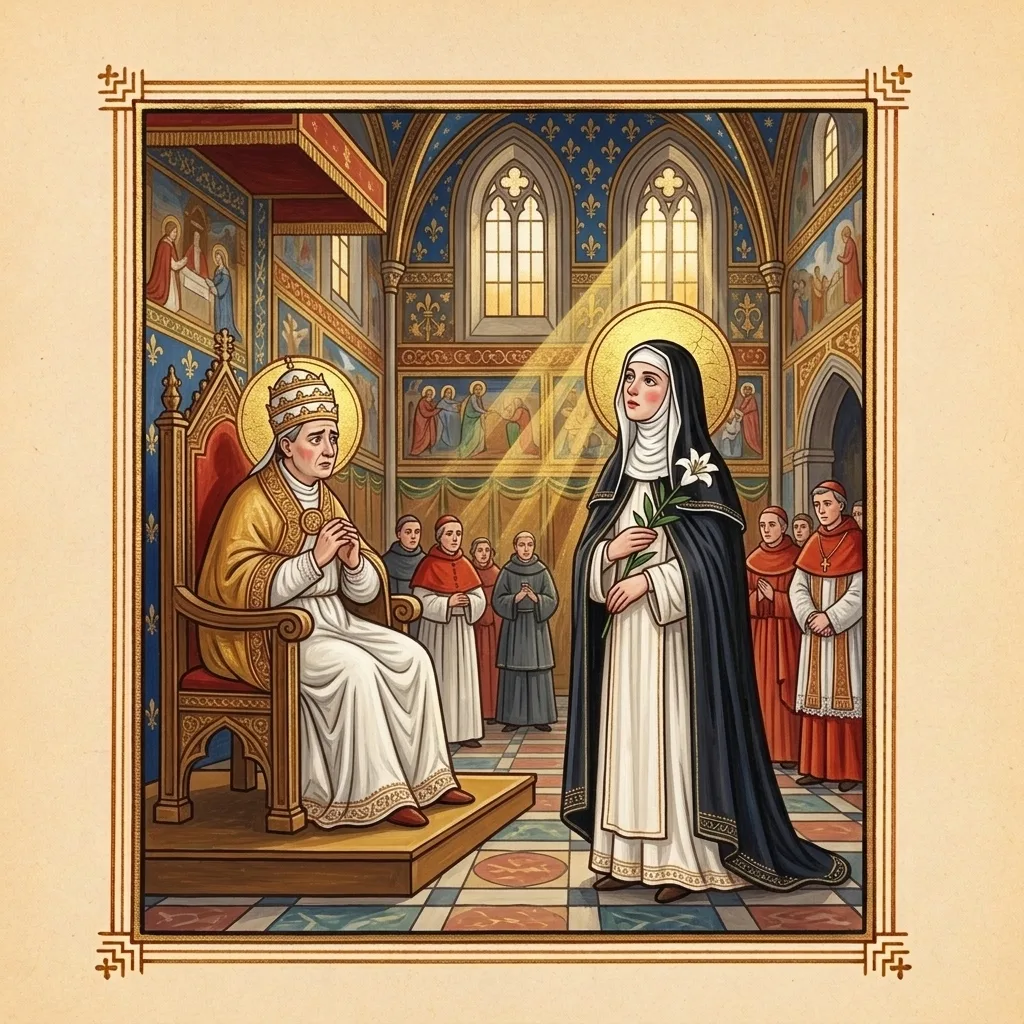
1A 29-year-old woman with no army, no title, and no formal education walked through the gates of the Papal Palace at Avignon — and changed the course of the Church. Nobody could explain why they listened to her. They just did.
 2
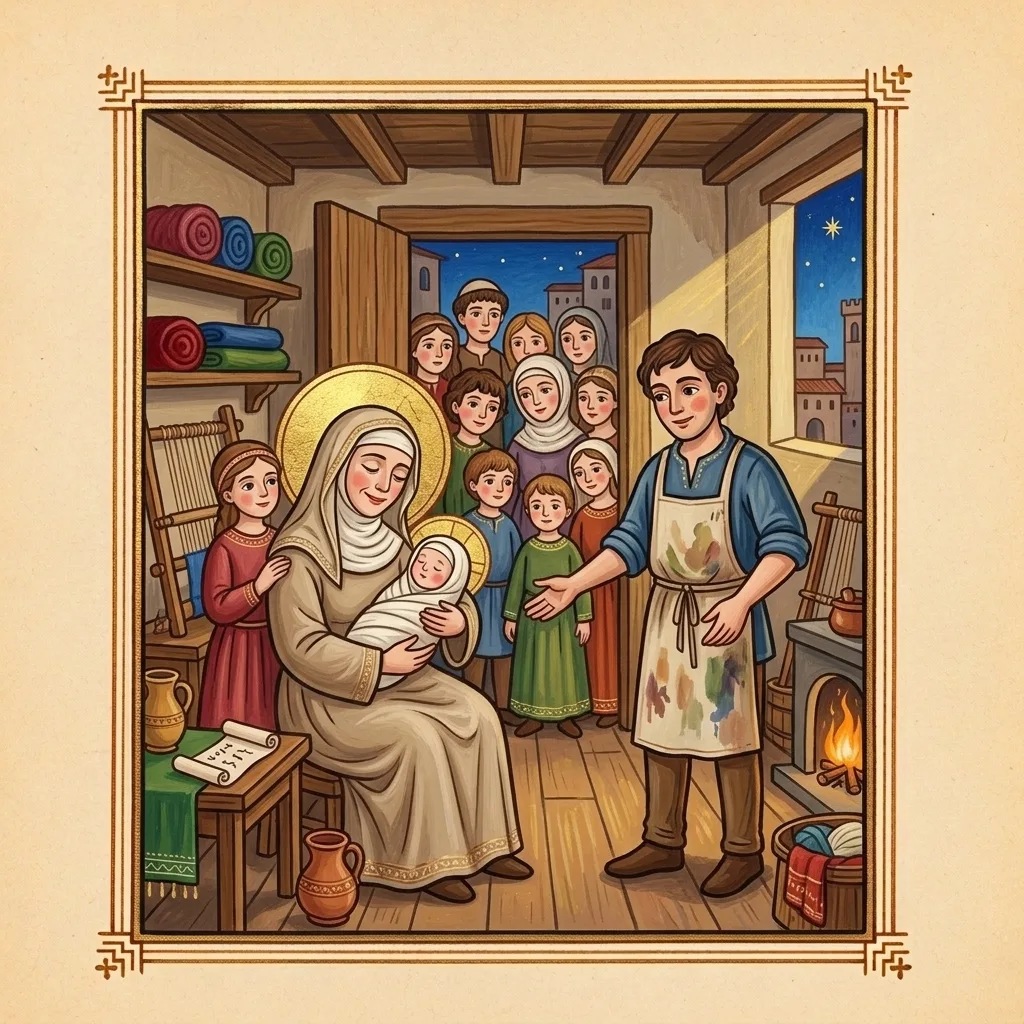
2Siena, 1347. Giacomo the wool dyer and his wife Lapa had twenty-five children. Catherine was the twenty-fourth — born into a house overflowing with noise, color, and hard work. Nobody in that crowded home expected her to be the one history would remember.
 3
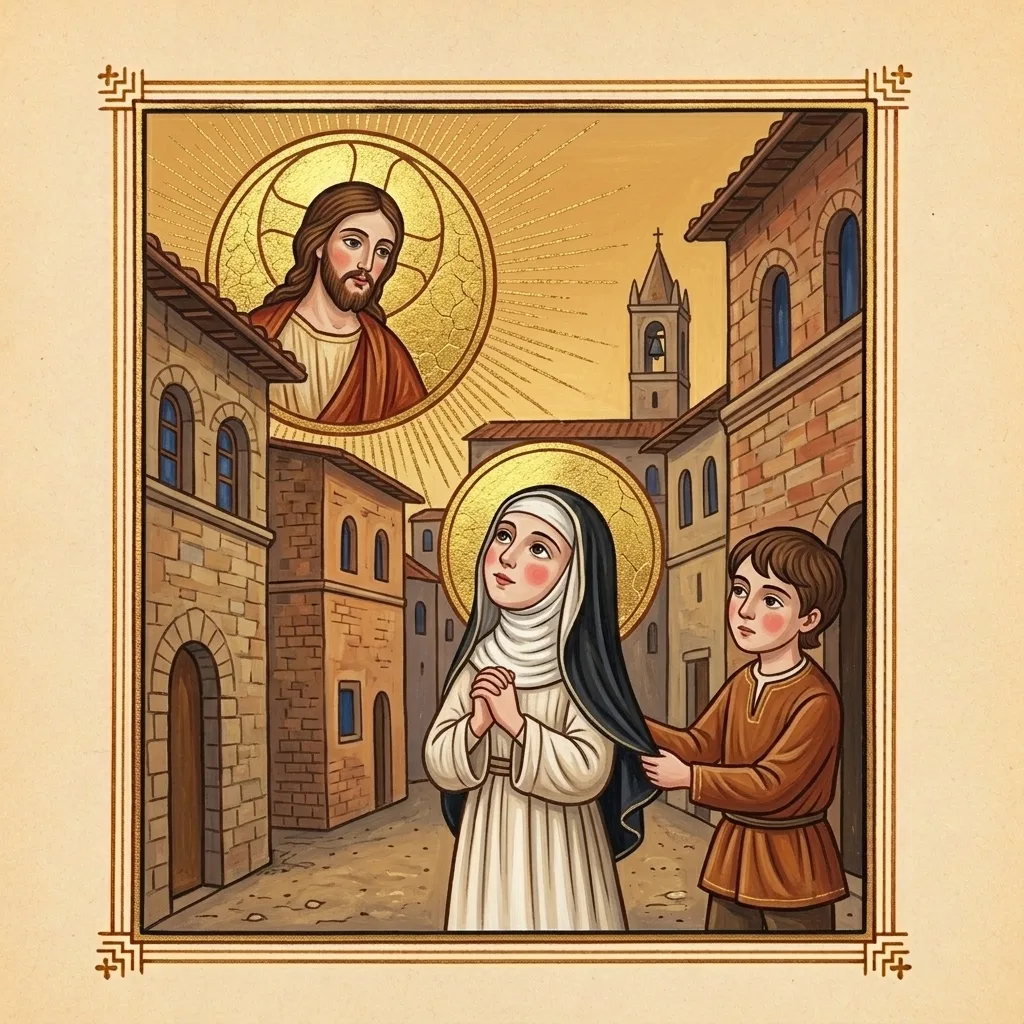
3She was six years old, walking home with her older brother through the streets of Siena, when she looked up and saw Christ hovering above the rooftops — robed in white, smiling at her with great tenderness. Her brother walked on, saw nothing. She stood frozen until the vision faded. She never forgot the face.
 4
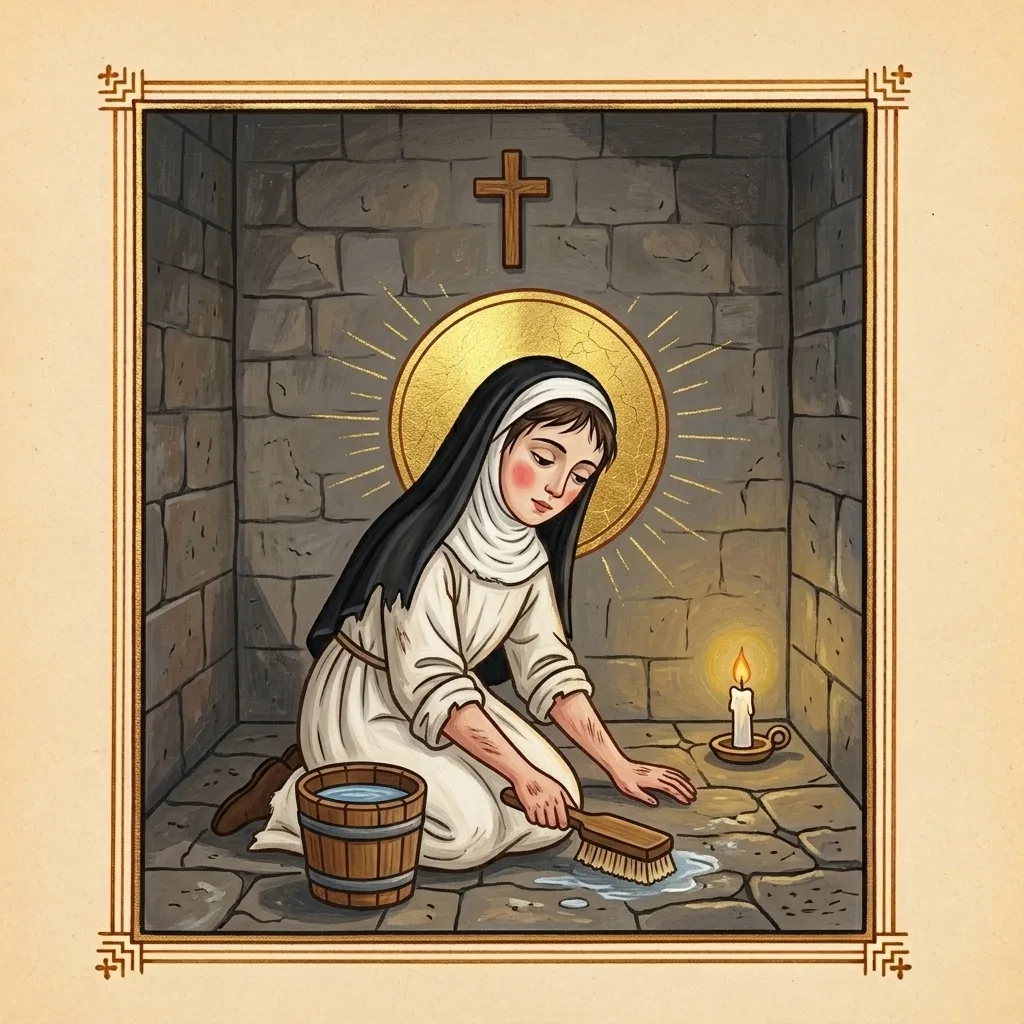
4Her parents wanted her married. At fifteen she cut off her hair in protest. They punished her with grueling household labor — scrubbing, hauling, cooking — hoping to break her resolve. Instead she turned the work into prayer and her little room into a monastery of one.
 5
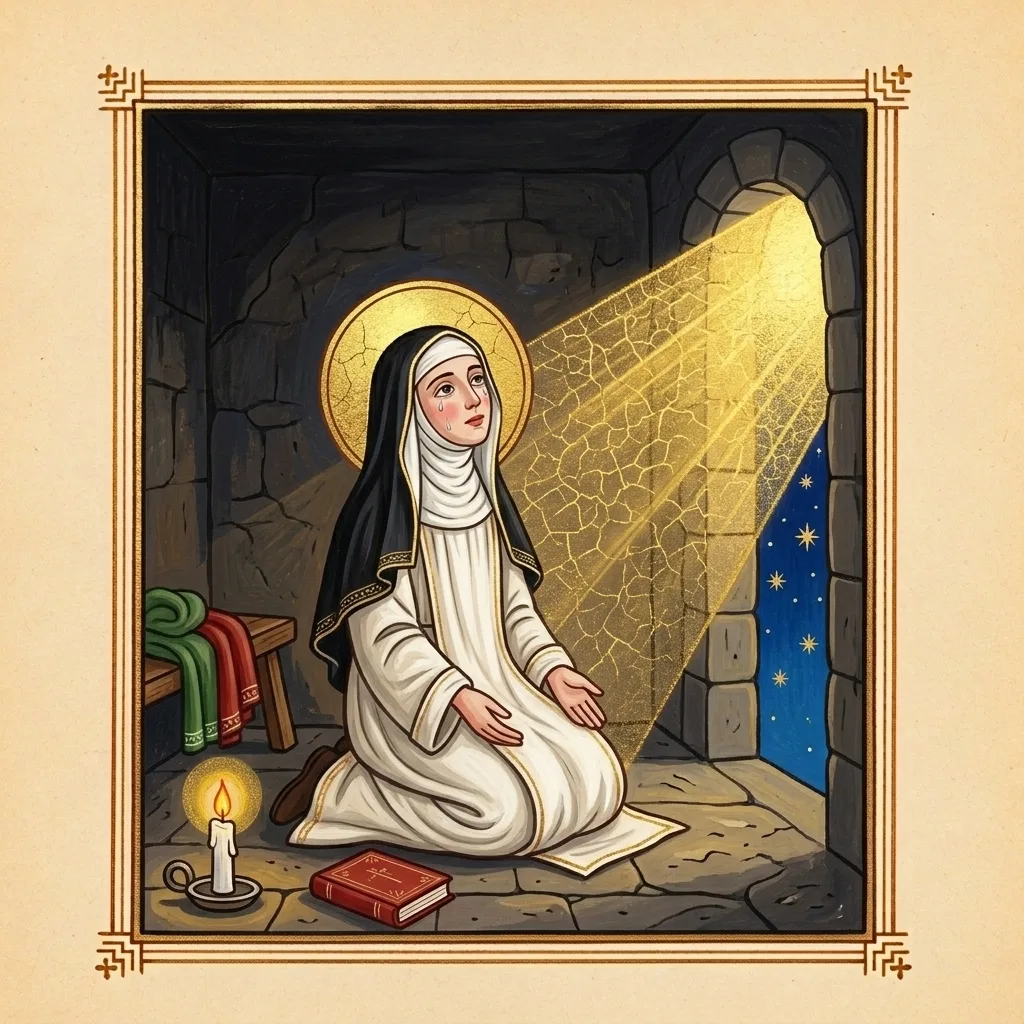
5For three years she barely left her small room — fasting, praying, wrestling with visions until her family thought she'd lost her mind. Then, she later said, God told her simply: 'Go out. The world is waiting.' She stepped outside and never looked back.
 6
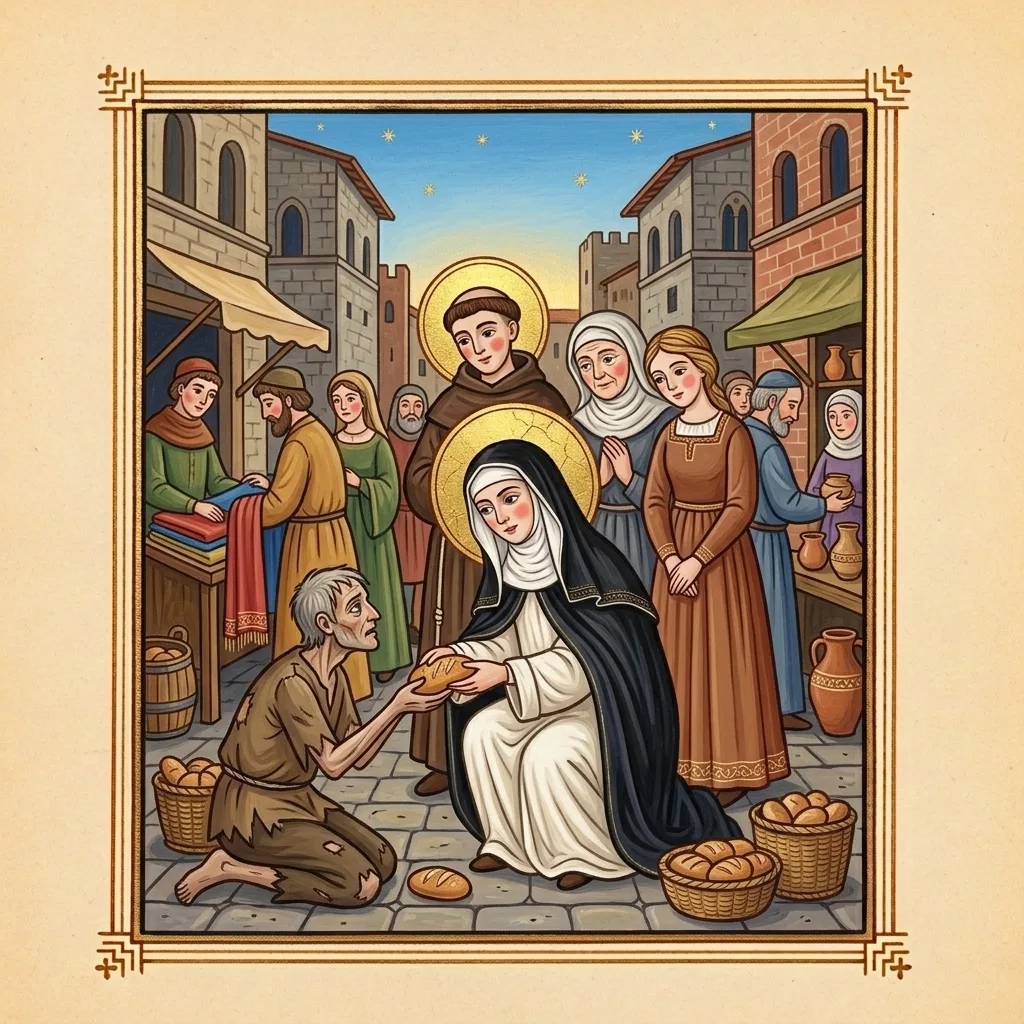
6She threw herself into the streets of Siena — nursing plague victims, feeding the hungry, talking condemned men toward mercy on the way to their executions. The people started calling her 'Mama.' She was barely twenty-four. Nobody had given her permission for any of it.
 7
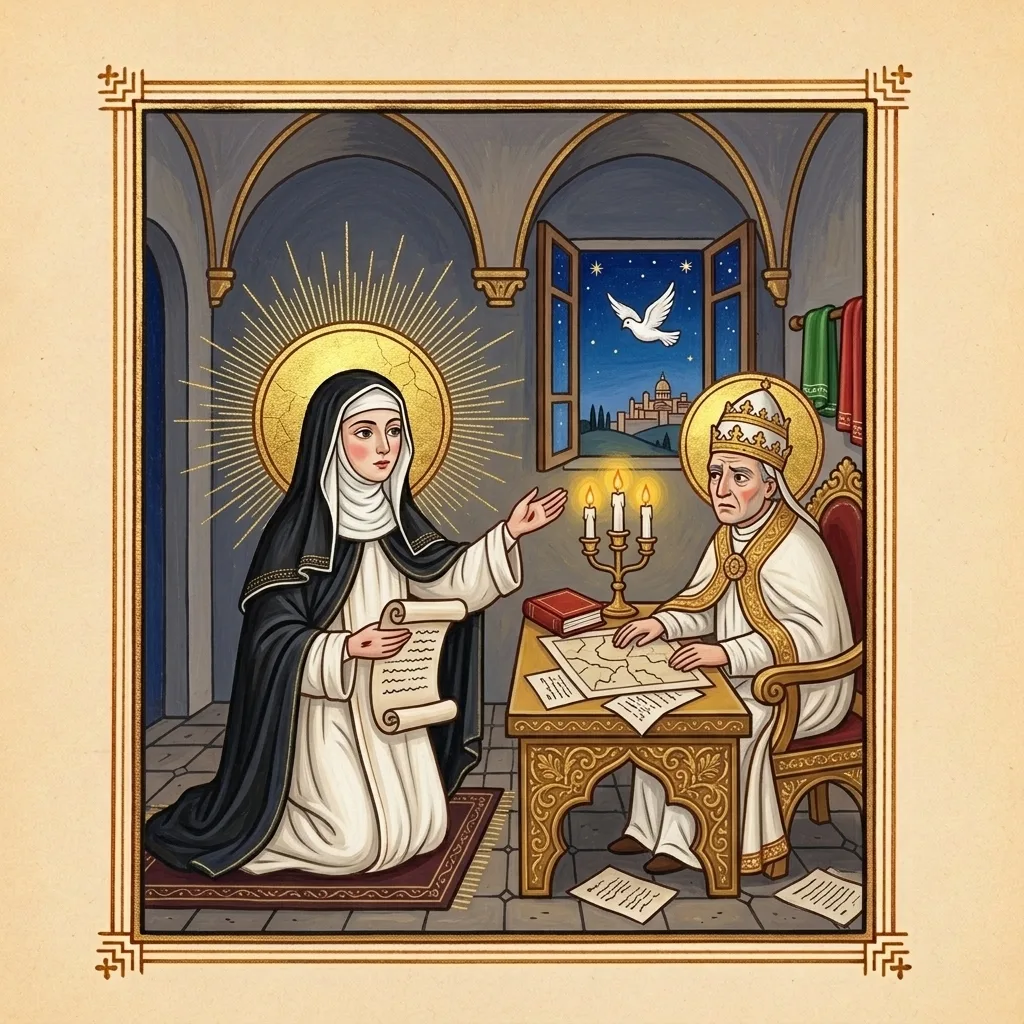
7In 1376, she traveled to Avignon and walked into the palace of Pope Gregory XI, who had not left France in years. She called him 'Papa,' told him the Church was rotting from cowardice, and pleaded with him to go back to Rome. He went. All of Europe was stunned.
 8
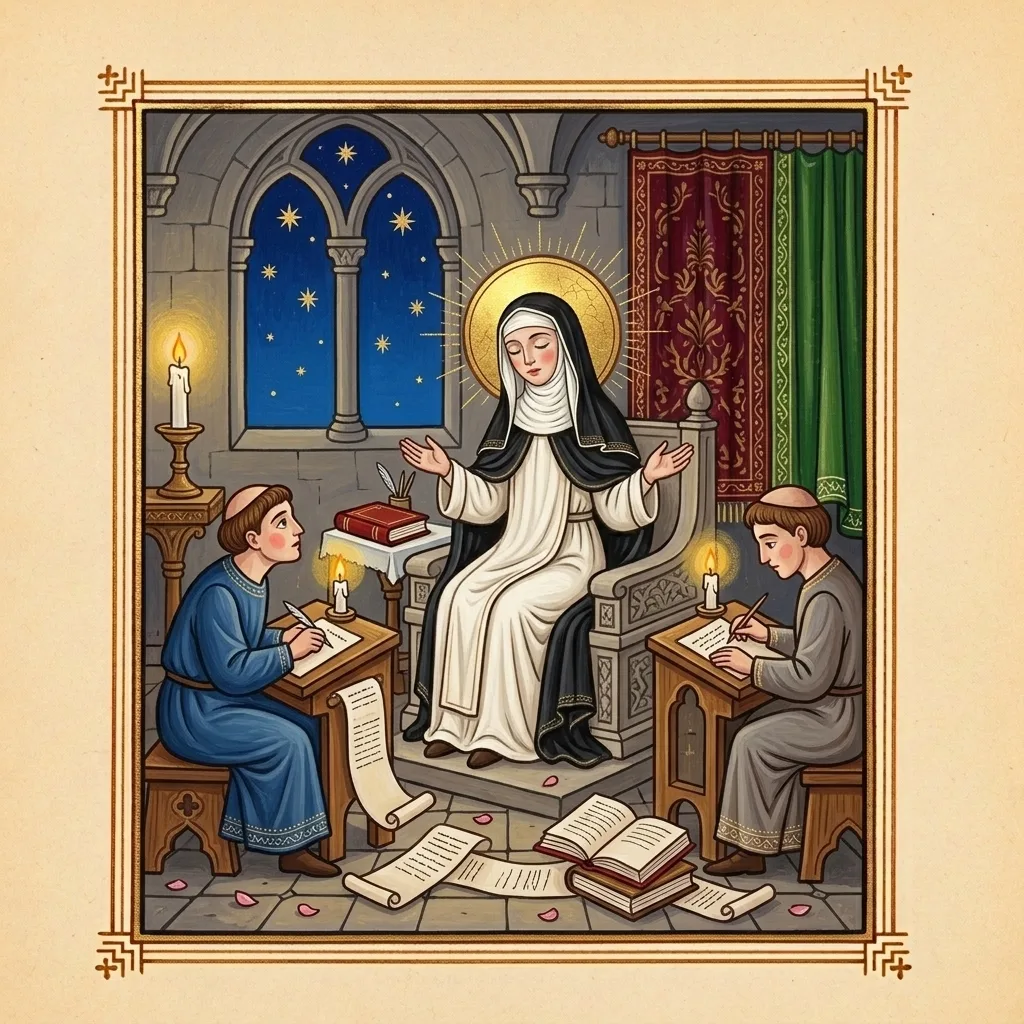
8She never learned to read as a child. Yet in 1377 she dictated her masterwork — 'The Dialogue' — while moving in and out of mystical ecstasy, secretaries scrambling to keep up. It became one of the great spiritual texts of the Church. She never once held the pen.
 9
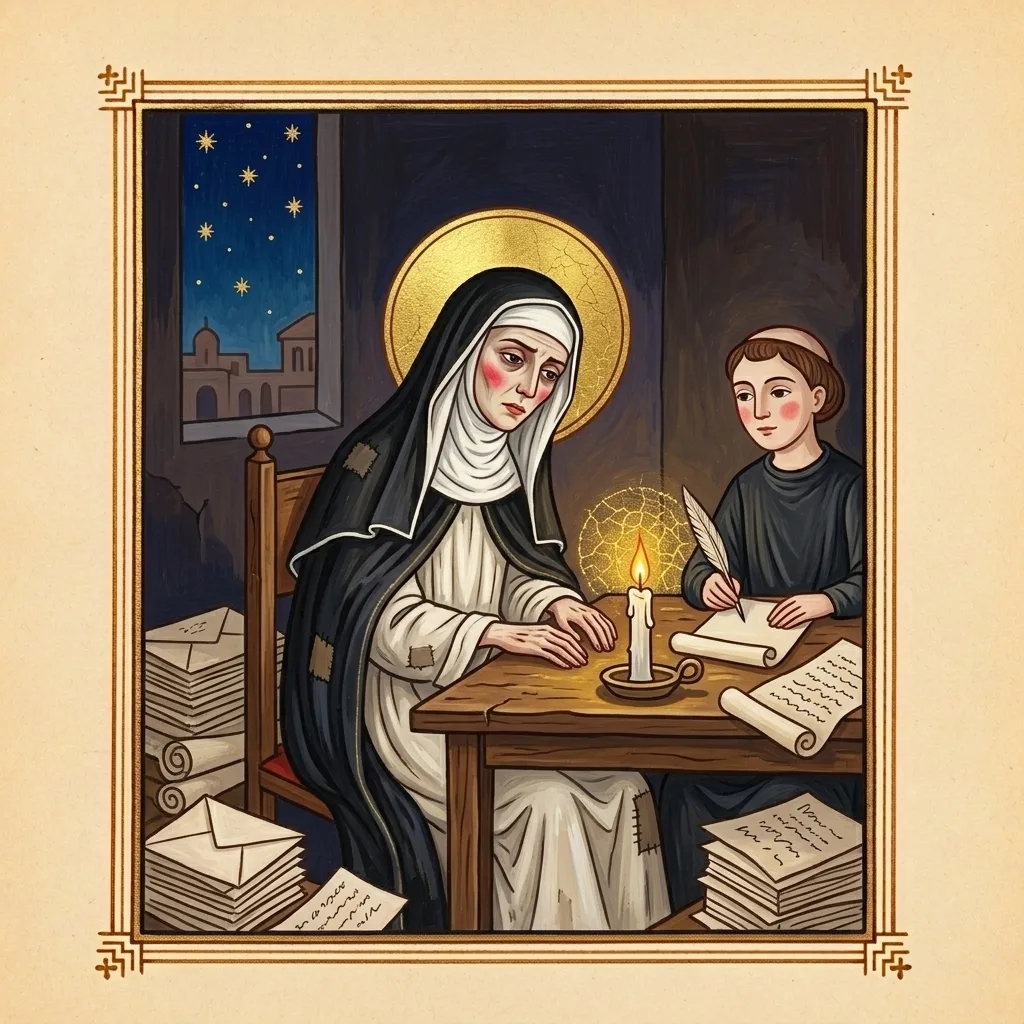
9The Great Schism split the Church into two rival papacies. Catherine wrote hundreds of letters to kings, cardinals, and popes — pleading, scolding, begging for unity. The effort consumed her. By 1380 she could no longer walk. Her body was giving out at thirty-three.
 10
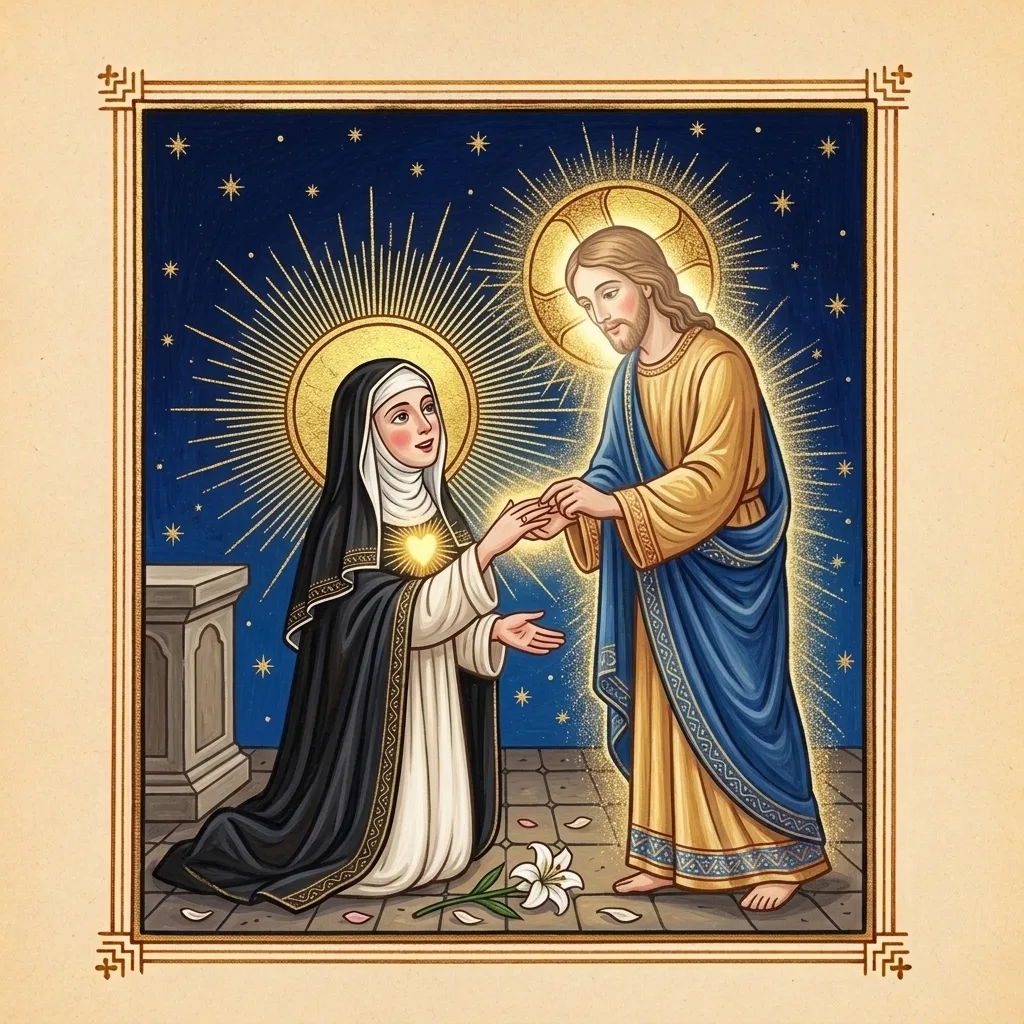
10'Be who God meant you to be,' she wrote, 'and you will set the world on fire.' She wasn't speaking in metaphor. She had spoken to popes. She had held dying men. She had seen Christ. She knew exactly what a life offered entirely to God was capable of doing.
 11
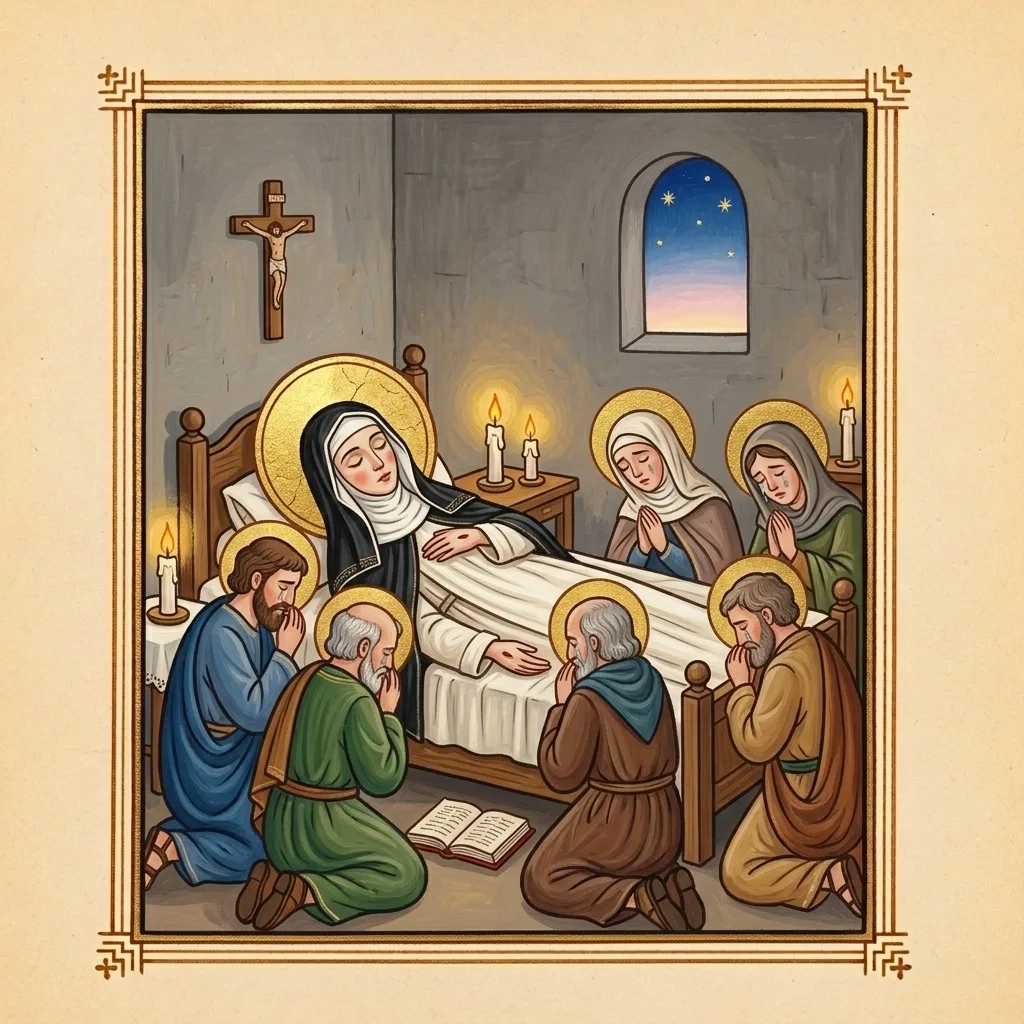
11April 29, 1380. She died at thirty-three — the same age as Christ at the cross. She had spent her last weeks in prayer for the Church, unable to eat or stand. Her final words were from the Psalms: 'Father, into Your hands I commend my spirit.'
 12
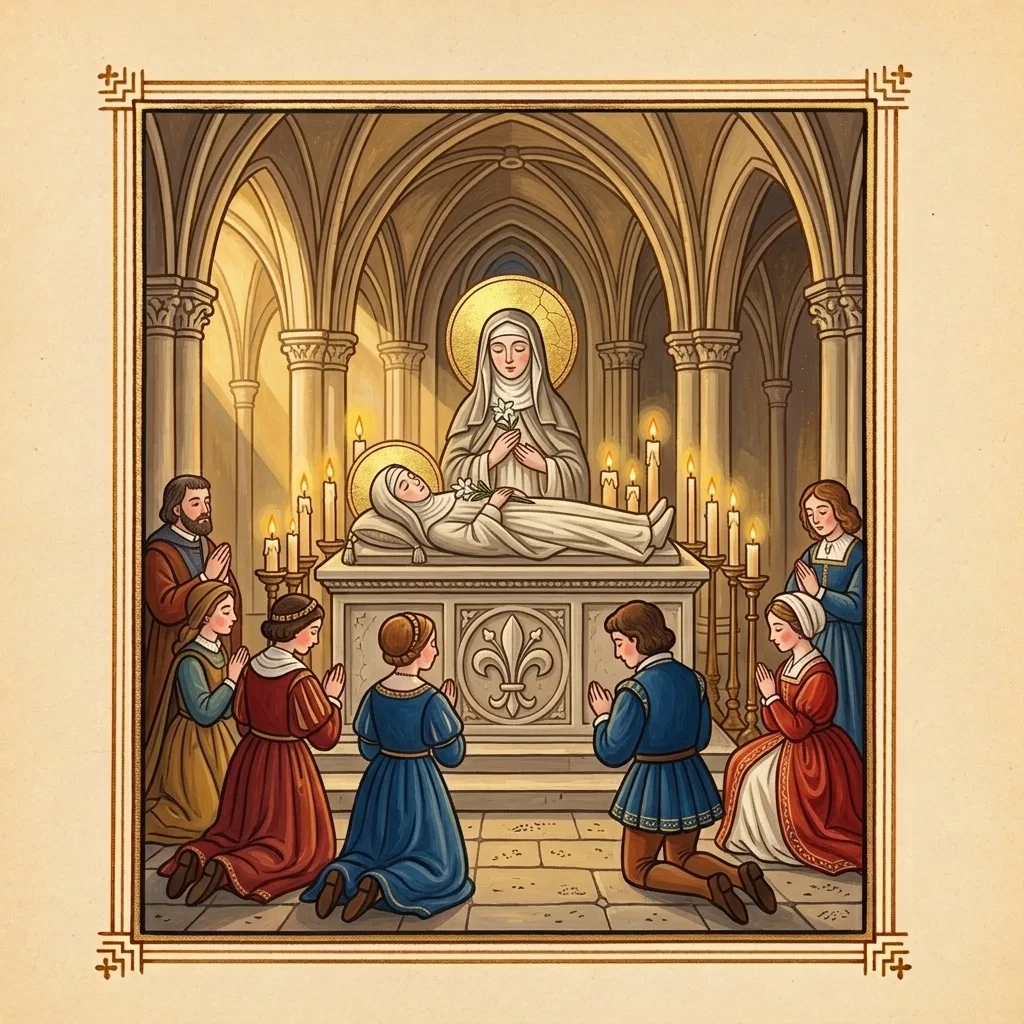
12She was canonized in 1461, declared a Doctor of the Church in 1970, and named co-patron of Europe in 1999. A woman with no formal education who shaped popes, wrote theology, and showed the whole Church what courage in love actually looks like.
 13
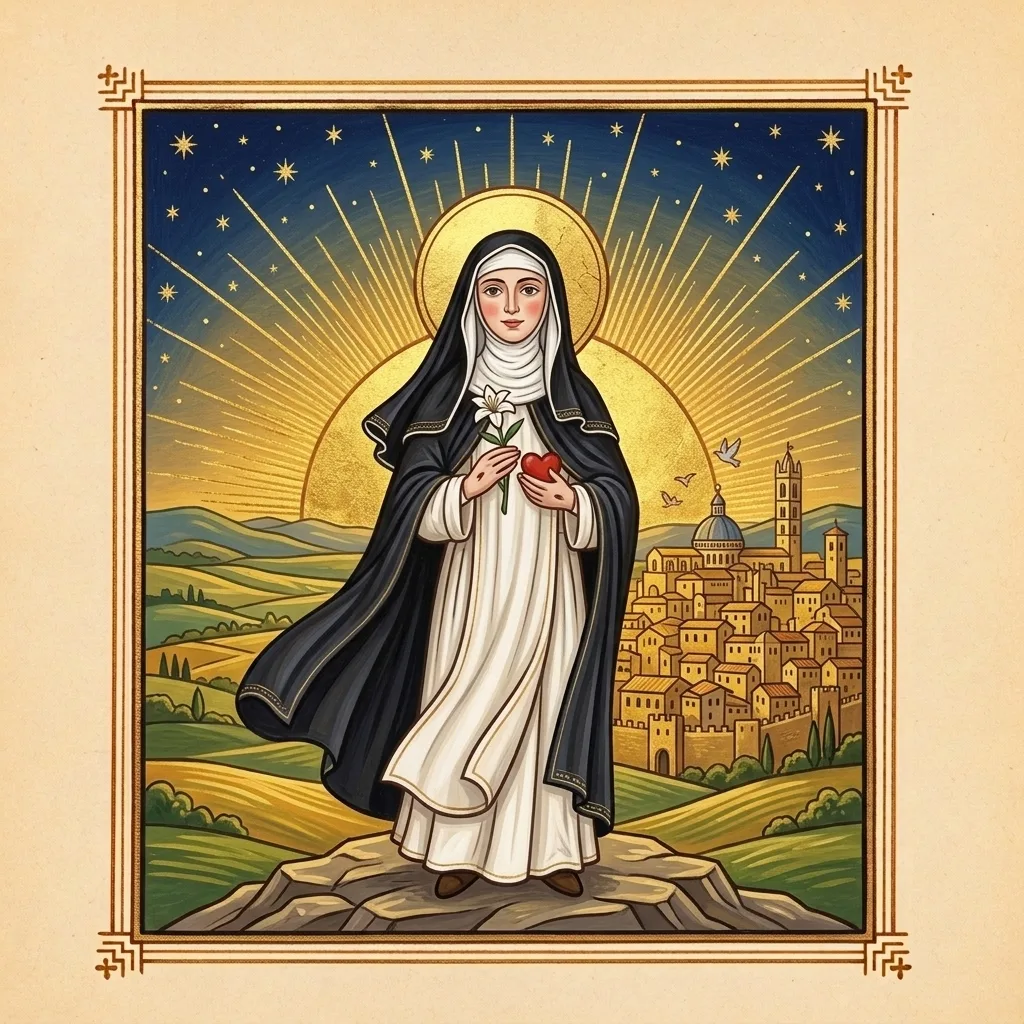
13Catherine had no platform, no credentials, no permission from anyone but God. She wrote to popes because she believed someone had to. She nursed the dying because they were dying. She had one thing to offer — and she offered it entirely. That, she would tell you, is enough.
Life & Times
Early Life
Youngest surviving child of a Sienese wool dyer; experienced her first vision at six and resolved to give her life entirely to God against her family's wishes.
Turning Point
Her mystical marriage to Christ around 1368 ended years of private solitude and launched her into public ministry among Siena's sick, poor, and powerful.
Legacy
Adviser to popes, diplomat, and letter-writer to kings and criminals; traveled to Avignon to recall Gregory XI to Rome, then supported Urban VI through the Great Western Schism until her death in Rome in 1380.
Historical Context
Sources & historical notes
Dates and later-life details are left uncertain where the sources do not establish them. Historical summaries are secondary overviews; Scripture and Church documents are linked separately where available.
Words & Wisdom
“Start being brave about everything. Drive out darkness and spread light. Don't look at your weaknesses. Realize instead that in Christ crucified you can do everything.”
“The soul that is united to God and forgets itself is like wax that has taken an impression of a seal — the wax can be used as a seal but it has no mark of its own.”
Holy Spirit, come into my heart; draw it to Thee by Thy power, O my God, and grant me charity with filial fear. Preserve me, O beautiful love, from every evil thought; warm me, inflame me with Thy dear love, and every pain will seem light to me. My Father, my sweet Lord, help me in all my actions. Jesus, love, Jesus, love. Amen.
O Eternal God, I know with complete certainty that nothing will happen to me that You have not foreseen, decreed, and ordered from all eternity. This is enough for me. I adore Your eternal and impenetrable designs; I submit myself to them with all my heart. I desire them all; I accept them all; I make a sacrifice of everything to You; I unite this sacrifice to that of Your dear Son, my Savior, beseeching You, by His infinite merits, for the patience in my troubles and perfect submission to all Your holy will. Amen.
Related Saints
Connections in the communion of saints
Teresa of Ávila
Both women Doctors of the Church whose mystical writings and reform efforts changed Church history.
Clare of Assisi
Catherine admired Clare's mysticism and courage. Both were powerful women mystics who advised popes.
Joan of Arc
Both heard divine voices and showed extraordinary courage in advising kings and challenging the powerful.