Sanctified Life
AD 1412 — AD 1431
Also Known As
"If I am not in the grace of God, may God put me there; and if I am, may God so keep me."
Joan of Arc, a peasant girl from Domrémy, claimed the voices of saints commanded her to save France. At seventeen she led French forces to lift the Siege of Orléans in nine days, then escorted the Dauphin to his coronation at Reims. Captured in 1430 and burned for heresy in 1431, she died calling out the name of Jesus.

Interactive Lesson
The Illustrated Life
Joan of Arc's story in 13 illustrated moments — tap any scene to begin there.
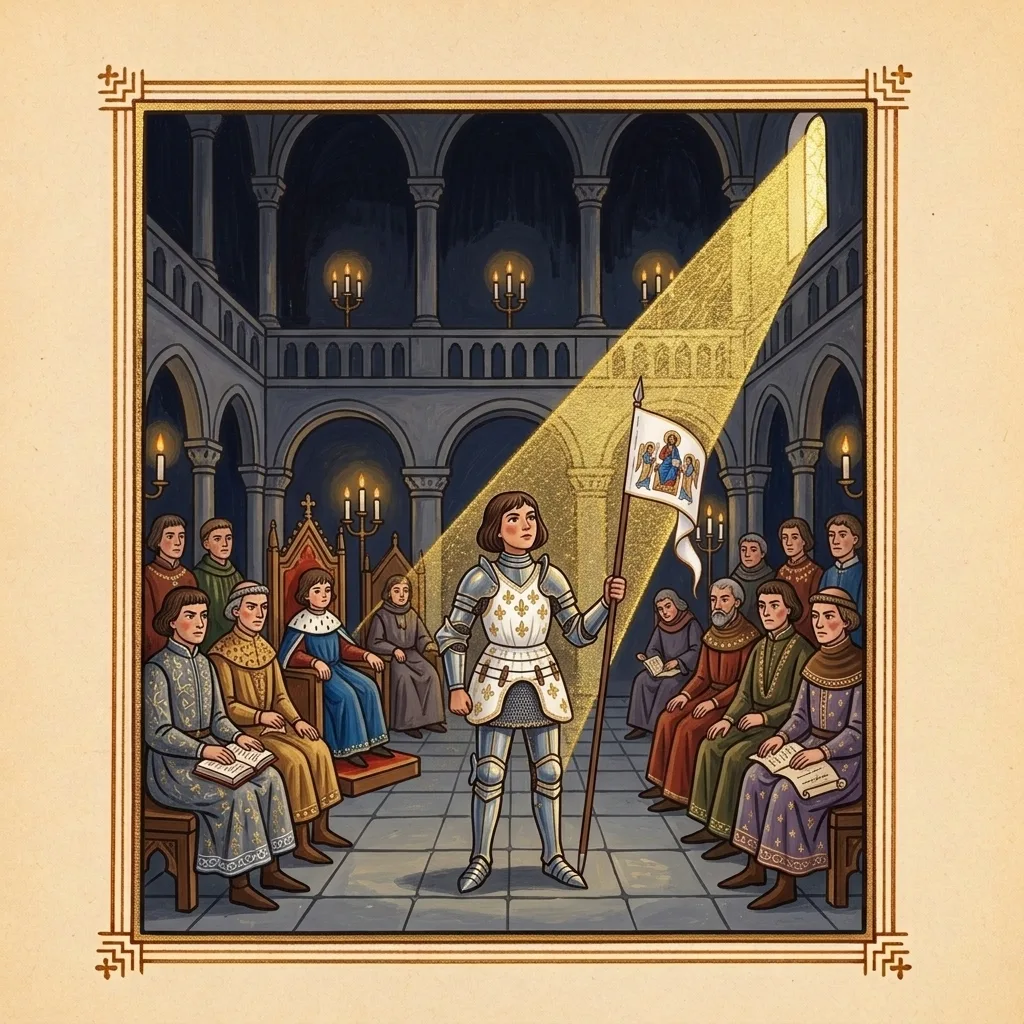 1
1A teenage girl who cannot read or write walks into the royal court of France and tells the king she has been sent by God to save his nation. She is seventeen years old. Everyone in that room should have laughed her out the door. Instead, the king gives her an army.
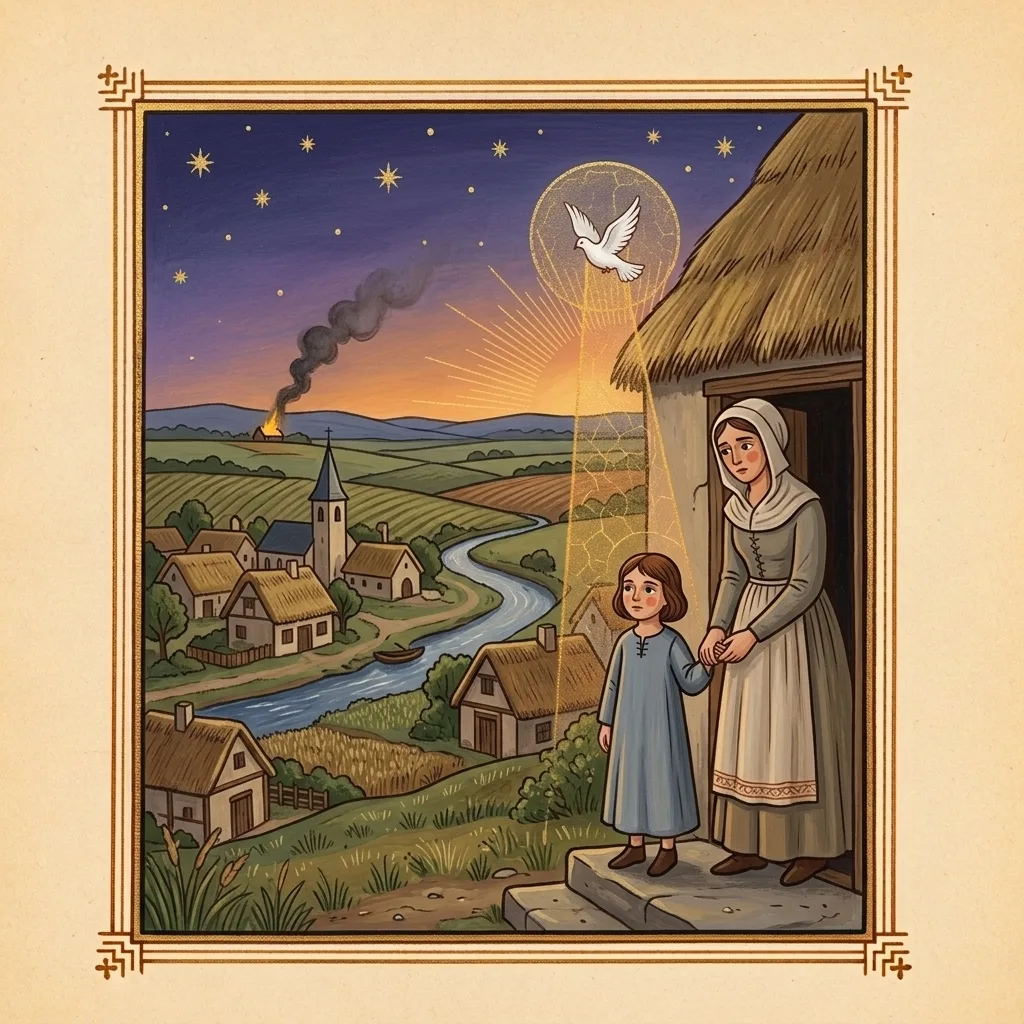 2
2She is born in 1412 in Domrémy, a tiny village in northeastern France. All around her, the Hundred Years' War burns. English soldiers occupy half the country. The rightful king is a fugitive. Joan grows up knowing that France is dying — and that God has not abandoned it yet.
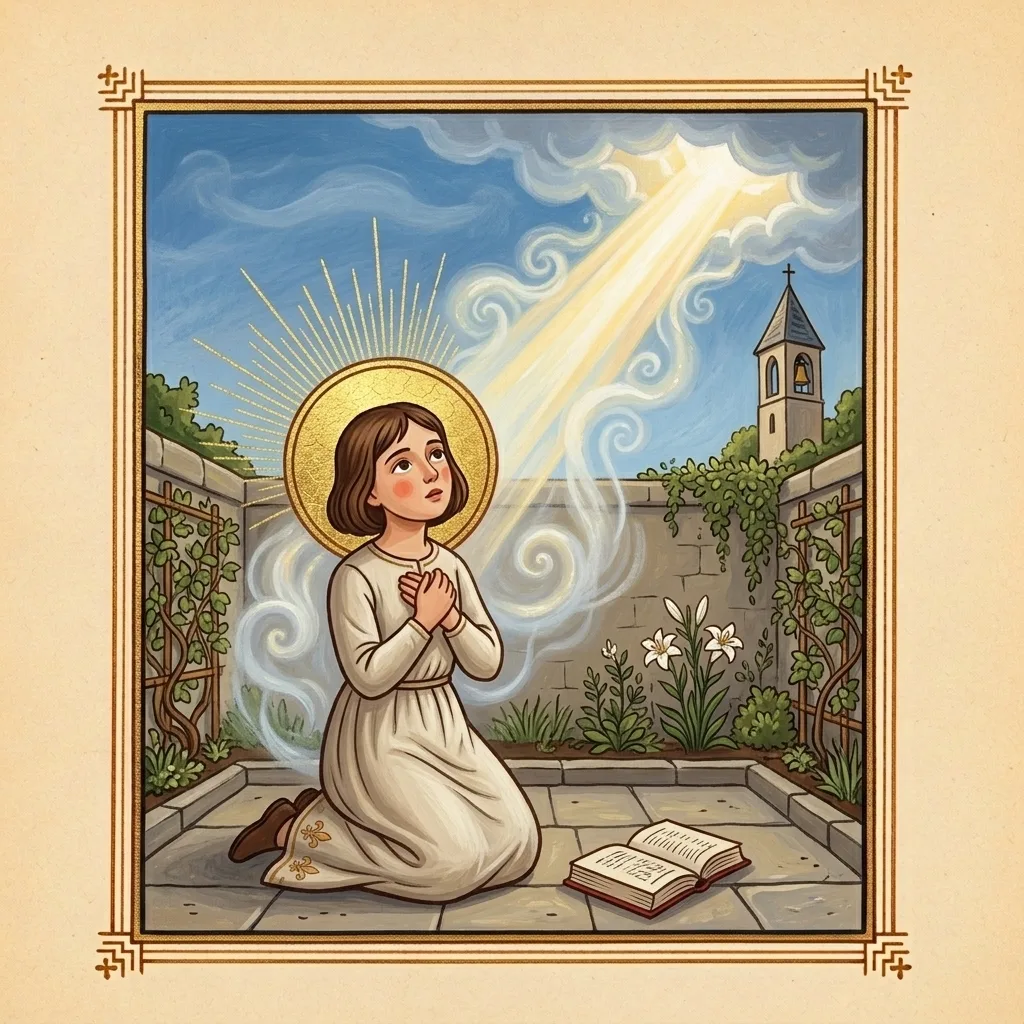 3
3At thirteen, Joan is praying in her father's garden when something extraordinary happens. A blaze of light. Voices — not whispers, but real, commanding voices. St. Michael the Archangel tells her she must save France. She is terrified. Then she kneels and listens.
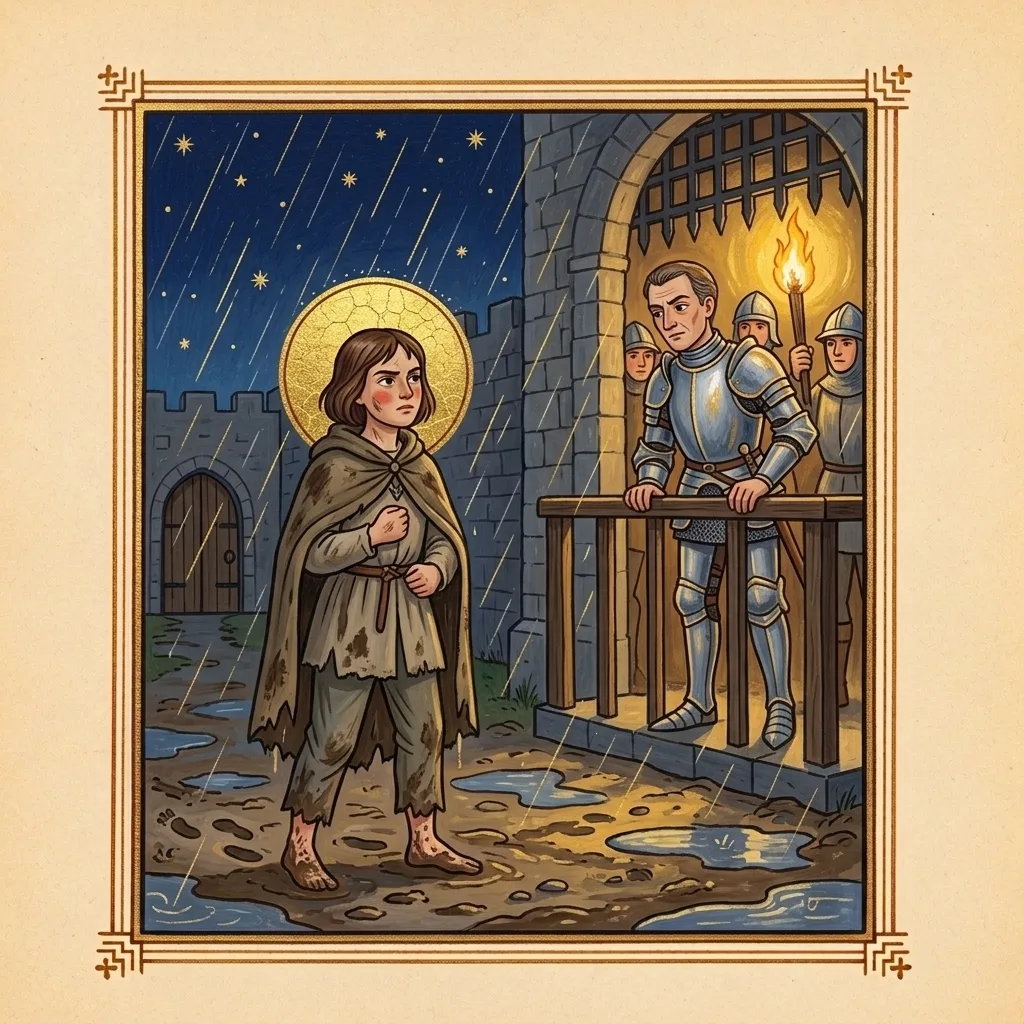 4
4The voices are daily now: find the king, dress as a soldier, cross enemy lines. Joan is a peasant girl with no horse, no army, no power. She is turned away twice. She goes back a third time — and does not leave without his help.
 5
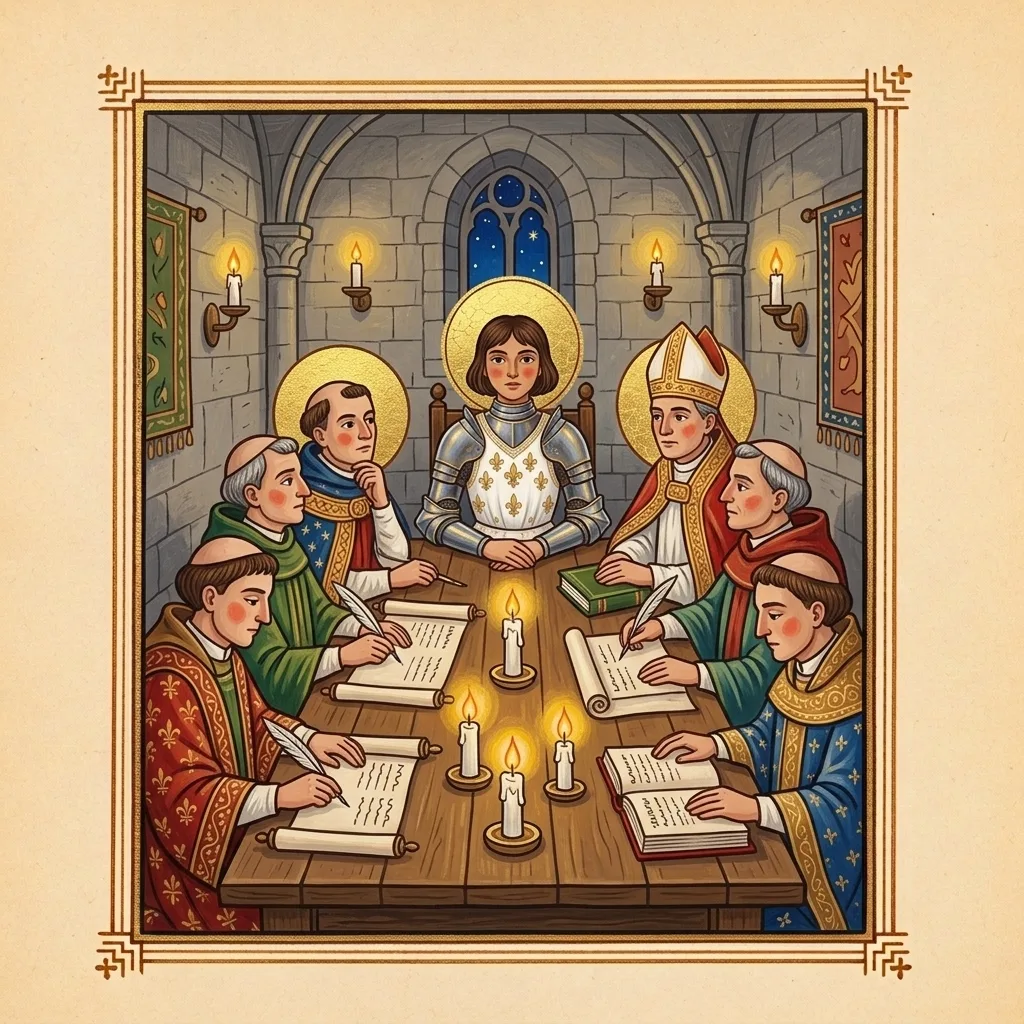
5The royal court is full of men who think she is a fraud or a lunatic. Theologians grill her for weeks. She outsmarts them all — not with learning, but with the logic of someone who simply knows what she has seen. 'I was born to do this.'
 6
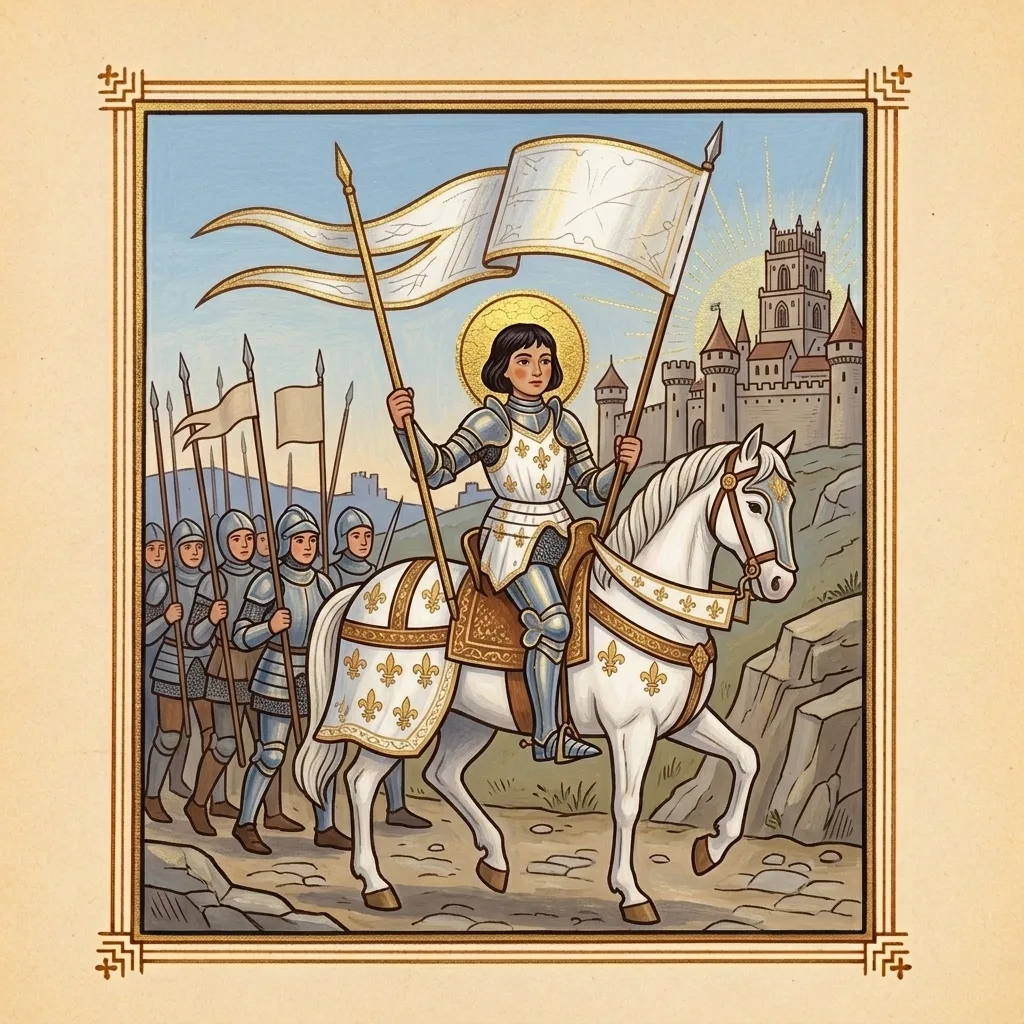
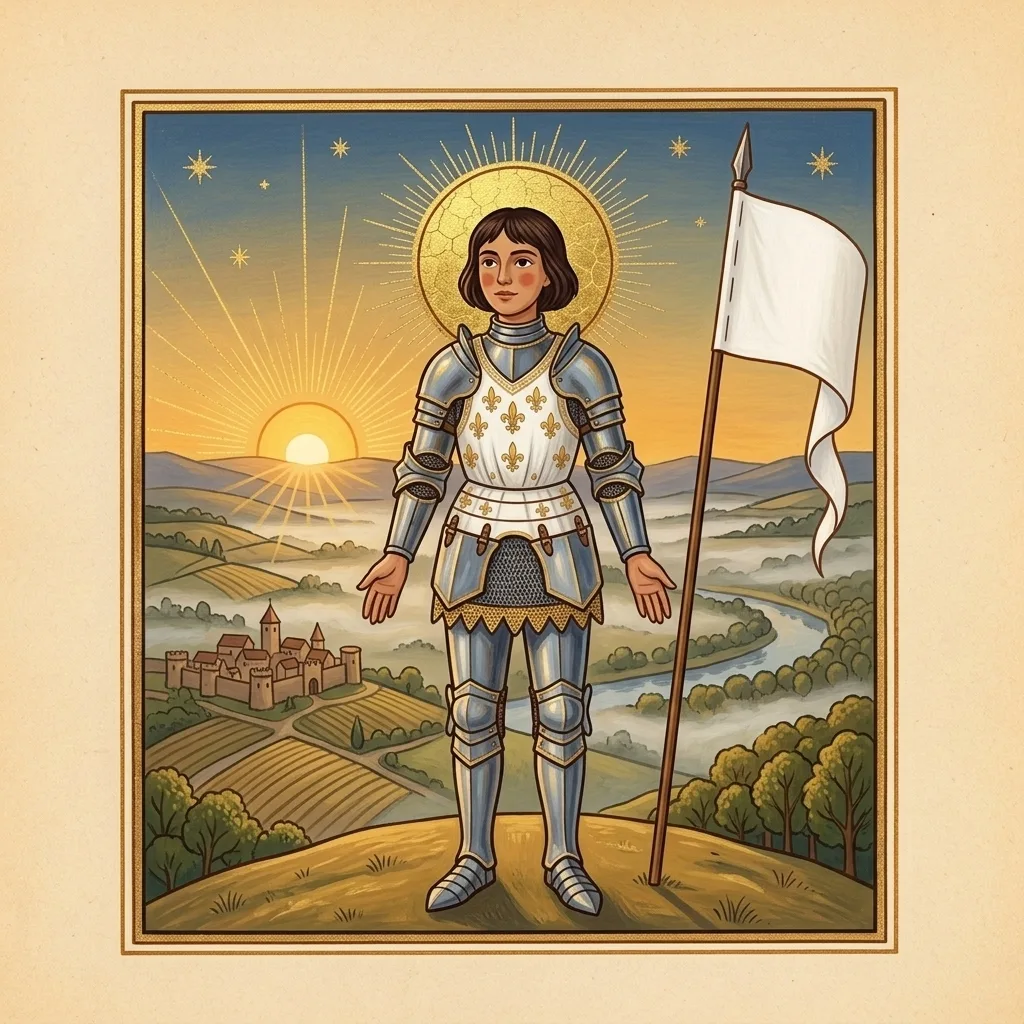
6She rides out in white armor carrying a standard painted with the name of Jesus. She writes letters to the English commanders demanding they leave France — in God's name. They laugh at her letters. Then her army arrives at Orléans, and nobody is laughing anymore.
 7
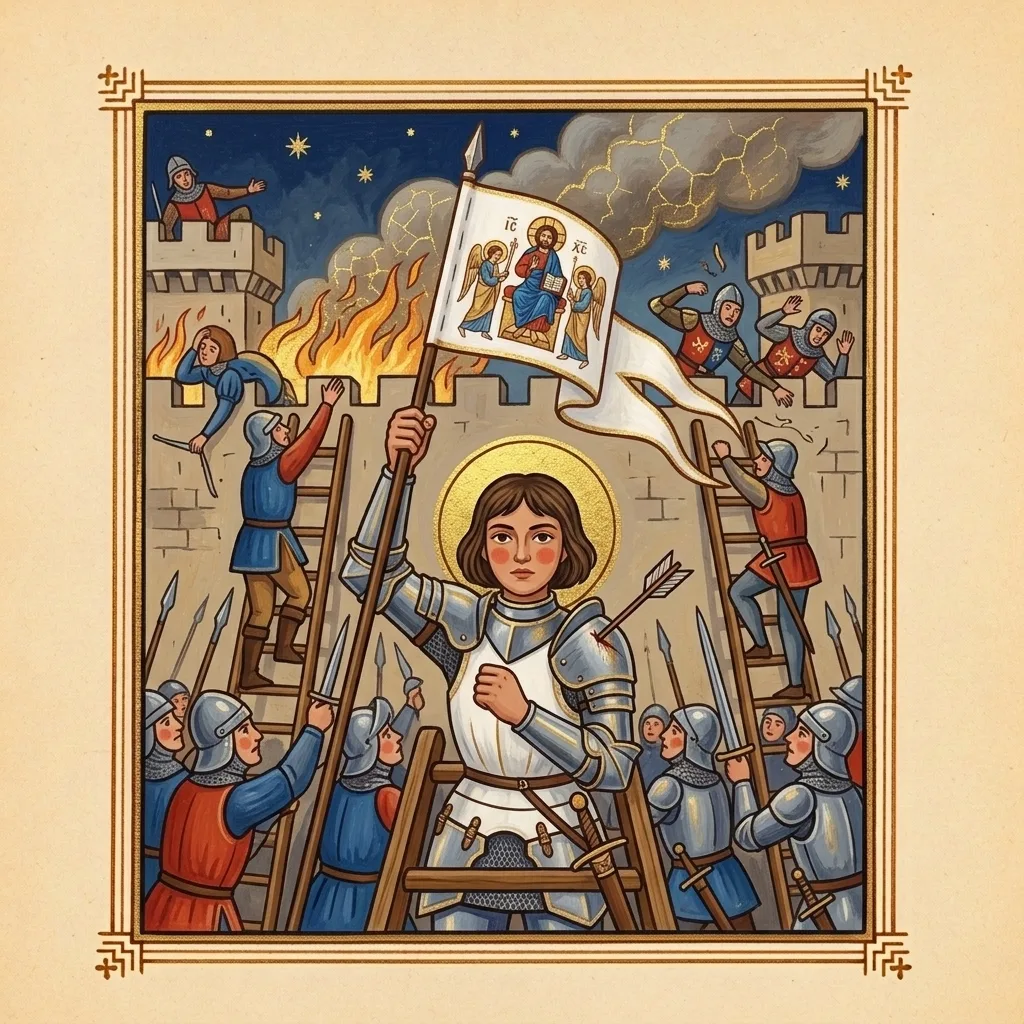
7The Siege of Orléans had lasted months. French commanders had given up hope of breaking it. Joan arrives and breaks it in nine days. She is struck by an arrow through the shoulder — and returns to the battlefield the same afternoon. When the English see her banner rise again, they retreat. Orléans is free.
 8
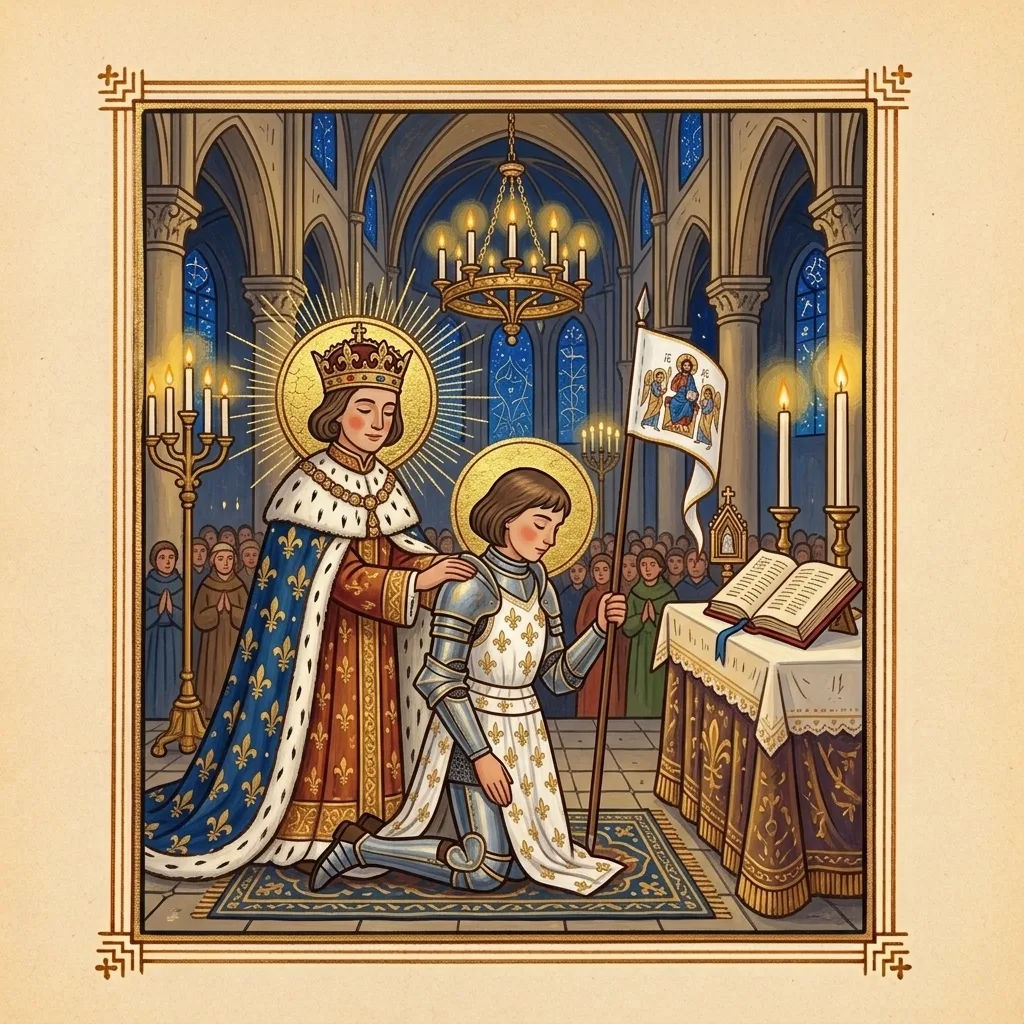
8Here is the part that surprises people: after her greatest military victories, Joan wants to go home. She tells the king she has done what she was sent to do. The king asks her to keep fighting. She obeys — and it is this obedience that leads her into the campaigns that will eventually cost her everything.
 9
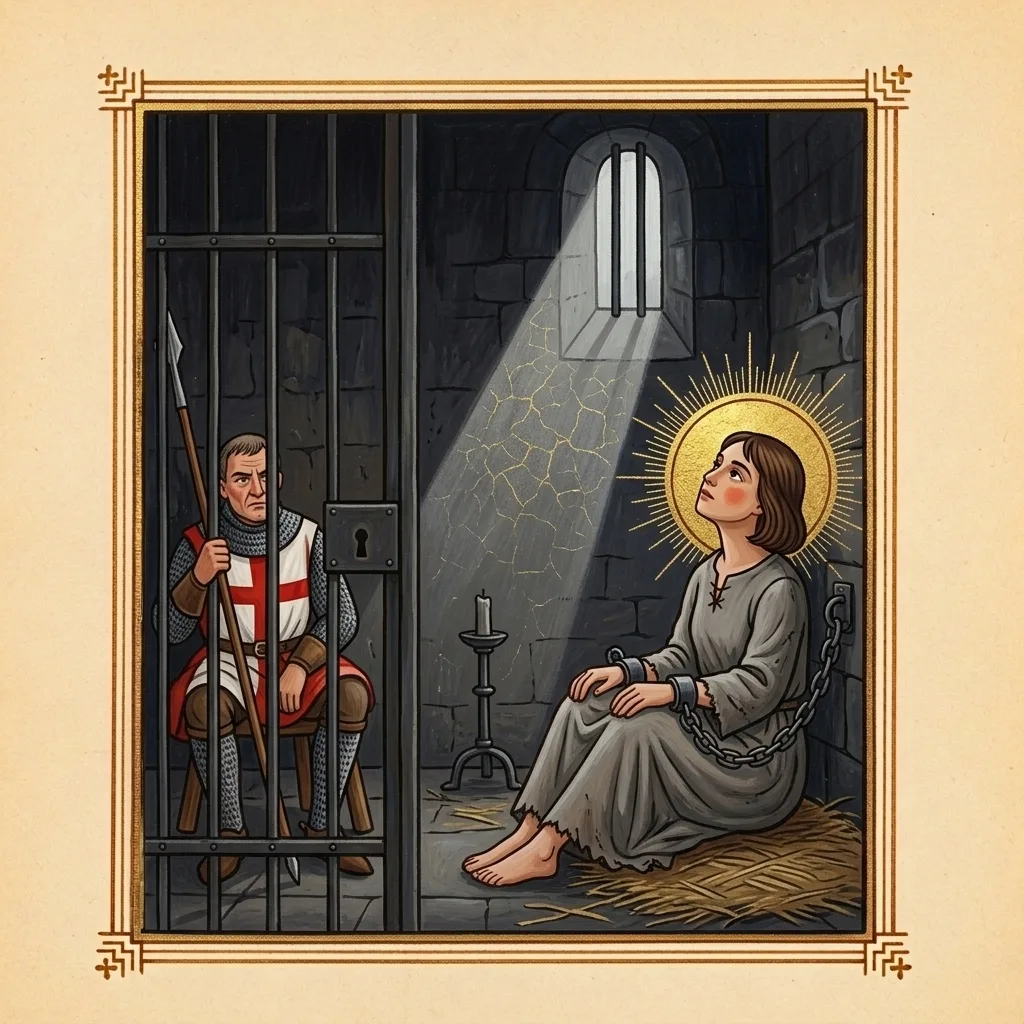
9In May 1430, Joan is captured by Burgundian soldiers at Compiègne. She is sold to the English. The king she crowned sends no ransom. She spends months in chains in a stone prison cell, tried by a court determined to destroy her. She is alone in a way that is almost impossible to imagine.
 10
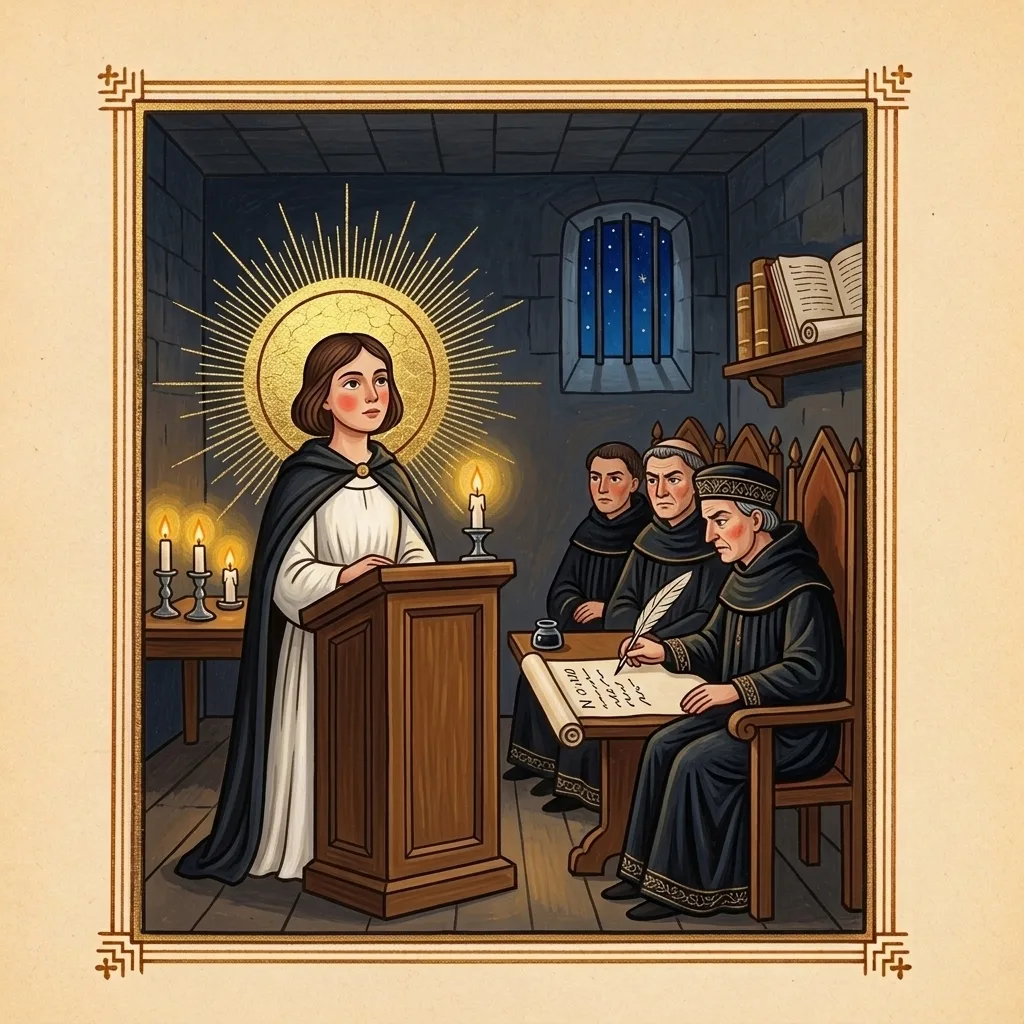
10Her interrogators set a trap: are you in God's grace? No one can know that for certain — and any answer condemns her. She doesn't blink: 'If I am not, may God put me there. If I am, may God keep me there.' The room goes silent.
 11
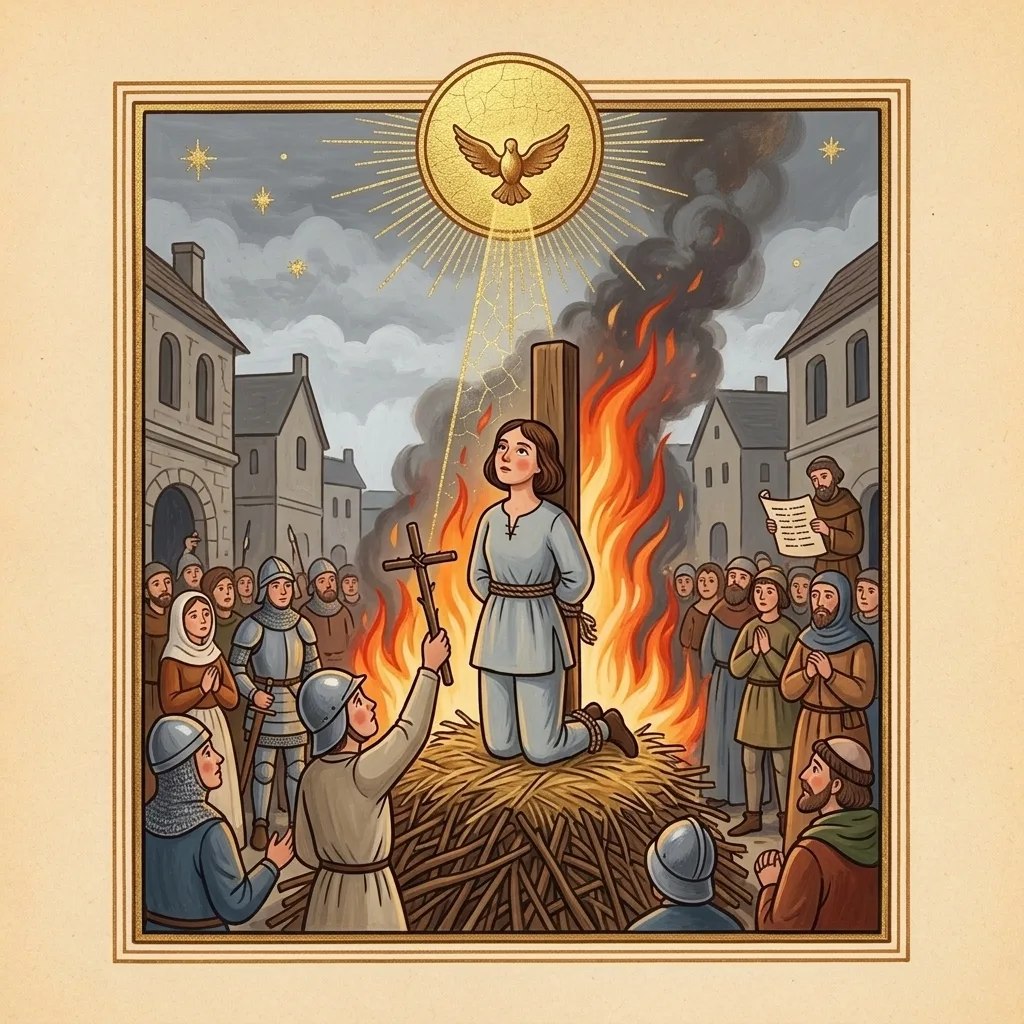
11On May 30, 1431, Joan of Arc is burned at the stake in the marketplace of Rouen. She asks for a cross. A soldier makes one from two sticks and holds it up for her to see. She holds her gaze on it through the smoke and the flames. Her last word — the only word witnesses agree on — is 'Jesus.'
 12
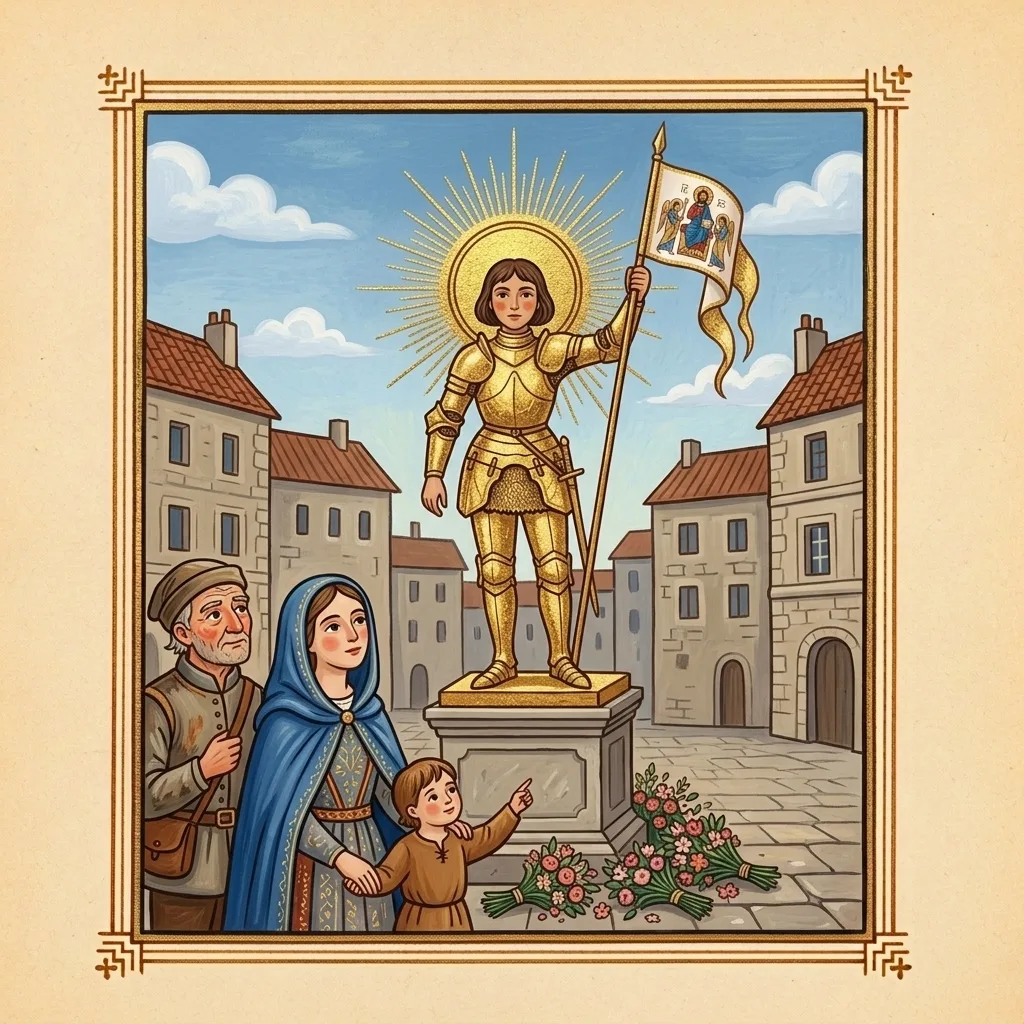
12Twenty-five years later, the Pope orders a new trial. Every charge is overturned. She is declared a martyr. In 1920, she is canonized. The girl they burned as a heretic is now a saint of the Church she died for. Her trial transcripts — the closest thing we have to her actual voice — survive to this day, word for word.
 13
13Joan was a teenager from a village no one had heard of, facing the most powerful army in Europe — and she said yes anyway. Across six centuries, she hands us this: courage is not the absence of fear. It is deciding something matters more.
Life & Times
Early Life
Born c. 1412 in Domrémy. A pious peasant girl who from around age thirteen reported hearing the voices of Saint Michael, Saint Margaret, and Saint Catherine calling her to save France.
Turning Point
In 1429 she persuaded Charles VII to send her to Orléans at the head of a relief army. She lifted the months-long siege in nine days, then escorted the Dauphin to his coronation at Reims on July 17.
Legacy
After failed campaigns at Paris and La Charité, she was captured at Compiègne in May 1430. Tried for heresy by a pro-English ecclesiastical court in Rouen, she was burned at the stake on May 30, 1431, aged about nineteen.
Historical Context
Sources & historical notes
Dates and later-life details are left uncertain where the sources do not establish them. Historical summaries are secondary overviews; Scripture and Church documents are linked separately where available.
The Saint's Path
Words & Wisdom
“I do not fear the soldiers, for my road is made open to me; it was for this that I was born.”
In the face of your enemies, in the face of harassment, ridicule, and doubt, you held firm in your faith. Even in your abandonment, alone and without friends, you held firm in your faith. Even as you faced your own mortality, you held firm in your faith. I pray that I may be as bold in my beliefs as you, St. Joan. I ask that you ride alongside me in my own battles. Help me be mindful that what is worthwhile can be won when I persist. Help me hold firm in my faith. Help me believe in my ability to act well and wisely. Amen.
Related Saints
Connections in the communion of saints
Catherine of Siena
Both heard divine voices and showed extraordinary courage in advising kings and challenging the powerful.
Thérèse of Lisieux
Thérèse had a special devotion to Joan. Both are co-patrons of France.
Thérèse of Lisieux
Thérèse had a special devotion to Joan. Both are co-patrons of France.