Sanctified Life
AD 1905 — AD 1938
Birthplace: Glogowiec, Poland
Also Known As
"Jesus, I trust in You. [The inscription Christ asked her to place on the Divine Mercy image, recorded in her Diary, entry 47]"
A Polish nun with only three years of formal education, Helena Kowalska entered the Congregation of the Sisters of Our Lady of Mercy in 1925 and became Sister Maria Faustina. Beginning in 1931 she recorded visions of Christ in her Diary, which gave the Church the Divine Mercy image, the Chaplet, and the feast day. Beatified in 1993 and canonized by John Paul II on April 30, 2000, she was the first saint he named of the new millennium.

Interactive Lesson
The Illustrated Life
Faustina Kowalska's story in 13 illustrated moments — tap any scene to begin there.
 1
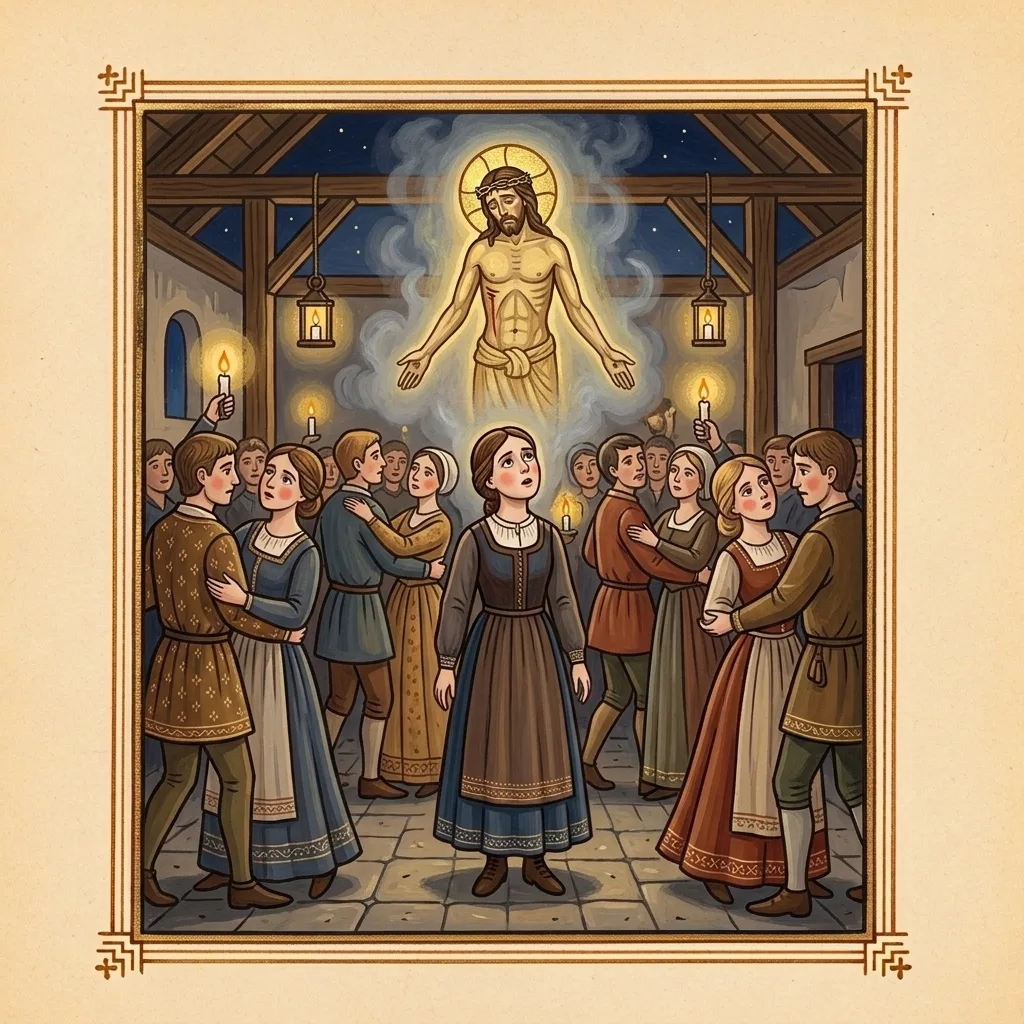
1She was a poor Polish farmer's daughter who left school at fourteen to work as a housemaid. She never traveled beyond Poland. Yet the words she wrote in a battered notebook would eventually reach a billion hearts. It started at a dance in Łódź — with a vision she couldn't ignore.
 2
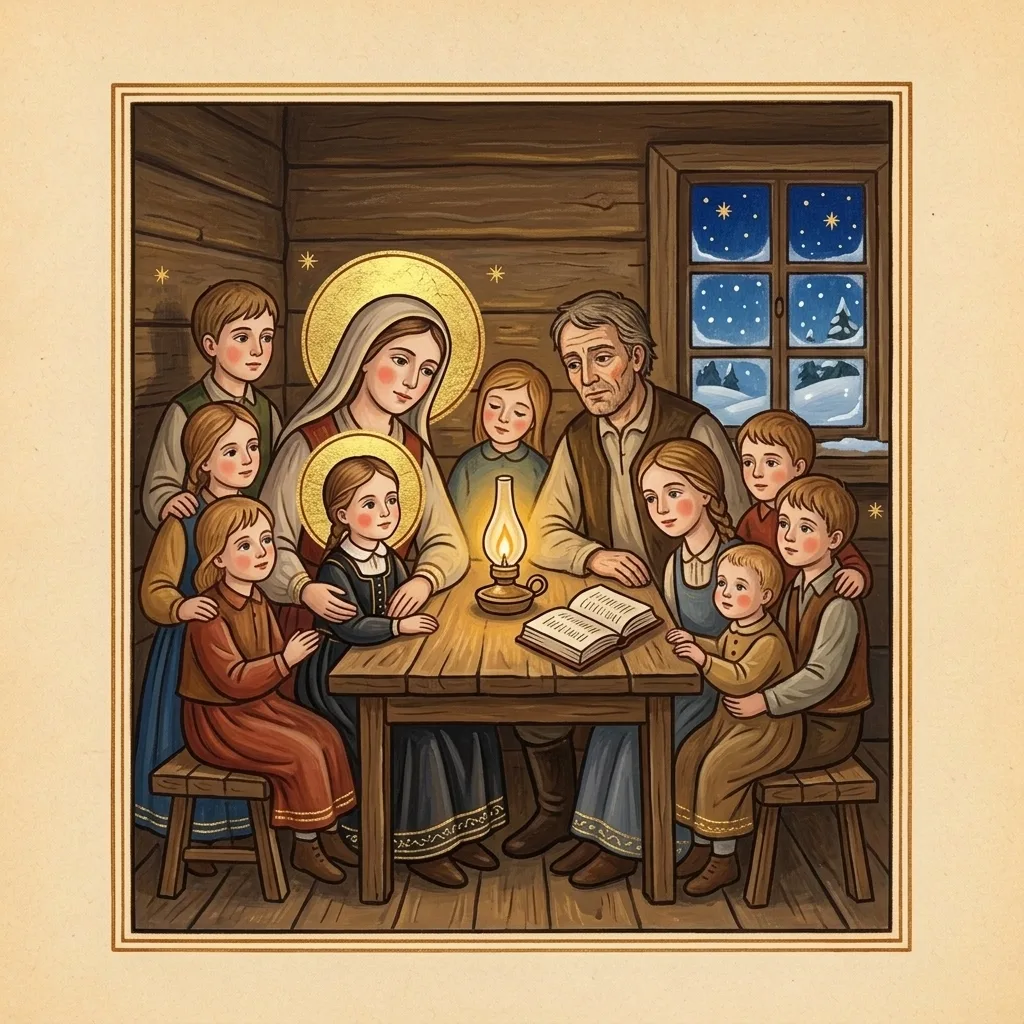
2Helena Kowalska was born in 1905 in a small village in central Poland, the third of ten children. Her family farmed a few acres and prayed together every evening. They were poor and devout in equal measure — deeply rooted in the earth and in God.
 3
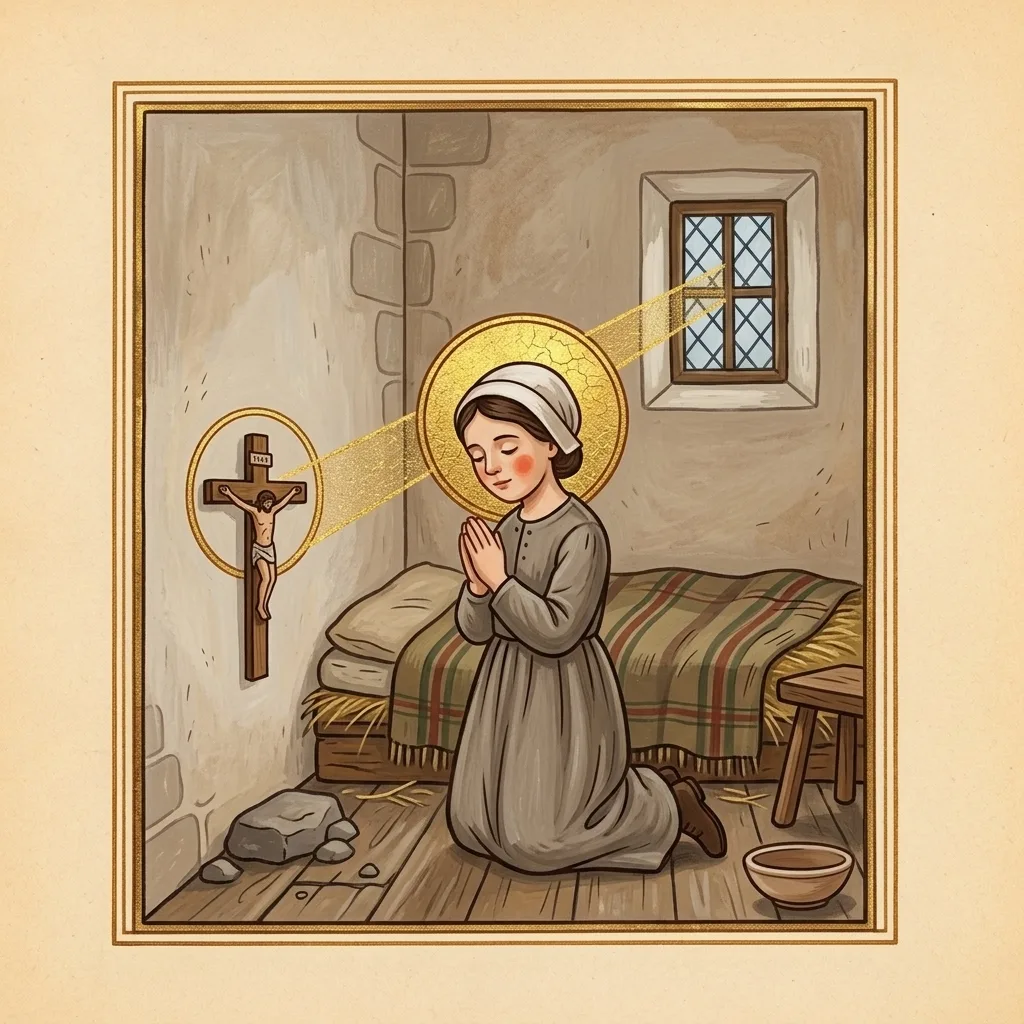
3From the age of seven, Helena felt a pull toward God she couldn't explain. While other children played, she slipped away to pray. Her family needed her hands in the fields, and she gave them — but her heart was somewhere else entirely, reaching toward something more.
 4
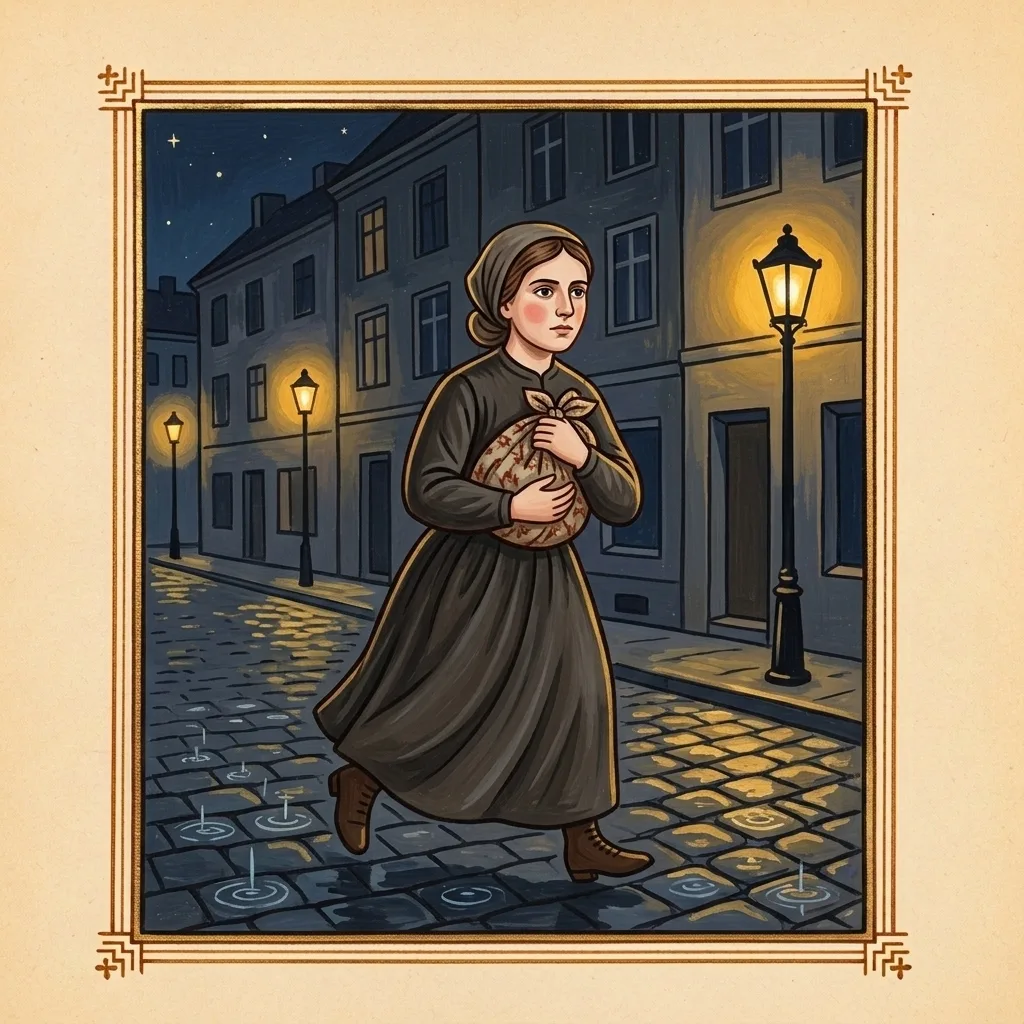
4At nineteen, at a dance in Łódź, she saw Jesus standing before her — suffering, exhausted, His face marked with wounds. 'How long shall I put up with you?' He asked. She left the dance hall that night, alone, and walked to Warsaw to find a convent. She never looked back.
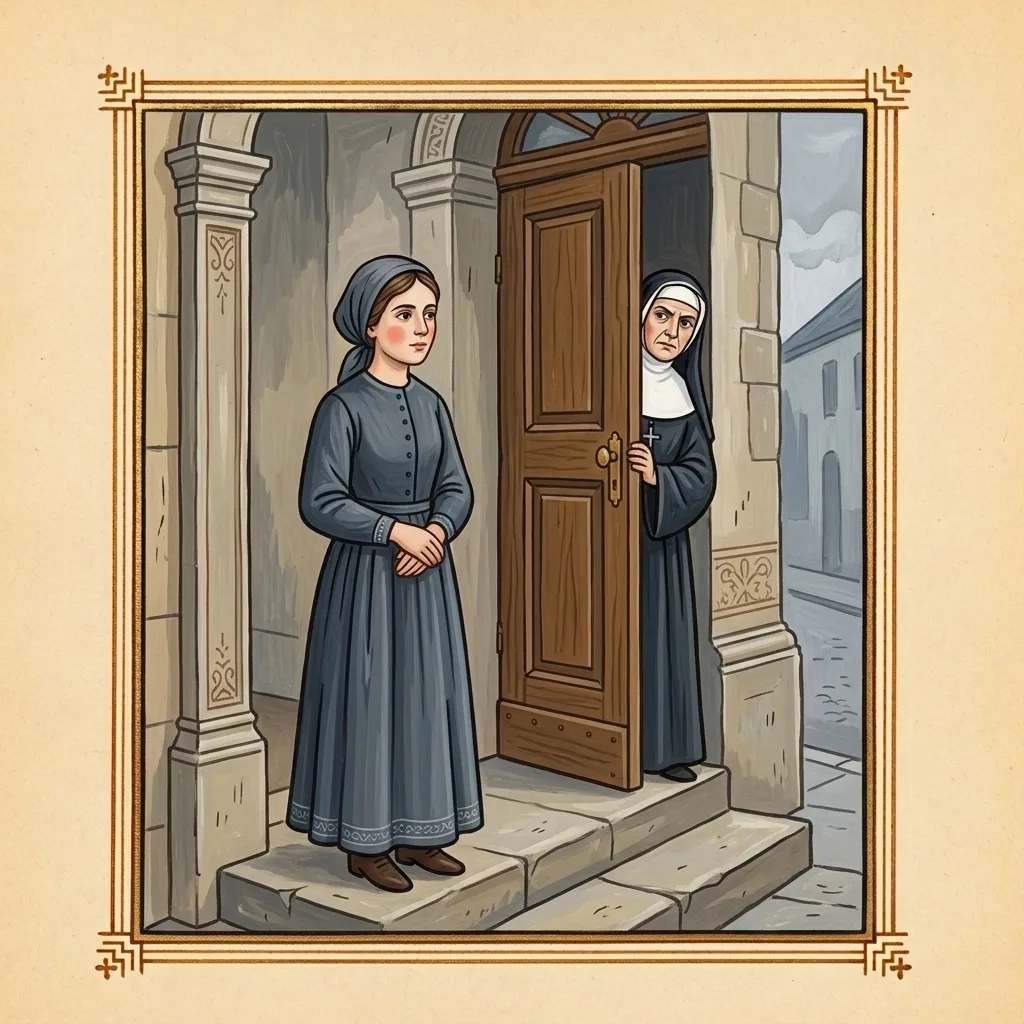 5
5Convent after convent turned her away. She had no dowry, no education, no family connections to open any doors. One sister told her flatly that God had no use for uneducated peasants. She listened politely — and kept knocking on the next door down the street.
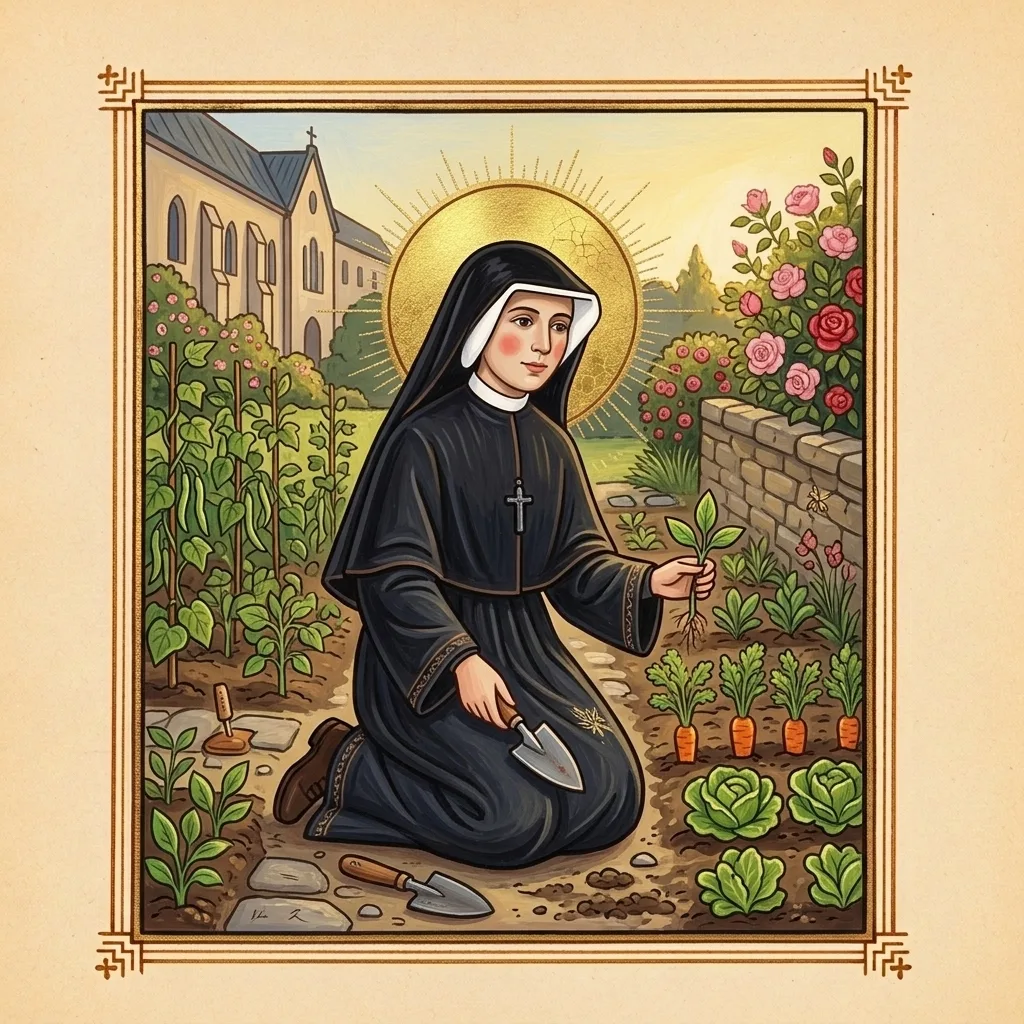 6
6She was finally accepted by the Sisters of Our Lady of Mercy in 1925. As Sister Faustina, she cooked, gardened, kept the convent gate, and cleaned floors. Her superiors saw a pleasant, simple sister. Almost no one suspected the fire burning inside her.
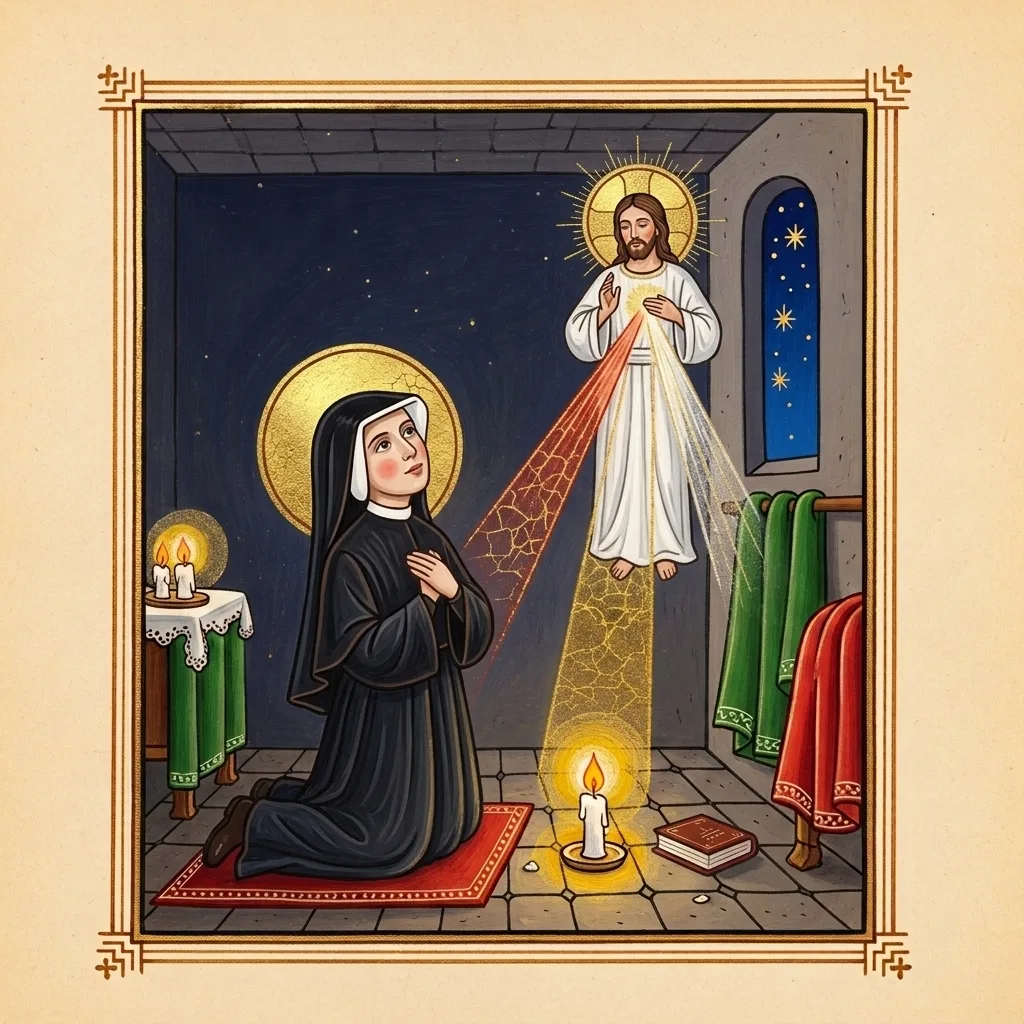 7
7On February 22, 1931, Jesus appeared to Faustina in her cell in Płock — robed in white, with two great beams of light streaming from His chest, one red and one pale. 'Paint what you see,' He told her, 'and sign it: Jesus, I trust in You.'
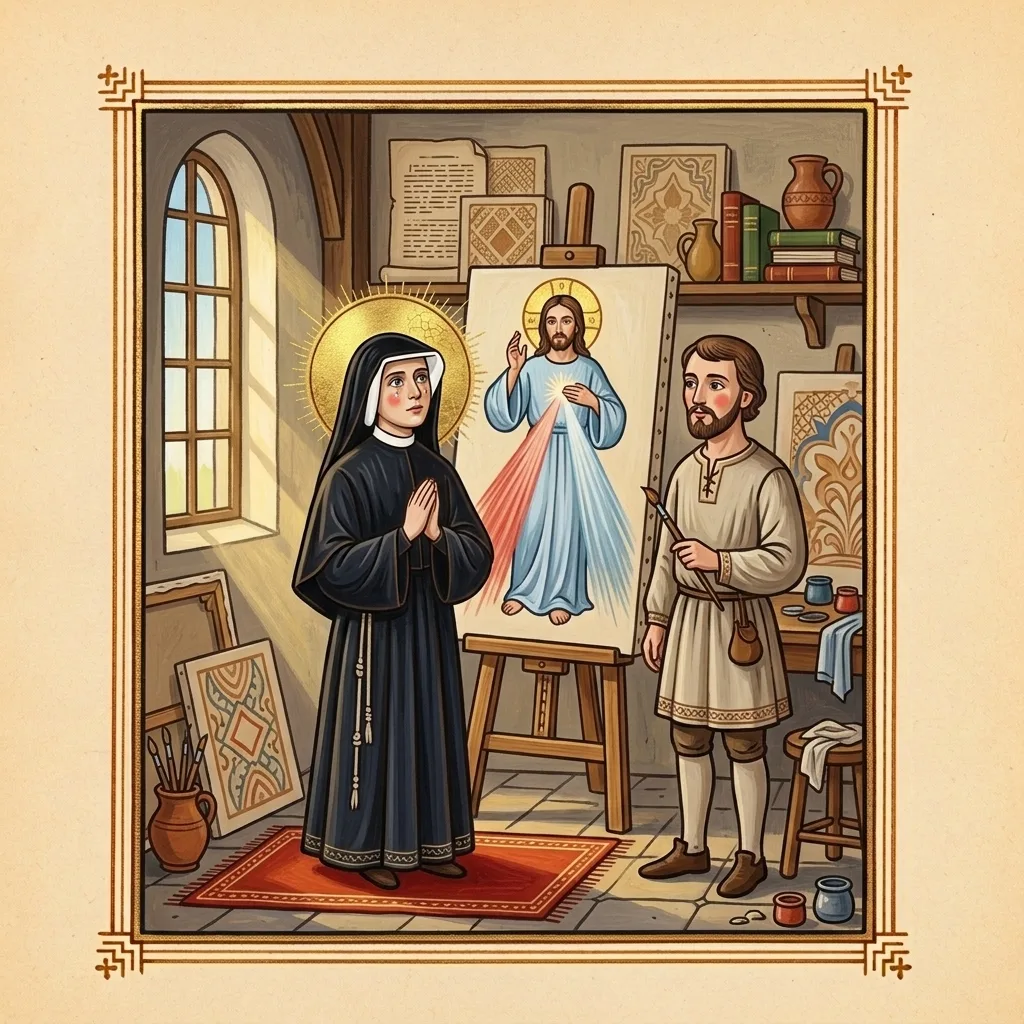 8
8She found a painter named Eugeniusz Kazimirowski in Vilnius and described the vision in exhausting detail. He labored for months. When he finally showed her the finished canvas, she wept. The image was too dim, she said — too pale. 'Who could ever paint You?'
 9
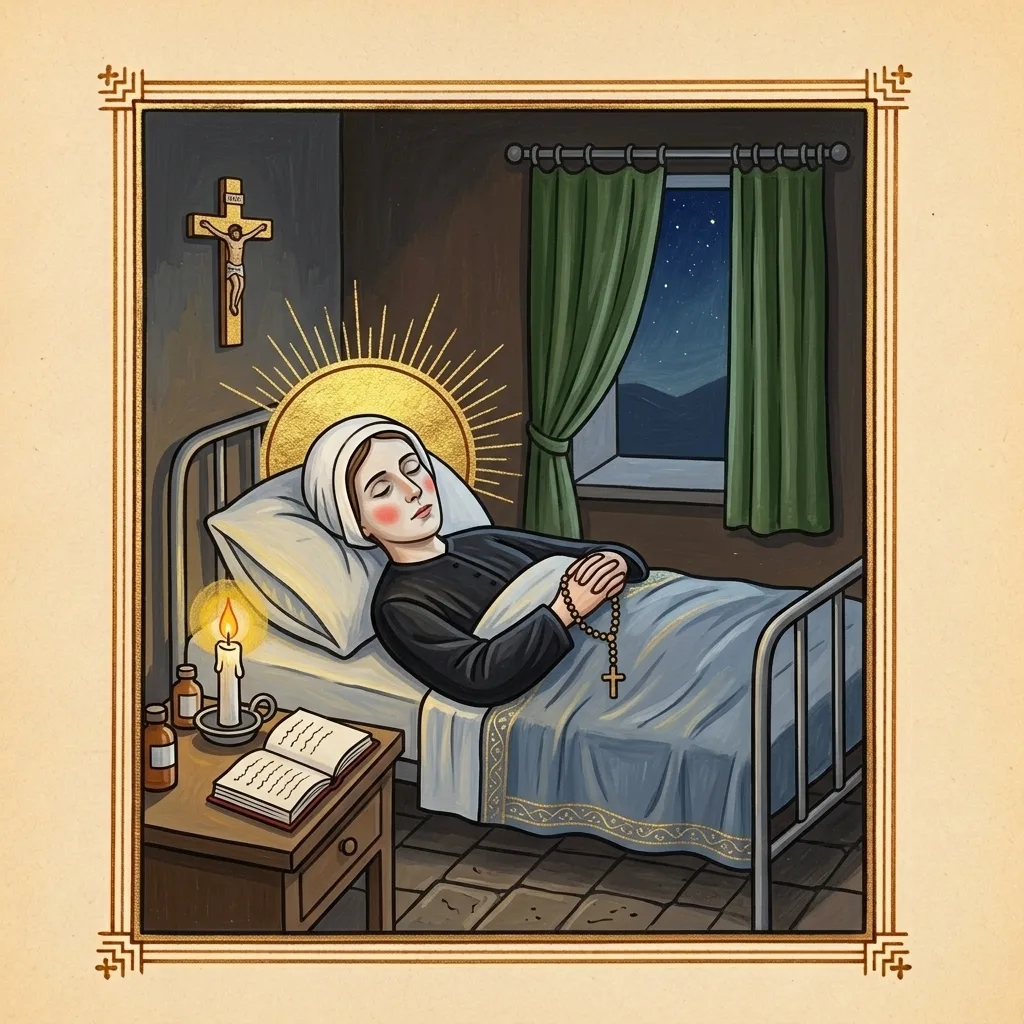
9Tuberculosis had been eating at Faustina for years. By thirty, she was coughing blood and spending long stretches in the infirmary. She offered every moment of suffering for sinners — deliberately, by name. She called it 'a gift wrapped in darkness.'
 10
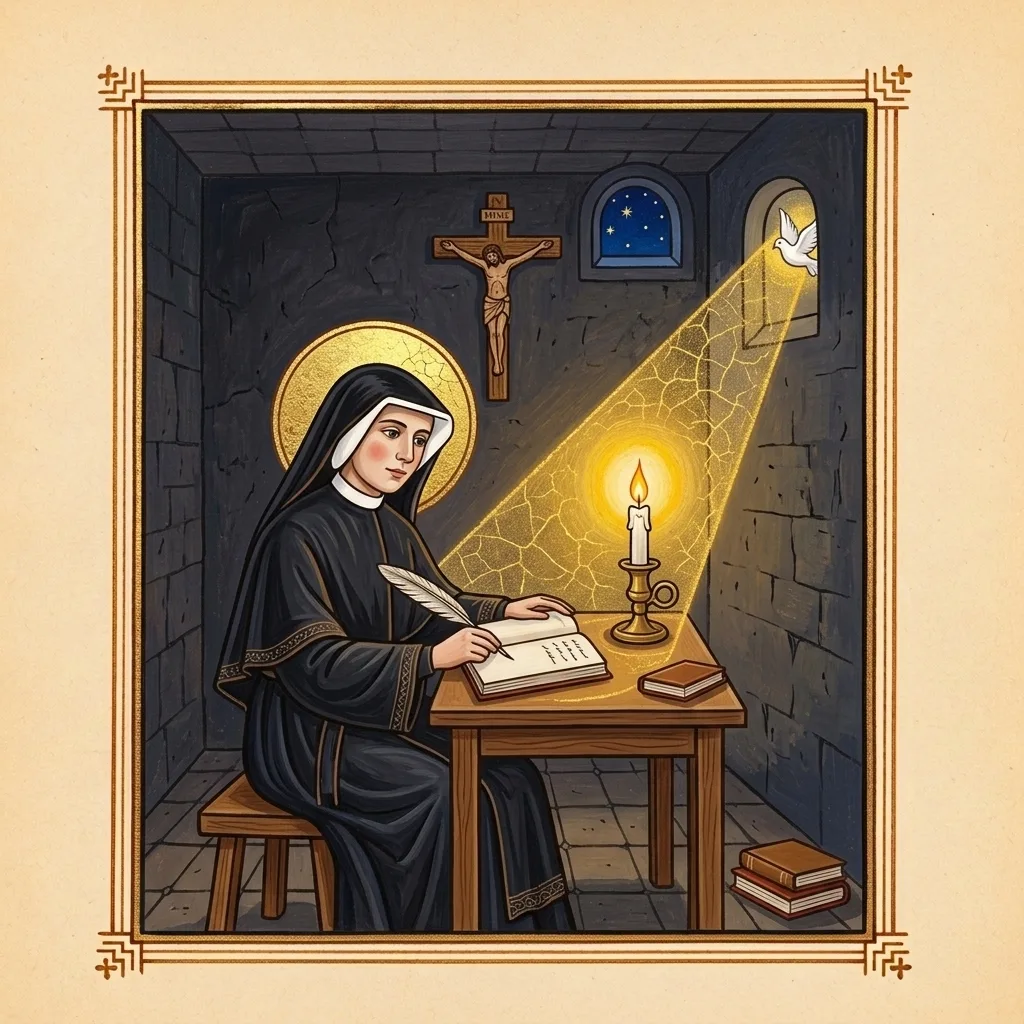
10In her darkest hours of doubt and physical agony, Jesus told her: 'You are the secretary of My mercy.' She picked up her pen and kept writing — through illness, through theological suspicion, through exhaustion. Six hundred pages from a woman who barely went to school.
 11
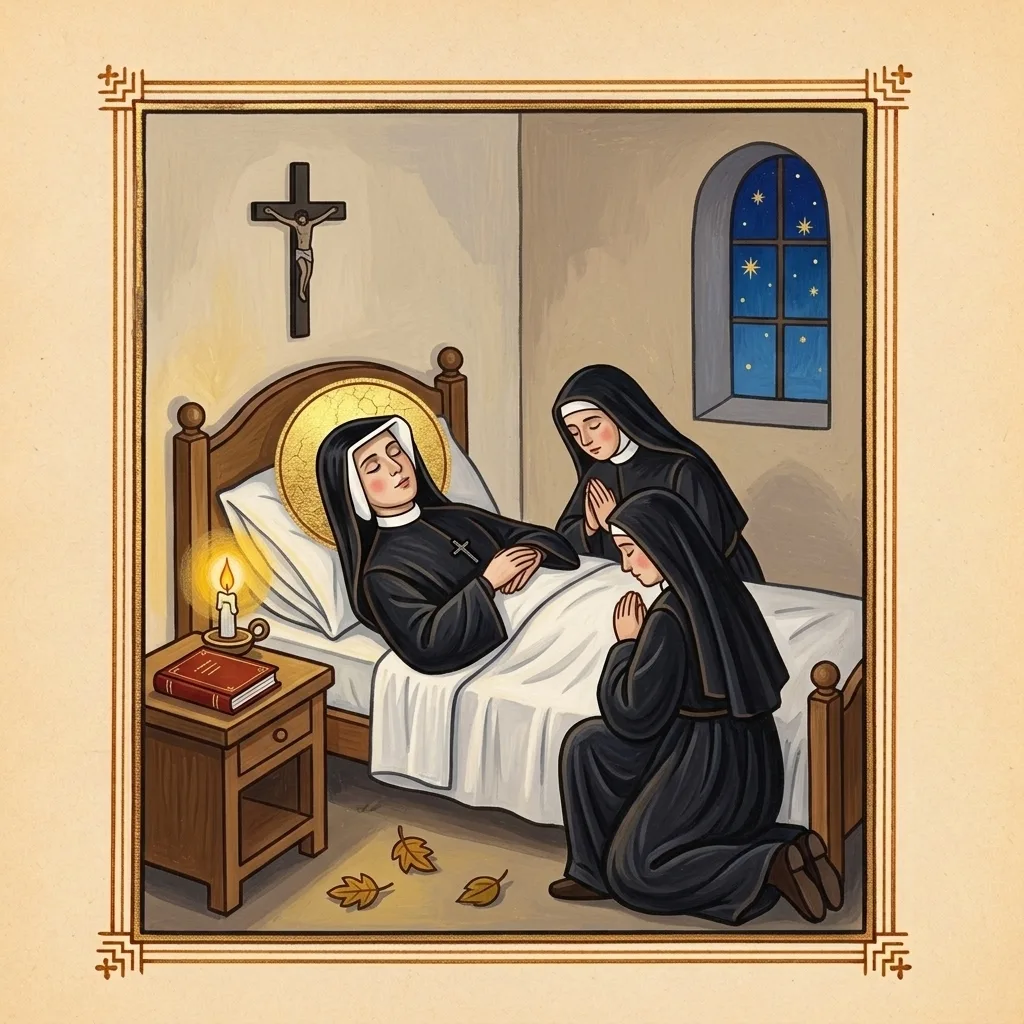
11She died on October 5, 1938, at thirty-three — the same age as Christ at the cross. In the years after, the Church actually suppressed her devotion, fearing theological error. Her diary nearly burned. Yet the mercy she proclaimed could not be stopped.
 12
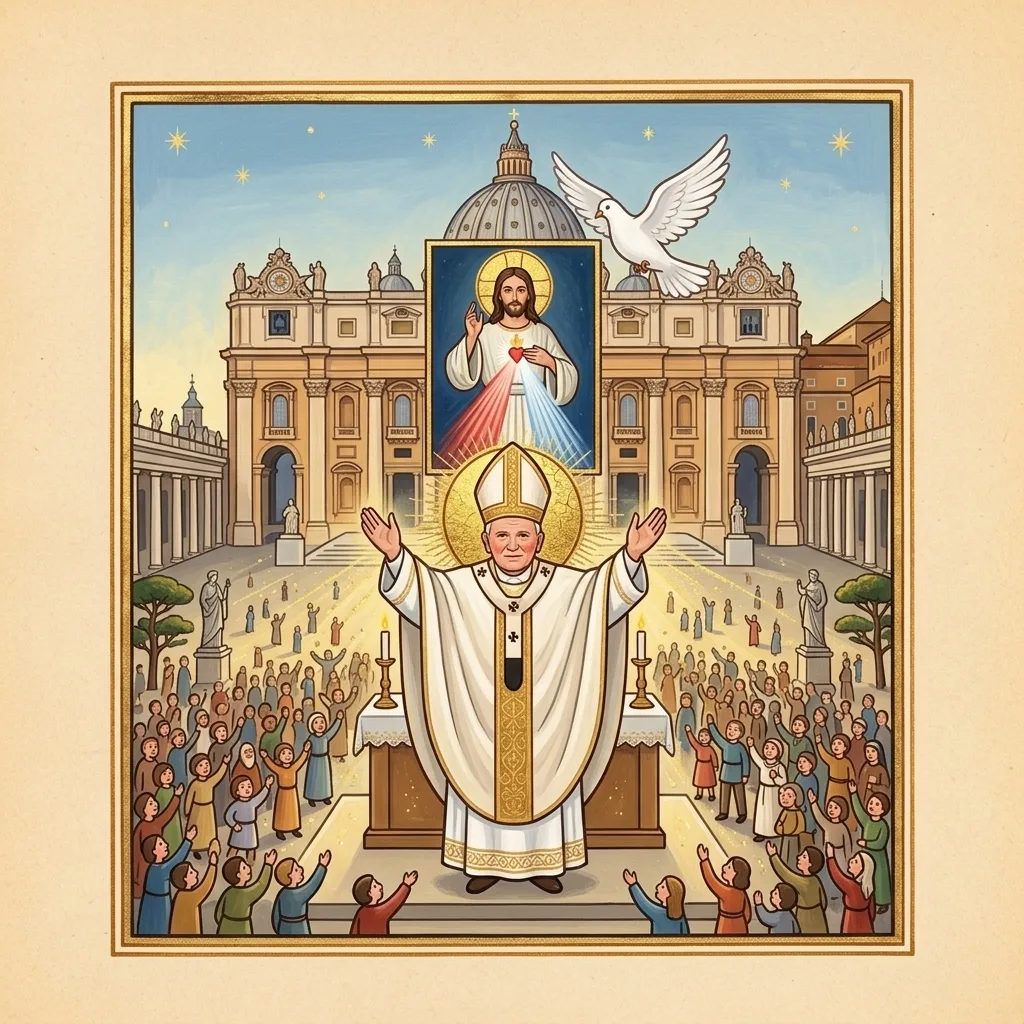
12On April 30, 2000, Pope John Paul II — a Pole who had grown up with her image on his homeland's walls — canonized Faustina as the first saint of the new millennium. Standing before the world, he declared Divine Mercy Sunday a feast for the universal Church.
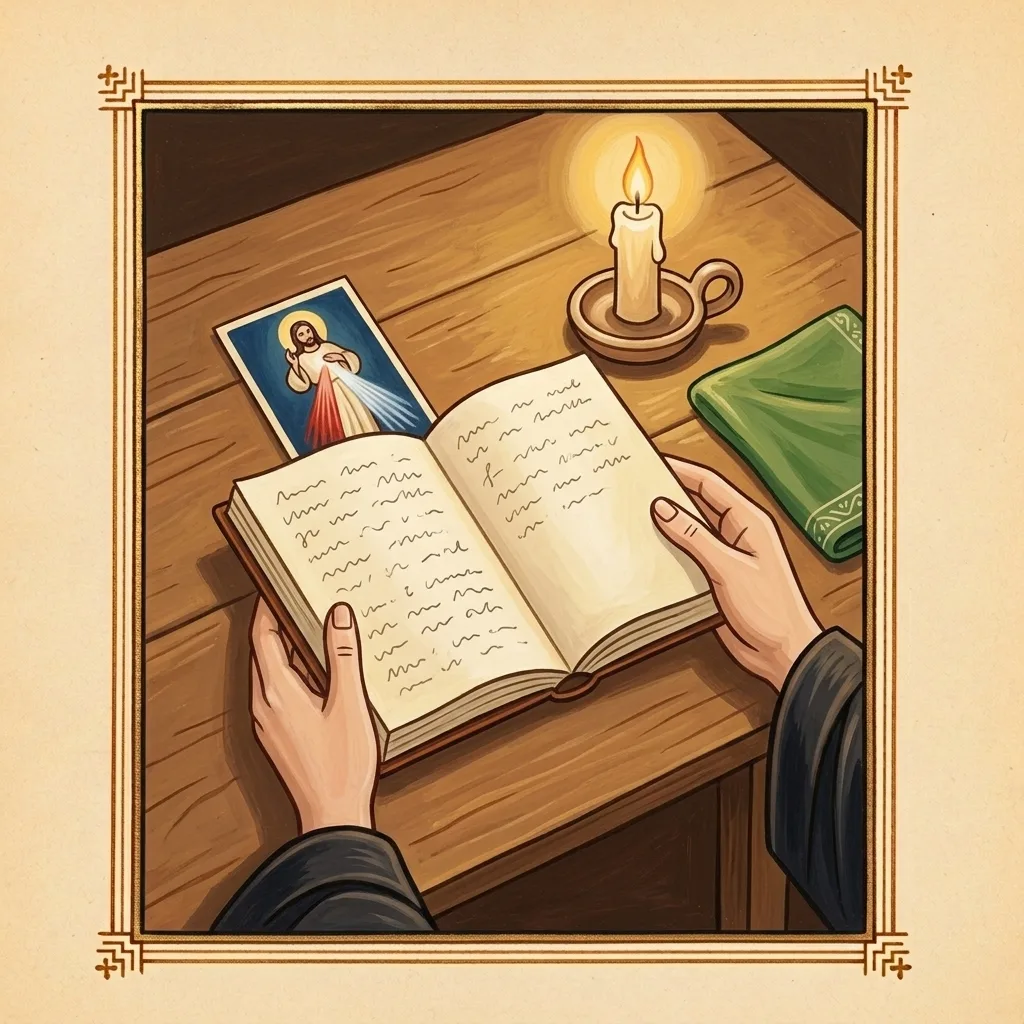 13
13Faustina's entire life was one message repeated from every direction: no wound is too deep, no failure too final, no sin bigger than God's mercy. Whatever you are carrying today, she would hand you her diary open to the same page: 'Jesus, I trust in You.'
Life & Times
Early Life
Born the third of ten children in Głogowiec, Poland, Helena Kowalska had only three years of schooling and worked as a housekeeper to support her family before entering religious life.
Turning Point
A vision of the suffering Christ at a dance hall in Łódź moved her to travel to Warsaw, where she was accepted into the Sisters of Our Lady of Mercy in 1925.
Legacy
As Sister Faustina she recorded detailed mystical visions in her Diary and died of tuberculosis in Kraków on October 5, 1938, at thirty-three.
Historical Context
Sources & historical notes
Dates and later-life details are left uncertain where the sources do not establish them. Historical summaries are secondary overviews; Scripture and Church documents are linked separately where available.
Words & Wisdom
“O Blood and Water, which gushed forth from the Heart of Jesus as a fount of mercy for us, I trust in You! [Diary, entry 84]”
“Love is a mystery that transforms everything it touches into things beautiful and pleasing to God. [Diary]”
Diary of St. Maria Faustina Kowalska
Divine Mercy in My Soul — a 600-page spiritual journal recording her mystical visions and inner locutions, considered one of the outstanding works of Catholic mystical literature.
Read MoreO Blood and Water, which gushed forth from the Heart of Jesus as a fount of mercy for us, I trust in You!
Related Saints
Connections in the communion of saints