Sanctified Life
AD 1920 — AD 2005
Birthplace: Wadowice, Poland
Also Known As
"Be not afraid."
Karol Wojtyła lost his mother at eight, his brother at twelve, and his father at twenty, leaving him alone in Nazi-occupied Poland — where he labored in a quarry and factory by day and studied for the priesthood in secret by night. Elected in 1978 as the first Polish pope, he made 104 international journeys, backed Poland's Solidarity movement at a decisive moment in Cold War history, and survived an assassination attempt in St. Peter's Square in 1981. His 27-year pontificate produced the 'Theology of the Body,' the institution of World Youth Day, and 14 encyclicals; he was canonized by Pope Francis on April 27, 2014.

Interactive Lesson
The Illustrated Life
John Paul II's story in 13 illustrated moments — tap any scene to begin there.
 1
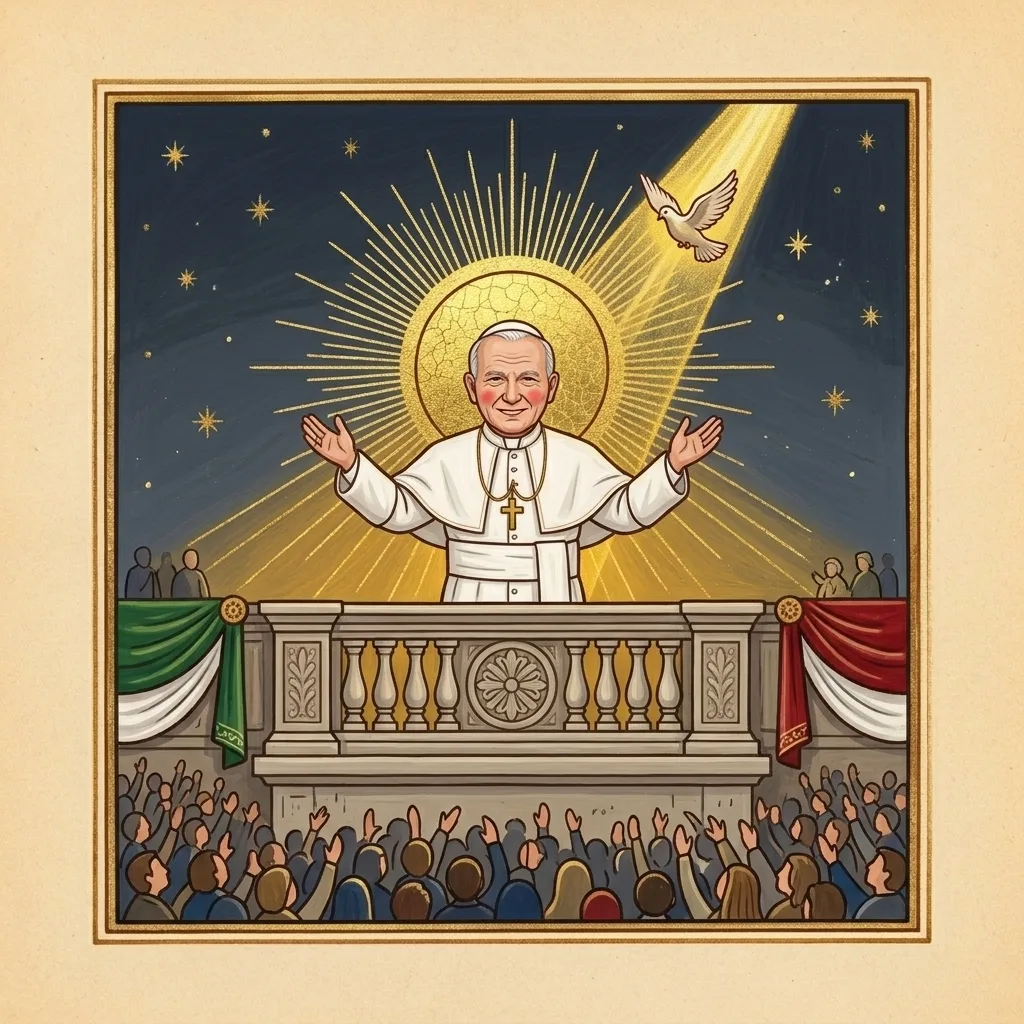
1On the night of October 16, 1978, white smoke curled above the Sistine Chapel — and a Polish cardinal walked out onto the balcony of St. Peter's to greet a stunned world. For 455 years, every pope had been Italian. Tonight, everything changed. His first words: 'Be not afraid.'
 2
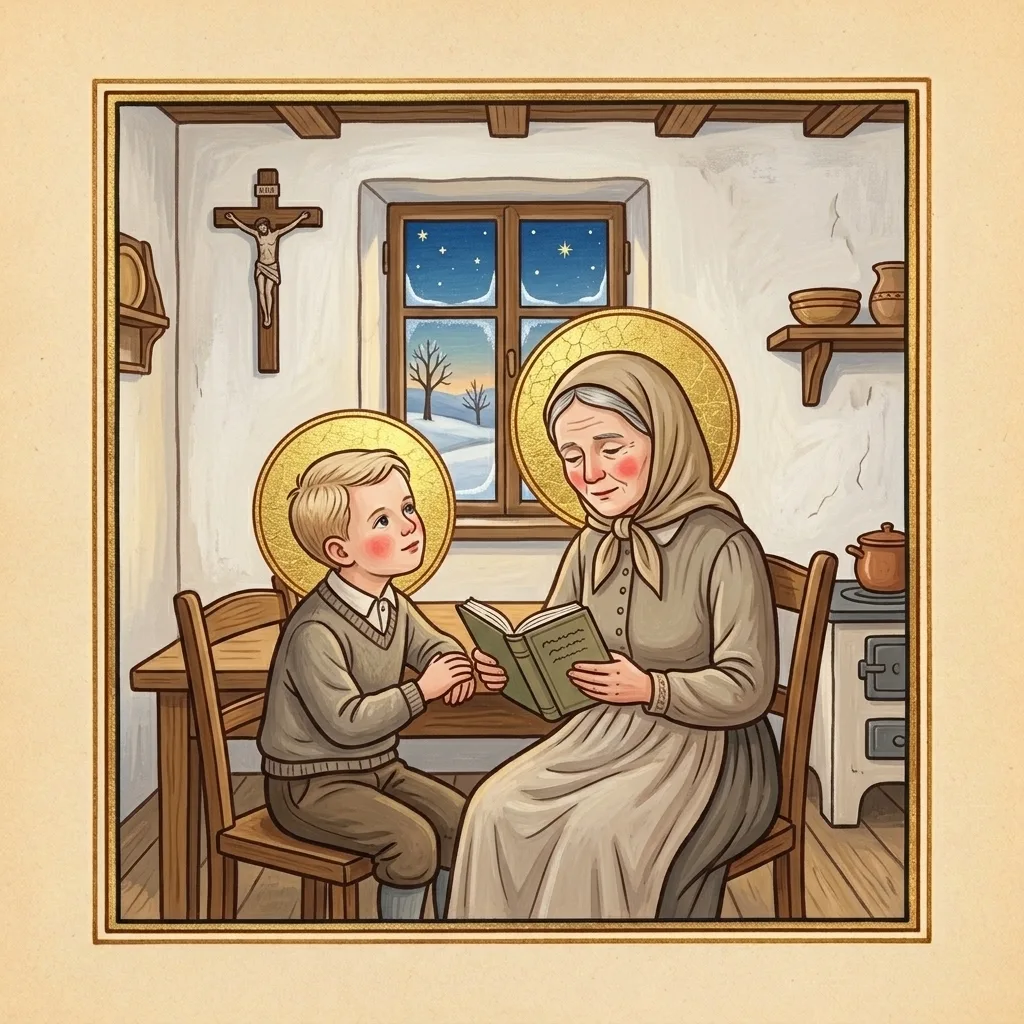
2Karol Józef Wojtyła is born in 1920 in Wadowice, a quiet Polish town in the shadow of the Carpathian Mountains. His mother calls him Lolek. She will be dead before he turns nine. Poland itself is barely two years old as a reborn nation — a country that has always known it can be taken away.
 3
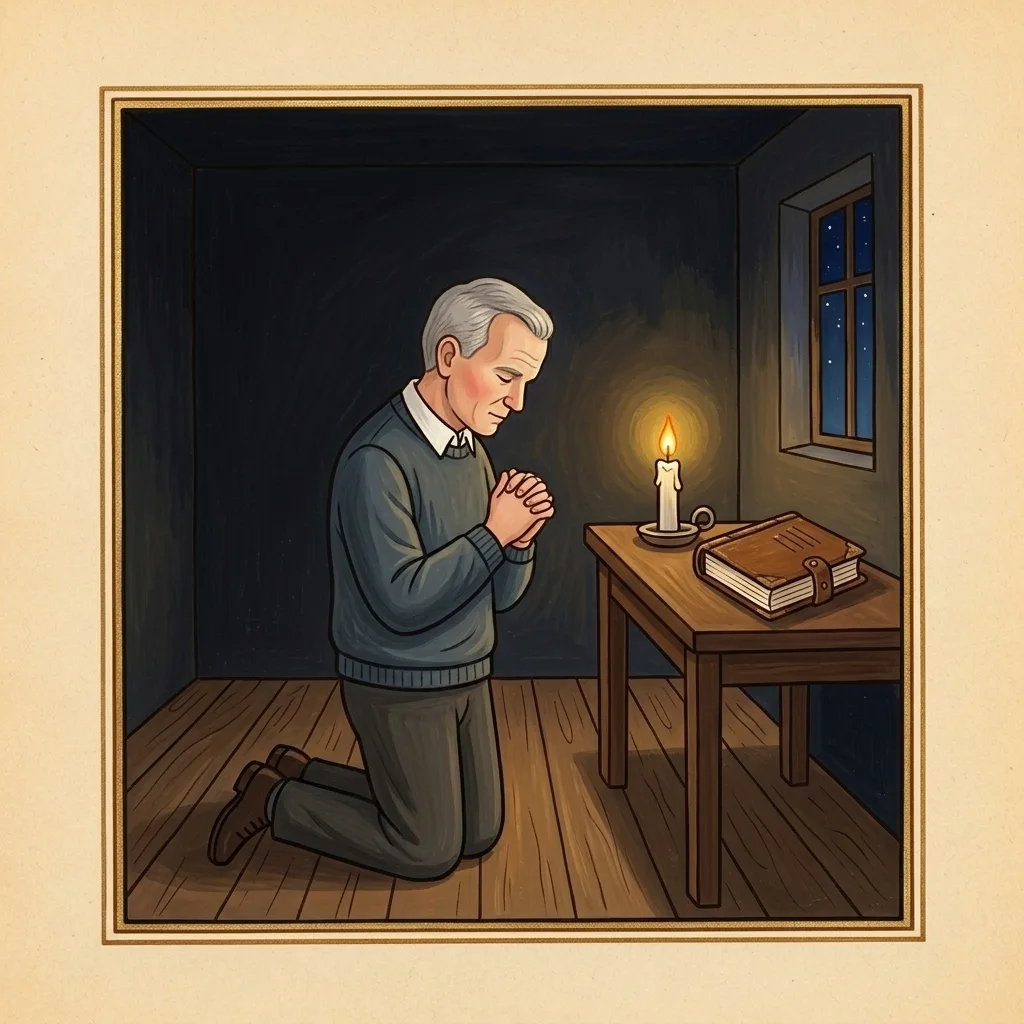
3Young Karol is a force of life — a goalkeeper, an actor, a poet who performs on makeshift stages. He devours philosophy and learns to ski the Tatra peaks. But grief keeps finding him: his mother gone, then his beloved brother Edmund, then his father. By twenty, he is alone in the world. And something begins to stir.
 4
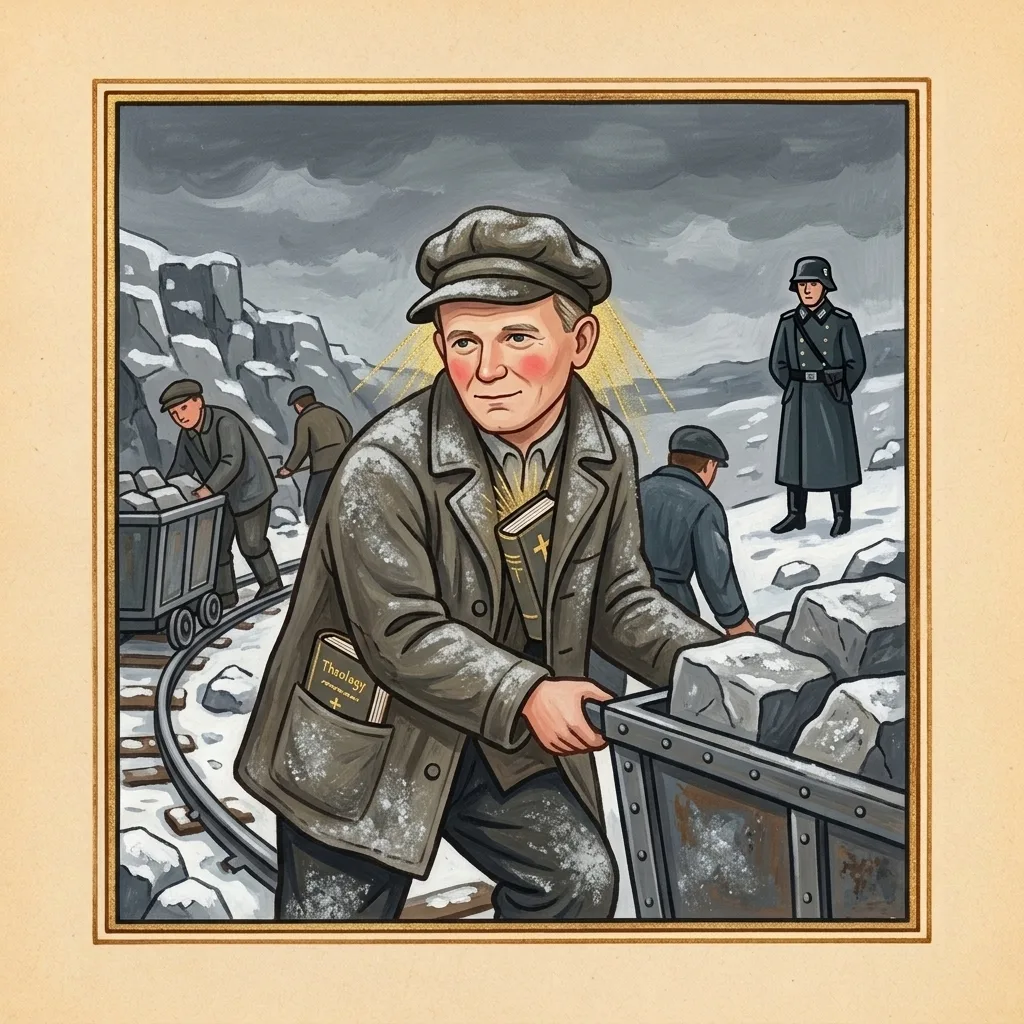
4The Nazis invade Poland in 1939. Universities close. Priests are arrested. Karol is forced to work in a stone quarry and then a chemical plant, his hands cracked and raw. But under the city, in secret, he studies for the priesthood. To be caught means death. He studies anyway.
 5
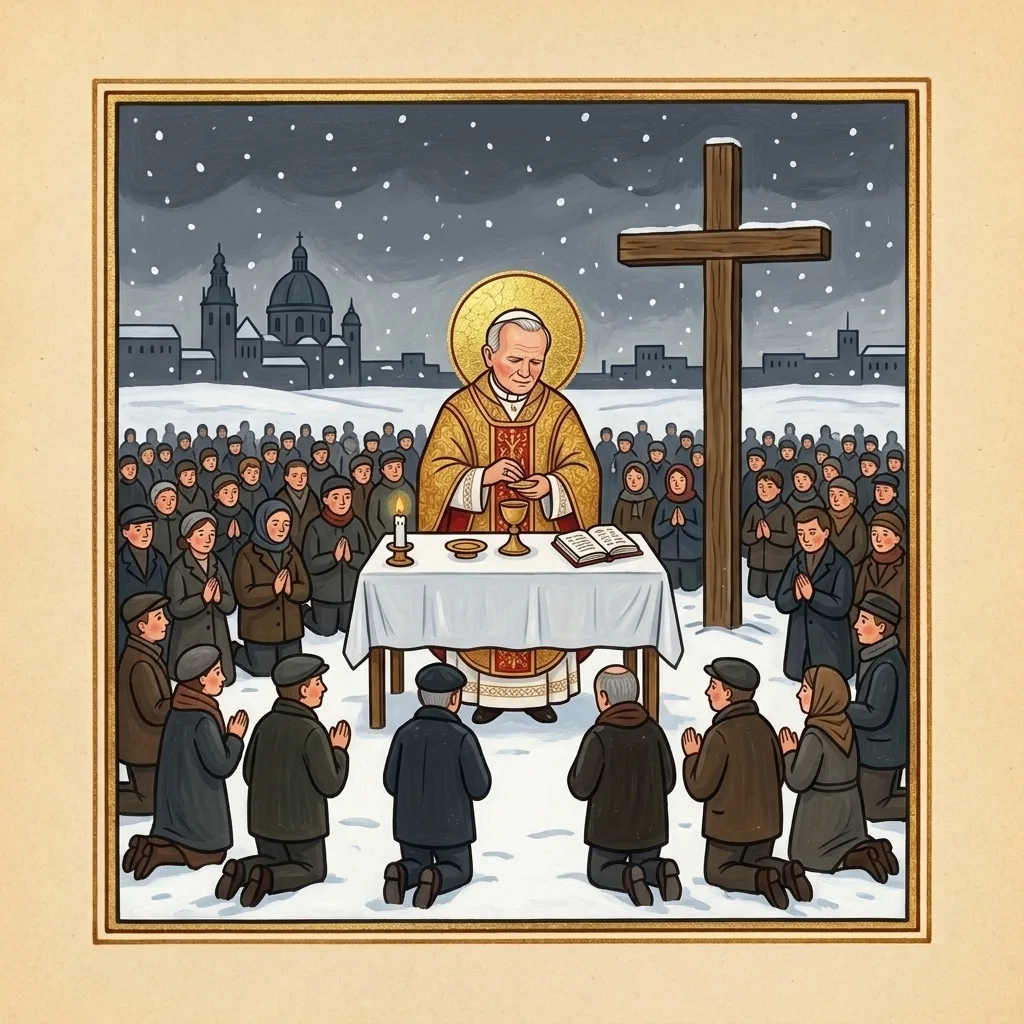
5Even as a bishop and then Cardinal of Kraków, the communist regime tries to silence him. They deny building permits for new churches. He holds outdoor Masses in the snow. They censor his speeches. He writes poetry and philosophy instead, smuggling ideas through culture. The authorities keep a thick file on him. He keeps praying.
 6
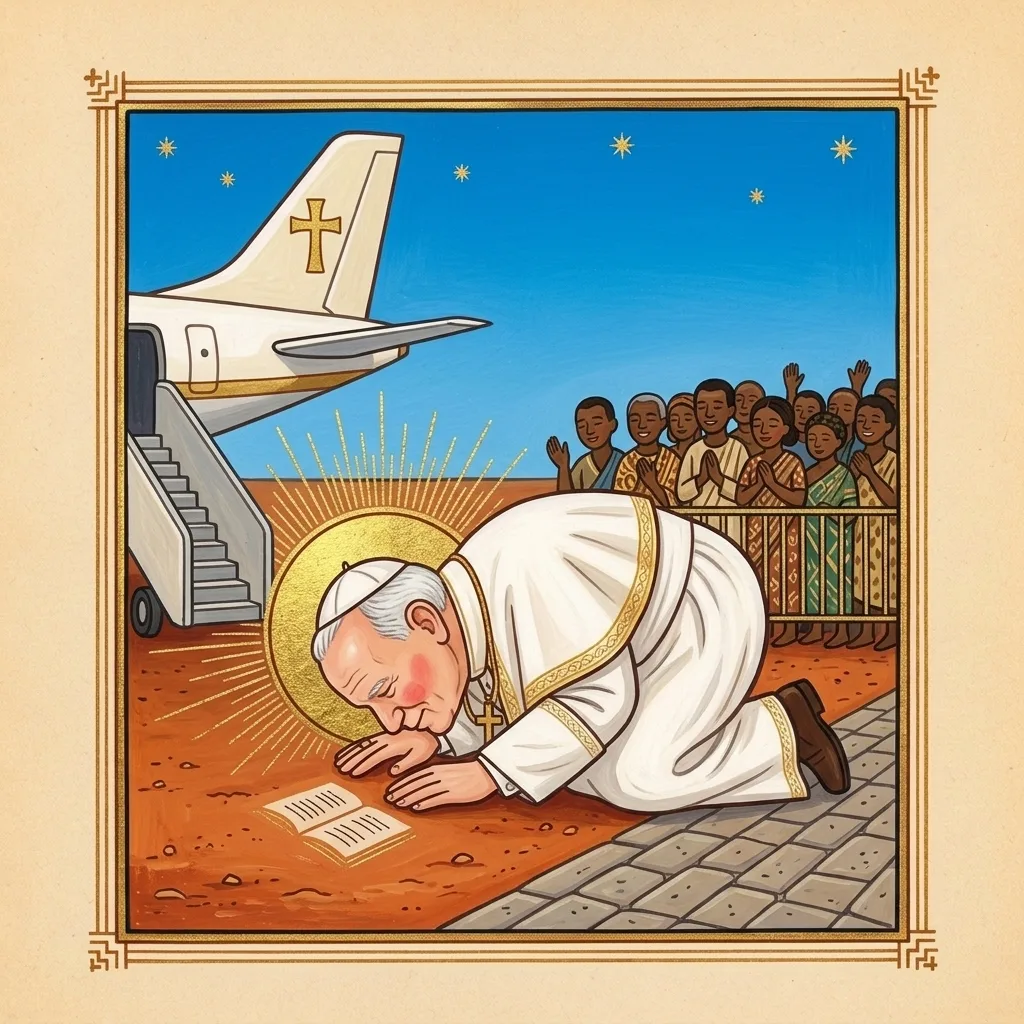
6As Pope, he refuses to be a distant, bureaucratic figure. He travels to 129 countries — more than all previous popes combined. He lands in Africa, Asia, Latin America, and the favelas of Brazil, climbing down from planes to kneel and kiss the ground of each nation. He is not visiting countries. He is meeting people.
 7
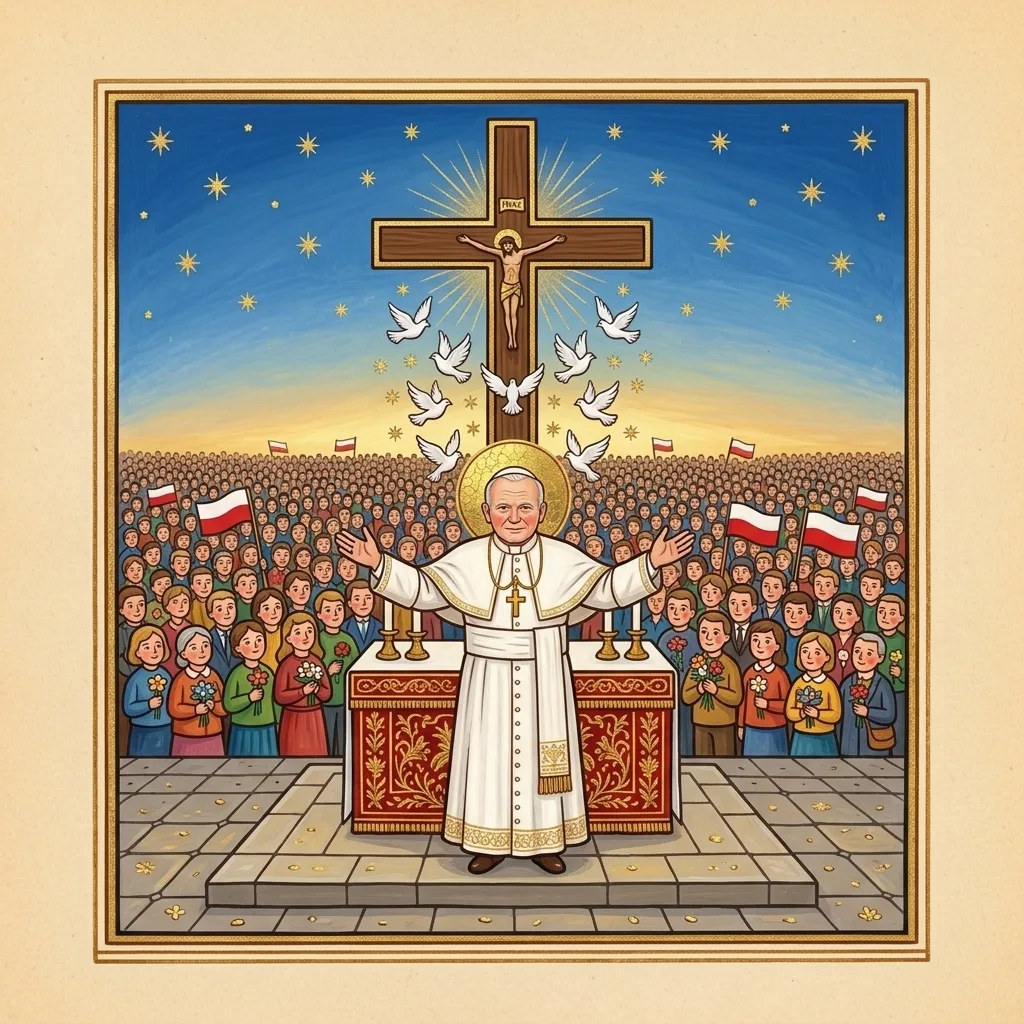
7In 1979 he returns to communist Poland. A million people pack Warsaw's square. 'Be not afraid!' he thunders — and witnesses say the crowd felt it in their chests: something had broken. Within a decade, the Iron Curtain falls.
 8
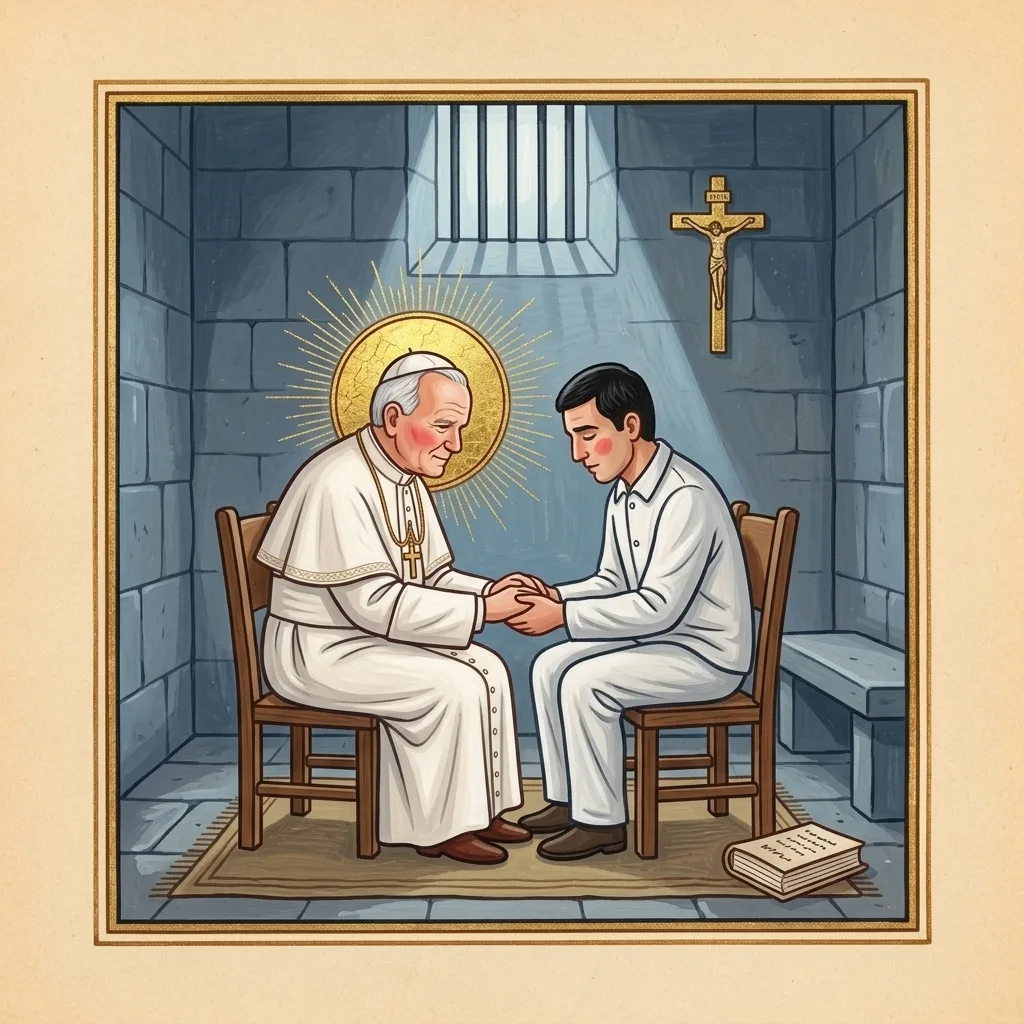
8He helped topple communism — then visited the man who shot him. In 1981 a gunman fired four times in St. Peter's Square. Two years later, John Paul sat beside him in a bare cell and held his hand. 'I forgave you the day it happened.' Ağca couldn't understand it.
 9
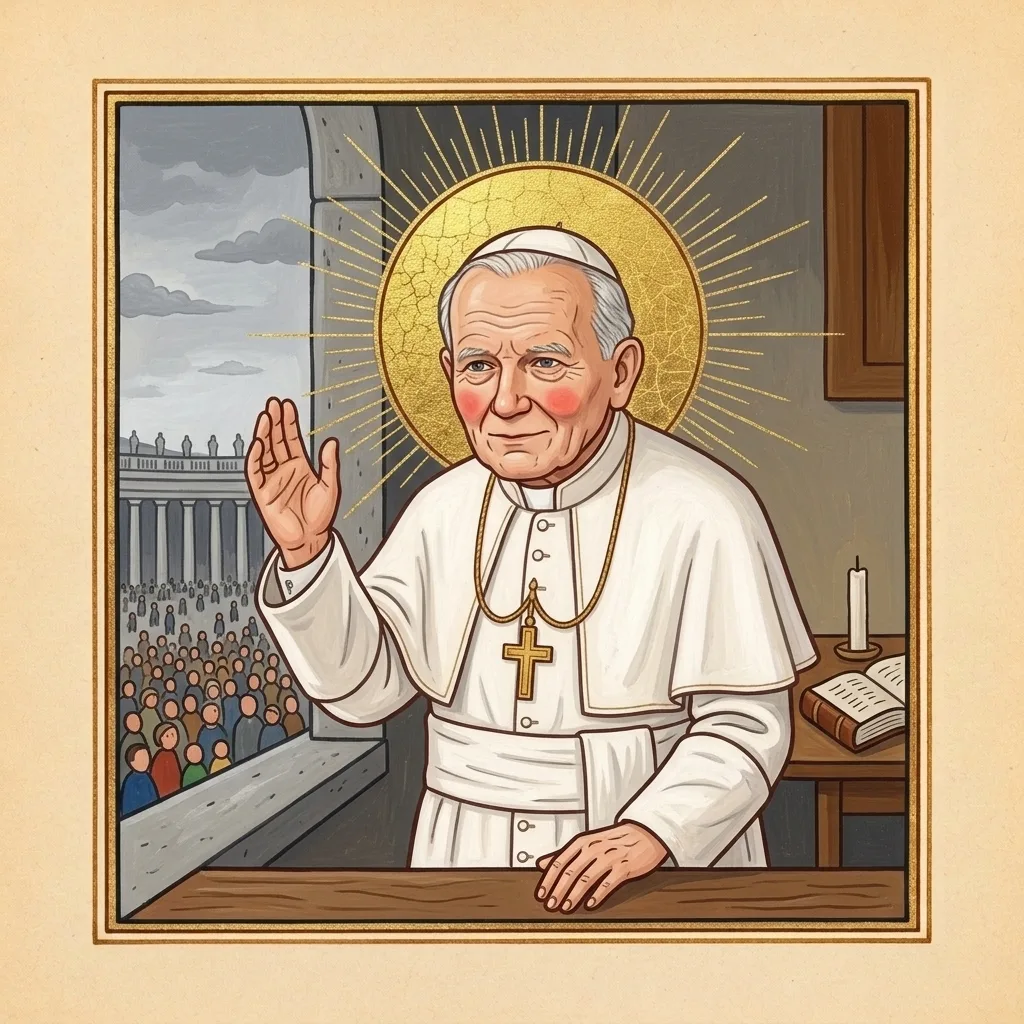
9Parkinson's slowly takes his body. His hands shake. His speech blurs. And he refuses to hide. At World Youth Day in Toronto, he holds up a crucifix — trembling, nearly silent — and two million young people weep. His suffering becomes his last, greatest sermon.
 10
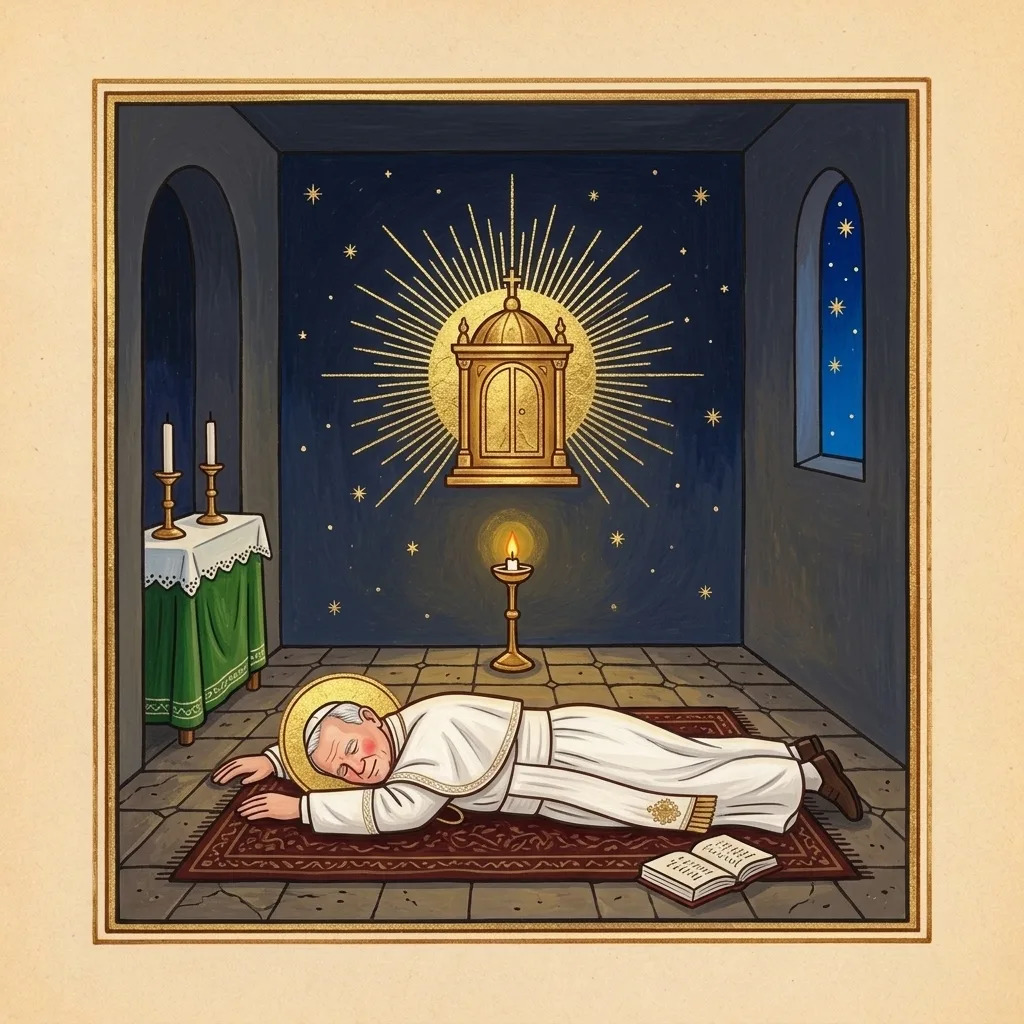
10Those closest to him describe a man who prayed for hours, face-down on the floor. His secretary once found him prostrate before the tabernacle at 3 a.m., arms wide, perfectly still. When asked about it, he said only: 'There are things between a man and God.'
 11
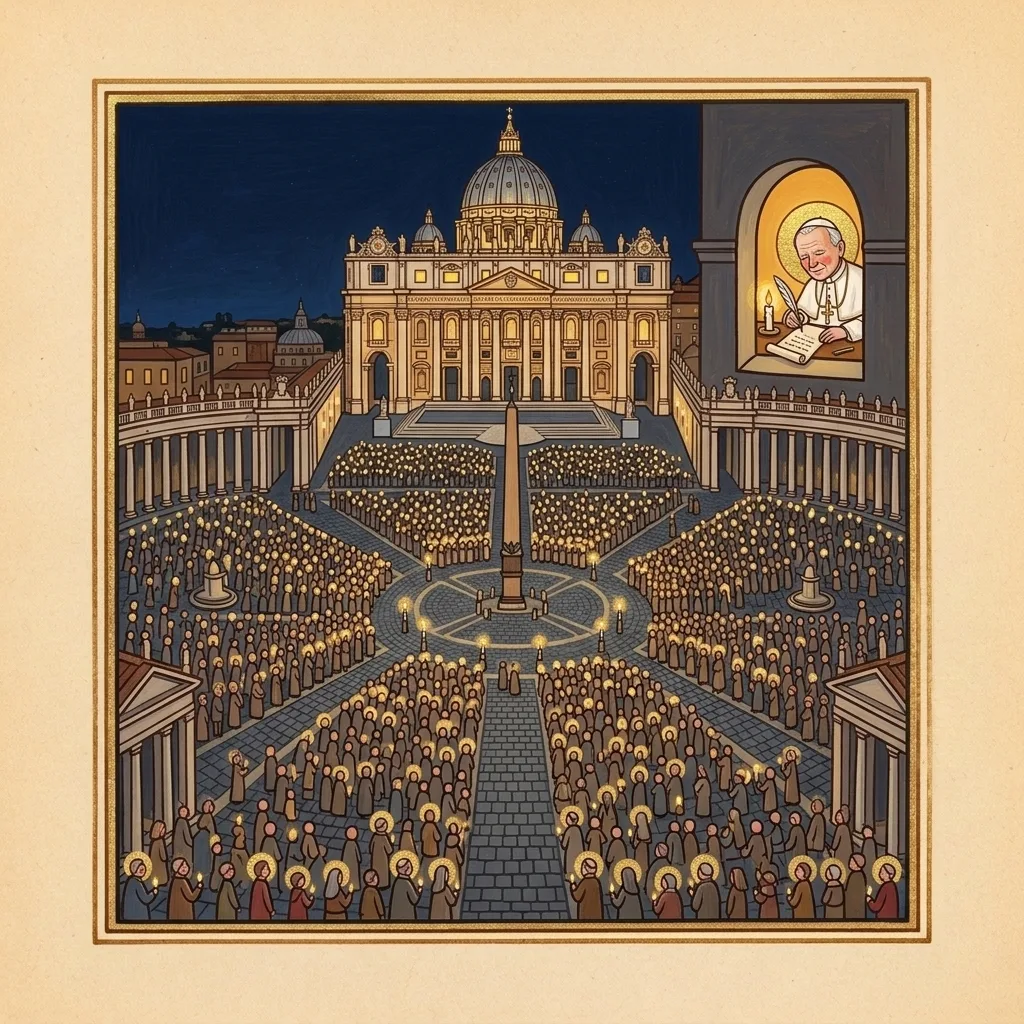
11He dies on April 2, 2005 — the vigil of Divine Mercy Sunday, the feast he himself had established. His last whispered word is 'Amen.' Outside in St. Peter's Square, hundreds of thousands keep vigil through the night. When the news breaks, the crowd does not weep in silence. They begin to chant: 'Santo subito.' Saint now.
 12
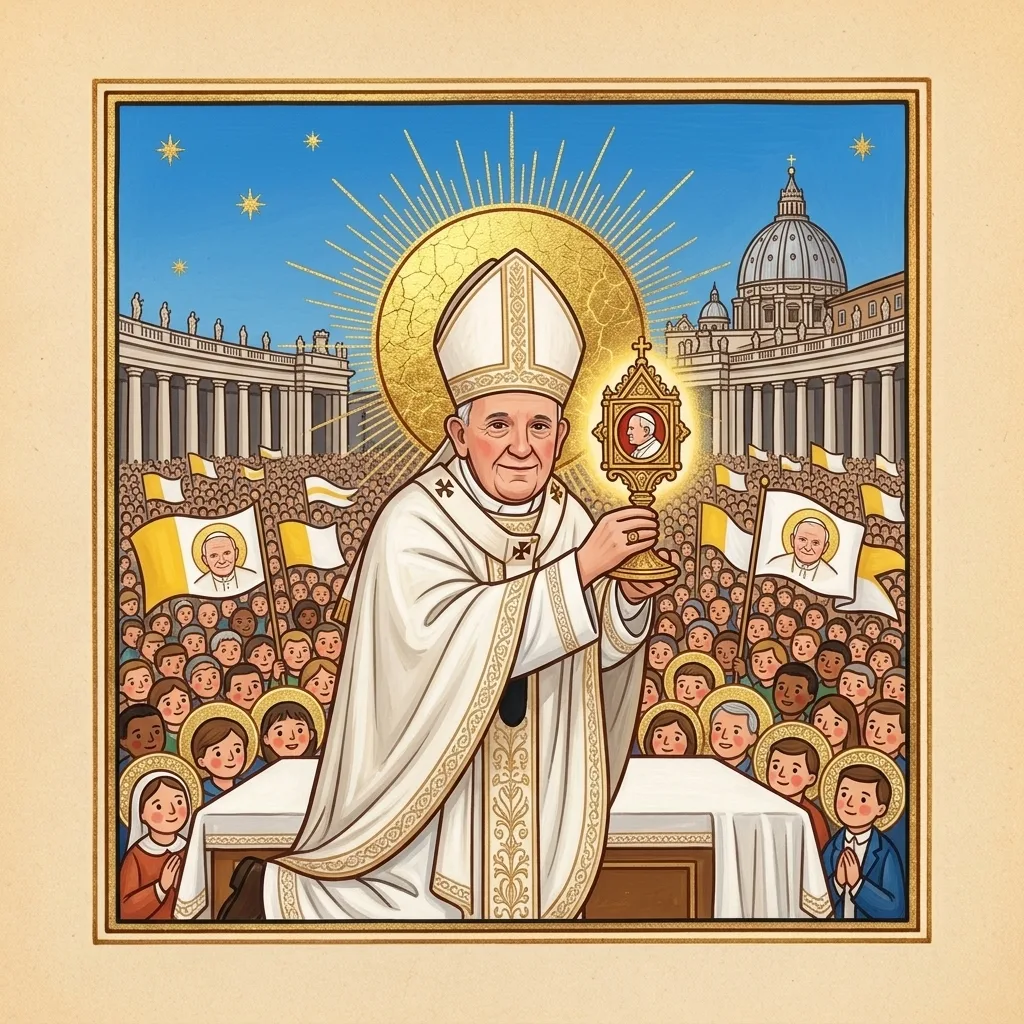
12On Divine Mercy Sunday, 2014, Pope Francis canonizes him before five million people in Rome. He becomes Saint John Paul the Great — the first pope to carry that title in over a thousand years. His words, his travels, his theology still ripple through millions of lives.
 13
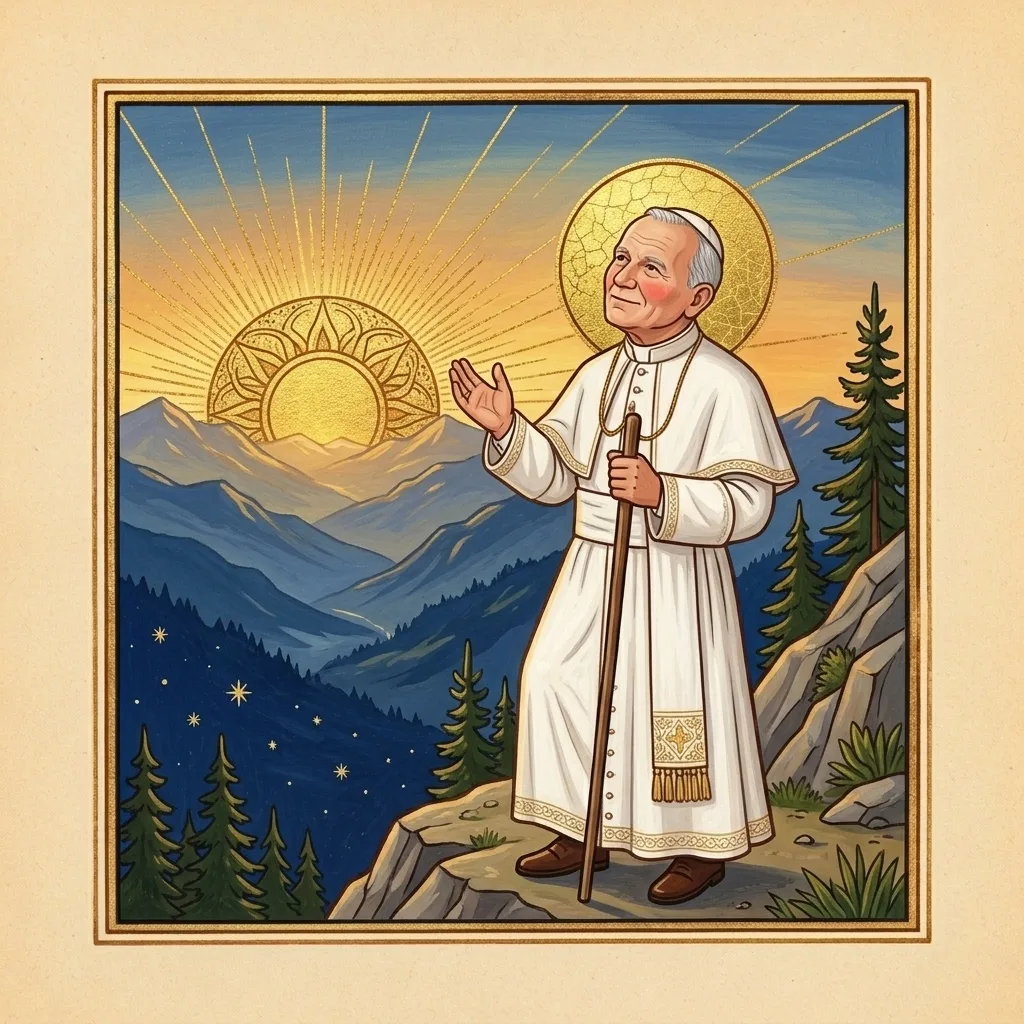
13John Paul II lost his mother, his brother, his father, his homeland, and finally his own body — and never stopped saying 'Be not afraid.' This is his gift to you: fear is not a sign that something is wrong. It is a sign that something matters. The question is not whether you will be afraid. It is whether you will go anyway.
Life & Times
Early Life
Born in Wadowice, Poland, on May 18, 1920; lost his mother to kidney failure at eight, his brother Edmund to scarlet fever at twelve, and his father to heart failure in 1941. He lived under Nazi occupation as a factory laborer and clandestine seminarian.
Turning Point
Election as Pope on October 16, 1978 — the first non-Italian pontiff in 455 years — instantly reoriented Catholic attention toward Eastern Europe and the persecuted Church behind the Iron Curtain.
Legacy
Survived a near-fatal shooting in St. Peter's Square in 1981; later visited his attacker in prison and offered personal forgiveness. He continued a relentless pastoral schedule even as Parkinson's disease advanced, dying on April 2, 2005.
Historical Context
Sources & historical notes
Dates and later-life details are left uncertain where the sources do not establish them. Historical summaries are secondary overviews; Scripture and Church documents are linked separately where available.
The Saint's Path
Words & Wisdom
O Mary, bright dawn of the new world, Mother of the living, to you do we entrust the cause of life Look down, O Mother, upon the vast numbers of babies not allowed to be born, of the poor whose lives are made difficult, of men and women who are victims of brutal violence, of the elderly and the sick killed by indifference or out of misguided mercy. Grant that all who believe in your Son may proclaim the Gospel of life with honesty and love to the people of our time.
Related Saints
Connections in the communion of saints
Thomas Aquinas
John Paul II's philosophy was deeply Thomistic, especially his personalism and Fides et Ratio.
Faustina Kowalska
John Paul II promoted Divine Mercy devotion and canonized Faustina, a fellow Pole.
Teresa of Calcutta
Close collaborators in service to the poor. He beatified her and she attended his papal events.
Maximilian Kolbe
Fellow Polish saints. John Paul II canonized Kolbe in 1982, calling him a 'martyr of charity.'
Óscar Romero
John Paul II initially hesitated on Romero's cause, but his legacy helped advance the beatification.
Padre Pio
As a young priest, Karol Wojtyła met Padre Pio. As Pope, he canonized him in 2002.
Gianna Beretta Molla
John Paul II canonized Gianna in 2004 as a model of pro-life witness.