Sanctified Life
AD 1910 — AD 1997
Birthplace: Skopje, North Macedonia
Also Known As
"Not all of us can do great things. But we can do small things with great love."
Mother Teresa — the 'Saint of the Gutters' — heard a call within a call to serve the poorest of the poor in Kolkata's slums. She founded the Missionaries of Charity to bring the abandoned dying off the streets and care for them with dignity, while secretly enduring a decades-long 'dark night of the soul' without faltering in her work.

Interactive Lesson
The Illustrated Life
Teresa of Calcutta's story in 13 illustrated moments — tap any scene to begin there.
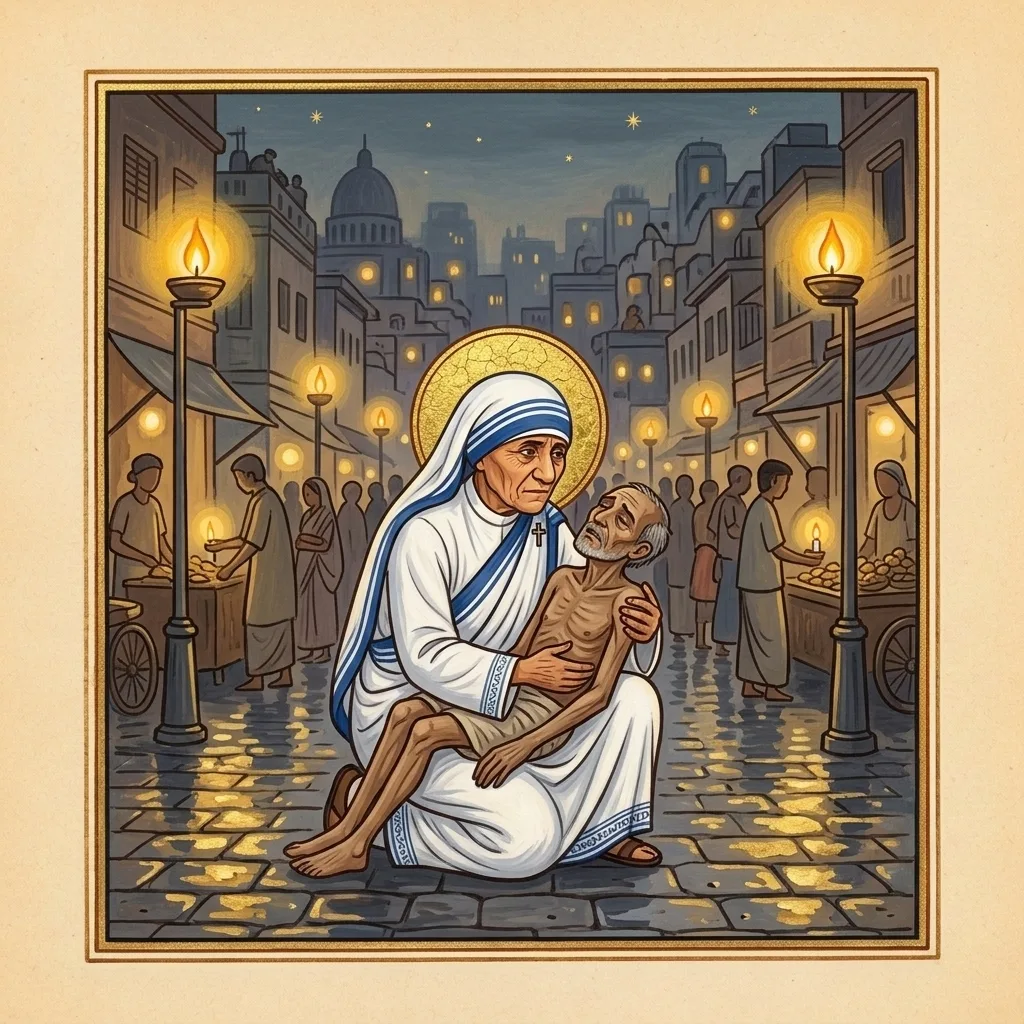 1
1She weighed barely ninety pounds. She had no money, no organization, no plan. And yet she walked into the slums of Calcutta and began picking dying strangers up off the street — one by one, with her bare hands. The world would never be the same.
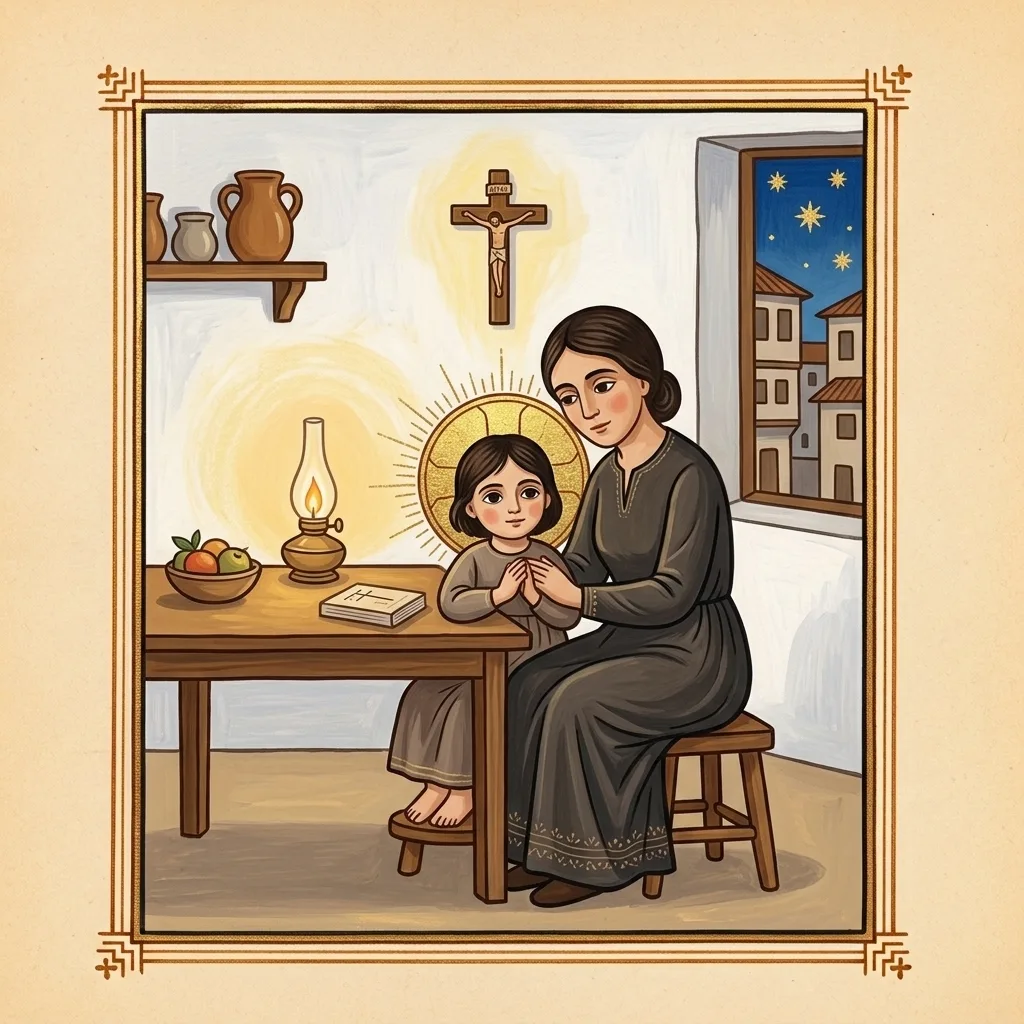 2
2She was born Anjezë Gonxhe Bojaxhiu in 1910 in Skopje — a city then part of the crumbling Ottoman Empire. Her family was Albanian, Catholic, and close-knit. Her father, a successful merchant, died suddenly when she was eight, leaving a wound she would carry quietly for the rest of her life.
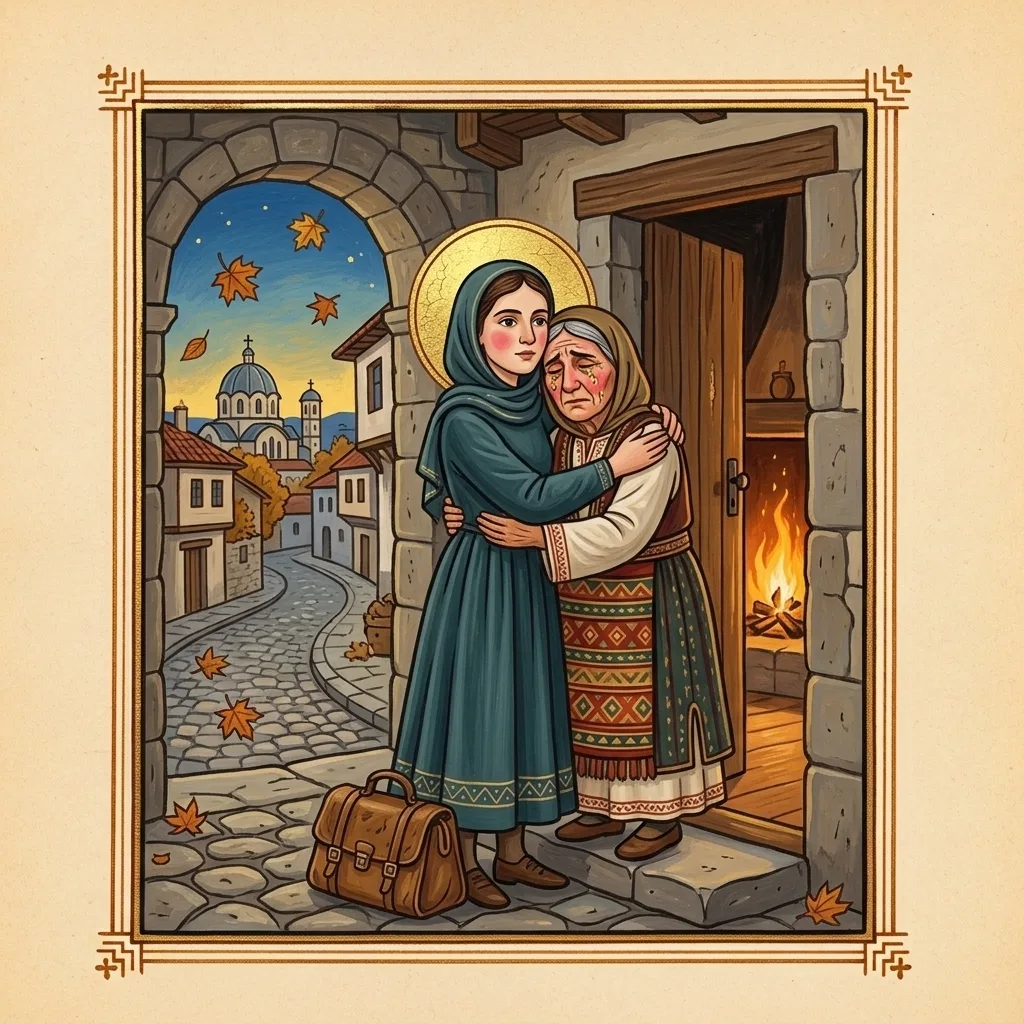 3
3By age twelve, Anjezë felt something stirring — a pull toward God she couldn't explain. She read missionary letters from Bengal aloud to her church youth group and felt her pulse quicken. At eighteen, she made the most difficult decision of her young life: she would leave her family and her homeland forever.
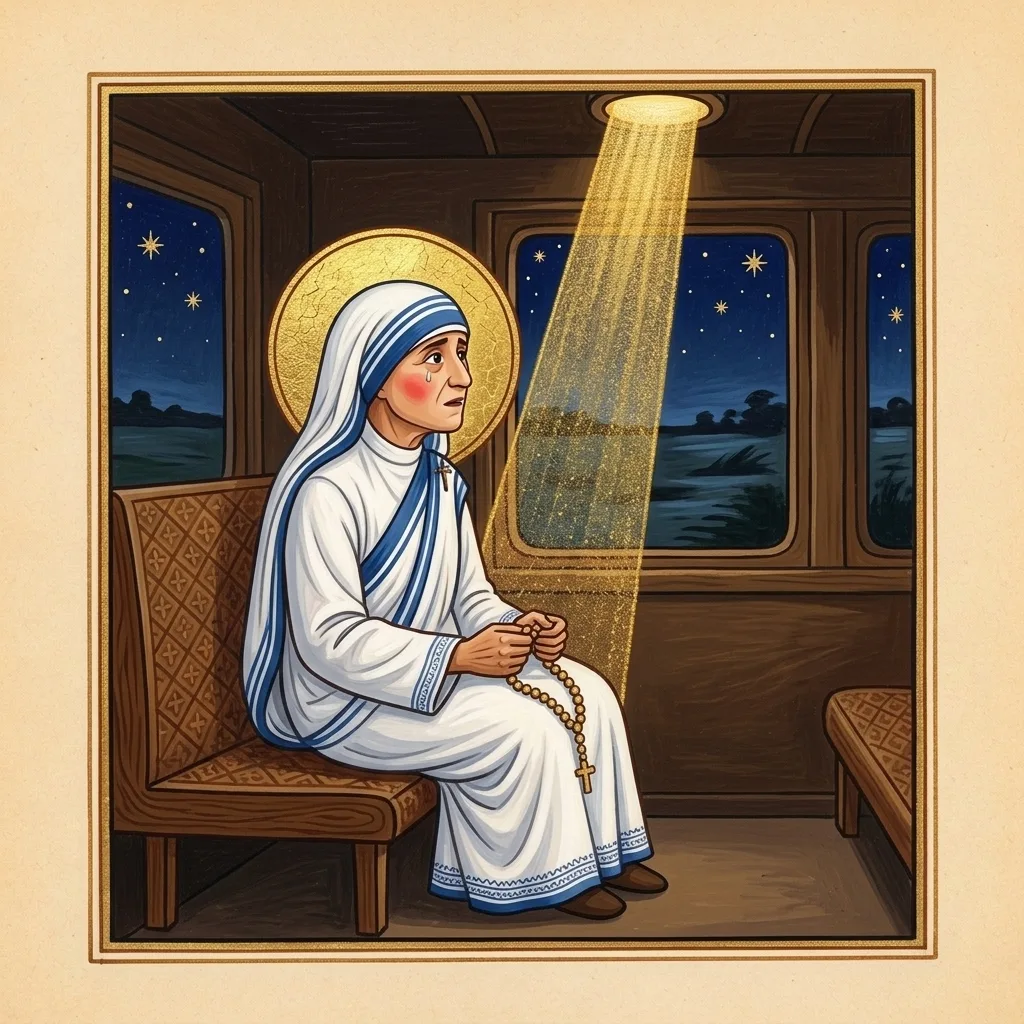 4
4September 10, 1946. Sister Teresa is on a train rattling toward Darjeeling for a retreat. Then — in a moment she will later call 'the call within a call' — she hears it. Not a voice exactly, but a certainty so total it shakes her: leave the convent. Go to the poorest of the poor. This is what God wants.
 5
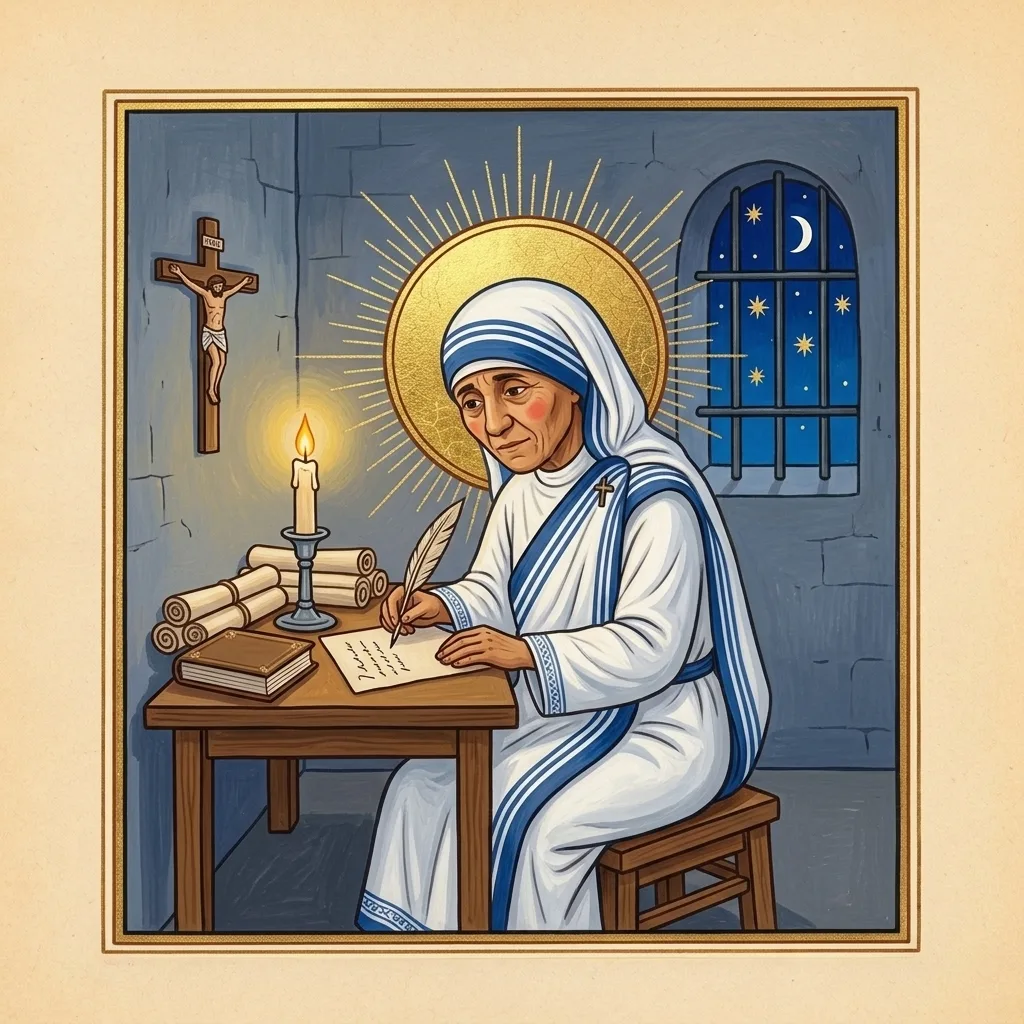
5The Church said: wait. The archbishop needed convincing. Rome needed convincing. For two years she fought through layers of bureaucracy, living inside a convent while the streets outside held thousands of dying people she couldn't yet reach. Patience, she would later teach, is the hardest prayer.
 6
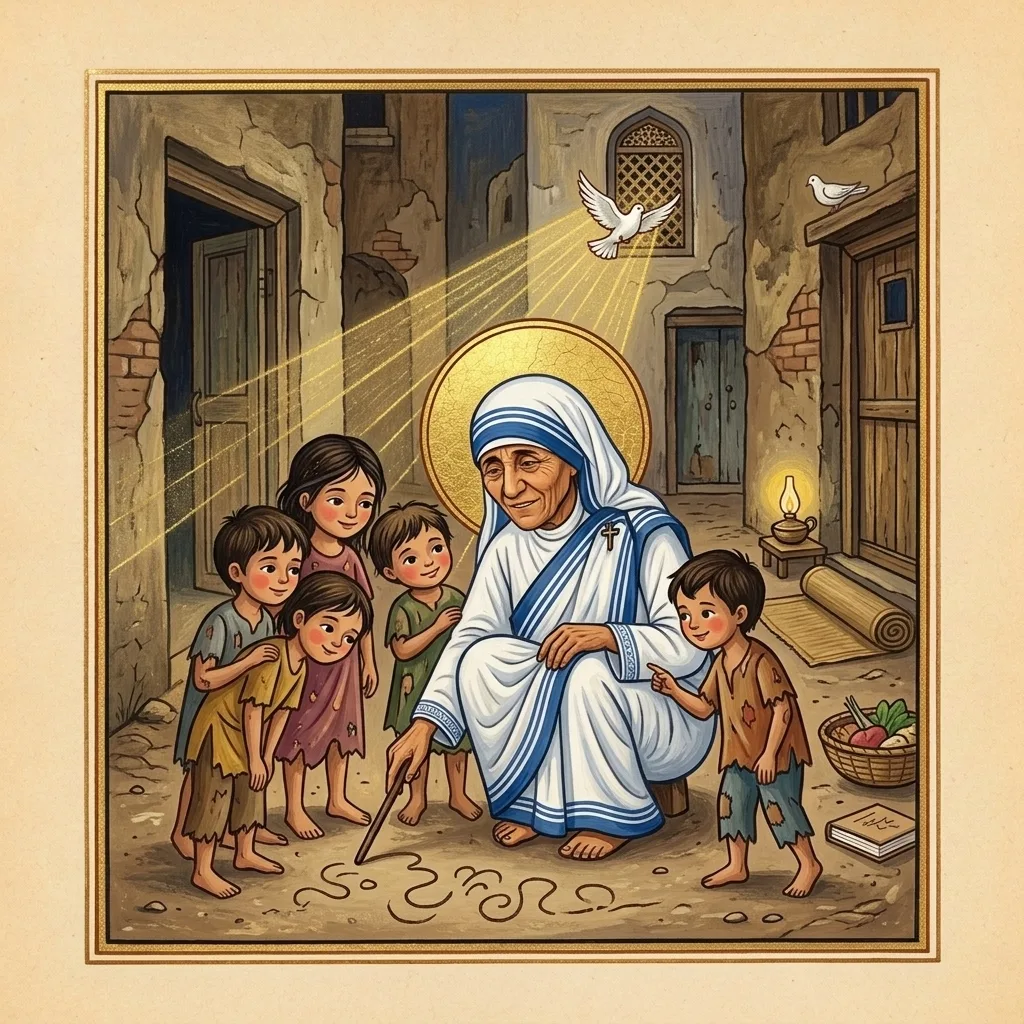
6In 1948, permission finally came. She traded her Loreto habit for a plain white cotton sari edged in blue — the color of the Virgin Mary — and walked out into the streets of Calcutta. She had five rupees in her pocket. She started a school for slum children by drawing letters in the dirt.
 7
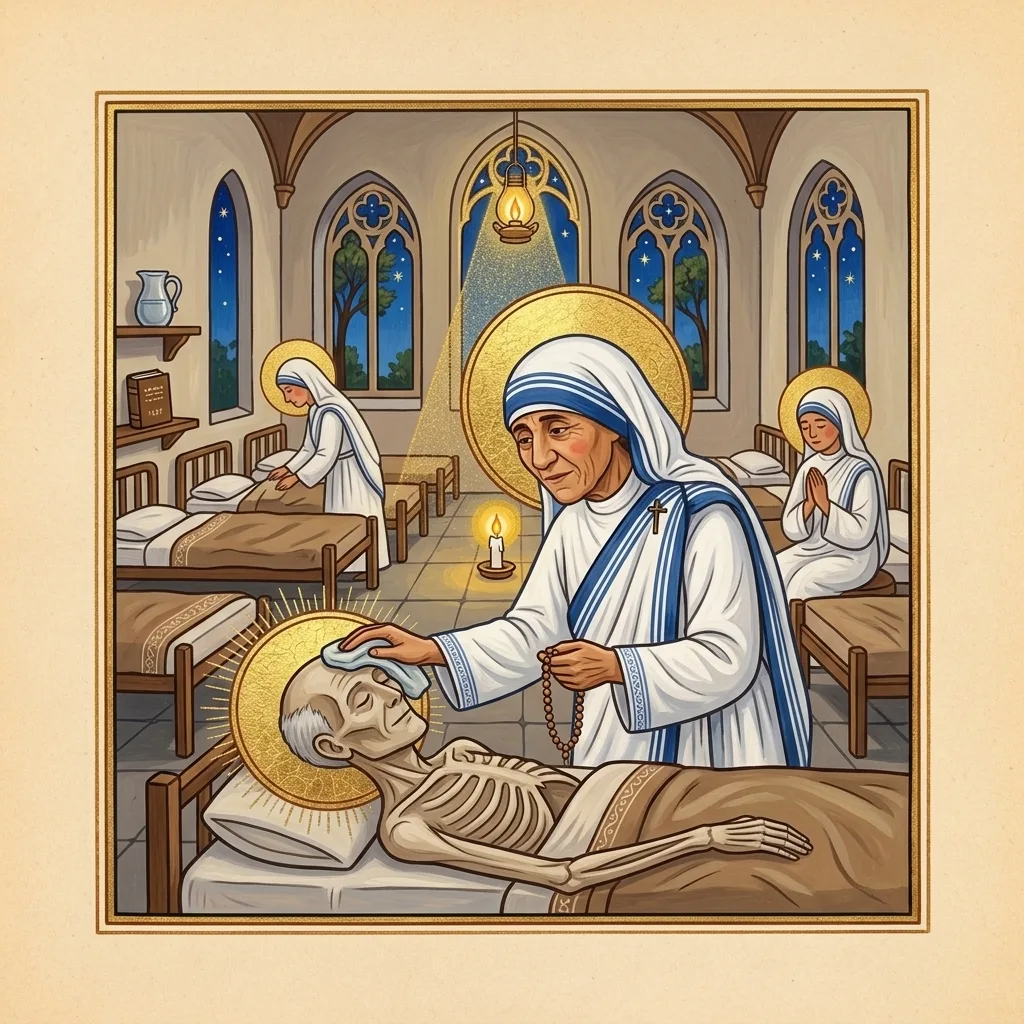
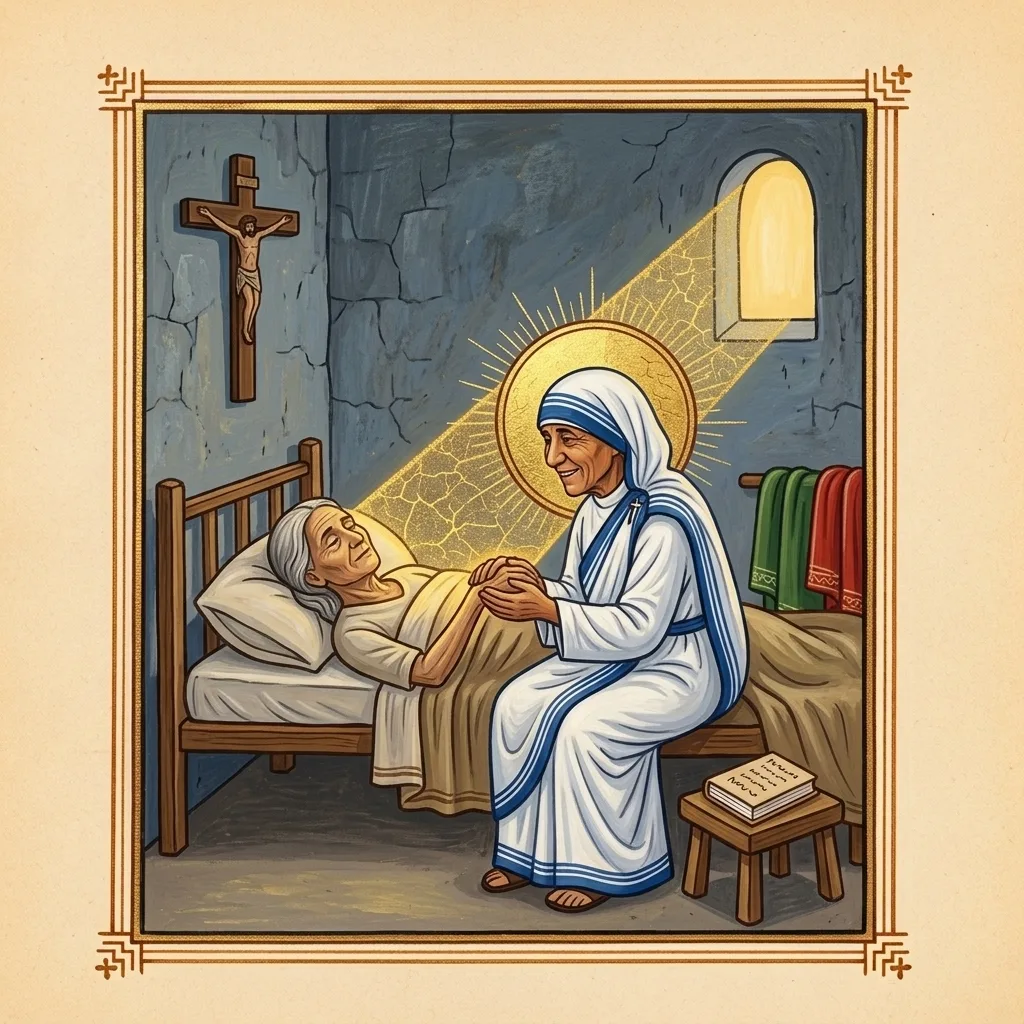
7In 1952 she opens Nirmal Hriday — Pure Heart — a home for the dying. People left in gutters are brought here, laid on clean cots. She asks nothing. She lets them die knowing someone held their hand. 'Small things with great love.'
 8
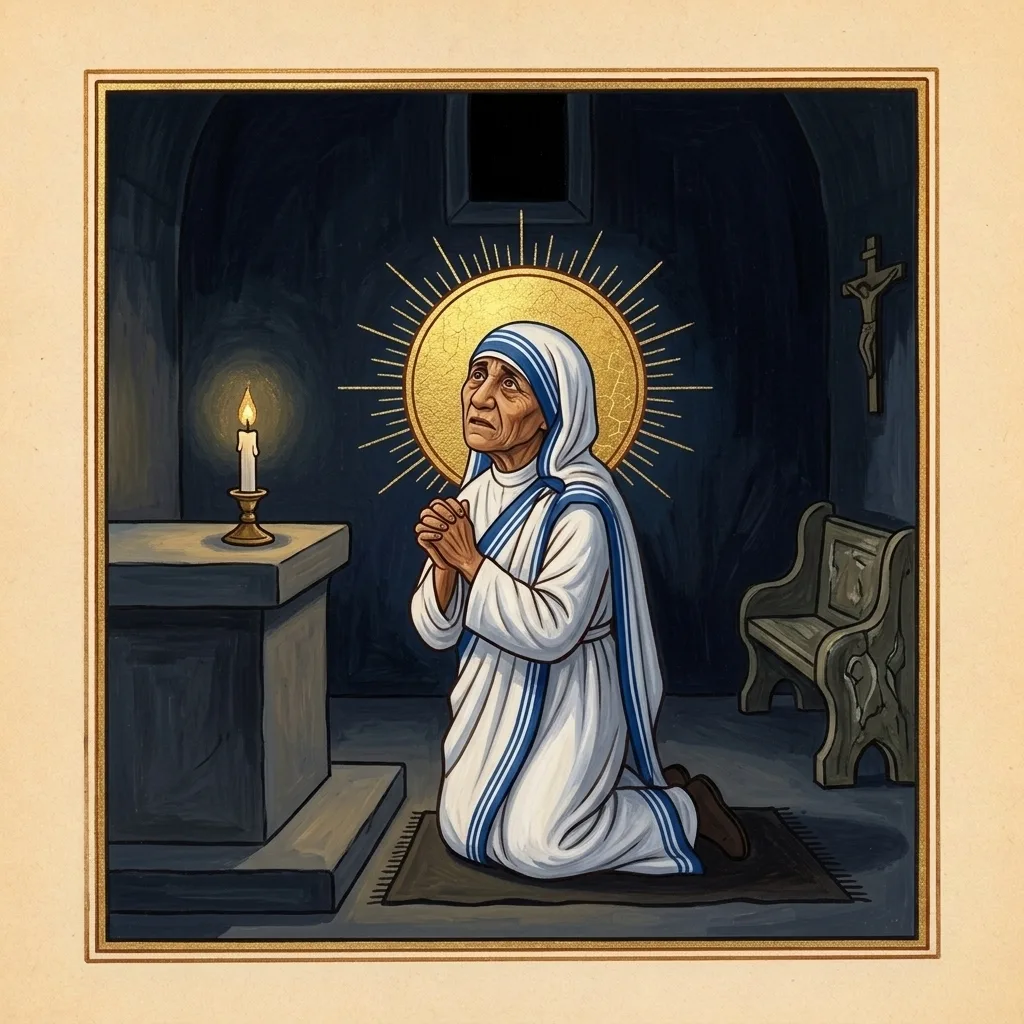
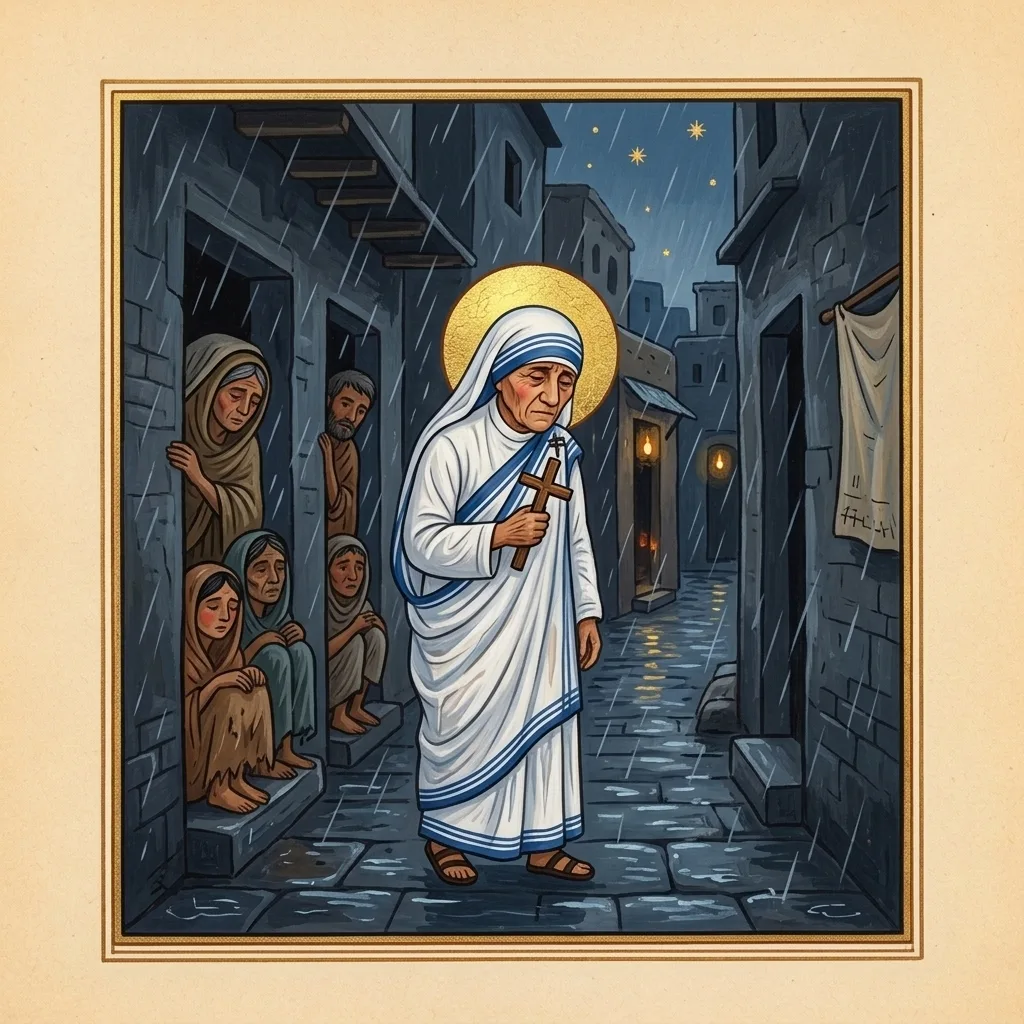
8Here is the surprise that most people never know: while the world celebrated her as a living saint, Teresa felt almost nothing. No comfort. No sense of God's presence. For fifty years she prayed into what felt like silence. She called it 'the darkness.' She told almost no one.
 9
9She confided to her spiritual director: 'There is such terrible darkness within me. I am told God loves me — and yet the reality of darkness and coldness and emptiness is so great that nothing touches my soul.' She was carrying the cross of the people she served — abandoned, invisible, unheard. And she carried it anyway.
 10
10And yet — in 1946, in 1979, and in the eyes of every person she picked up from the gutter — there had been moments of piercing clarity. She believed she saw Christ in every suffering face. 'Each one of them is Jesus in disguise,' she said. The darkness never erased that vision. It deepened it.
 11
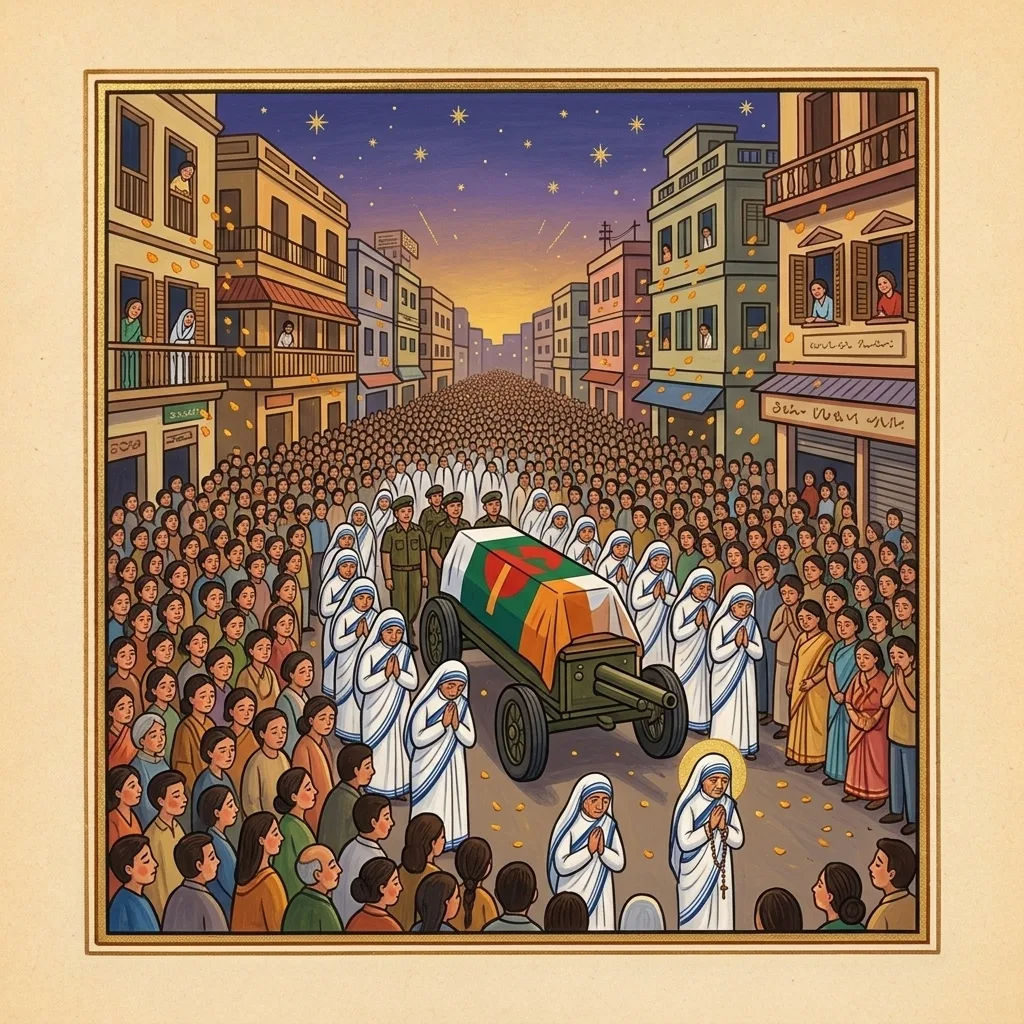
11She died September 5, 1997, in the city she chose over everything. The Indian government gave her a state funeral. Her body was carried on the same gun carriage that bore Gandhi. The gutters she'd walked every day were lined with a million weeping strangers.
 12
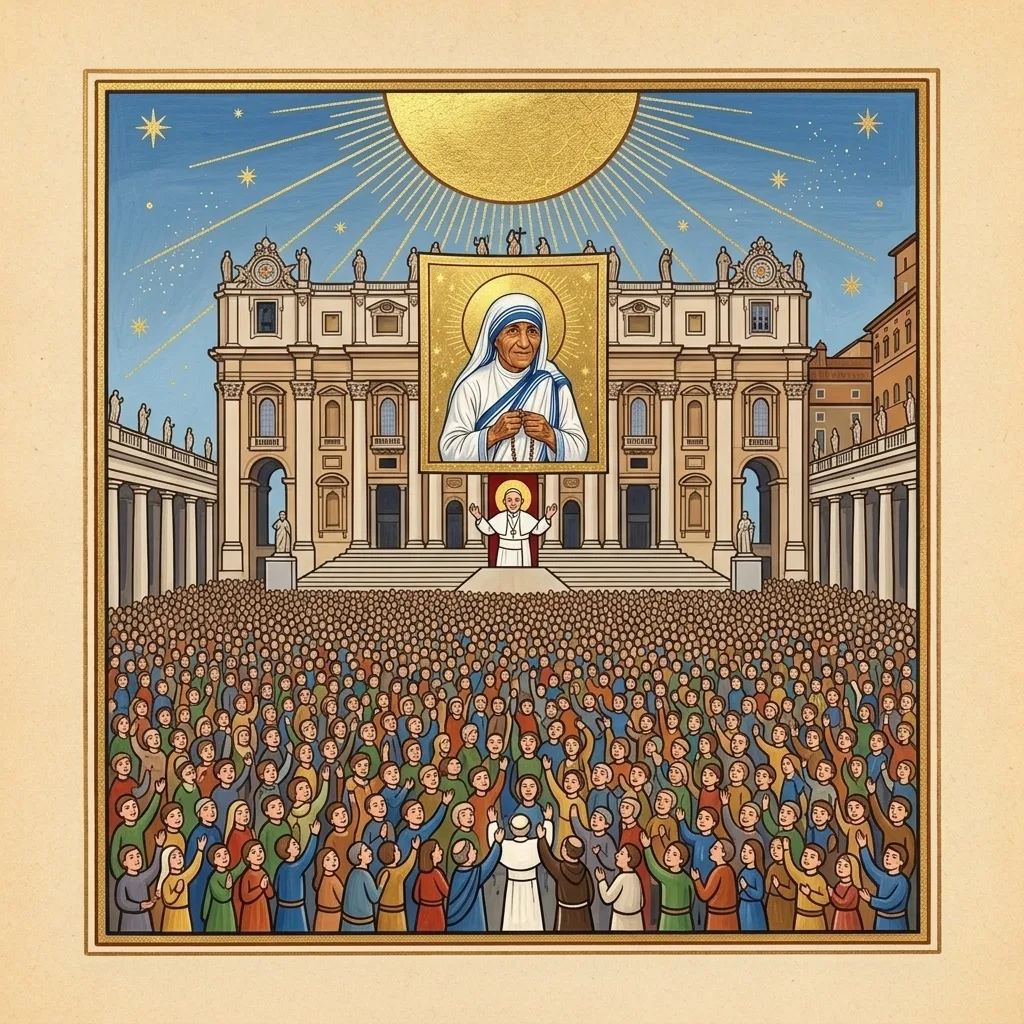
12Pope Francis canonized her on September 4, 2016, before one hundred thousand people in St. Peter's Square. The Missionaries of Charity she founded — begun with thirteen women — now numbers over 4,500 sisters in 133 countries. She built her empire out of nothing but love, one person at a time.
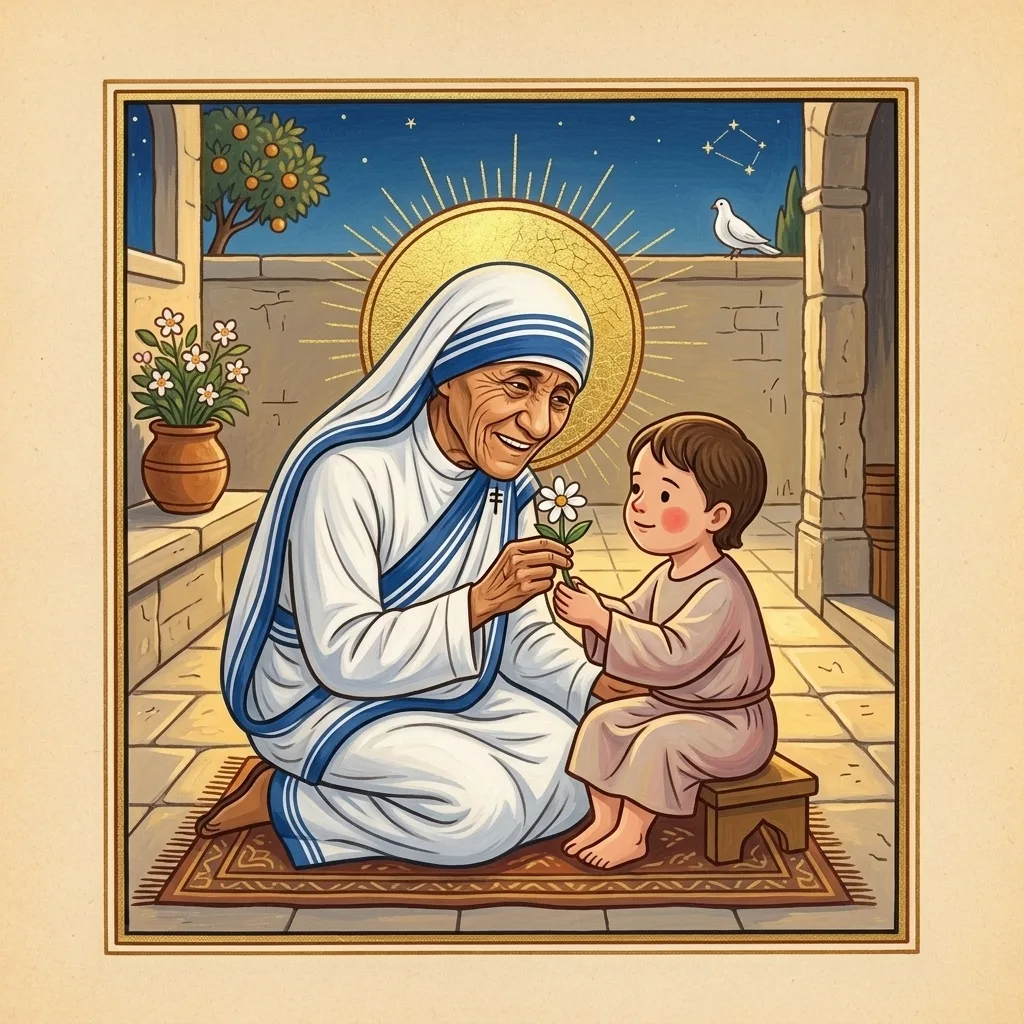 13
13Here is what Teresa hands to you across the years: you do not need to change the world. You need to love the one person in front of you — fully, attentively, as if they are the only person on earth. That is the whole secret. Small things with great love. Start there. Start today.
Life & Times
Early Life
Born Gonxhe Bojaxhiu in Skopje; joined the Sisters of Loreto in Ireland and taught geography in Calcutta, eventually becoming headmistress.
Turning Point
The 'Call within a call' on a train to Darjeeling in 1946 moved her to leave the convent and serve the poorest of the poor directly.
Legacy
Founded the Missionaries of Charity, won the Nobel Peace Prize in 1979, and sustained her ministry through a hidden, decades-long spiritual darkness.
Historical Context
Sources & historical notes
Dates and later-life details are left uncertain where the sources do not establish them. Historical summaries are secondary overviews; Scripture and Church documents are linked separately where available.
The Saint's Path
Words & Wisdom
A Simple Path
A collection of stories and teachings on faith, love, and service, compiled by Lucinda Vardey from conversations with Mother Teresa and members of the Missionaries of Charity.
Read MoreDear Jesus, help me to spread Thy fragrance everywhere I go. Flood my soul with Thy spirit and life. Penetrate and possess my whole being so utterly, That all my life may be only a radiance of Thine. Shine through me, and be so in me, That every soul I come in contact with May feel Thy presence in my soul. Let them look up and see no longer me, but only Jesus!
Related Saints
Connections in the communion of saints
Thérèse of Lisieux
Took her name from Thérèse and lived out the Little Way serving the poorest of the poor.
Maximilian Kolbe
Both exemplified radical self-gift to the most vulnerable—Kolbe in Auschwitz, Teresa in Calcutta.
John Paul II
Close collaborators in service to the poor. He beatified her and she attended his papal events.