Sanctified Life
AD 1225 — AD 1274
Also Known As
"Wonder is the desire for knowledge."
Thomas Aquinas reconciled Aristotle with Christian revelation, arguing that faith and reason are not enemies but complementary paths to the same Truth. He abandoned a noble family's ambitions for him — a prestigious Benedictine abbacy — to join the mendicant Dominicans, surviving kidnapping by his own brothers to pursue the vocation. Yet after a mystical vision near his death in 1274, he stopped writing the unfinished Summa Theologiae, declaring all he had written 'like straw' compared to what God had revealed.

Interactive Lesson
The Illustrated Life
Thomas Aquinas's story in 13 illustrated moments — tap any scene to begin there.
 1
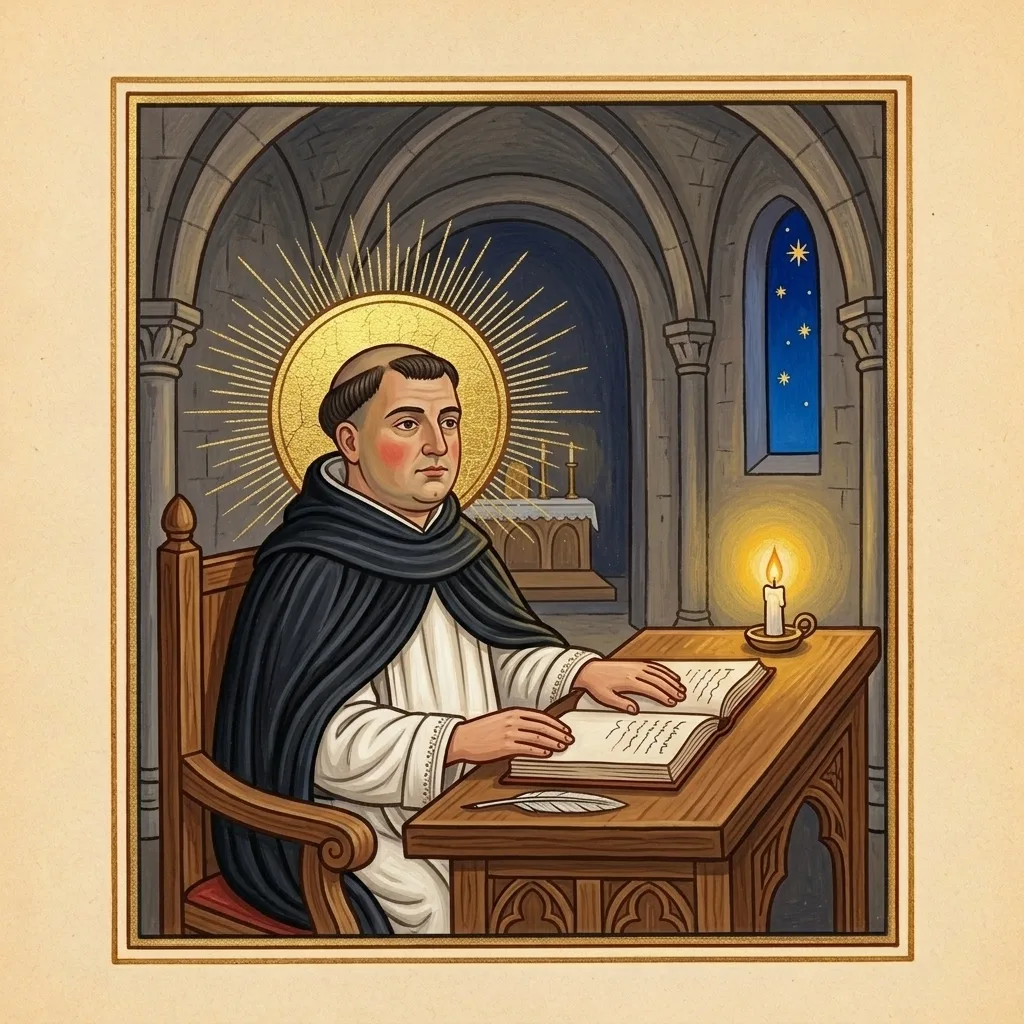
1One December morning in 1273, the greatest scholar in Christendom put down his quill — forever. Eight million words about God. Now he called every one of them worthless. Not from despair. From seeing something so far beyond words that language felt like straw.
 2
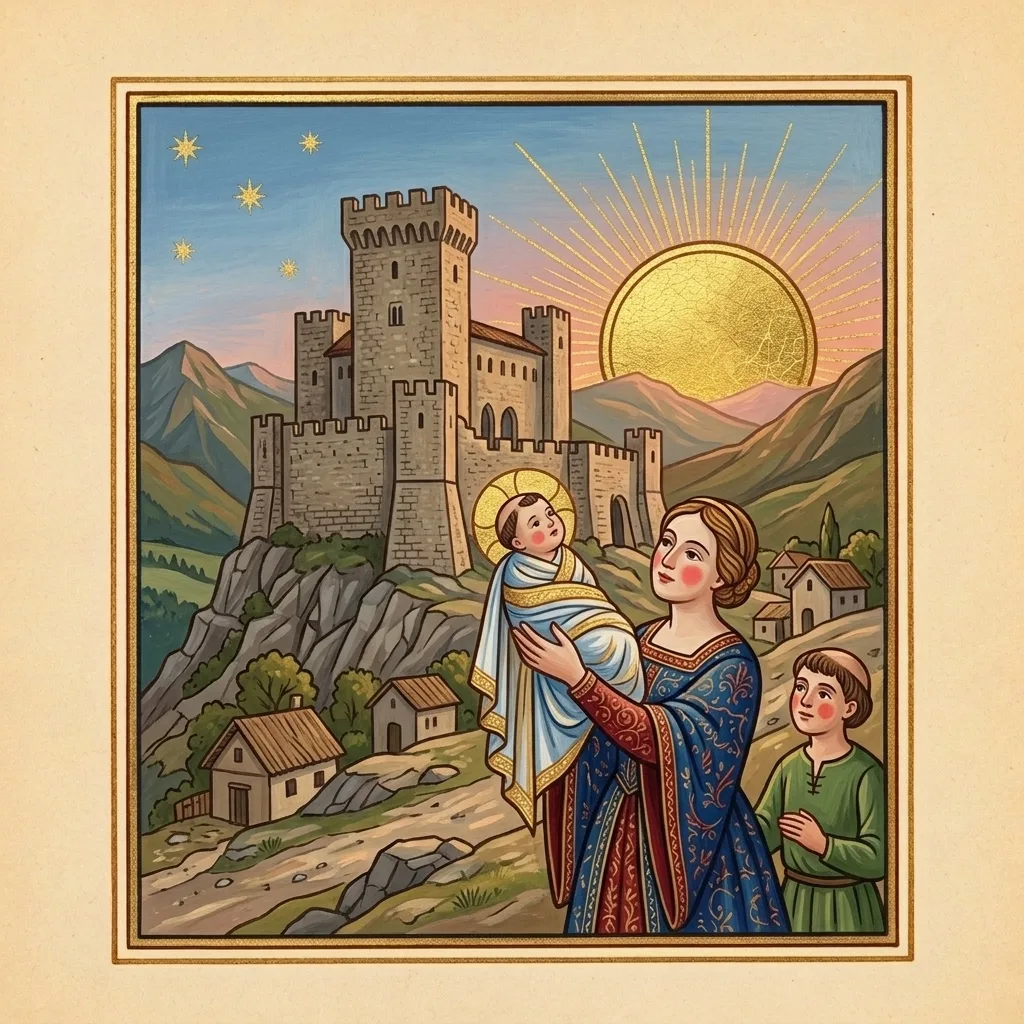
2He is born in 1225 in a stone castle above the town of Roccasecca, in the rugged hills between Rome and Naples. His family is noble, connected to emperors and kings, and they have a plan for him: he will one day rule the great Benedictine Abbey of Monte Cassino — wealthy, powerful, prestigious. God, apparently, has other ideas.
 3
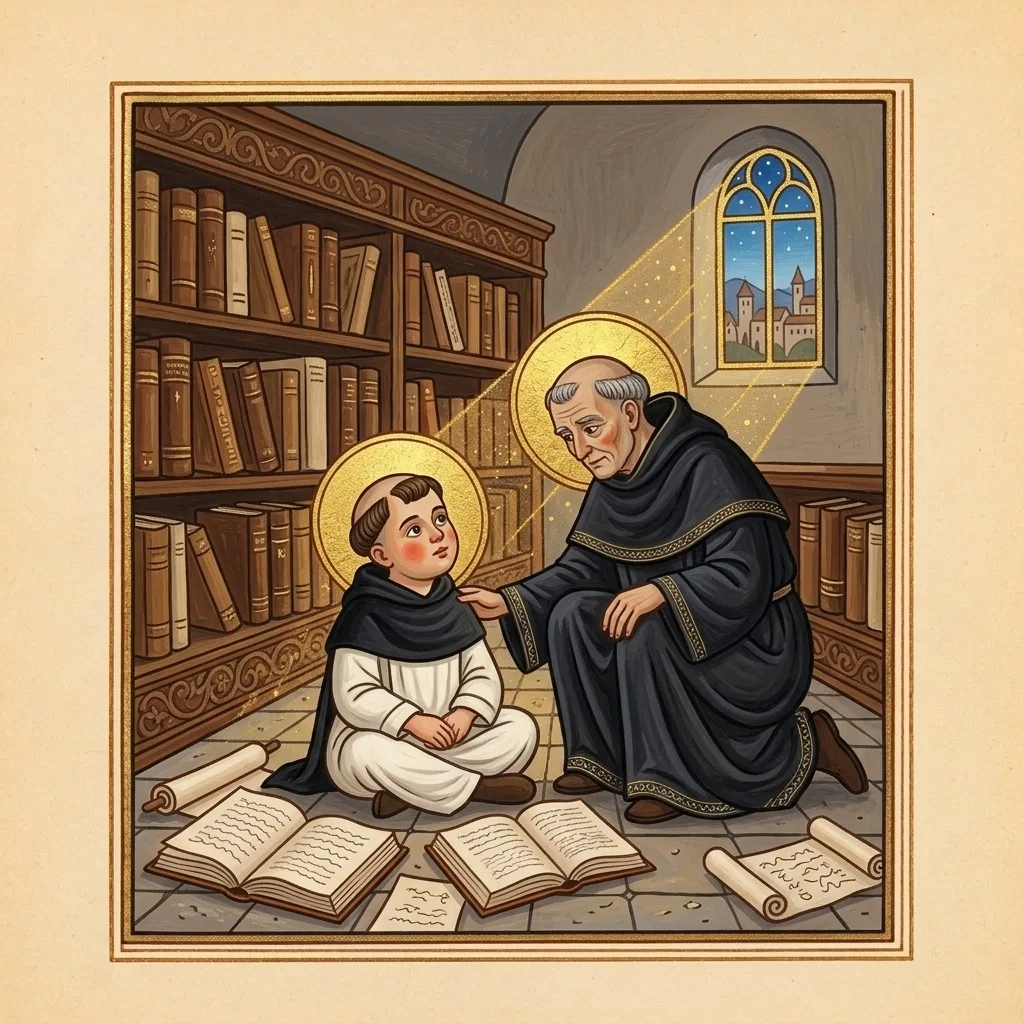
3At five years old, Thomas is sent to Monte Cassino, the great monastery founded by St. Benedict himself. The boy sits in the library surrounded by books almost as tall as he is — and he won't stop asking the monks one question. The monks remember it decades later. Over and over, the small, serious child asks: 'What is God?'
 4
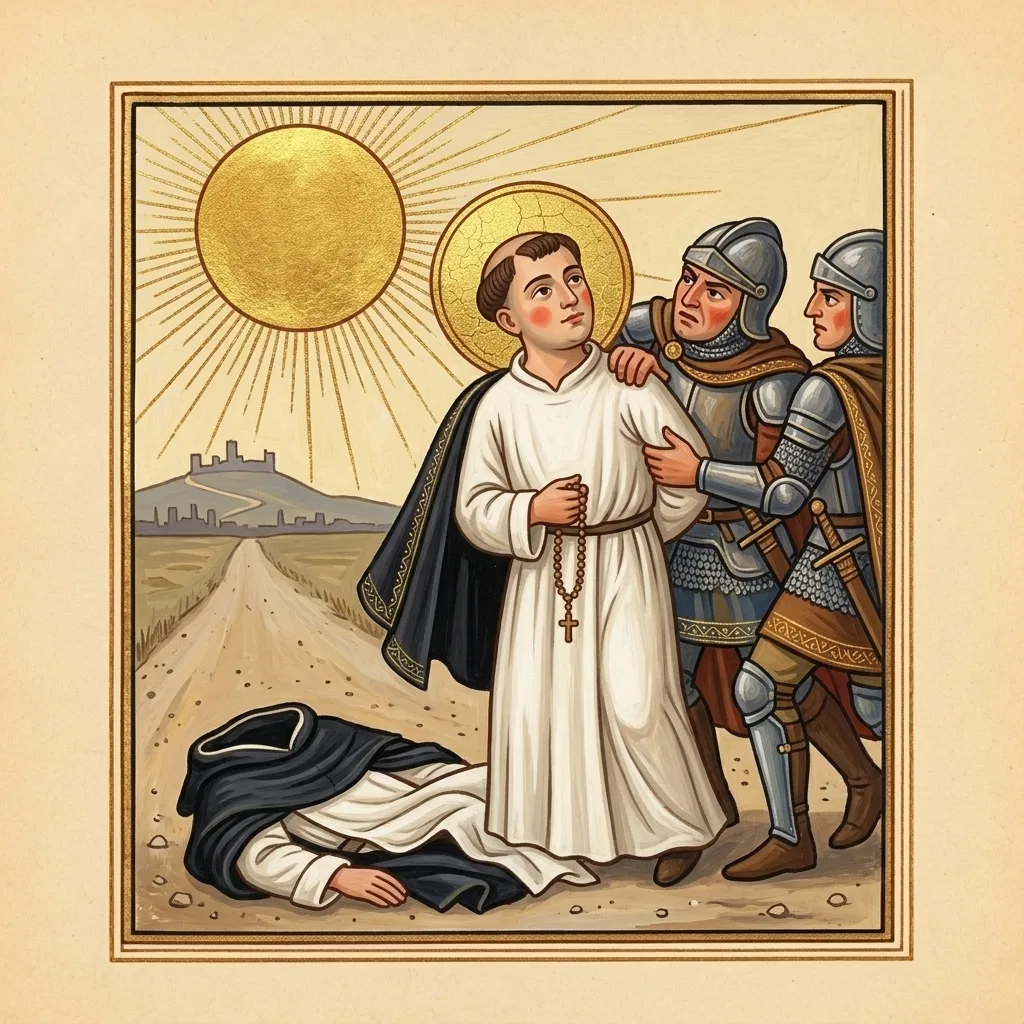
4In 1244, Thomas walks away from every inheritance, every title, every future his family planned — and joins the Dominicans, wandering preachers who own nothing. His mother is horrified. His brothers are furious. So they kidnap him.
 5
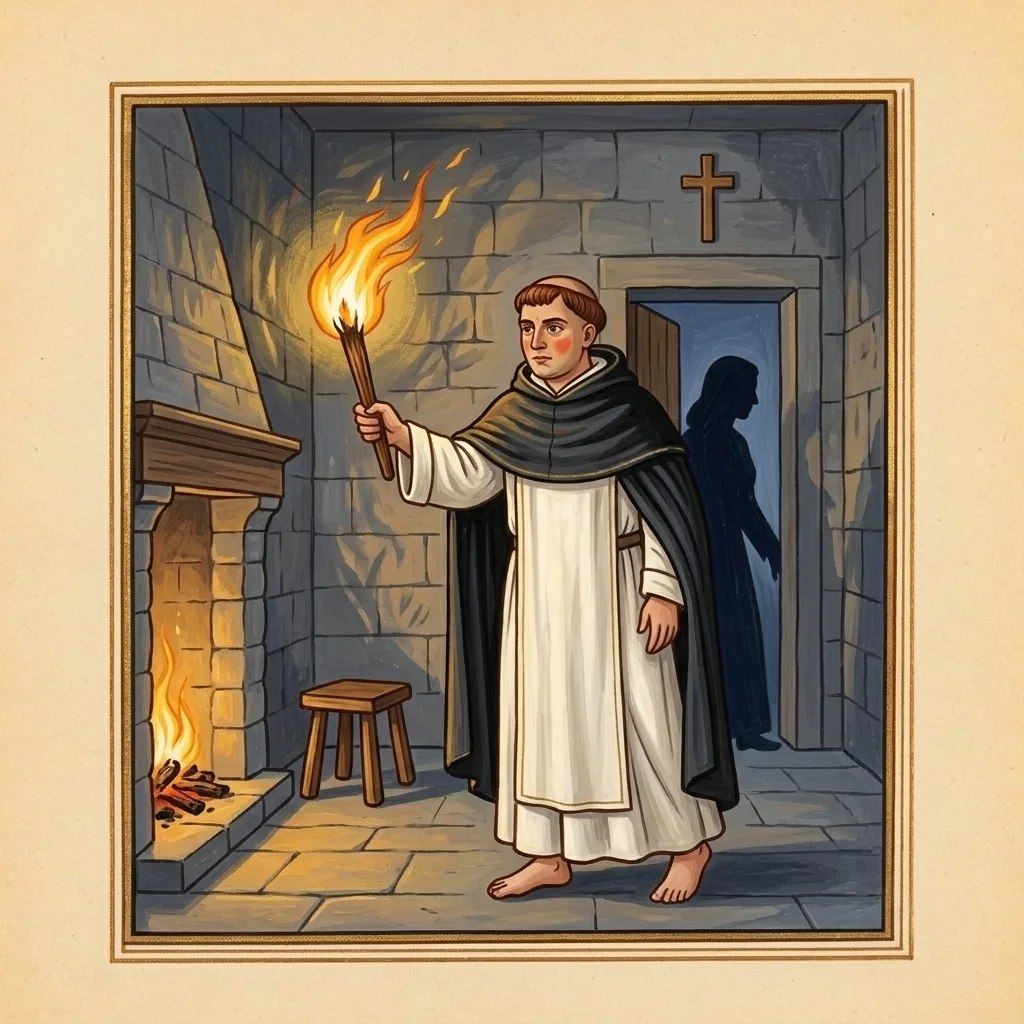
5For over a year, his family locks him in the family castle. They try everything — arguments, tears, a beautiful woman sent to his room one night to tempt him back to ordinary life. Thomas grabs a burning brand from the fireplace and drives her out. Then he falls to his knees and prays. He is not angry. He simply cannot be moved.
 6
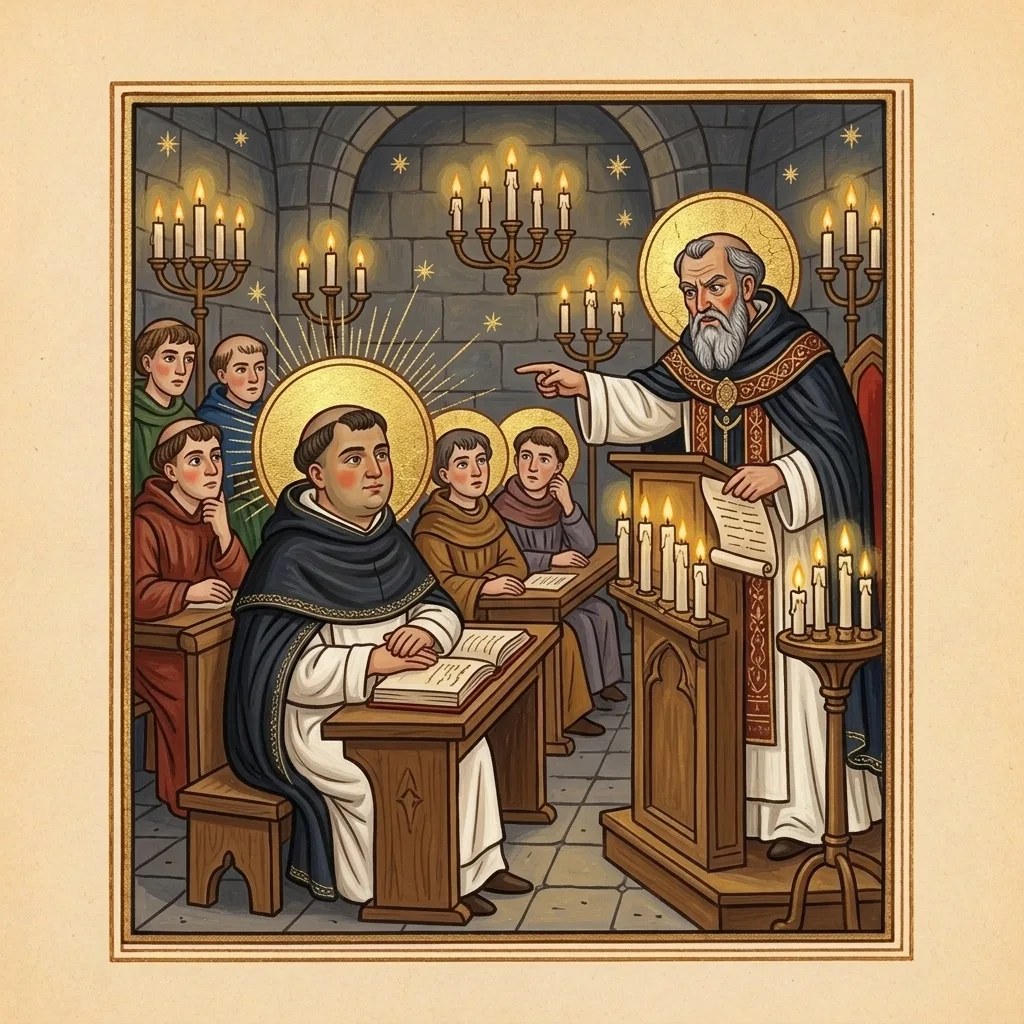
6His classmates call him 'the Dumb Ox.' Thomas says nothing. Then his teacher, Albert the Great, stops class cold: 'This dumb ox shall bellow so loud his bellowing will fill the whole world.' Wonder, Thomas will write, is the desire for knowledge. He is full of it.
 7
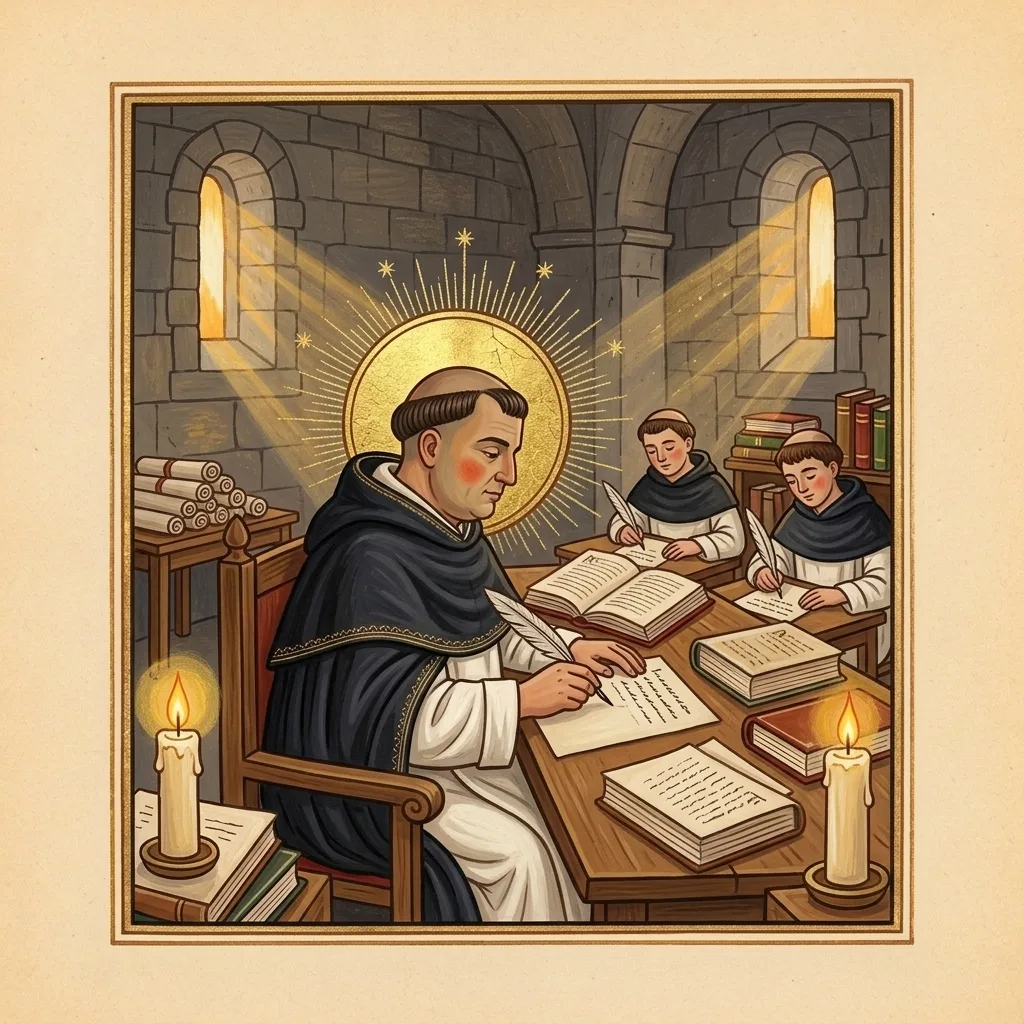
7In 1265, Thomas begins what he calls 'a manual for beginners.' Eight years later, the Summa Theologica spans volumes — a cathedral of thought on God, virtue, law, and love. Precise as a surgeon. Warm as a mystic. The greatest work of theology ever written.
 8
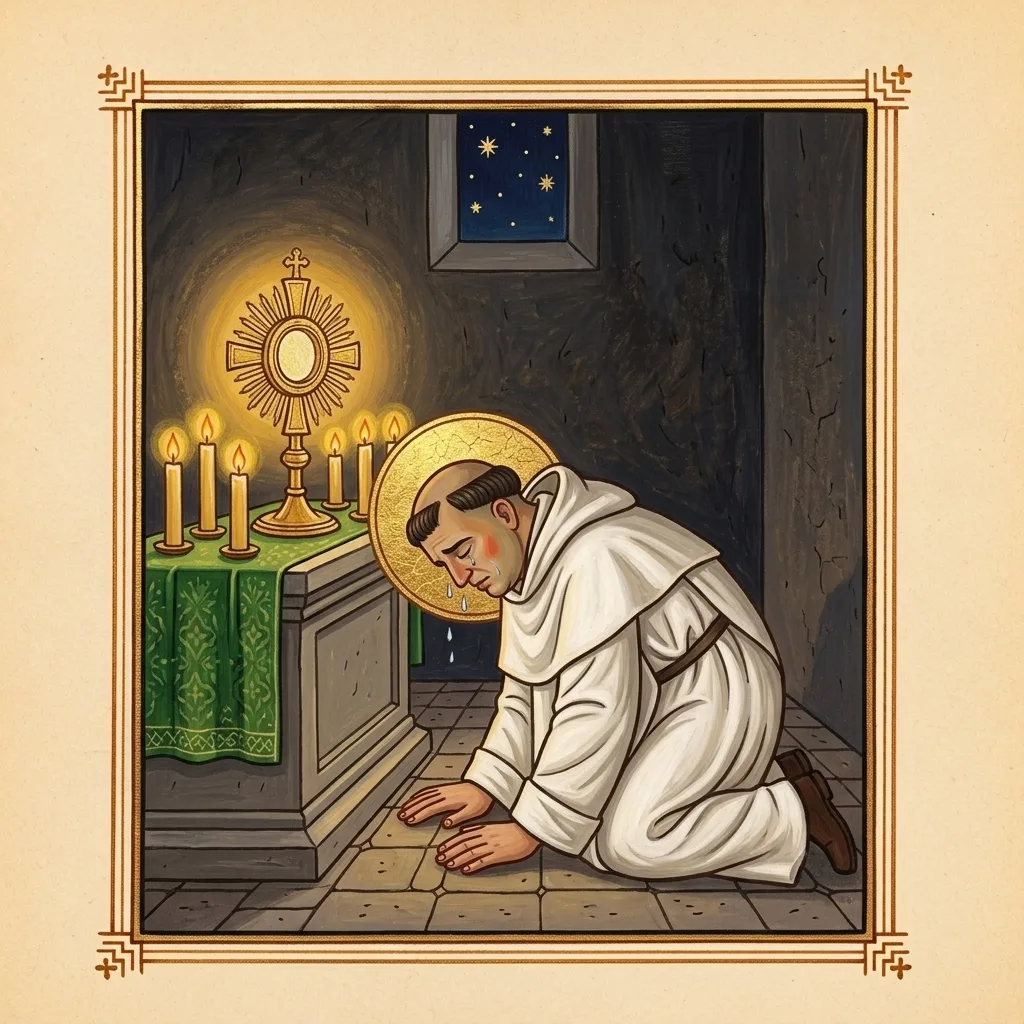
8The man who wrote millions of words about God was known above all for his silence. Colleagues described a gentleness almost strange. He wept during Mass. He wrote hymns still sung today. The iron logician was, at his core, a poet in love.
 9
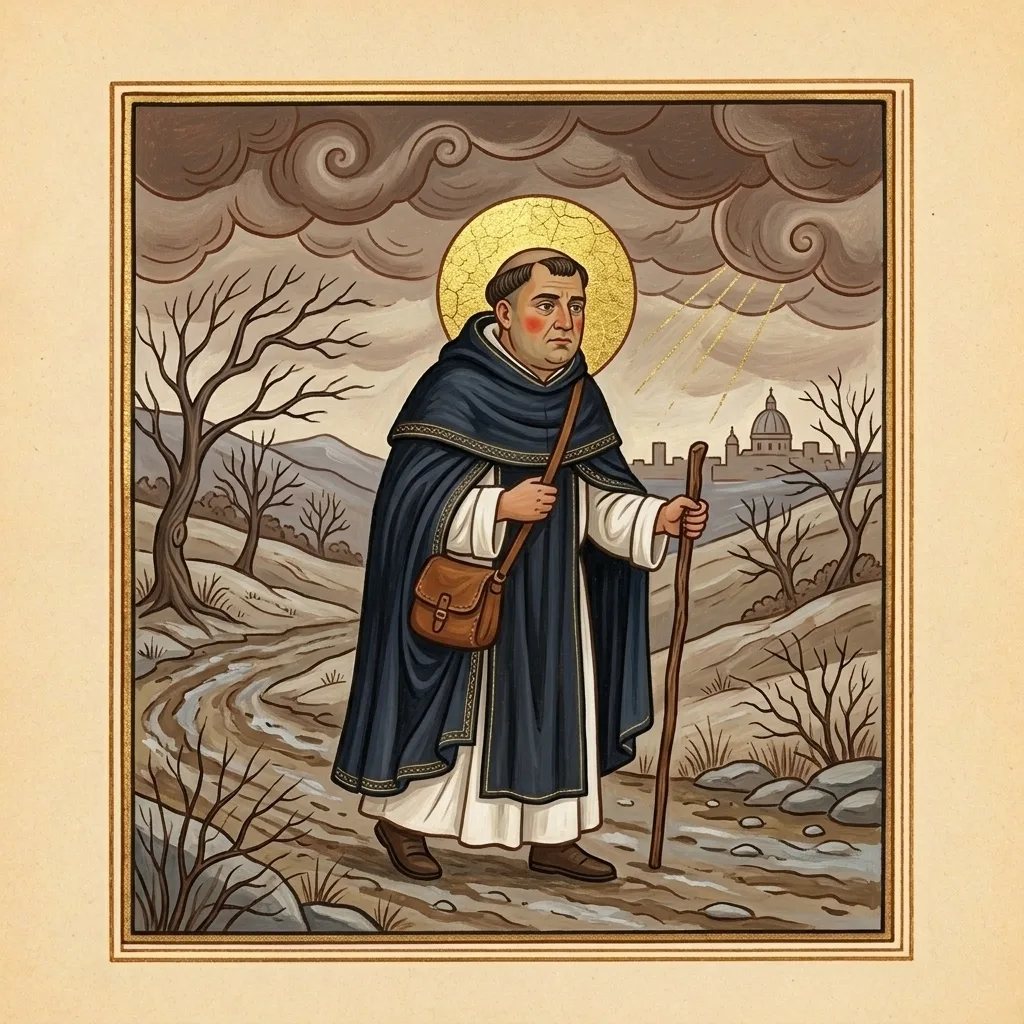
9He dictates to multiple secretaries at once, sleeps only hours a night, travels at the command of popes. 'Fear drives compassion right out of our hearts,' he writes — and perhaps he fears stopping. The body he drives without mercy begins, finally, to break.
 10
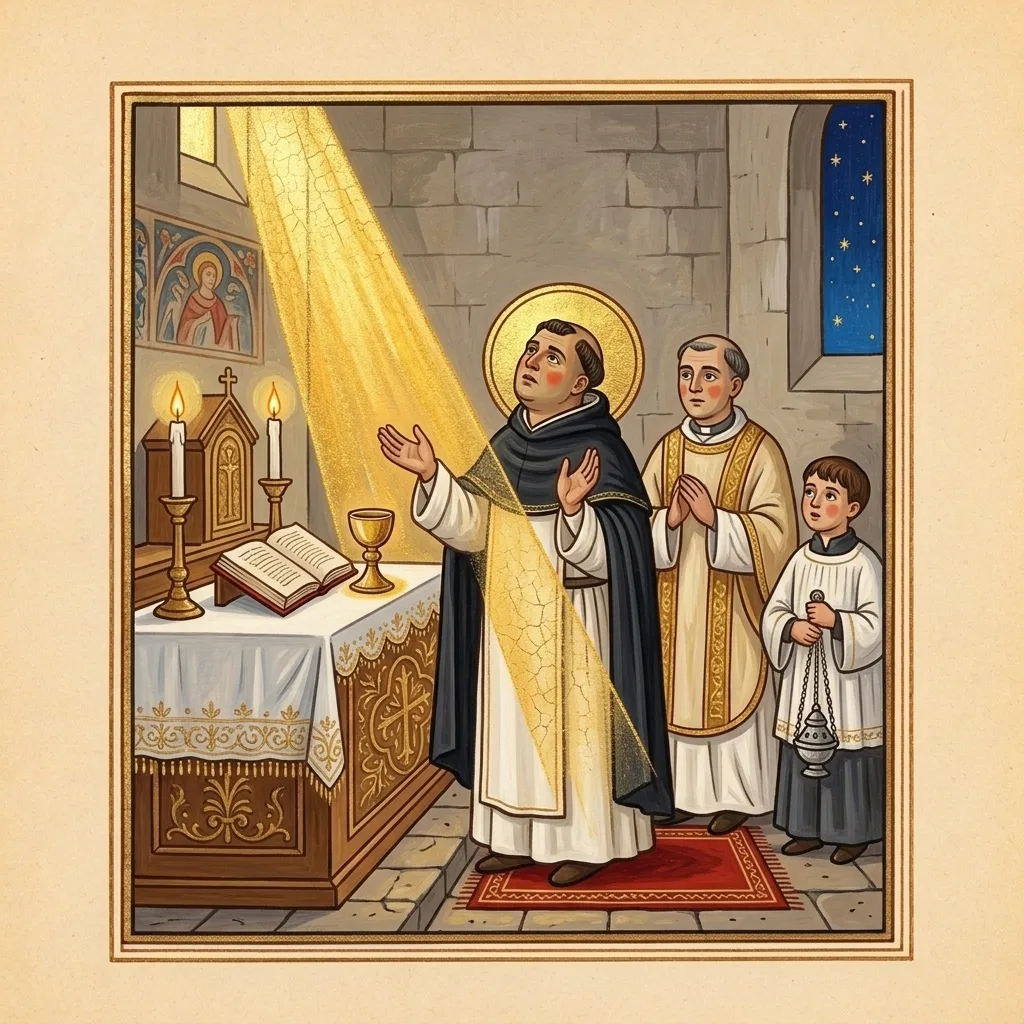
10On December 6, 1273, Thomas has a vision during Mass. He never describes it. He only says: 'All I have written seems like straw compared to what has been revealed.' He puts down the quill — and holds everything he built like a handful of straw, and smiles.
 11
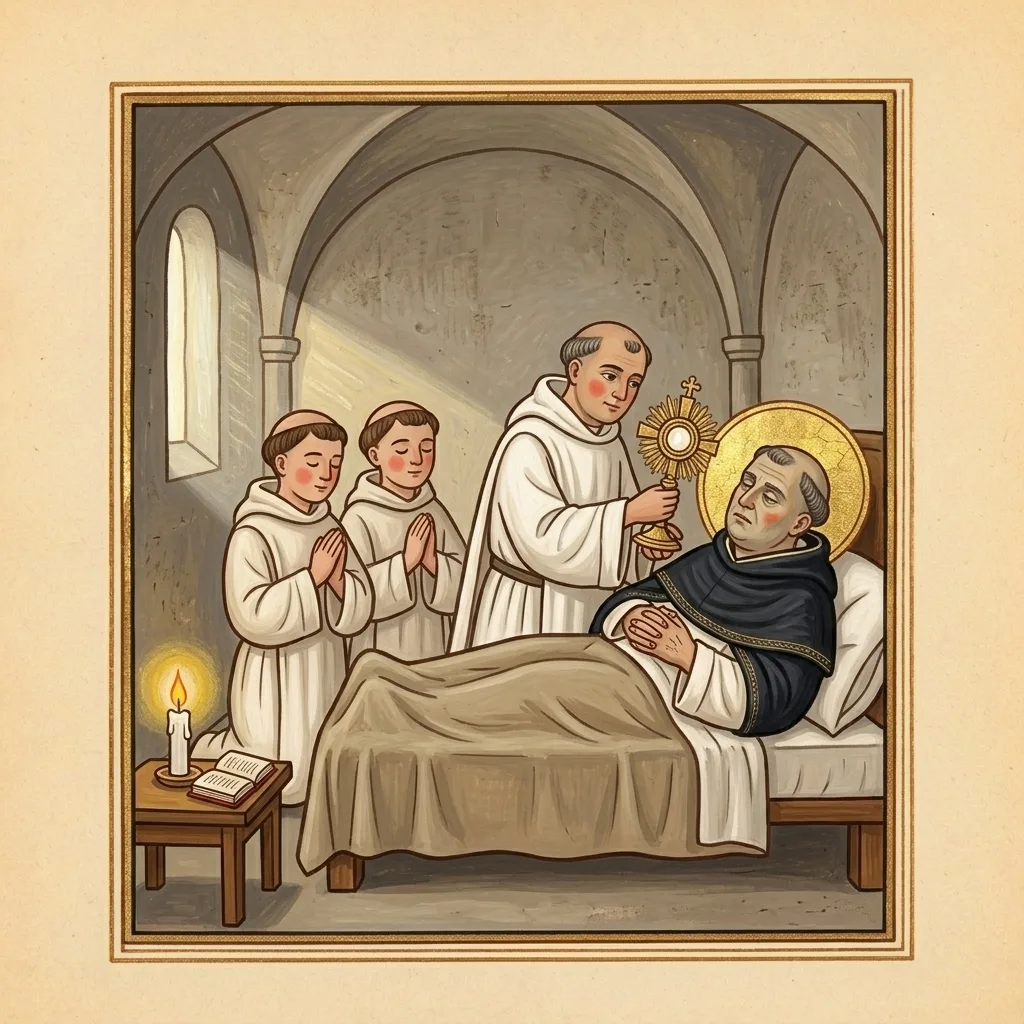
11He dies in March 1274, just forty-eight, at a small monastery on a road he was too sick to finish. He asks for the Eucharist and says simply: 'I receive you, the price of my soul's redemption.' The monks say the room fills with a sweetness they cannot name.
 12
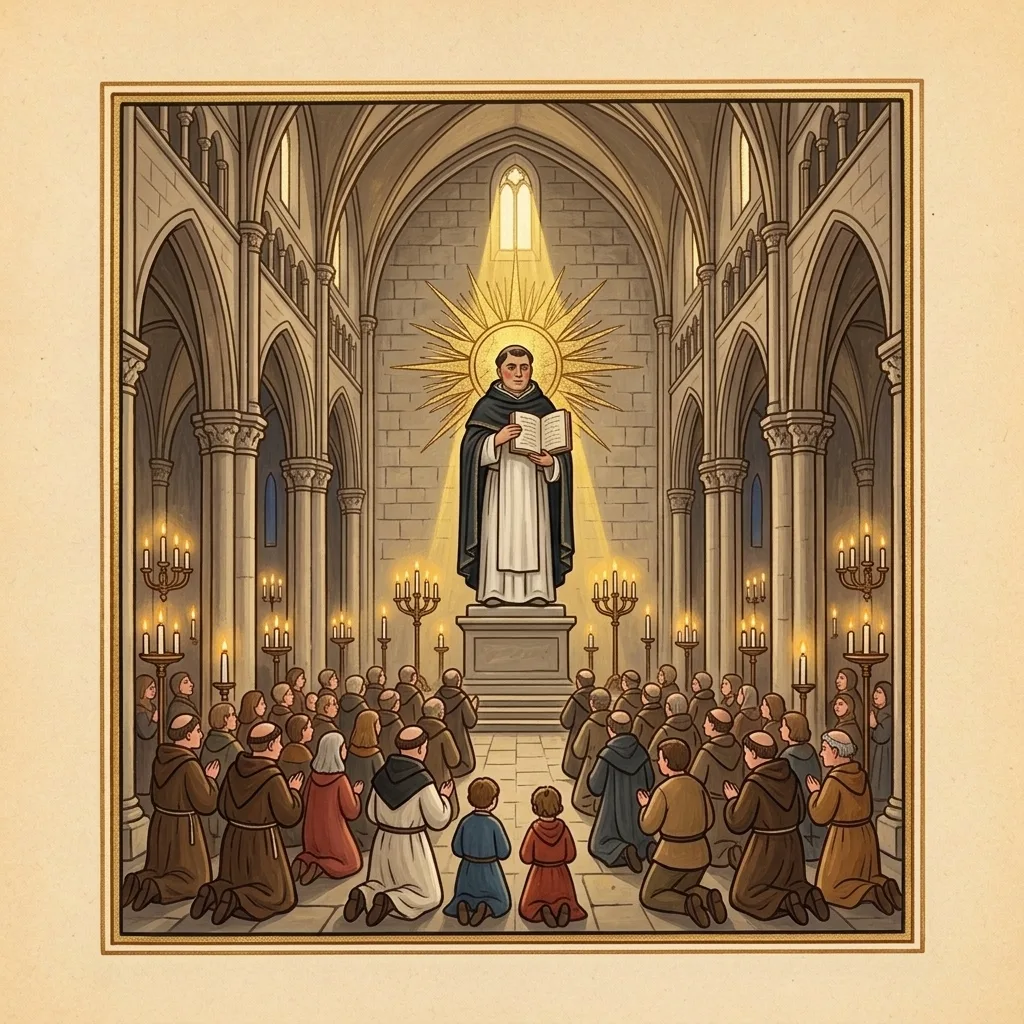
12Canonized in 1323. Declared the Church's intellectual backbone in 1879. His Summa stood beside the Bible in courts of law for centuries. Every Catholic university still teaches his method. He is called the Angelic Doctor — and the Dumb Ox bellowed, just as Albert promised.
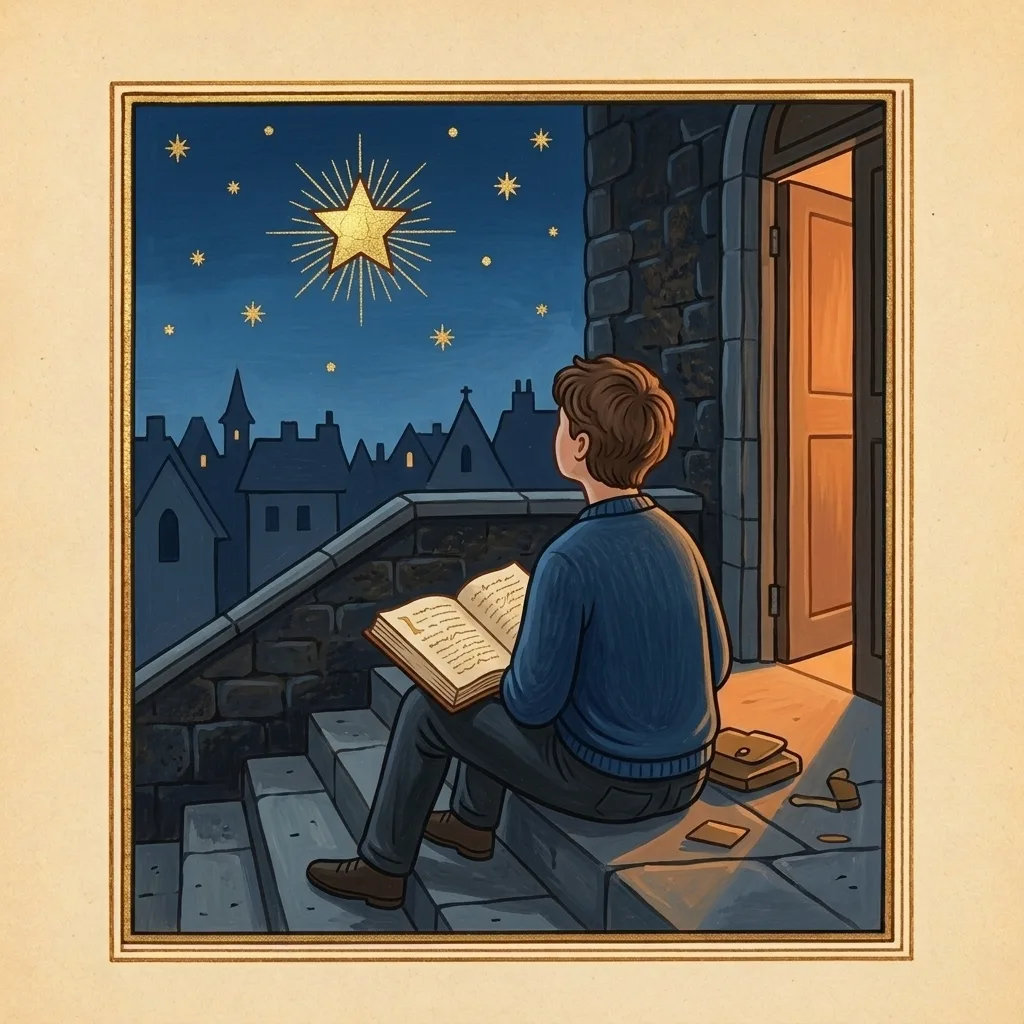 13
13Thomas spent his life insisting your mind and your faith are not enemies. 'Wonder is the desire for knowledge.' Your questions about God are not a problem — they are a prayer. The curiosity you carry in the dark is already a seeking. And all seeking, Thomas would say, ends in the same place.
Life & Times
Early Life
Born 1225 in Roccasecca, Kingdom of Sicily. He defied his noble family's plan for him to become Abbot of Monte Cassino, choosing instead to join the Dominican friars — a decision that led his brothers to kidnap and imprison him for over a year.
Turning Point
Sent to Cologne around 1248 to study under Albert the Great, his silent, deliberate manner earned him the mocking nickname 'The Dumb Ox', to which Albert replied that the ox's bellowing would one day fill the world.
Legacy
Wrote the Summa Theologiae beginning in Rome in 1265, leaving it unfinished after a mystical vision in December 1273. He died at the Cistercian abbey of Fossanova on 7 March 1274, en route to the Second Council of Lyon.
Historical Context
Sources & historical notes
Dates and later-life details are left uncertain where the sources do not establish them. Historical summaries are secondary overviews; Scripture and Church documents are linked separately where available.
Words & Wisdom
“There is nothing on this earth more to be prized than true friendship.”
“Beware of the person of one book.”
Summa Theologica
The monumental compendium of Catholic theology (1265-1274), intended as a manual for beginners. Structured in three parts covering God, Man's purpose of happiness, and Christ as the way to God. Left unfinished after Aquinas's mystical vision.
Summa Contra Gentiles
An apologetic masterwork (1259-1265) written to explain and defend Christian faith to non-believers using natural reason. In four books, it moves from truths about God knowable by reason to truths requiring revelation.
Disputed Questions on Truth
A collection of 29 disputed questions (1256-1259) covering truth, God's knowledge, ideas, divine providence, and the human mind. Written during his first period as a master in Paris.
Read MoreCommentaries on Aristotle
Extensive commentaries on Aristotle's major works including the Physics, Metaphysics, Nicomachean Ethics, and De Anima. These works were instrumental in reconciling Aristotelian philosophy with Christian theology.
Read MorePange Lingua Gloriosi
The famous Eucharistic hymn containing the 'Tantum Ergo', composed for the Solemnity of Corpus Christi.
Read MoreGodhead here in hiding, whom I do adore, Masked by these bare shadows, shape and nothing more, See, Lord, at thy service low lies here a heart Lost, all lost in wonder at the God thou art.
Seeing, touching, tasting are in thee deceived: How says trusty hearing? that shall be believed; What God's Son has told me, take for truth I do; Truth himself speaks truly or there's nothing true.
On the cross thy godhead made no sign to men, Here thy very manhood steals from human ken: Both are my confession, both are my belief, And I pray the prayer of the dying thief.
I am not like Thomas, wounds I cannot see, But can plainly say that thou art God to me; This faith each day deeper be my holding of, Daily make me hope more, daily make me love.
O sacred banquet in which Christ is received, the memory of his Passion is renewed, the mind is filled with grace, and a pledge of future glory is given to us. Alleluia.
Creator of all things, true Source of light and wisdom, lofty origin of all being, graciously let a ray of Your brilliance penetrate into the darkness of my understanding and take from me the double darkness in which I have been born, an obscurity of both sin and ignorance.
Give me a sharp sense of understanding, a retentive memory, and the ability to grasp things correctly and fundamentally. Grant me the talent of being exact in my explanations, and the ability to express myself with thoroughness and charm. Point out the beginning, direct the progress, and help in completion; through Christ our Lord. Amen.
Related Saints
Connections in the communion of saints
Augustine of Hippo
Drew heavily on Augustine's theology while synthesizing it with Aristotelian philosophy.
John of the Cross
Thomistic philosophy deeply shaped John of the Cross's mystical theology.
Bonaventure
Fellow mendicant theologian in Paris. Both died in 1274 at the Council of Lyon.
Dominic de Guzmán
Dominic founded the Order that Aquinas joined. Thomas embodied the Dominican ideal of contemplata aliis tradere.
John Paul II
John Paul II's philosophy was deeply Thomistic. His encyclical Fides et Ratio championed faith and reason.
Anselm of Canterbury
Anselm's 'faith seeking understanding' and ontological argument influenced scholastic method.
Thomas the Apostle
Thomas's patron saint. The apostle's journey from doubt to faith—'My Lord and my God!'—inspired the theologian.
Pius V
Pius V made Thomas a Doctor of the Church and mandated his Summa as the basis of seminary education.