Sanctified Life
AD 1542 — AD 1591
Birthplace: Fontiveros, Spain
Also Known As
Patronage
"In the twilight of life, we shall be judged on love alone."
John of the Cross, a mystic and poet of the Spanish Counter-Reformation, was imprisoned in a tiny, windowless cell in Toledo for nine months for his zeal in reforming the Carmelite order. In that 'dark night,' he composed sublime mystical poetry and mapped the soul's painful purification toward the 'Living Flame of Love' — union with God.

Interactive Lesson
The Illustrated Life
John of the Cross's story in 13 illustrated moments — tap any scene to begin there.
 1
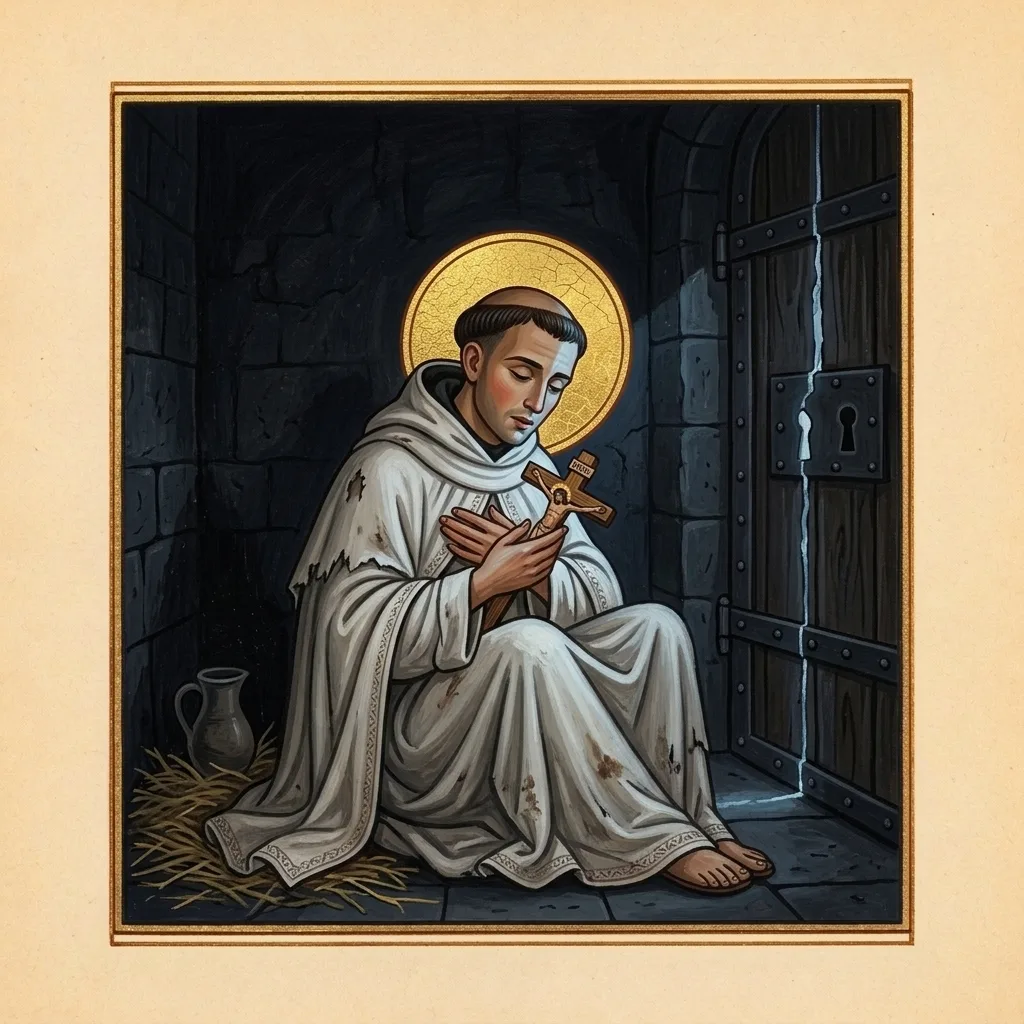
1He sat in a cell no bigger than a closet. No window. No light. His captors were his own brothers. And in that crushing dark, he wrote the most beautiful poetry in the Spanish language.
 2
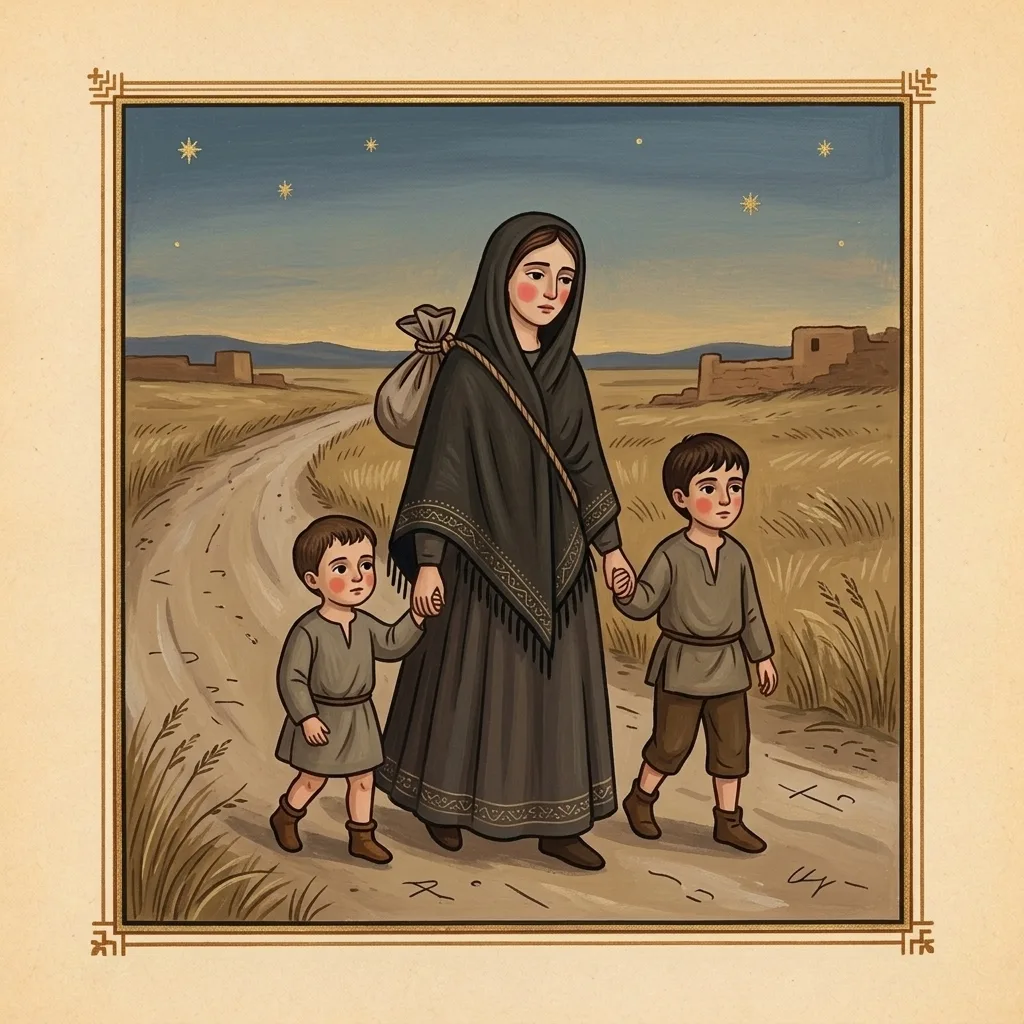
2Born in 1542 in Fontiveros, Spain, Juan de Yepes knew hunger before he knew hope. His father died of illness when Juan was still a toddler. His widowed mother then walked from town to town with her boys, taking in whatever work and charity the road offered.
 3
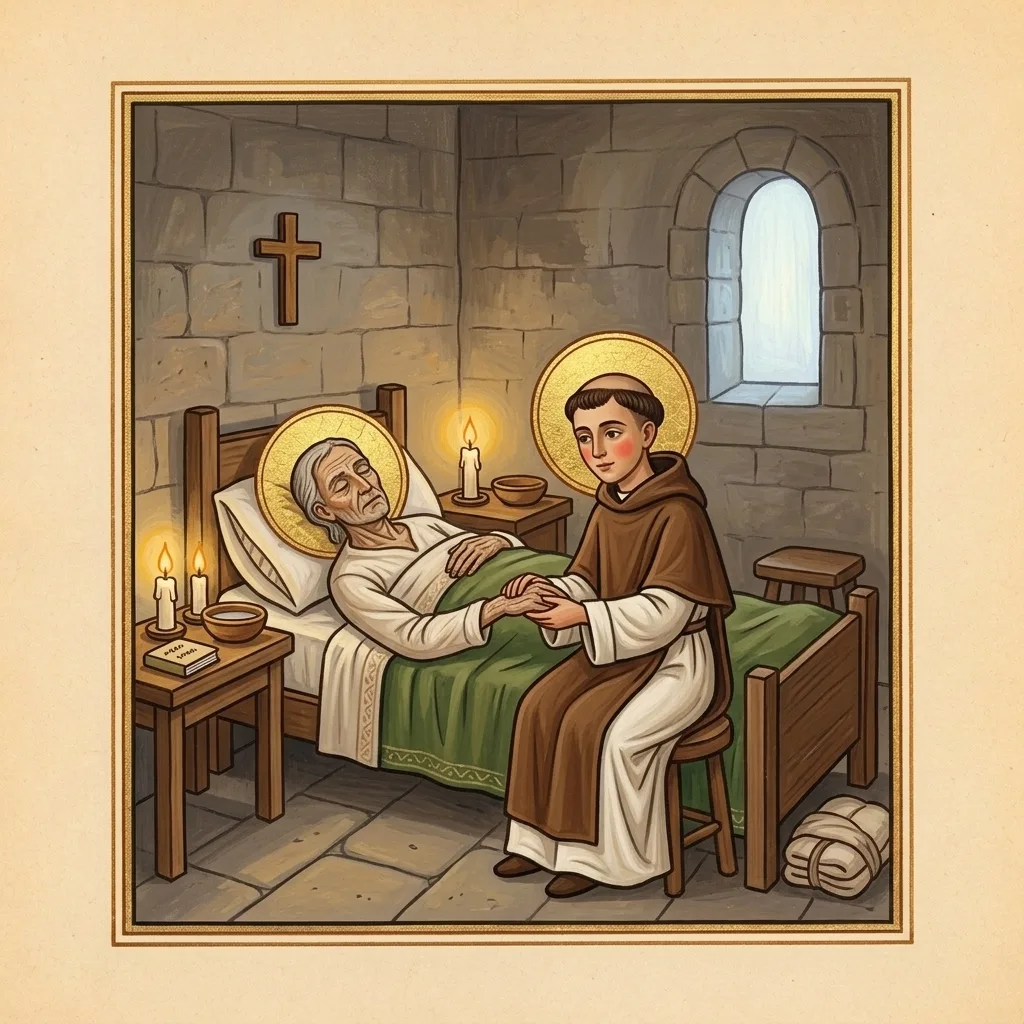
3John worked in a hospital for the dying — mopping floors, dressing wounds. He studied at a Jesuit school at night. Even as a boy, he was drawn toward something beyond what the eye can see.
 4
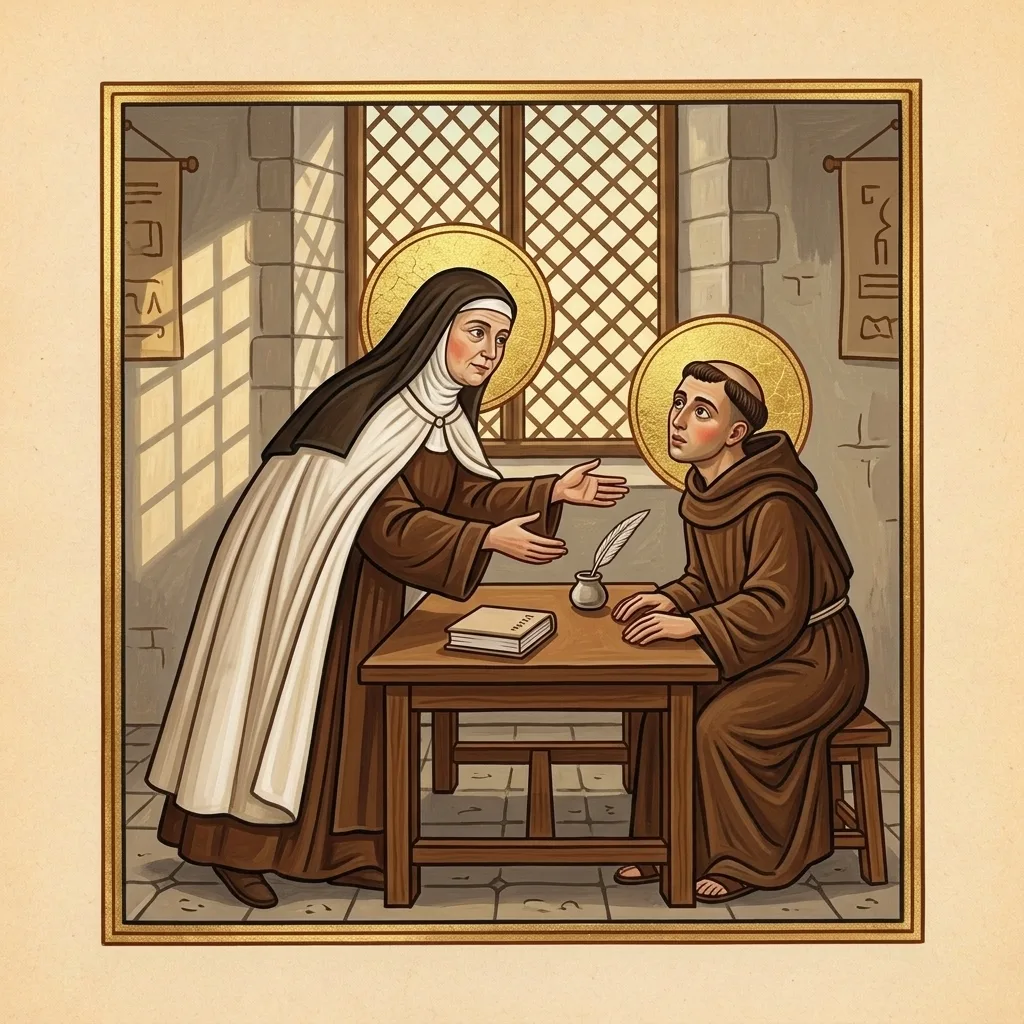
4At twenty-five, John was on the verge of joining the solitary Carthusians — a life of pure silence and withdrawal. Then a fiery woman named Teresa of Ávila found him, sized him up in minutes, and redirected his entire life: come help me reform the Carmelites. He said yes.
 5
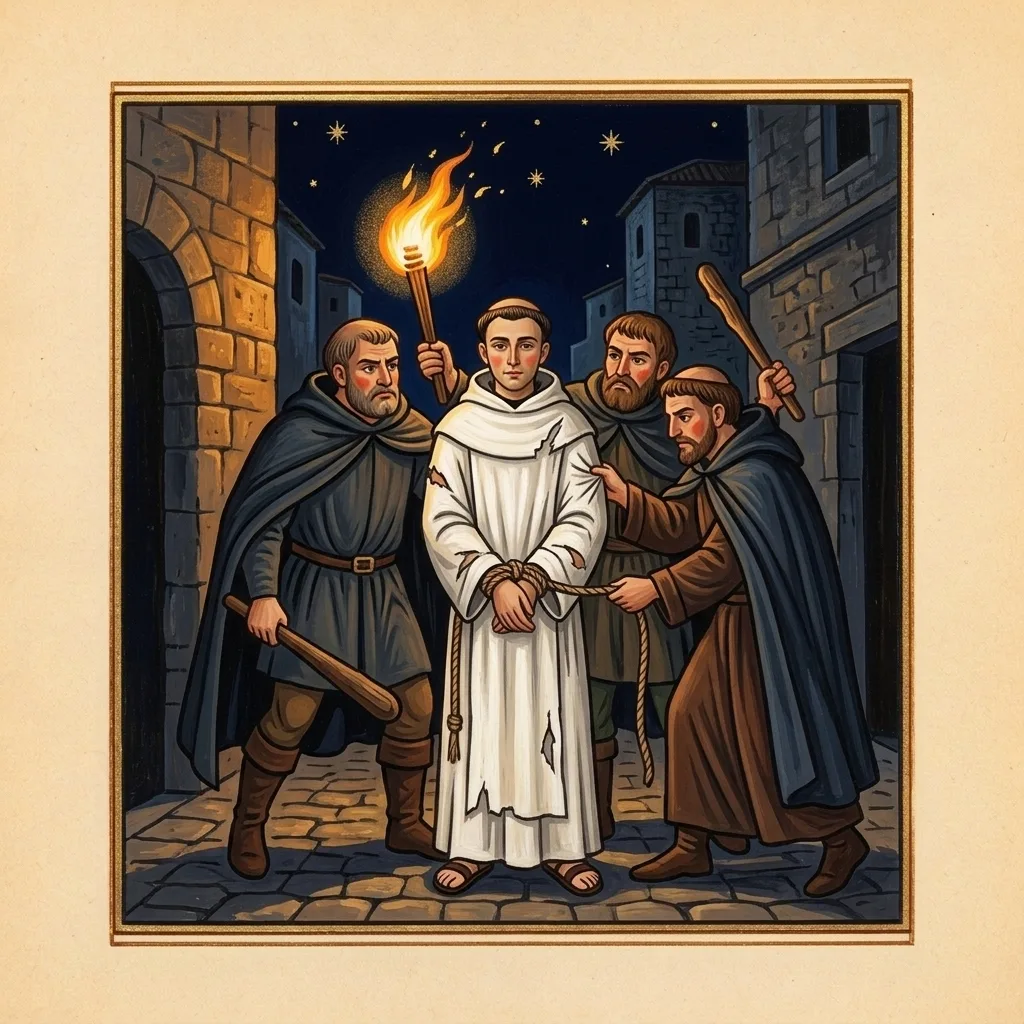
5The reform provoked outrage among the established Calced Carmelites, who saw it as a rebuke to their own way of life. In December 1577, a group of them broke down John's door in the dark of night, bound him with rope, and dragged him south to a prison in Toledo.
 6
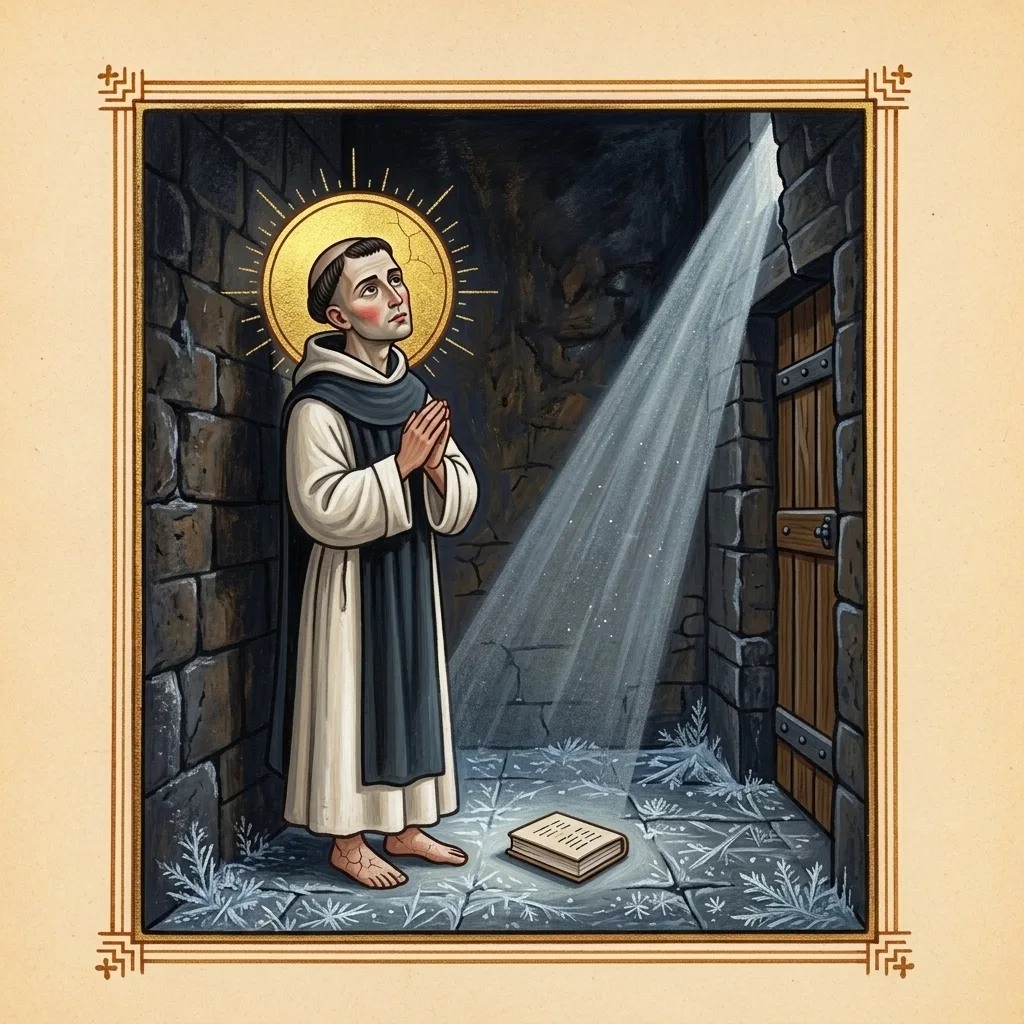
6For nine months he endured beatings, near-starvation, and freezing cold. They wanted him to abandon the reform. He refused. 'Where there is no love, put love,' he would later write.
 7
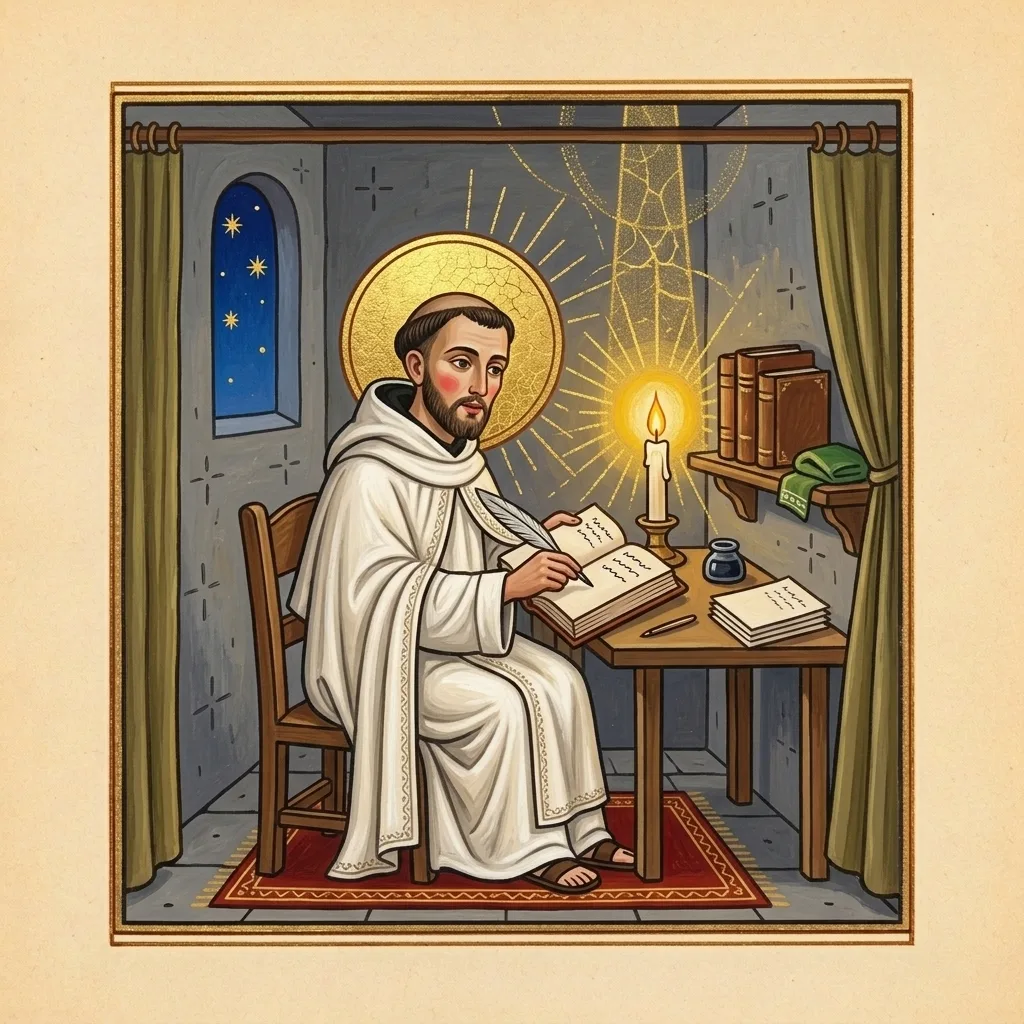
7In the Toledo cell, with no paper and no ink, poetry poured out of him unbidden. He composed verse after verse from memory — 'The Dark Night of the Soul,' 'The Spiritual Canticle' — holding each word carefully in his mind. When he finally escaped, he wrote it all down.
 8
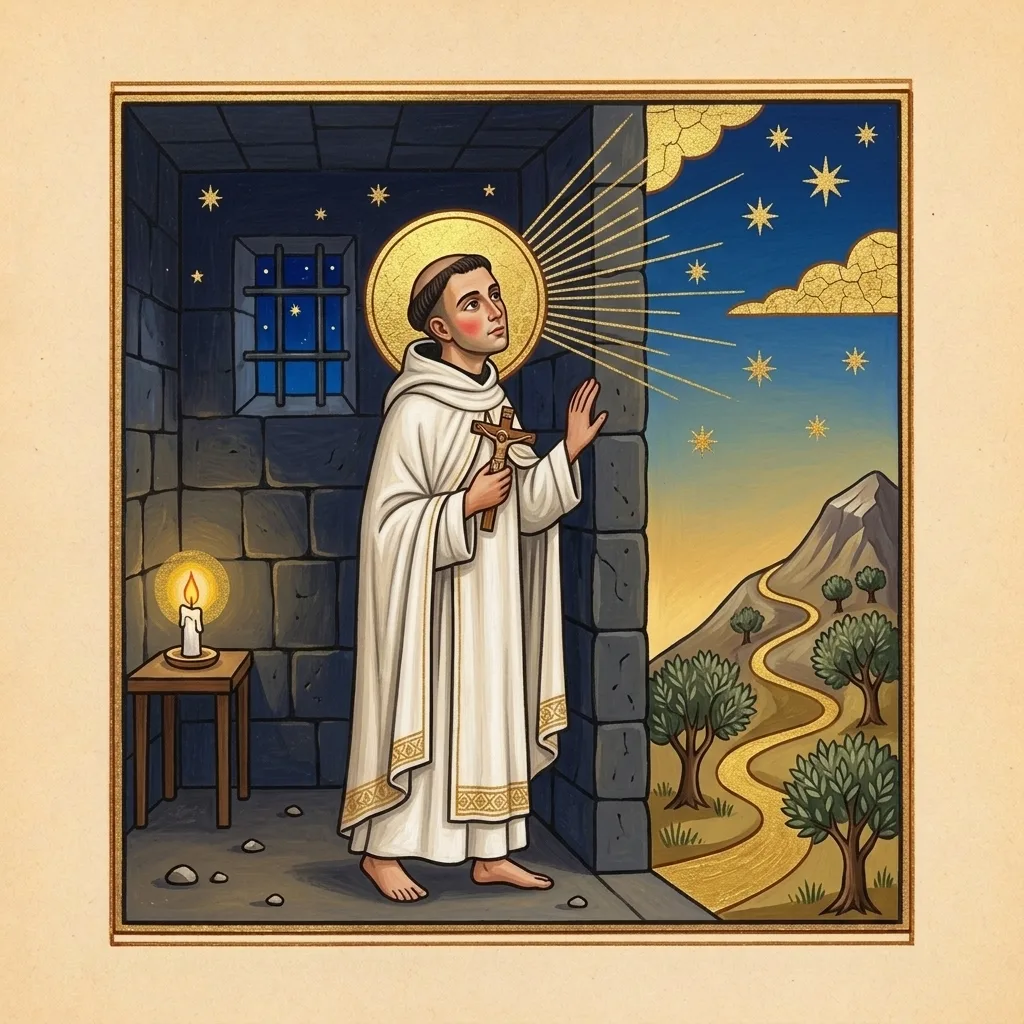
8The paradox: his greatest masterpieces were born in captivity. The man who mapped the path to divine light found it first in a lightless cell. Suffering was not the enemy of his prayer — it was the door.
 9
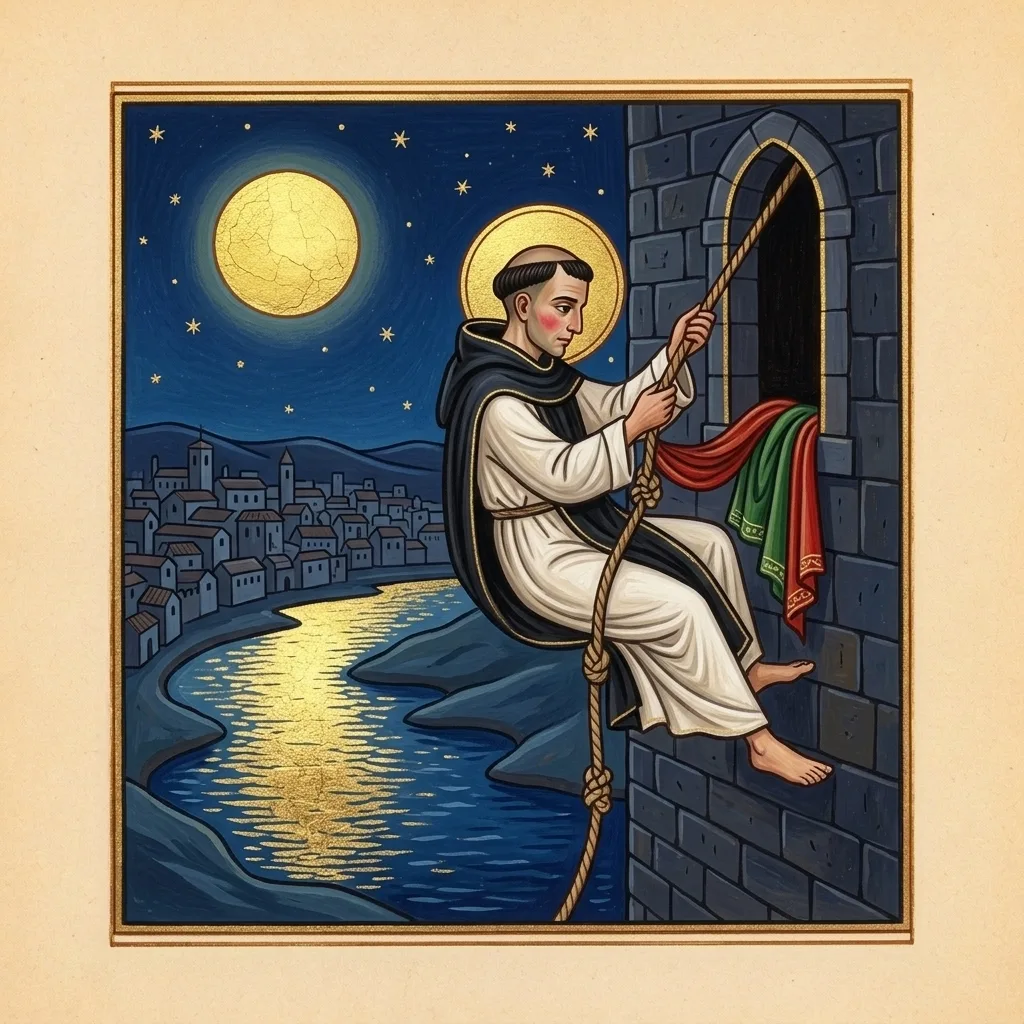
9He escaped by tying torn bedsheets together and lowering himself from a window ledge in the dark. He dropped into an alley and ran — barefoot, feverish, clutching the poems he had memorized.
 10
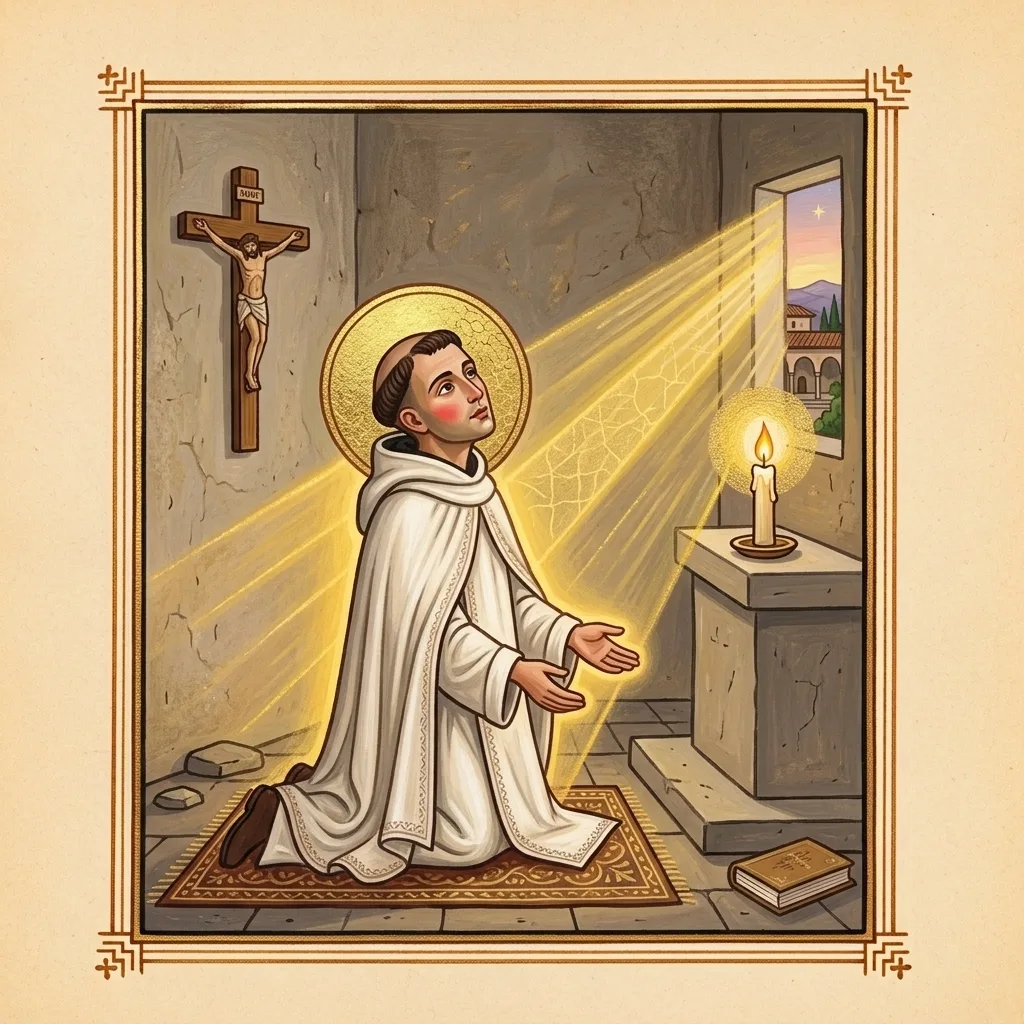
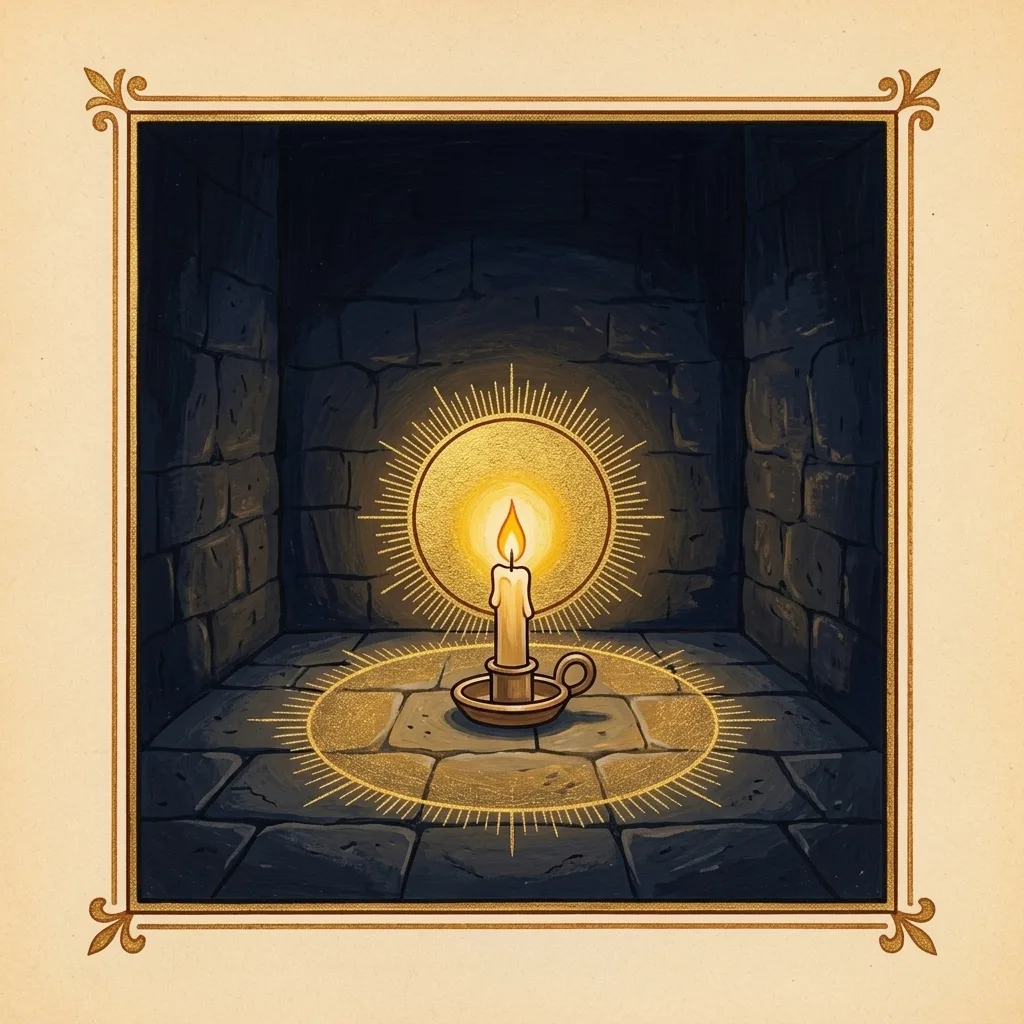
10He wrote of the soul as a candle consumed by a greater flame — not destroyed, but transformed into something brighter. 'God's first language is silence,' he said. He knew the price of that silence. He had paid it in a lightless cell and found everything there.
 11
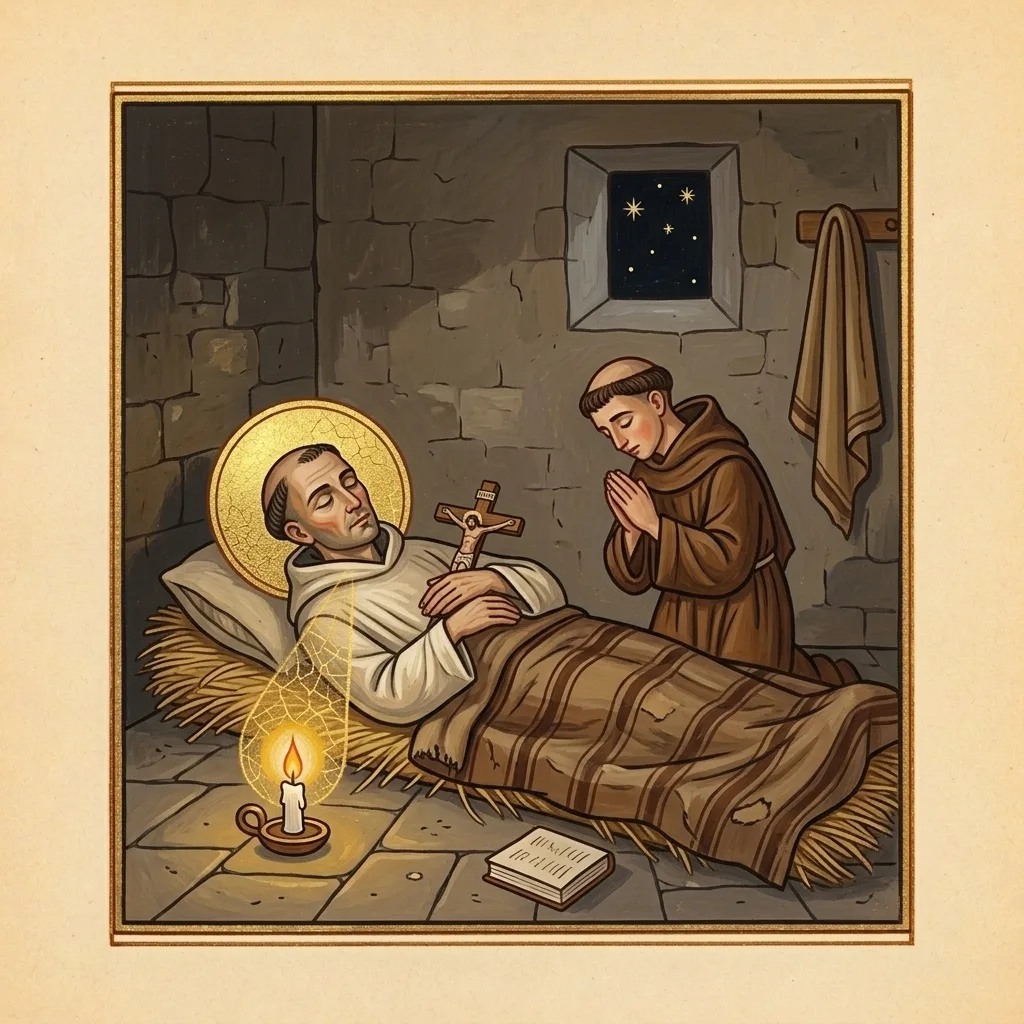
11He died at forty-nine in Úbeda, sick with fever and slandered by men in his own order who resented his holiness. He asked to hear the Psalms read aloud as he lay dying. 'In the twilight of life,' he had written, 'we shall be judged on love alone.'
 12
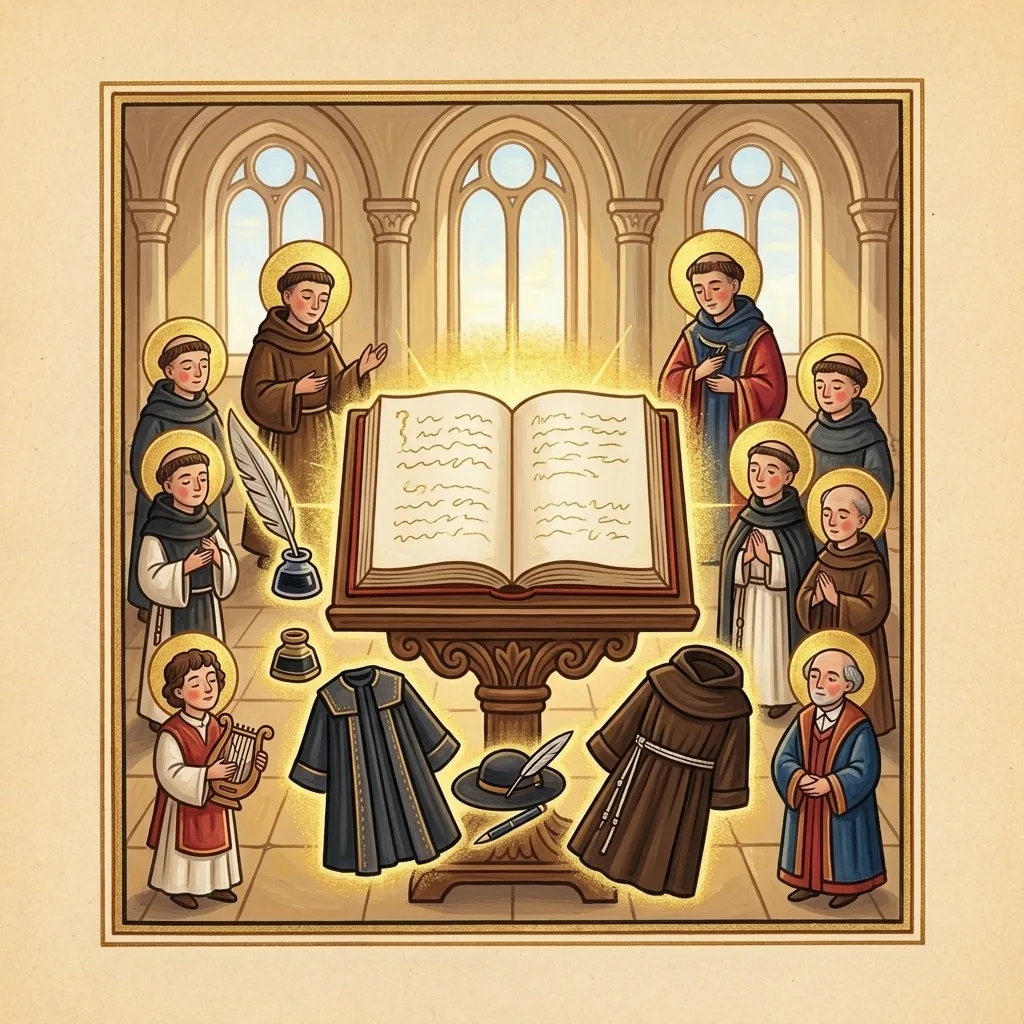
12The Church canonized John of the Cross in 1726. Two centuries later, in 1926, he was named a Doctor of the Church — the Mystical Doctor. Across the modern world, T.S. Eliot, Thomas Merton, and Edith Stein all turned to him in their darkest hours.
 13
13John's gift is the most counter-intuitive truth in Christianity: when life goes dark and silent, you have not been abandoned — you have been invited deeper. The darkness is not the problem. It is the path. Put love where you find none, and watch what grows.
Life & Times
Early Life
Born into poverty in Fontiveros; joined the Carmelites; recruited by Teresa of Ávila to help restore the order's primitive rule of poverty and prayer.
Turning Point
Imprisoned in Toledo for nine months by Calced opponents, where darkness and deprivation produced his greatest mystical poetry — and then a daring escape in August 1578.
Legacy
Wrote his major prose commentaries in Granada and Segovia, held leadership roles in the reform, and died at Úbeda on December 14, 1591, after his own order's leadership stripped him of office.
Historical Context
Sources & historical notes
Dates and later-life details are left uncertain where the sources do not establish them. Historical summaries are secondary overviews; Scripture and Church documents are linked separately where available.
Words & Wisdom
“Where there is no love, put love, and you will draw out love.”
“Mine are the heavens and mine is the earth. Mine are the nations, the just are mine, and mine the sinners. The angels are mine, and the Mother of God, and all things are mine; and God himself is mine and for me, because Christ is mine and all for me.”
Mine are the heavens and mine is the earth. Mine are the nations, the just are mine, and mine the sinners. The angels are mine, and the Mother of God, and all things are mine; and God himself is mine and for me, because Christ is mine and all for me. What do you ask, then, and seek, my soul? Yours is all of this, and all is for you.
O sweet Cautery! O delightful wound! O gentle hand! O delicate touch! That tastes of eternal life And pays every debt! In slaying, You changed death to life.
Related Saints
Connections in the communion of saints
Thomas Aquinas
John's mystical theology is built on a Thomistic philosophical foundation.
Augustine of Hippo
Augustine's restless search for God and introspective spirituality shaped John's Dark Night.
Thérèse of Lisieux
Thérèse's 'dark night of faith' in her final illness was understood through John's writings.
Teresa of Ávila
Together they reformed the Carmelite Order, creating the Discalced Carmelites amid fierce opposition.