Sanctified Life
AD 354 — AD 430
Also Known As
Patronage
"Our hearts are restless until they rest in You."
Augustine of Hippo spent his youth in hedonism, then nearly a decade among the Manicheans, then restless years as a skeptic and Neoplatonist — all while his mother Monica prayed for him. His garden conversion in Milan in 386 and baptism by Ambrose the following Easter led to his return to North Africa, his ordination, and thirty-five years as Bishop of Hippo, where he built the intellectual framework of Western Christian theology.

Interactive Lesson
The Illustrated Life
Augustine of Hippo's story in 13 illustrated moments — tap any scene to begin there.
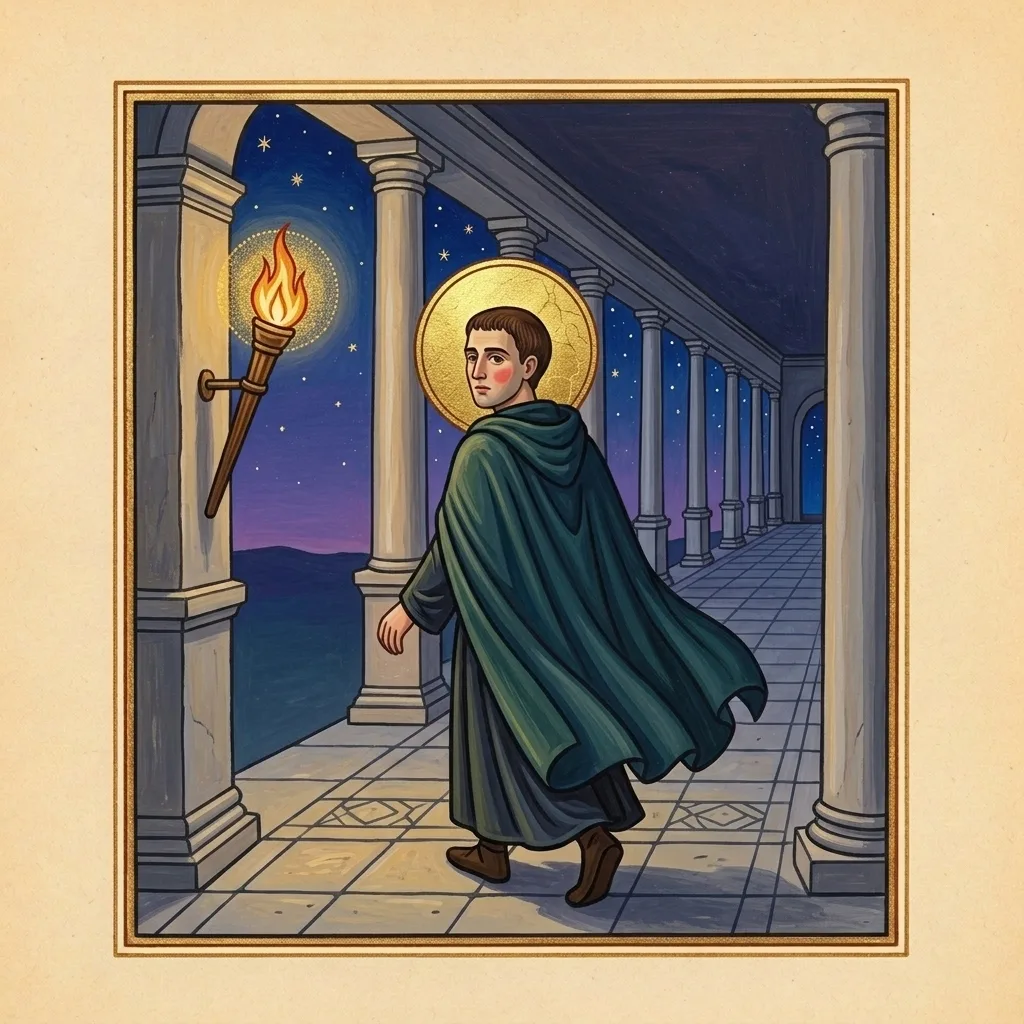 1
1He was one of the greatest minds in history — and he spent years begging God not to change him yet. 'Lord, give me chastity,' he prayed, 'but not yet.' This is the story of a man who ran from God as fast as his brilliance could carry him, and how God caught him anyway.
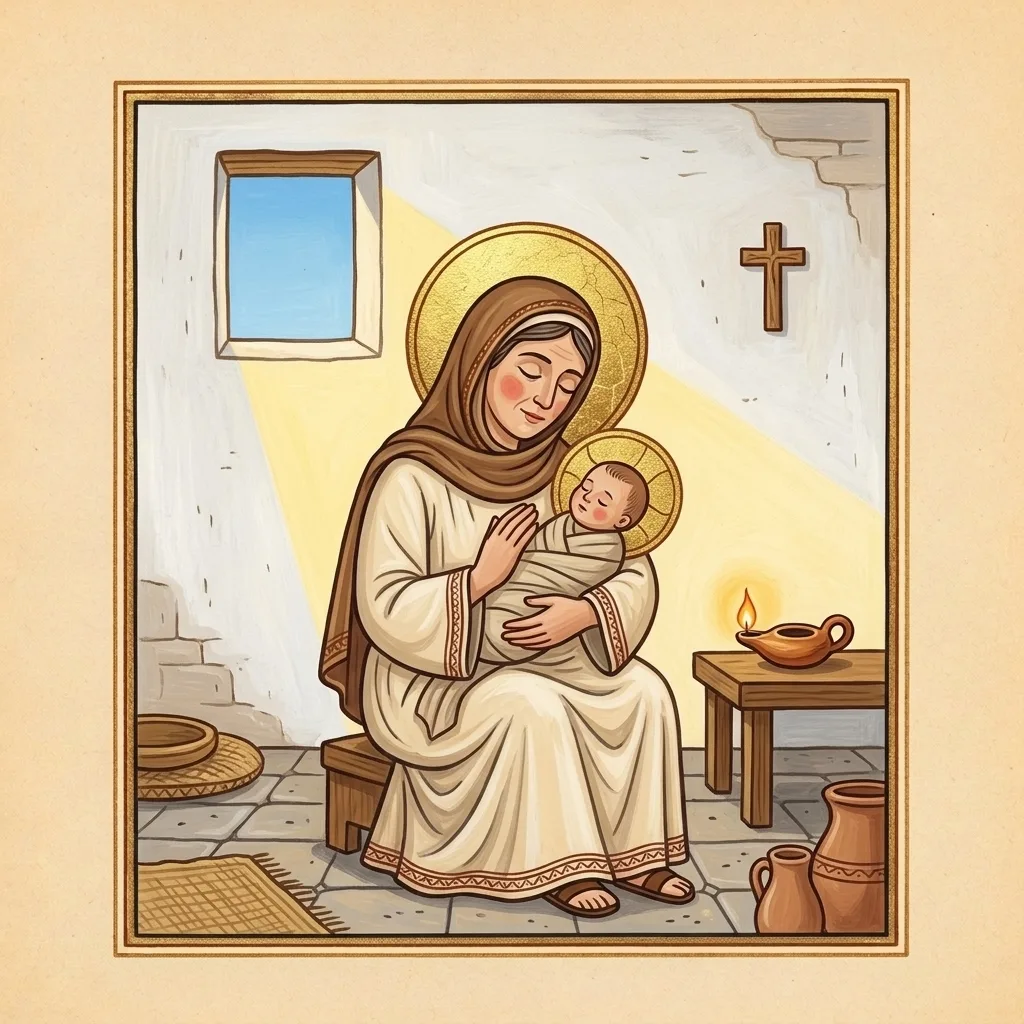 2
2Augustine is born in 354 in Thagaste, a small town in North Africa — what is now Algeria. His father Patricius is a pagan. His mother Monica is a Christian who prays for her son with a ferocity that will outlast decades of his wandering. From the very beginning, he is caught between two worlds.
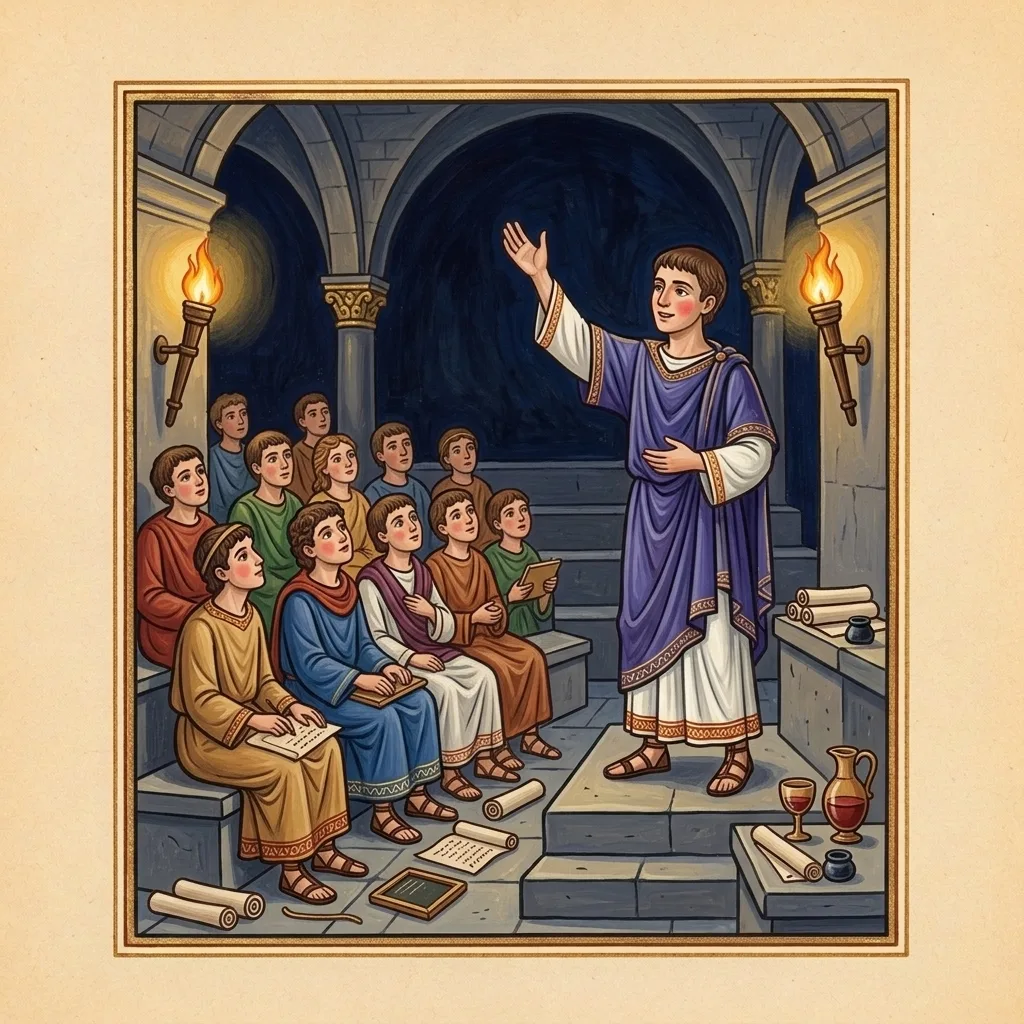 3
3As a teenager in Carthage, Augustine discovers he is extraordinary. Words bend to his will. He becomes the best student in his school of rhetoric, dazzling teachers and peers alike. But the city is full of noise and pleasure, and Augustine wants to taste all of it. Brilliance and hunger make a dangerous combination.
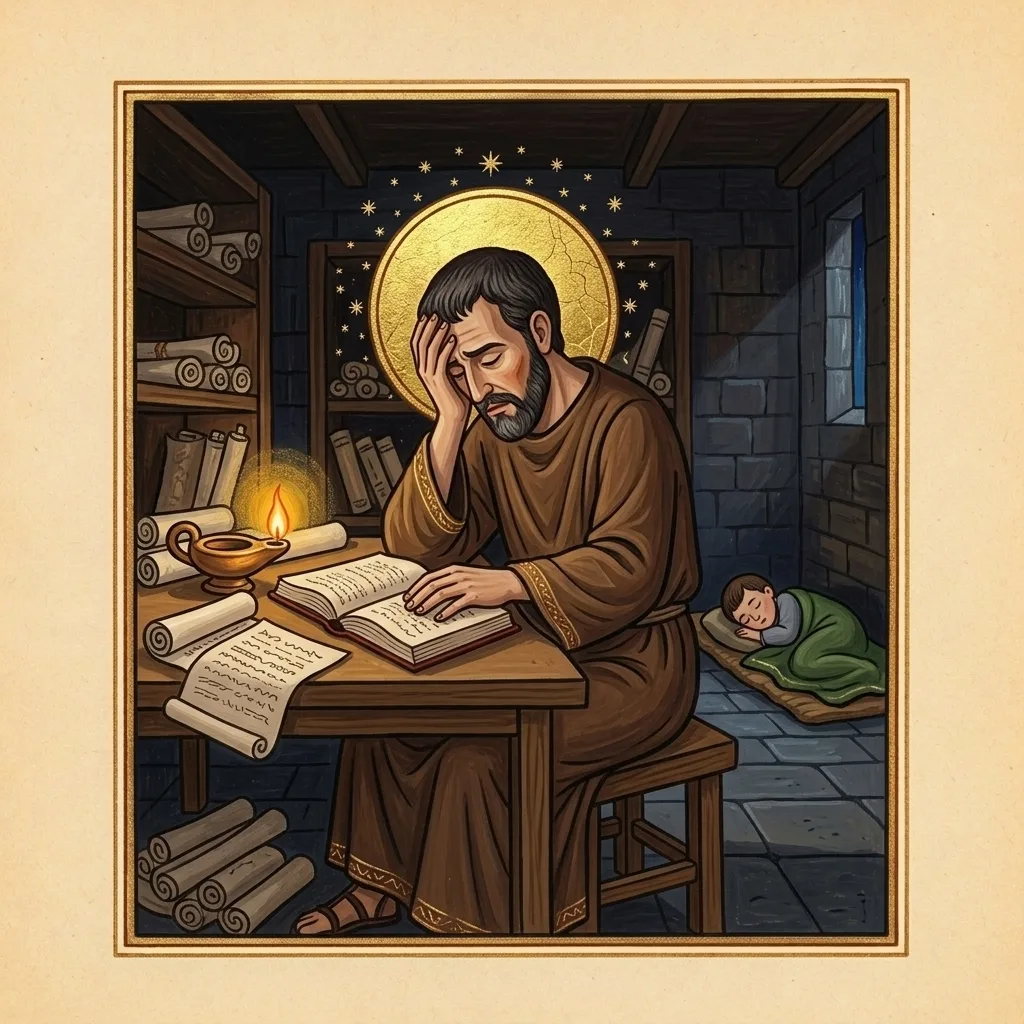 4
4For nine years Augustine follows the Manichaean religion, convinced he has found a rational answer to the problem of evil. He takes a mistress. He fathers a son he names Adeodatus — 'gift of God.' He climbs to the top of his profession. And yet something keeps gnawing. The answers are hollow. The hunger does not stop.
 5
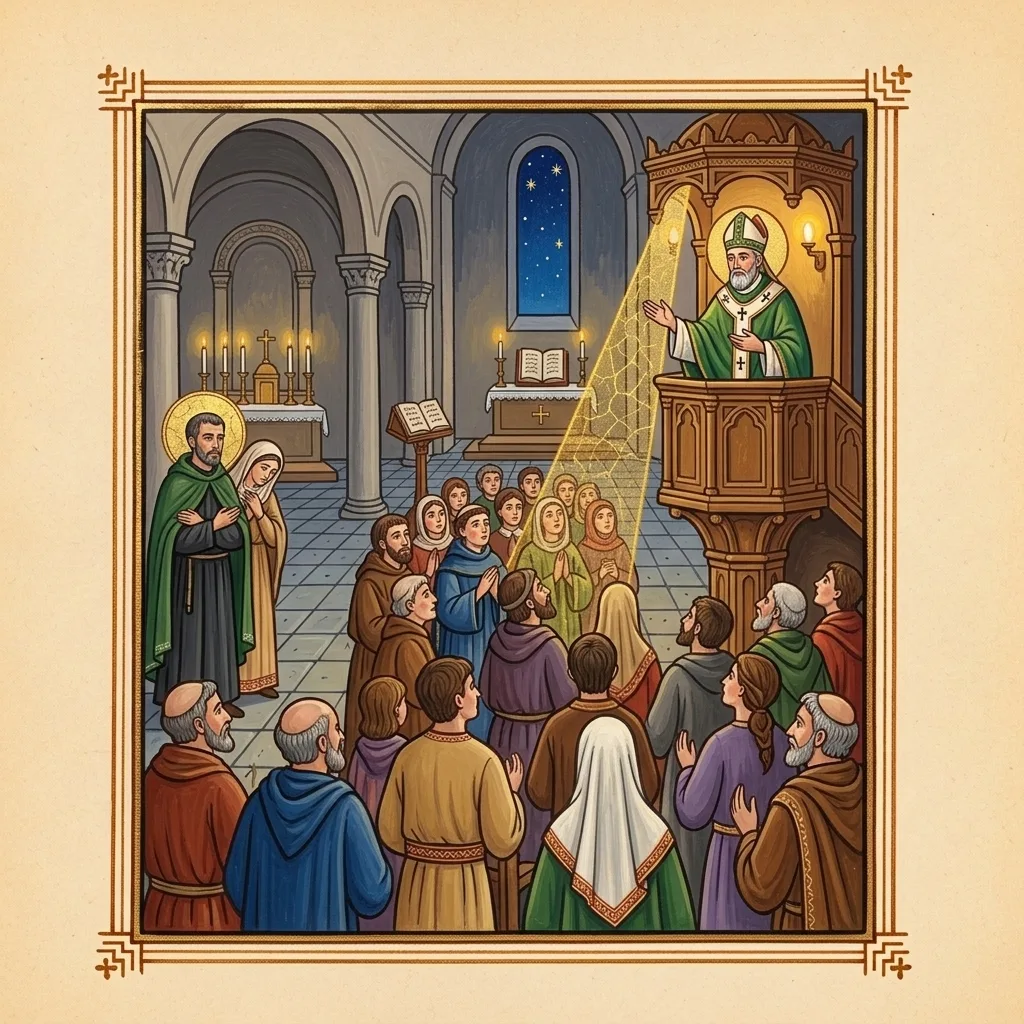
5In Milan, Augustine meets Bishop Ambrose — a man as brilliant as himself, but at peace. Ambrose does not argue with him. He simply preaches, Sunday after Sunday, and the words seep in. Meanwhile, Monica has followed her son to Italy. She refuses to stop praying. Augustine is surrounded, and he knows it.
 6
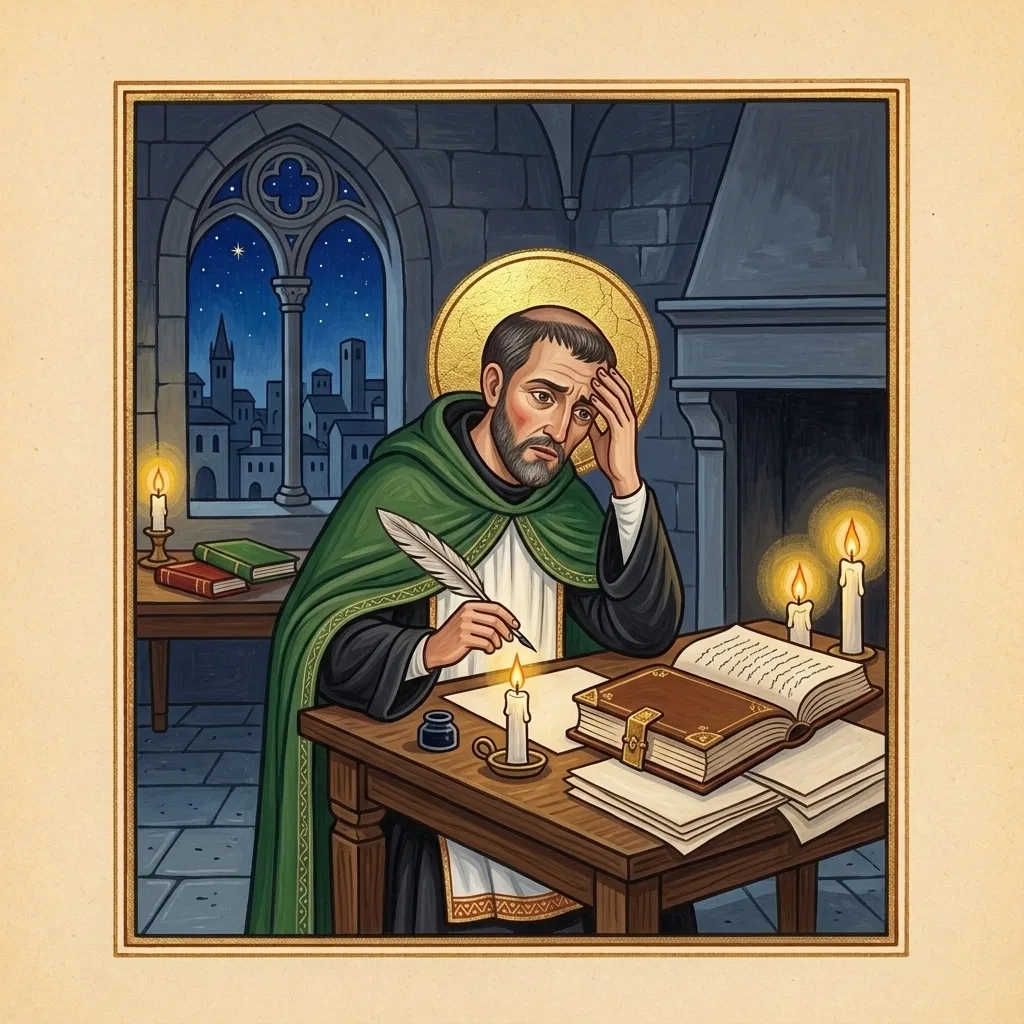
6His mind is almost convinced. But his will is in chains. He cannot stop. So he prays the most honest prayer in history: 'Lord, give me chastity — but not yet.' God is close. Augustine is not ready.
 7
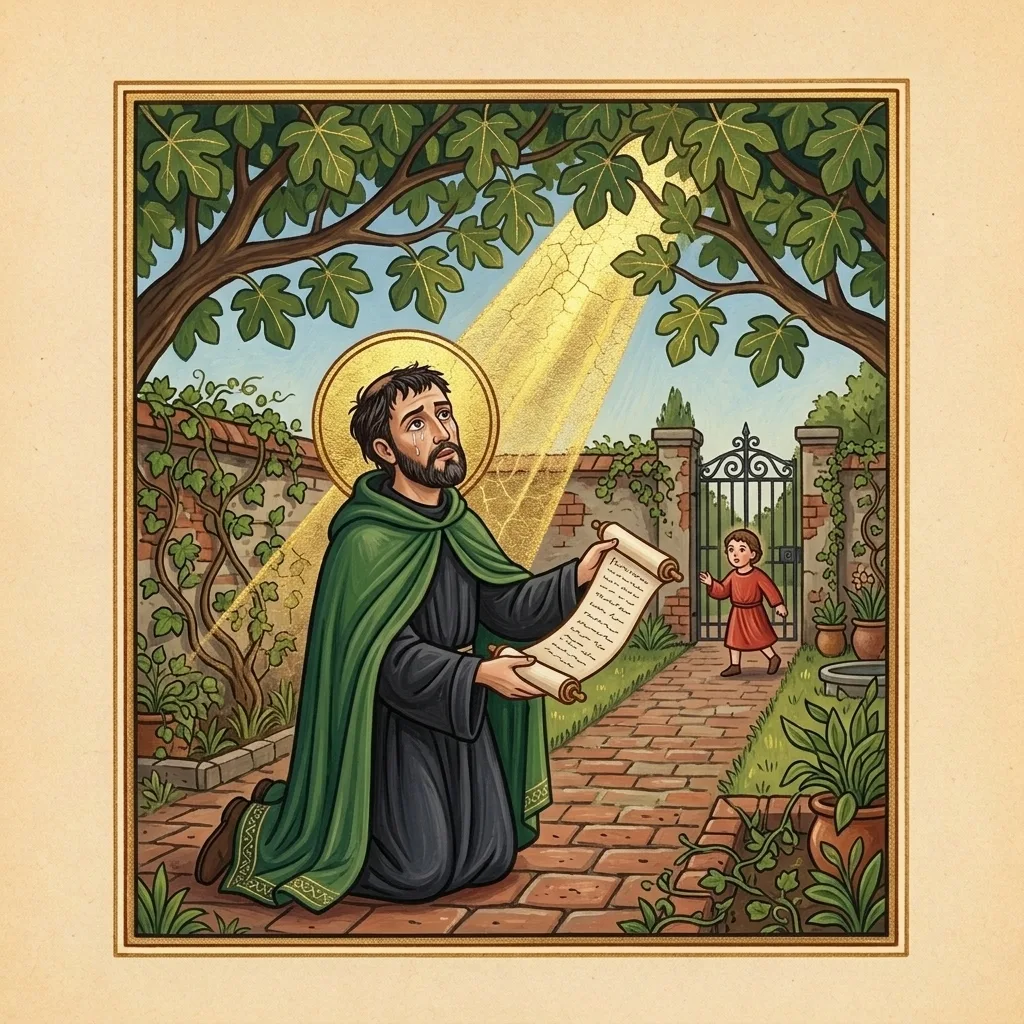
7Summer, 386. Augustine weeps under a fig tree, broken. A child's voice drifts over: 'Tolle, lege — take up and read.' He grabs a scroll. His eyes land on Romans 13:13. Everything he's been running from walks straight through the door.
 8
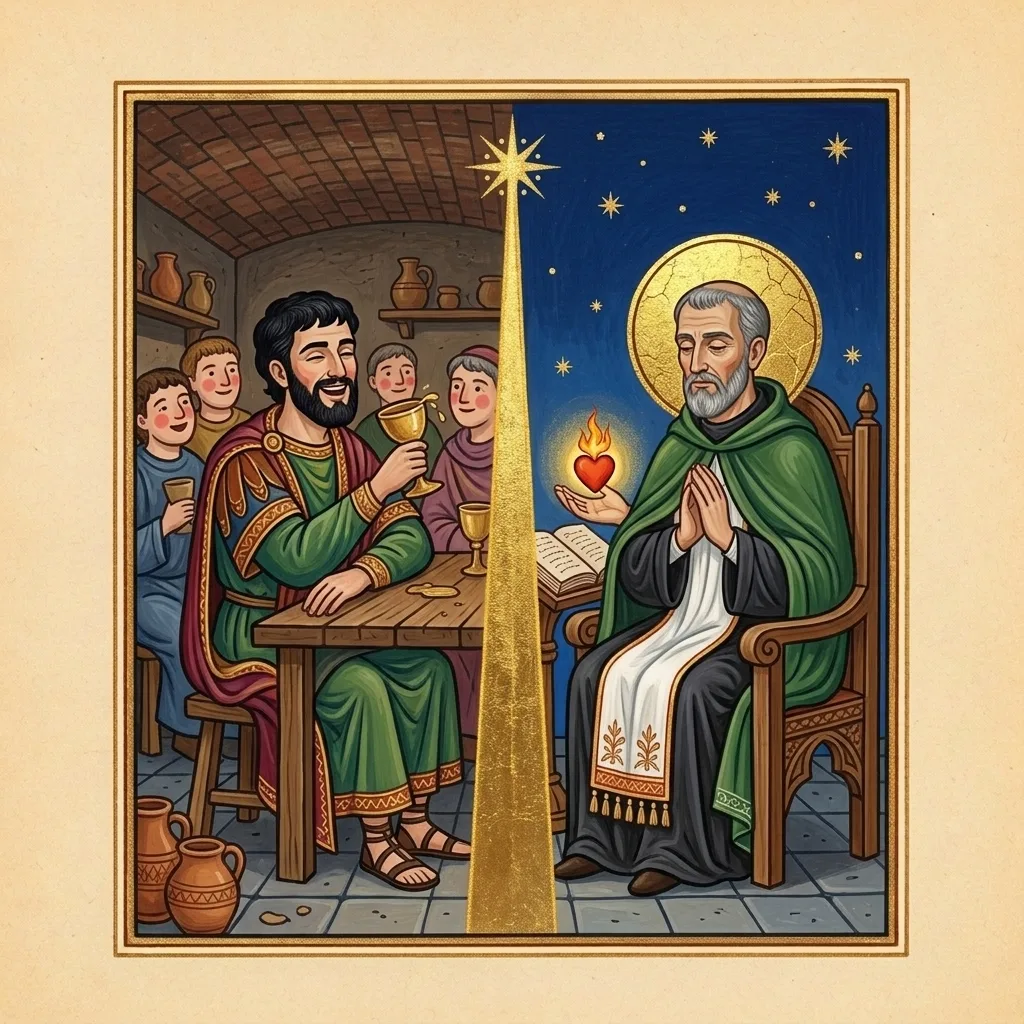
8'Our hearts are restless until they rest in You.' The man who wrote that spent years running away. The Confessions isn't a saint being saintly — it's God chasing a brilliant, selfish man across three countries. That's why it still hits.
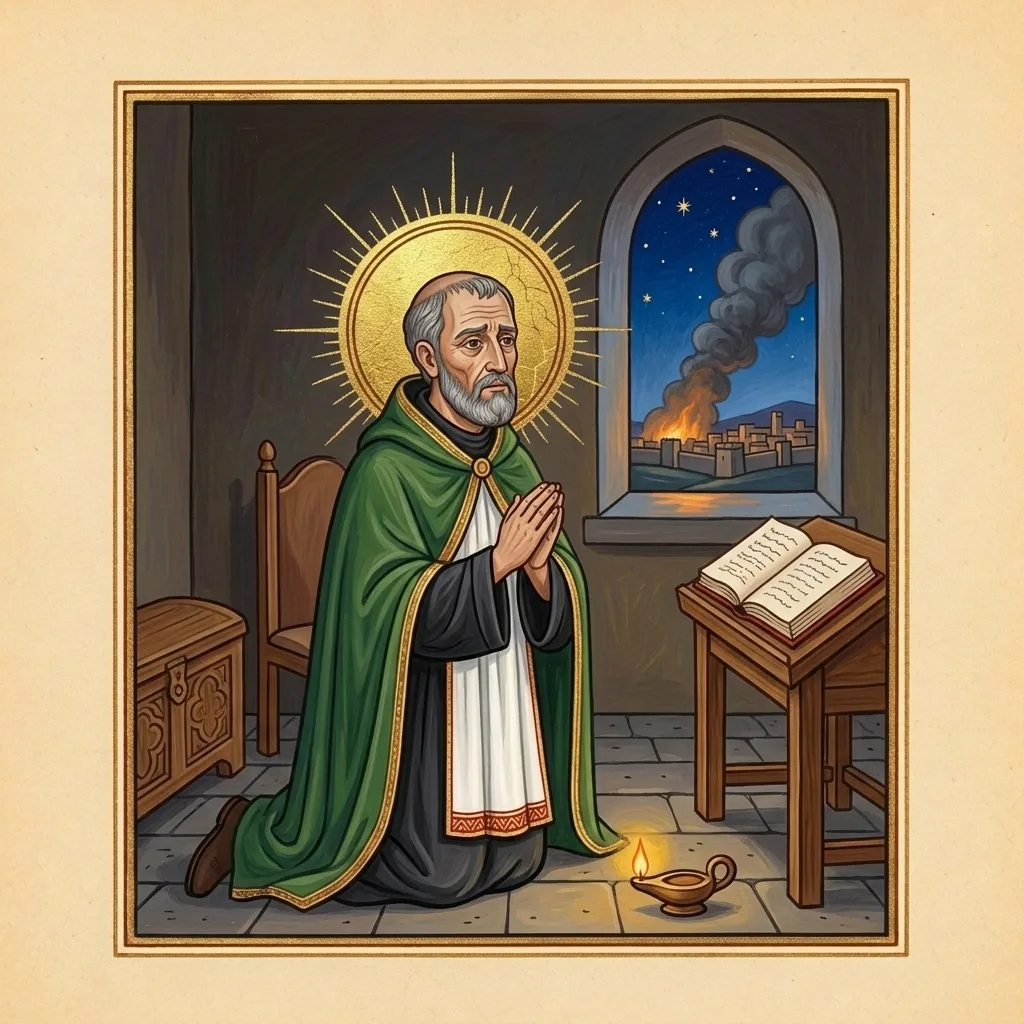 9
9In 430, the Vandals pour across North Africa, burning and killing. City after city falls. Augustine is seventy-five years old, and he watches everything he has spent his life building crumble around him. Friends flee. His own city of Hippo is surrounded. He dies inside its walls, listening to the siege engines, still praying.
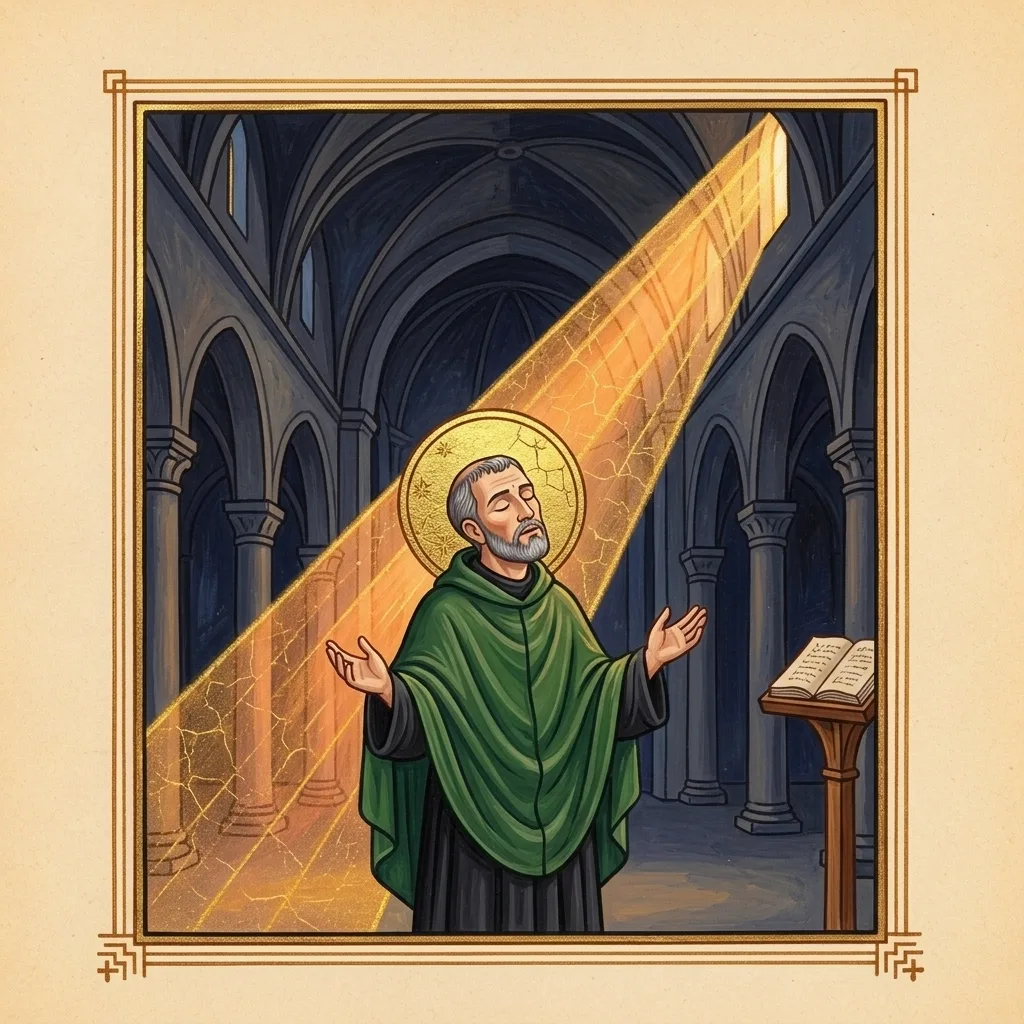 10
10His deepest moment with God isn't a vision. It's a sentence: 'You called and broke my deafness. You shone and dispelled my blindness. You breathed your fragrance — and now I pant for you.' Sixteen centuries later, the words still burn.
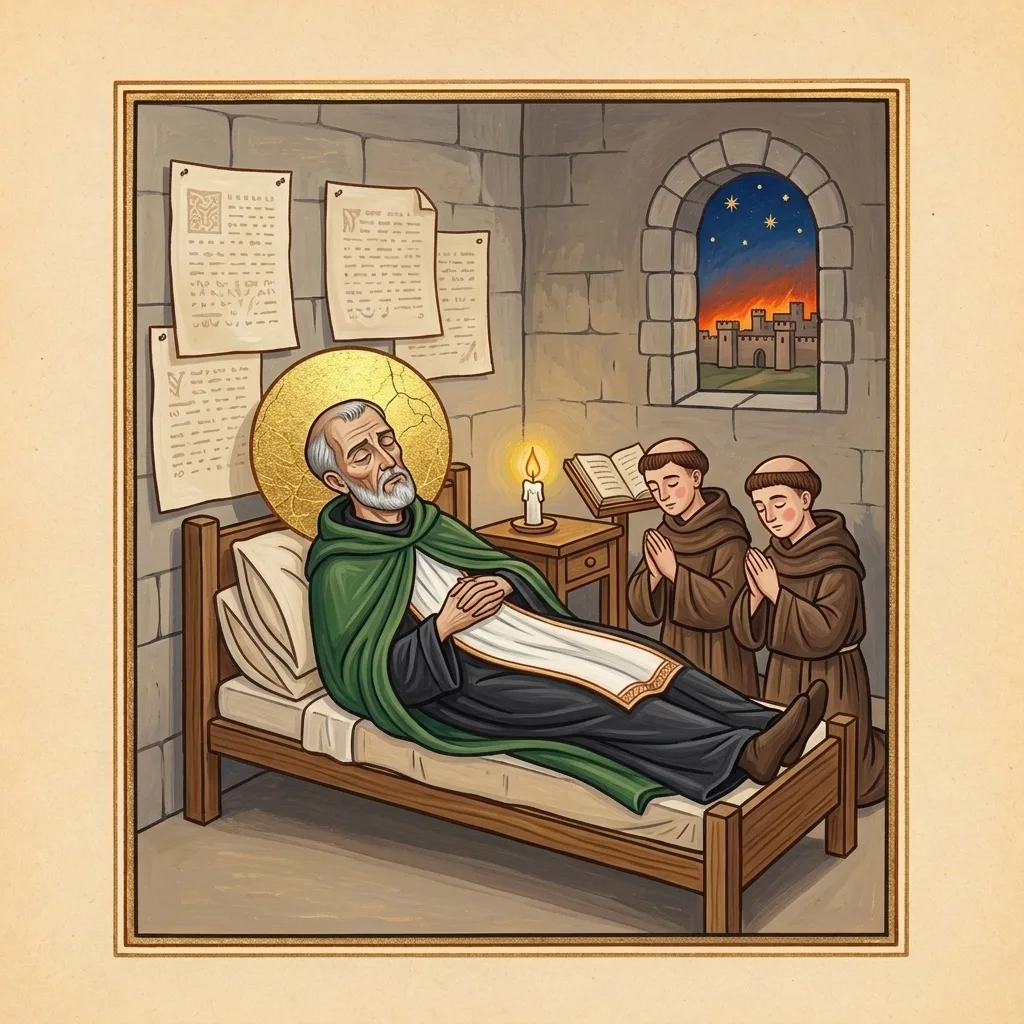 11
11Augustine dies August 28, 430, inside the besieged city. His last act: hang the penitential psalms on his wall to read and weep over as he dies. The Vandals burn Hippo. His books survive. The largest body of Latin from the ancient world — saved.
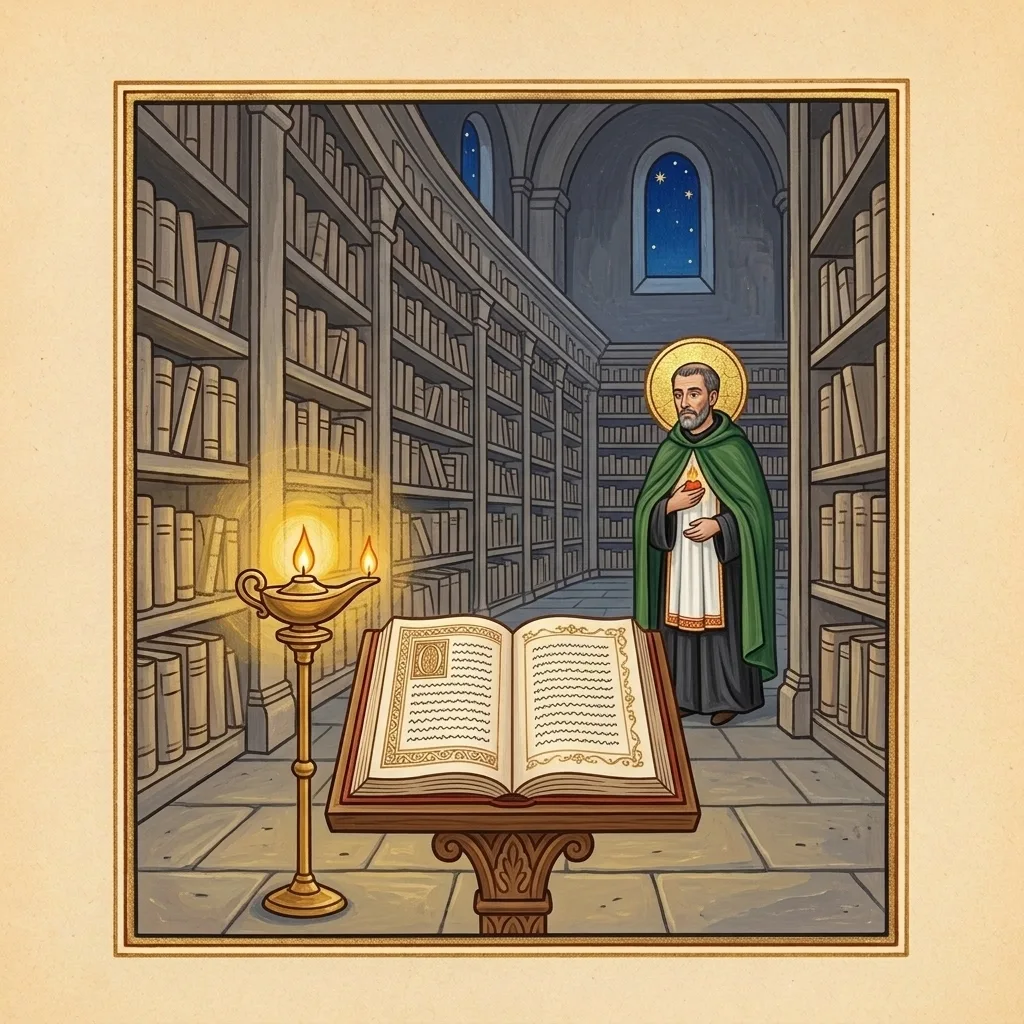 12
12Sixteen centuries on, Augustine is everywhere. Luther was his monk. Pascal, Kierkegaard, Arendt — all shaped by him. He invented the Christian philosophy of history. He invented the memoir. And one sentence has never stopped being true.
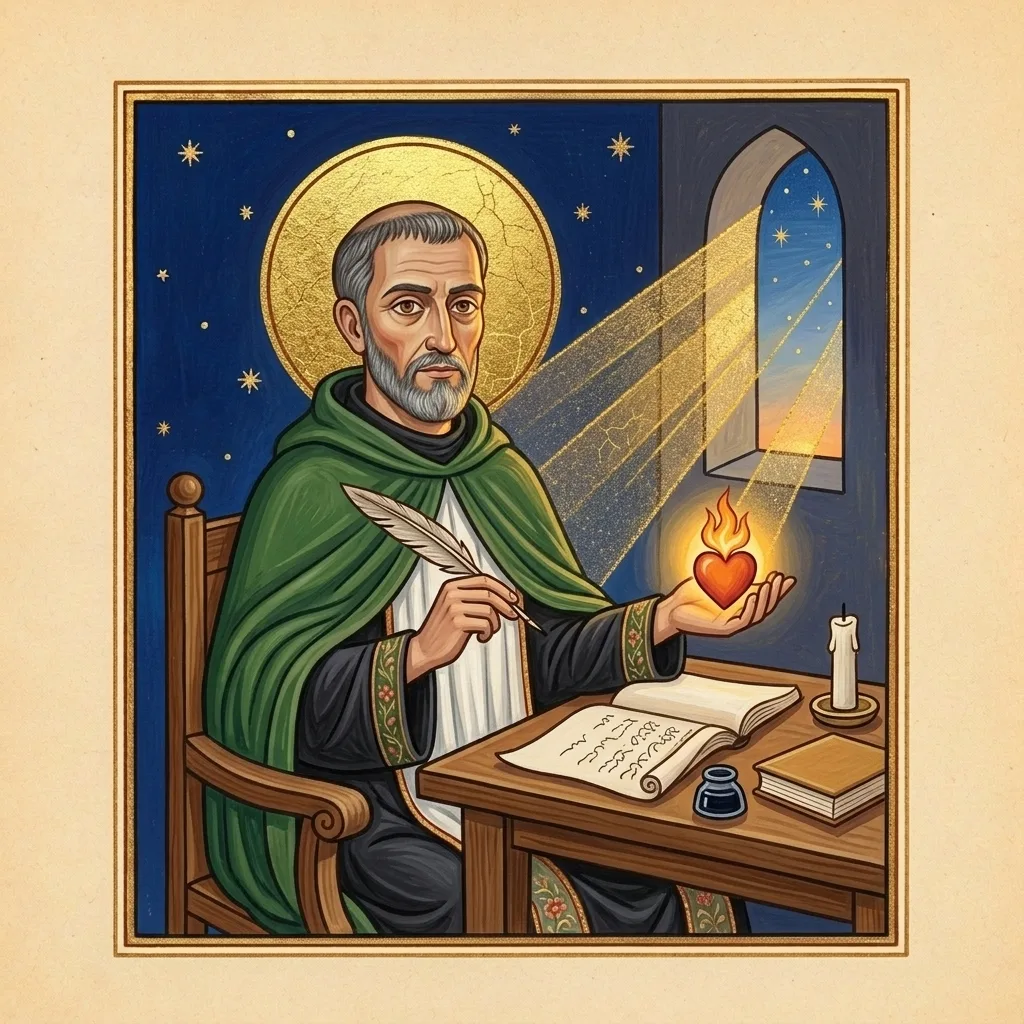 13
13Augustine wants you to know: your restlessness is not a flaw — it's a compass. Every hunger the world can't fill is pointing somewhere. 'You were within me,' he says, 'but I was outside.' You've been close the whole time. Come back inside.
Life & Times
Early Life
Born 354 in Thagaste, Augustine pursued rhetoric at Carthage, spent nearly nine years as a Manichaean, and fathered a son, Adeodatus, with a concubine.
Turning Point
In a Milan garden in 386, at the end of a long interior struggle, he heard a child's voice say 'Tolle, lege.' He opened Romans 13:13–14 and found his resistance gone.
Legacy
Served as Bishop of Hippo for thirty-five years, writing 'The City of God' as the Roman Empire collapsed. Died in 430 as the Vandals besieged his city.
Historical Context
Sources & historical notes
Dates and later-life details are left uncertain where the sources do not establish them. Historical summaries are secondary overviews; Scripture and Church documents are linked separately where available.
The Saint's Path
Words & Wisdom
Late have I loved you, O Beauty ever ancient, ever new, late have I loved you! You were within me, but I was outside, and it was there that I searched for you. In my unloveliness I plunged into the lovely things which you created. You were with me, but I was not with you. Created things kept me from you; yet if they had not been in you they would have not been at all. You called, you shouted, and you broke through my deafness. You flashed, you shone, and you dispelled my blindness. You breathed your fragrance on me; I drew in my breath and now I pant for you. I have tasted you, now I hunger and thirst for more. You touched me, and I burned for your peace.
Breathe in me, O Holy Spirit, that my thoughts may all be holy. Act in me, O Holy Spirit, that my work, too, may be holy. Draw my heart, O Holy Spirit, that I love but what is holy. Strengthen me, O Holy Spirit, to defend all that is holy. Guard me, then, O Holy Spirit, that I always may be holy. Amen.
O Holy Spirit, descend plentifully into my heart. Enlighten the dark corners of this neglected dwelling and scatter there Thy cheerful beams.
Related Saints
Connections in the communion of saints
Ambrose
Ambrose's preaching drew Augustine to Christianity. Ambrose baptized him at the Easter Vigil of 387.
Jerome
The two greatest Latin Fathers corresponded on theological matters, sometimes disagreeing sharply.
Thomas Aquinas
Augustine's theology of grace, the Trinity, and the City of God profoundly shaped Aquinas's Summa.
Bernard of Clairvaux
Bernard's mystical theology and understanding of grace drew heavily on Augustinian spirituality.
John of the Cross
Augustine's introspective spirituality and 'restless heart' influenced John's mystical writings.