Sanctified Life
AD 6 — AD 100
Birthplace: Galilee
Also Known As
Patronage
"In the beginning was the Word, and the Word was with God, and the Word was God."
John the Evangelist, 'the Disciple whom Jesus loved,' was the only apostle to stand at the foot of the Cross. His Gospel opens in eternity — 'In the beginning was the Word' — and his letters distill the Christian life into a single command: love one another. He survived exile to Patmos, where he received the visions of Revelation, and died in Ephesus the last living eyewitness of Christ.

Interactive Lesson
The Illustrated Life
John the Evangelist's story in 13 illustrated moments — tap any scene to begin there.
 1
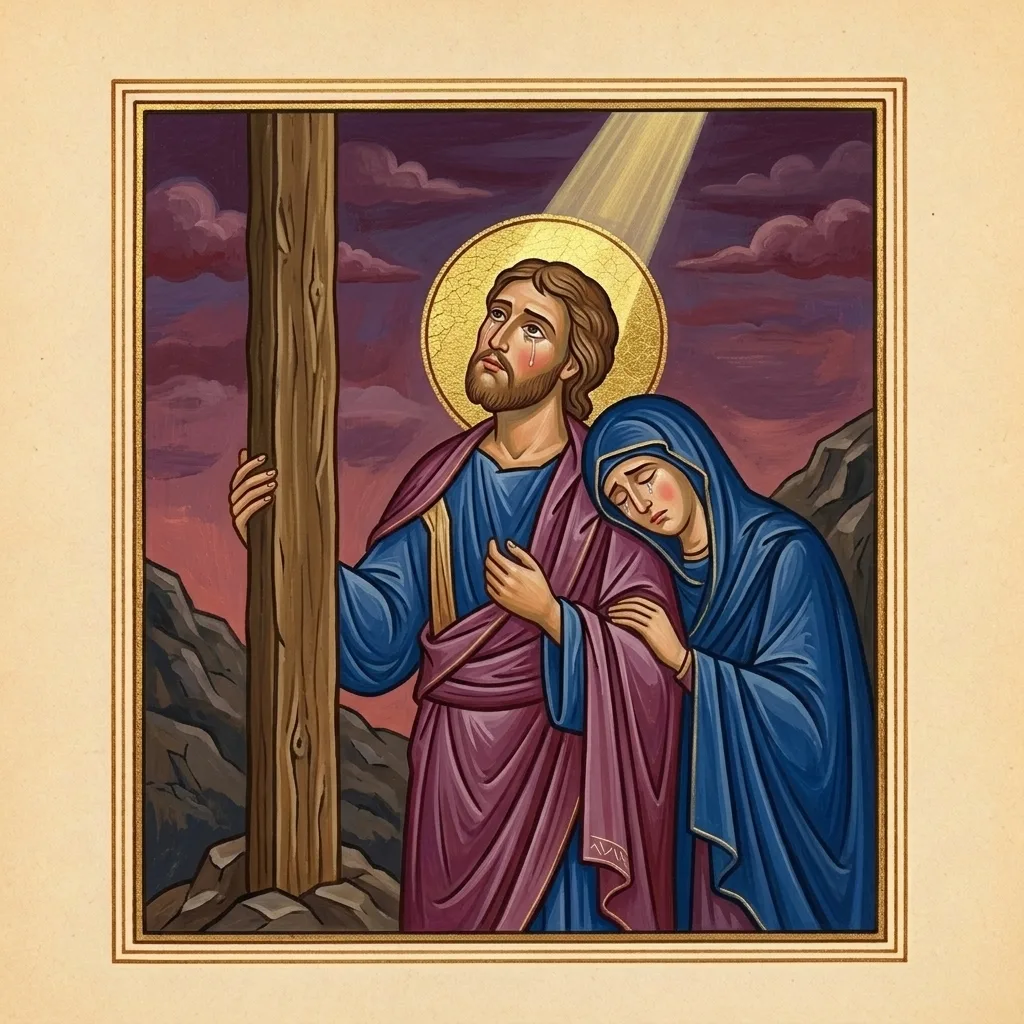
1Of twelve men who walked with Jesus, eleven fled or fell silent at the end. Only one stood beneath the Cross and watched. He was barely twenty years old — and Jesus, dying, looked down and made him a son. His name was John, and he would outlive them all.
 2
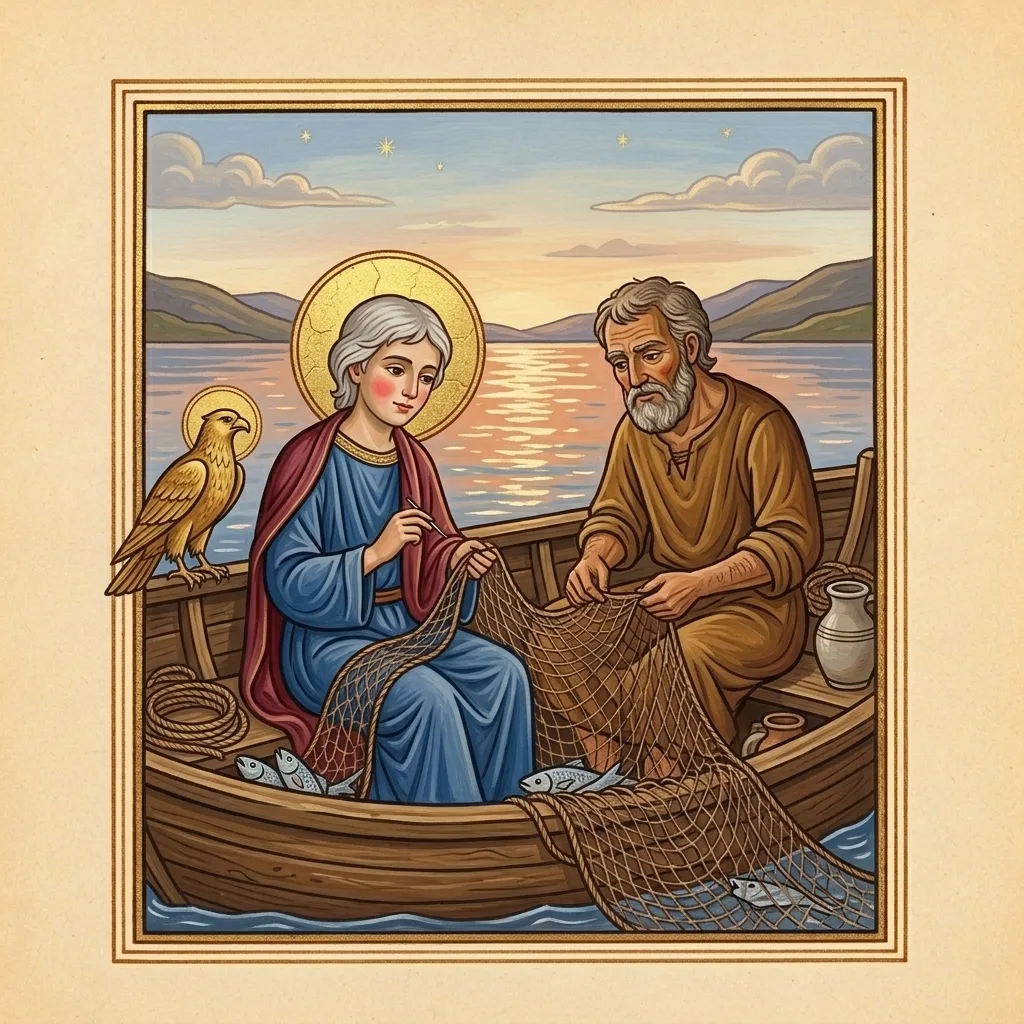
2John grew up where the wind always smelled of fish and the horizon was always water. He was a son of Zebedee, a fisherman on the Sea of Galilee — strong-handed, sun-darkened, shaped by early mornings and hard nets. It was a good life. Then a stranger walked along the shore.
 3
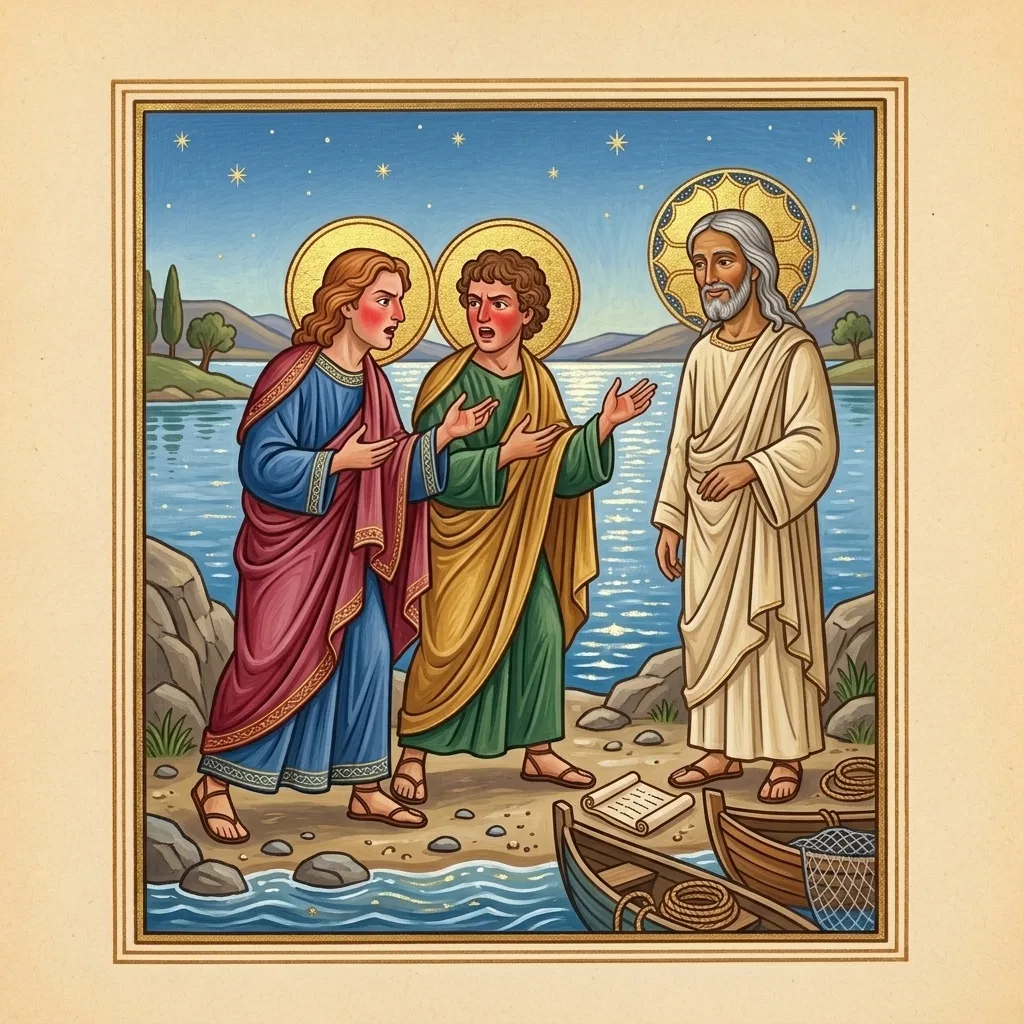
3John and his brother James had a nickname: Boanerges. Sons of Thunder. There was fire in them — impulsive, bold, the kind of young men who would ask Jesus if they could call down lightning on a village that rejected him. Jesus laughed, and kept them close anyway.
 4
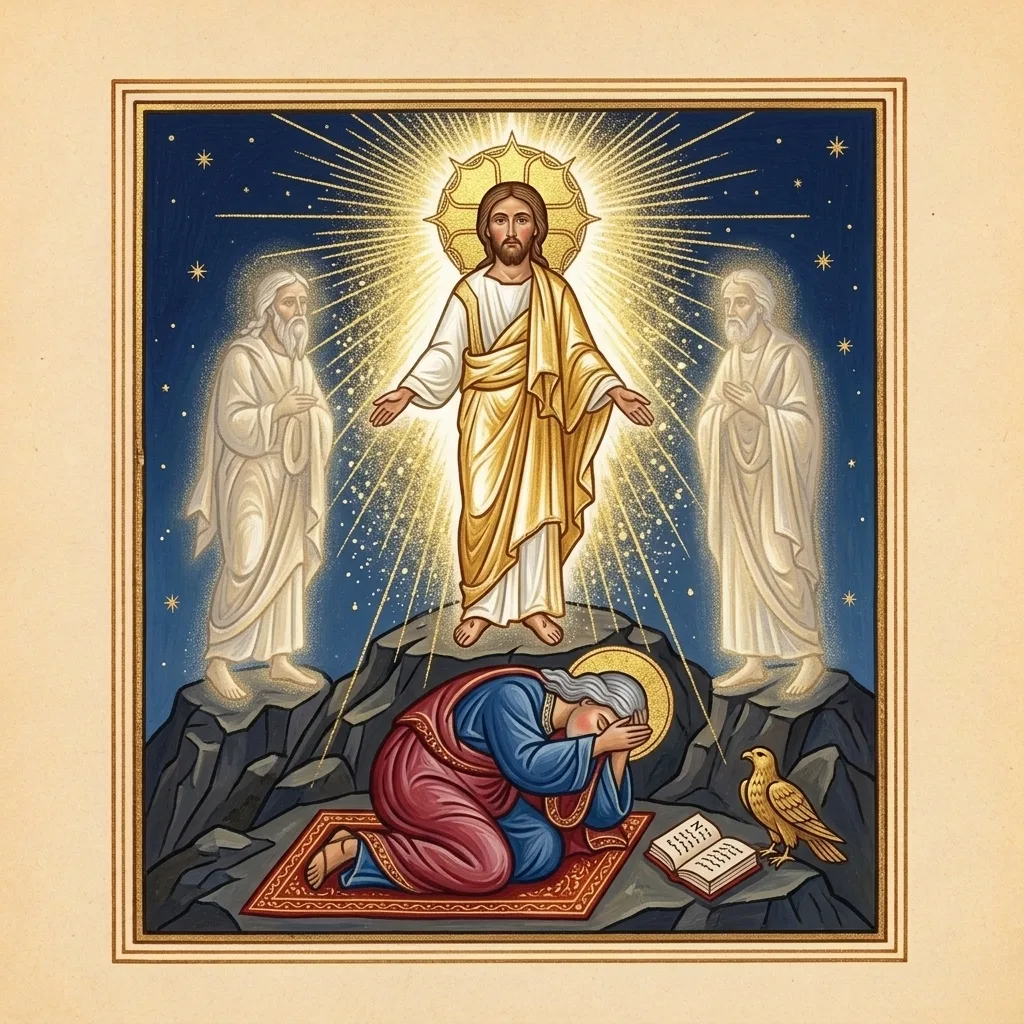
4One evening, Jesus took three disciples up a mountain. At the summit, something impossible happened: his face blazed like the sun, his clothes turned white as lightning. John fell facedown in the grass, trembling. He had seen behind the veil of the world — and nothing would ever look the same again.
 5
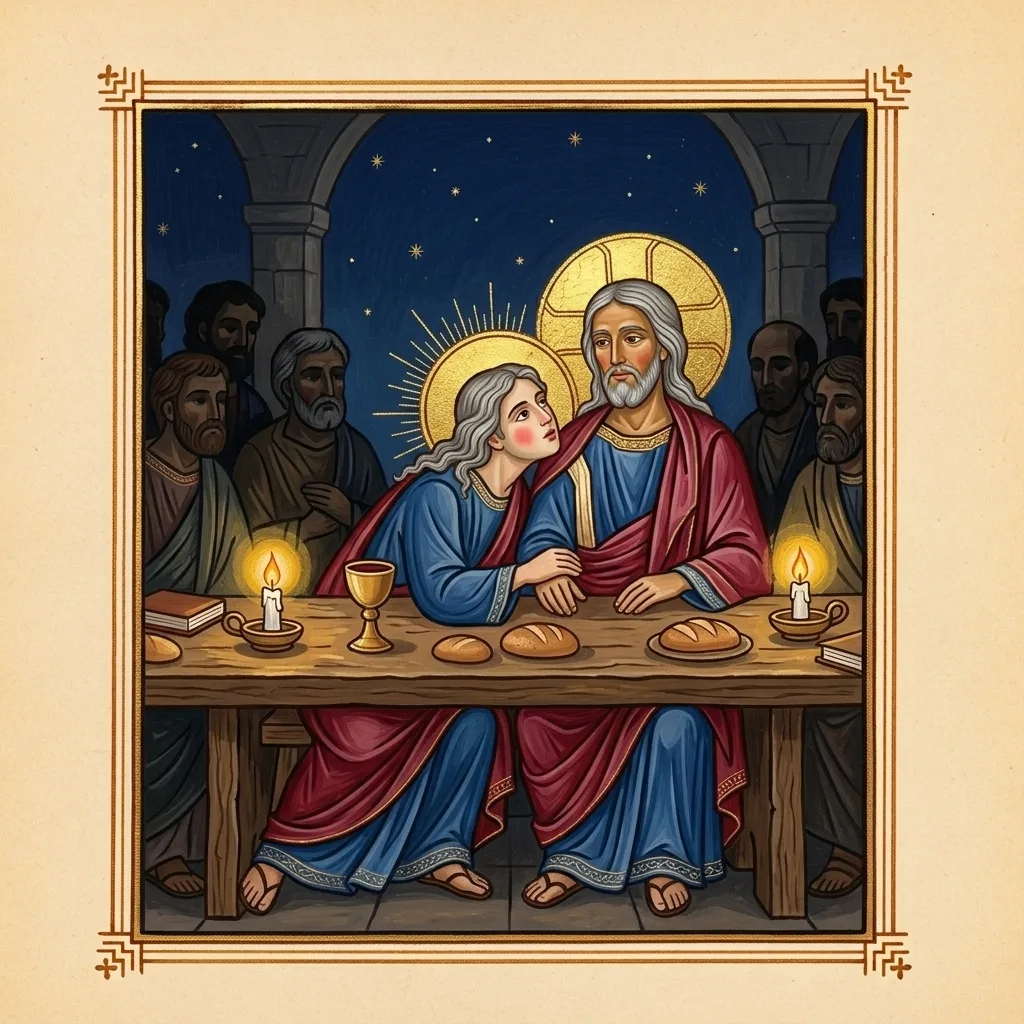
5At the Last Supper, John reclined beside Jesus — close enough to hear his heartbeat, close enough to ask the question no one else dared. Who will betray you? He was the one Jesus loved most, and the weight of that love would demand everything. The cross was coming. Most would run.
 6
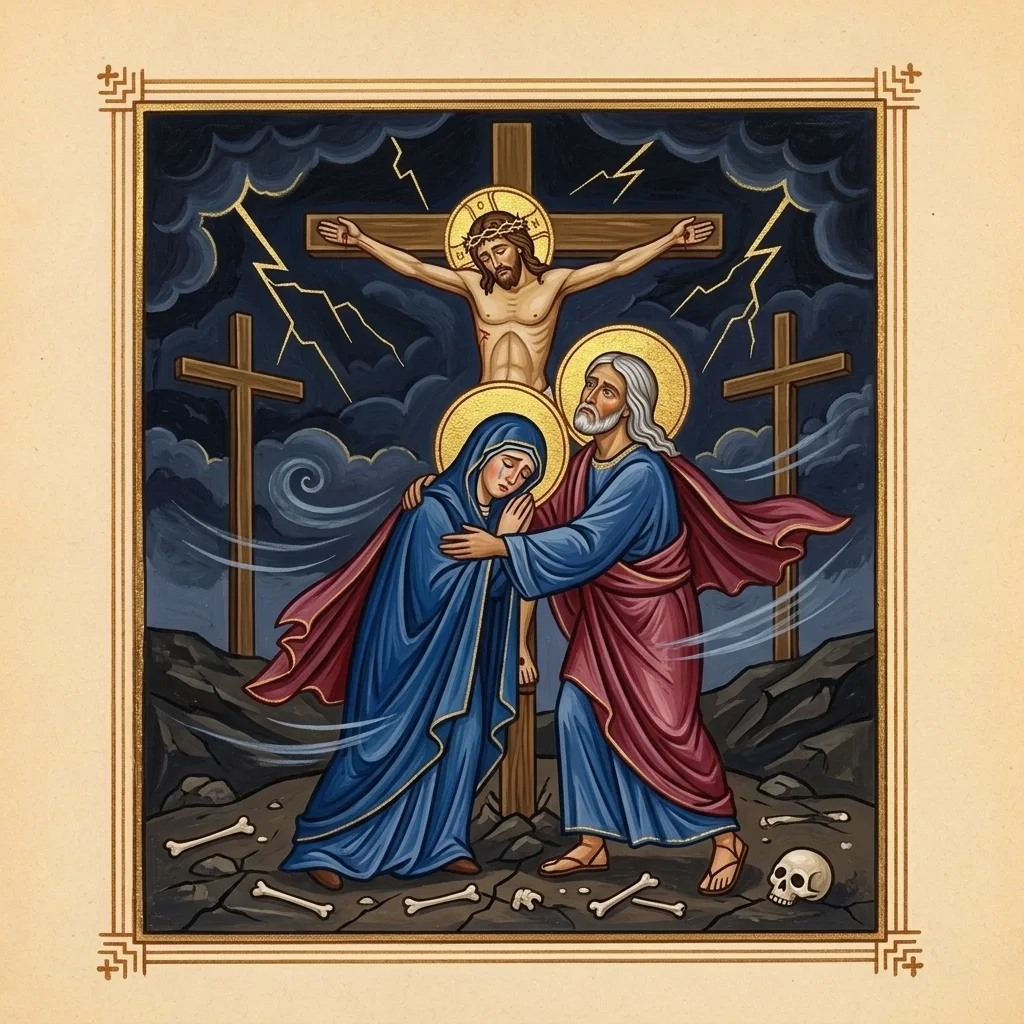
6When the soldiers came and the disciples scattered into the dark, John did not run far. He turned back. He followed Jesus through the trial, to the hill, to the end. Standing beneath the Cross, he received the most sacred charge ever spoken from nails and wood: 'Behold your mother.' He took Mary home that very hour.
 7
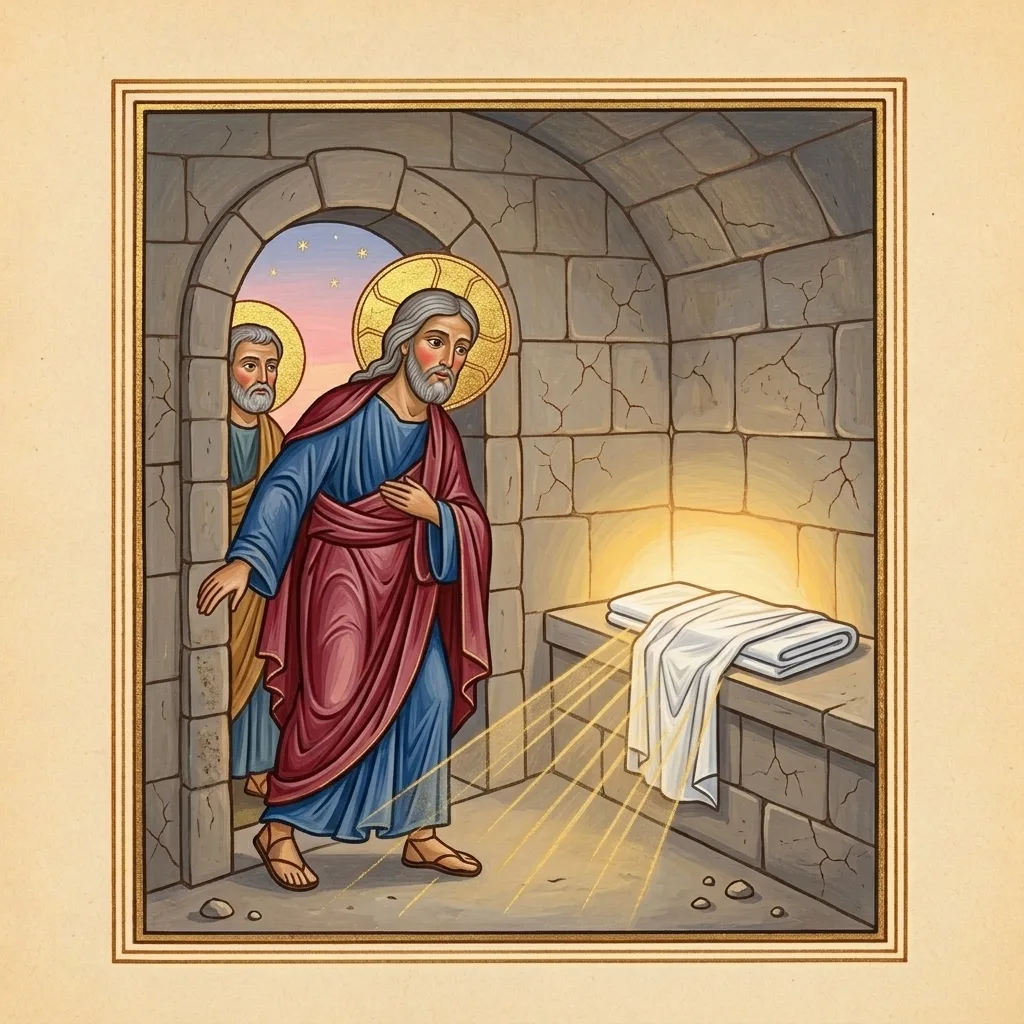
7John reaches the empty tomb first. He stops, looks in, sees the burial cloths folded like a shed skin — and steps inside. The Gospel says simply: 'He saw and believed.' The first to believe in the Resurrection was a young man who loved Jesus more than his own fear.
 8
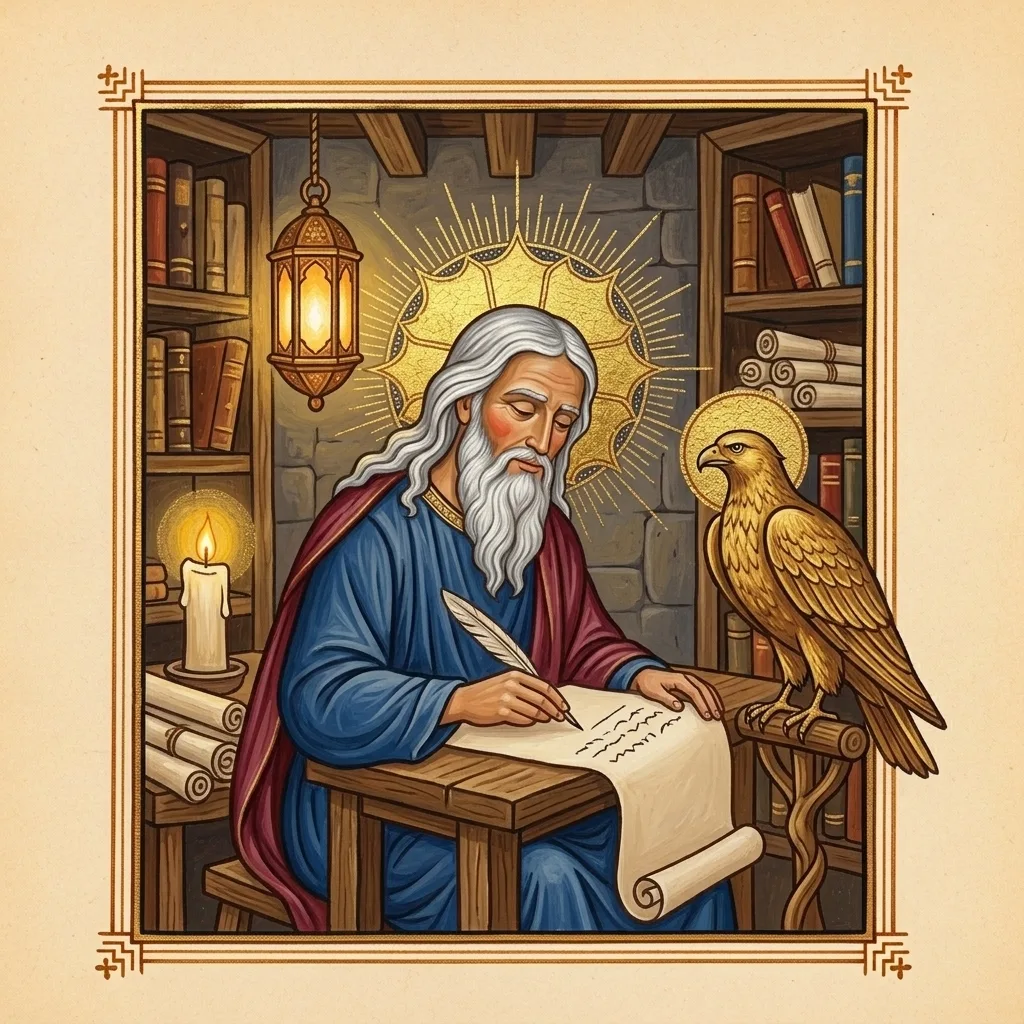
8John's Gospel opens not in Bethlehem but in eternity: 'In the beginning was the Word, and the Word was God.' The eagle soars where the others walk. But this soaring mystic's deepest teaching fits in four words. What are they?
 9
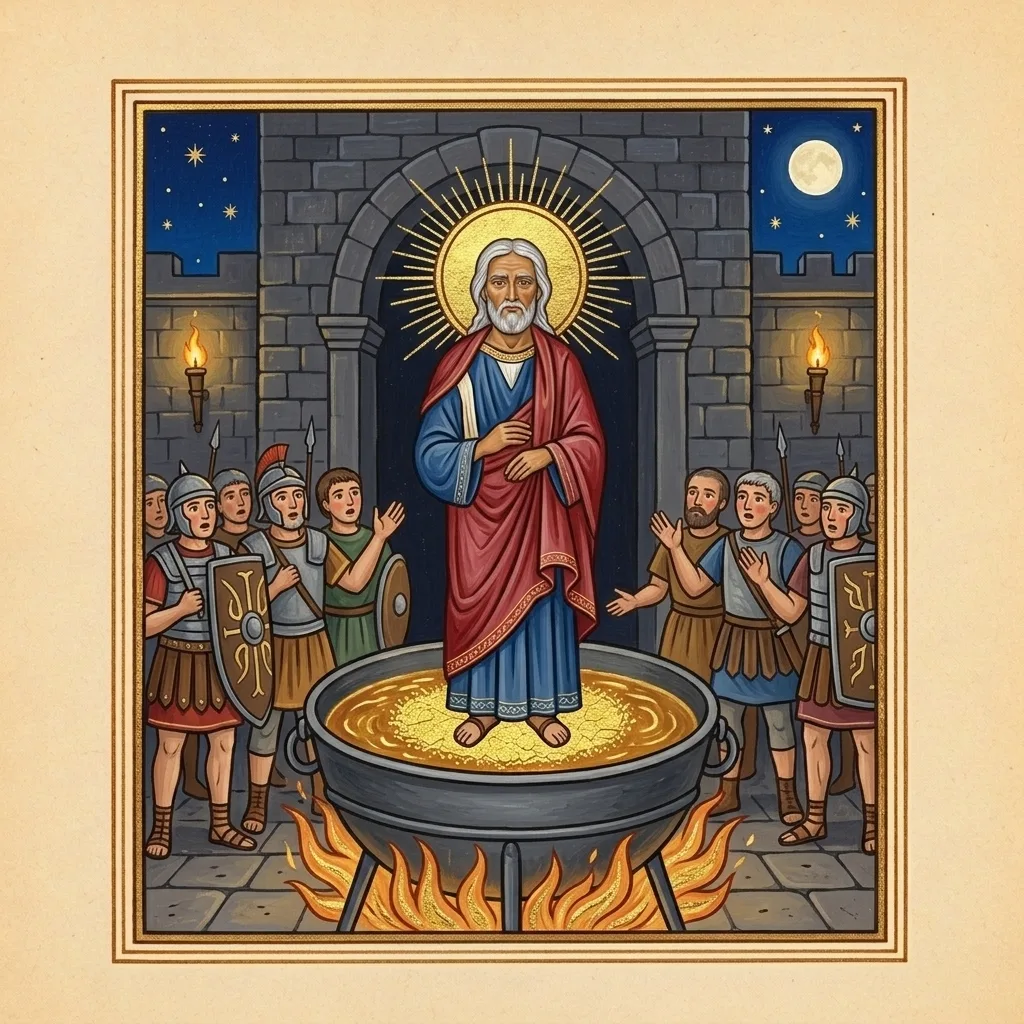
9Under Emperor Domitian, John was thrown into a cauldron of boiling oil in Rome. The flames roared. The oil churned. John walked out unharmed — refreshed, some said, as if from a warm bath. They didn't know what to do with a man who couldn't be killed. So they exiled him.
 10
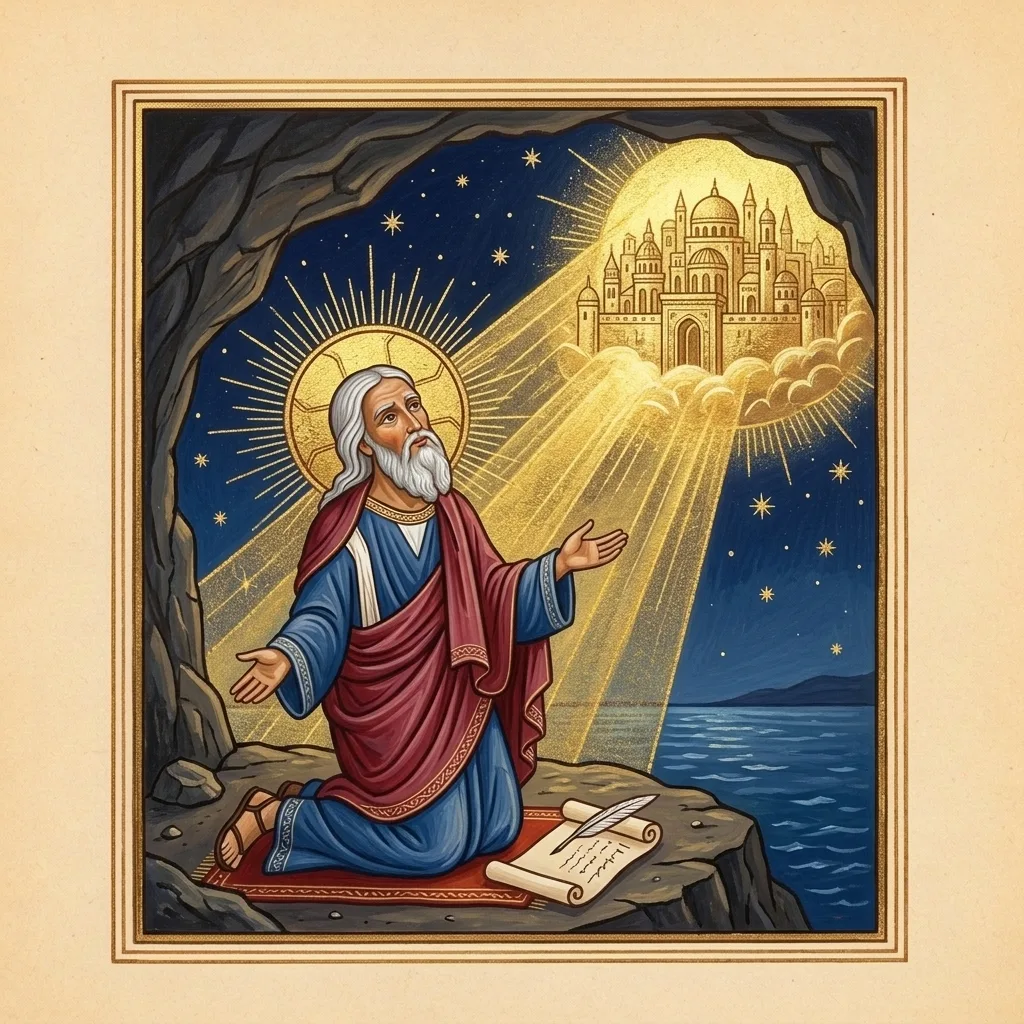
10Exiled to the rocky island of Patmos, John had nothing left but God — and God gave him everything. In a cave above the sea, the visions came: a Lamb on a throne, a new Jerusalem descending like a bride. He wrote it all down. The end of all things is not destruction. It is a wedding.
 11
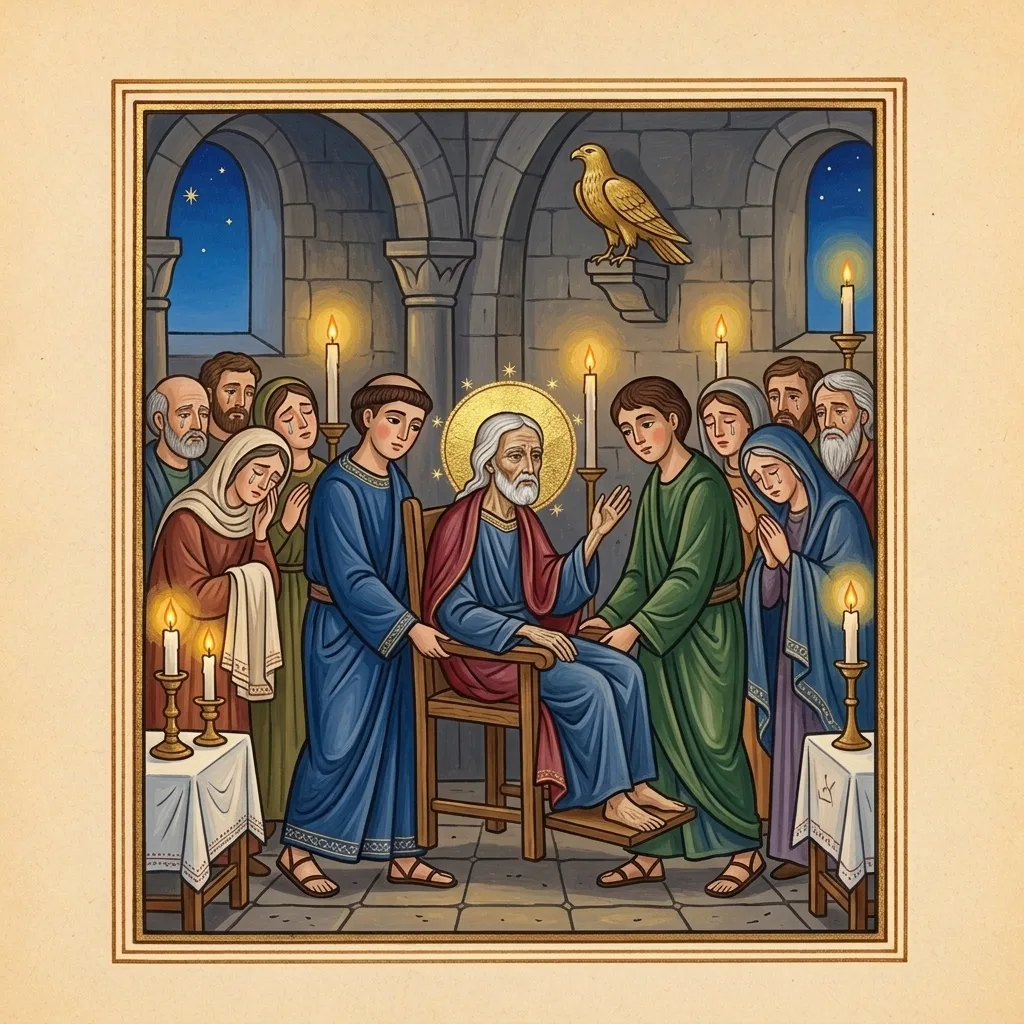
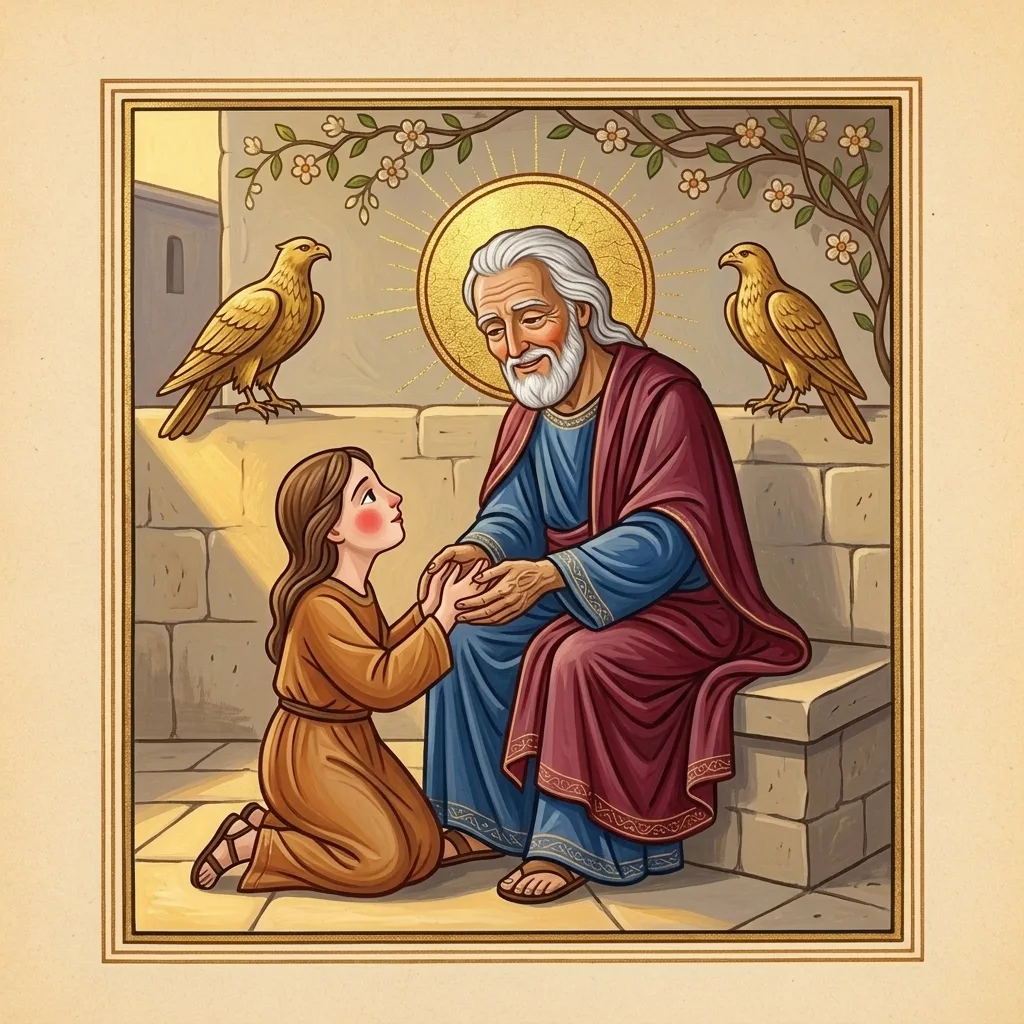
11By the end, John was too frail to preach. His disciples carried him into church, and he would raise a trembling hand and say: 'Little children, love one another.' Every week. The same words. Asked why, he said: 'If it alone is kept, it is enough.' Then he lay down and died. The last eyewitness.
 12
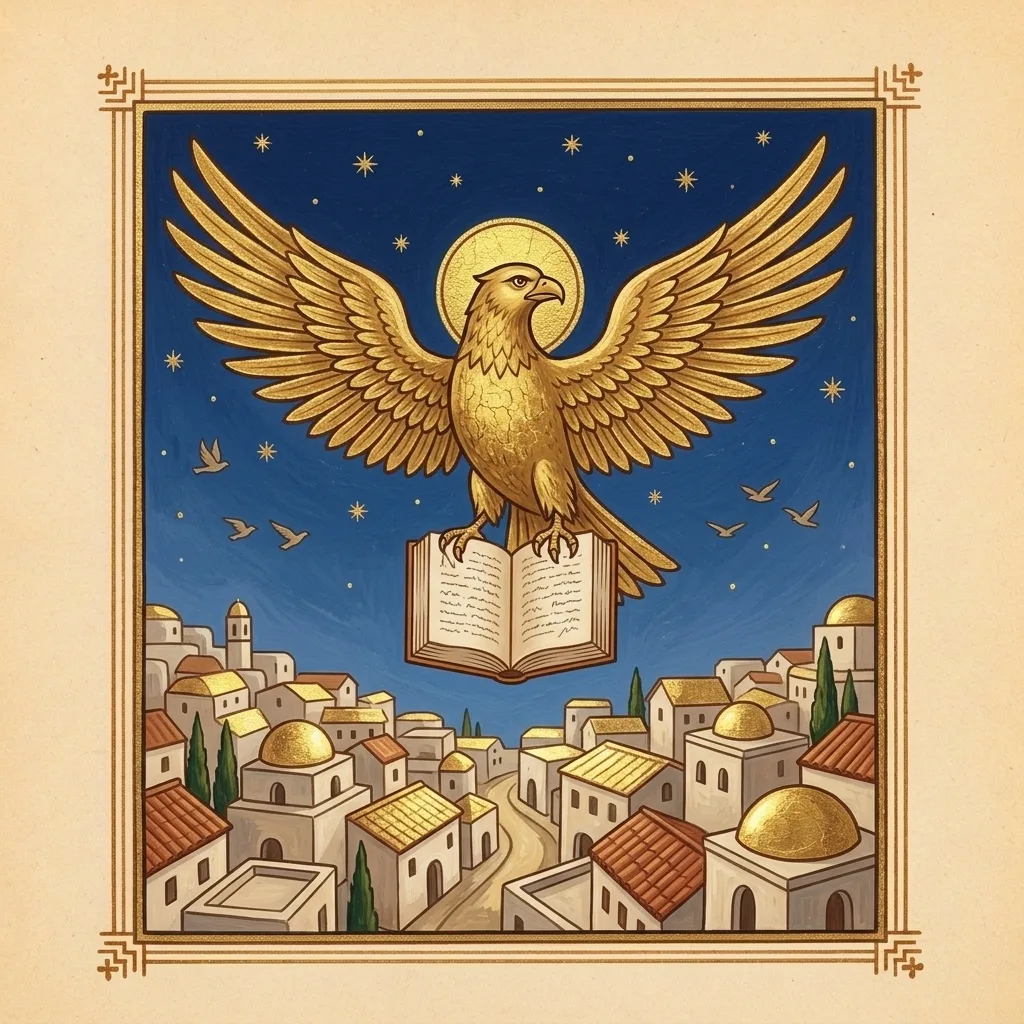
12The Church gave John the eagle — the only evangelist whose symbol flies. Matthew, Mark, and Luke are a man, a lion, an ox: creatures of earth. John alone soars where the sun is too bright to look at. East and West both claim him. Mystics and theologians have argued over his Gospel for two thousand years.
 13
13John wants to hand you something across two thousand years: you don't have to understand everything — you only have to love. Stubbornly. Repeatedly. Even when it costs you everything. 'God is love,' he wrote, 'and whoever abides in love abides in God.' The eagle soared to the heights to bring that back down to you.
Life & Times
Early Life
A fisherman from Galilee called by Jesus to be a 'fisher of men' alongside his brother James (sons of Zebedee).
Turning Point
The Crucifixion, where he stood faithfully by the Cross and received Mary as his mother, becoming the guardian of the Church's memory.
Legacy
Leads the Church in Ephesus, survives boiling oil in Rome, is exiled to Patmos to write Revelation, and dies the last surviving Apostle.
Historical Context
Sources & historical notes
Dates and later-life details are left uncertain where the sources do not establish them. Historical summaries are secondary overviews; Scripture and Church documents are linked separately where available.
Words & Wisdom
“God is love, and whoever abides in love abides in God, and God abides in him.”
“Little children, love one another.”
Gospel of John
The 'spiritual Gospel,' presenting Christ as the eternal Logos and emphasizing the Incarnation and the Sacraments.
Read MoreThe Johannine Epistles (1–3 John)
Three letters traditionally attributed to John, centering on love as the defining mark of Christian life and warning against early Gnostic errors.
Read MoreBook of Revelation
Apocalyptic visions received on Patmos, promising the final victory of the Lamb over evil.
Read MoreMerciful Lord, we beseech You to cast Your bright beams of light upon Your Church, that it, being enlightened by the doctrine of Your blessed Apostle and Evangelist Saint John, may so walk in the light of Your truth, that it may at length attain to the light of everlasting life; through Jesus Christ our Lord. Amen.
Related Saints
Connections in the communion of saints
St. James the Elder, Apostle
Brothers, sons of Zebedee, called 'Sons of Thunder' by Jesus.
Gregory of Nazianzus
Gregory's theological depth drew heavily on John's Gospel and mystical writings.
Mary Magdalene
According to tradition, both traveled to Ephesus with the Virgin Mary after Pentecost.
Peter the Apostle
Part of Jesus's inner circle, witnessing the Transfiguration and Gethsemane together.
Saint Andrew
Both were among the first four disciples called by Jesus at the Sea of Galilee.