Sanctified Life
AD 1474 — AD 1548
Birthplace: Cuautitlán, Mexico
Also Known As
Patronage
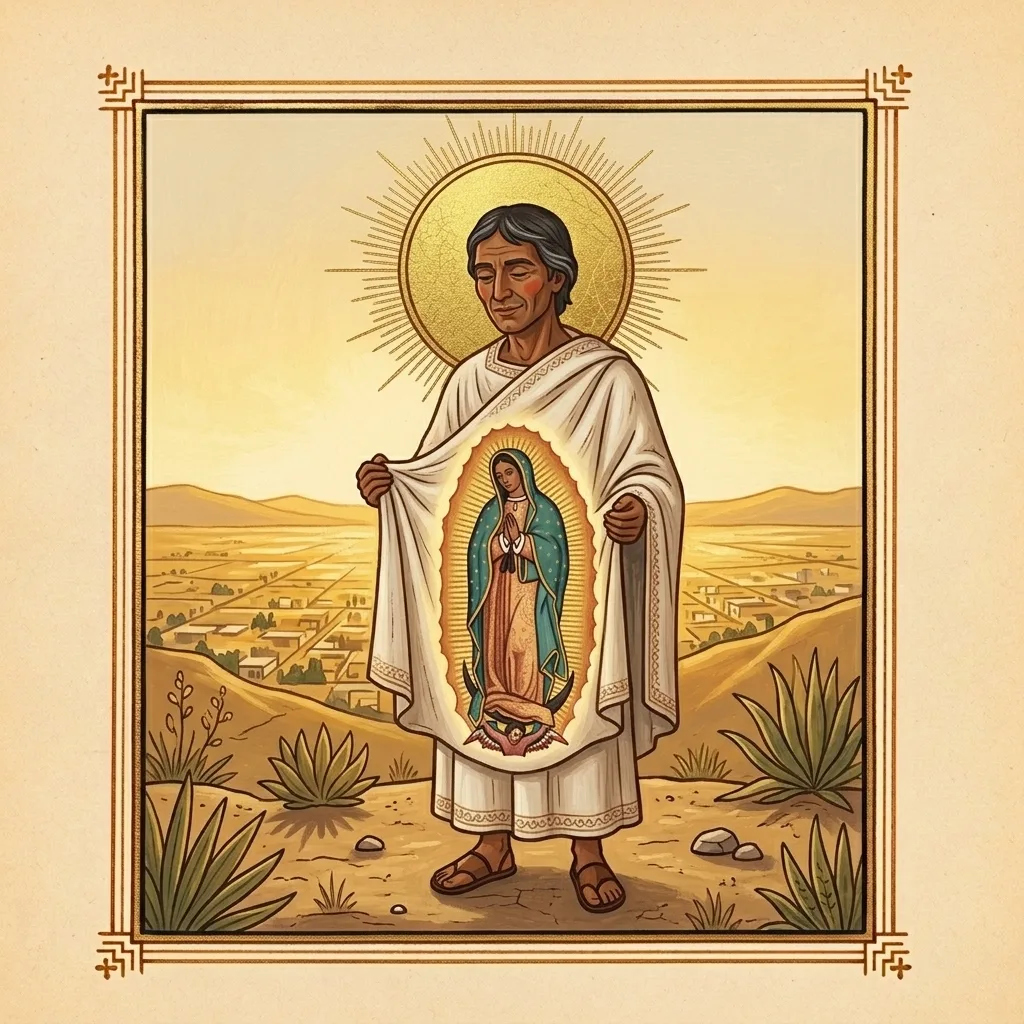
An indigenous Nahua convert baptized around 1524, Juan Diego experienced four apparitions of Our Lady of Guadalupe on Tepeyac Hill in December 1531. Sent by the Virgin to Bishop Zumárraga as her messenger, he carried Castilian roses in his tilma in the December frost. When he opened his cloak before the bishop, the image of the Virgin was found imprinted on the cloth — the same tilma that has hung in the Basilica of Our Lady of Guadalupe for nearly five centuries.

Interactive Lesson
The Illustrated Life
Juan Diego Cuauhtlatoatzin's story in 13 illustrated moments — tap any scene to begin there.
 1
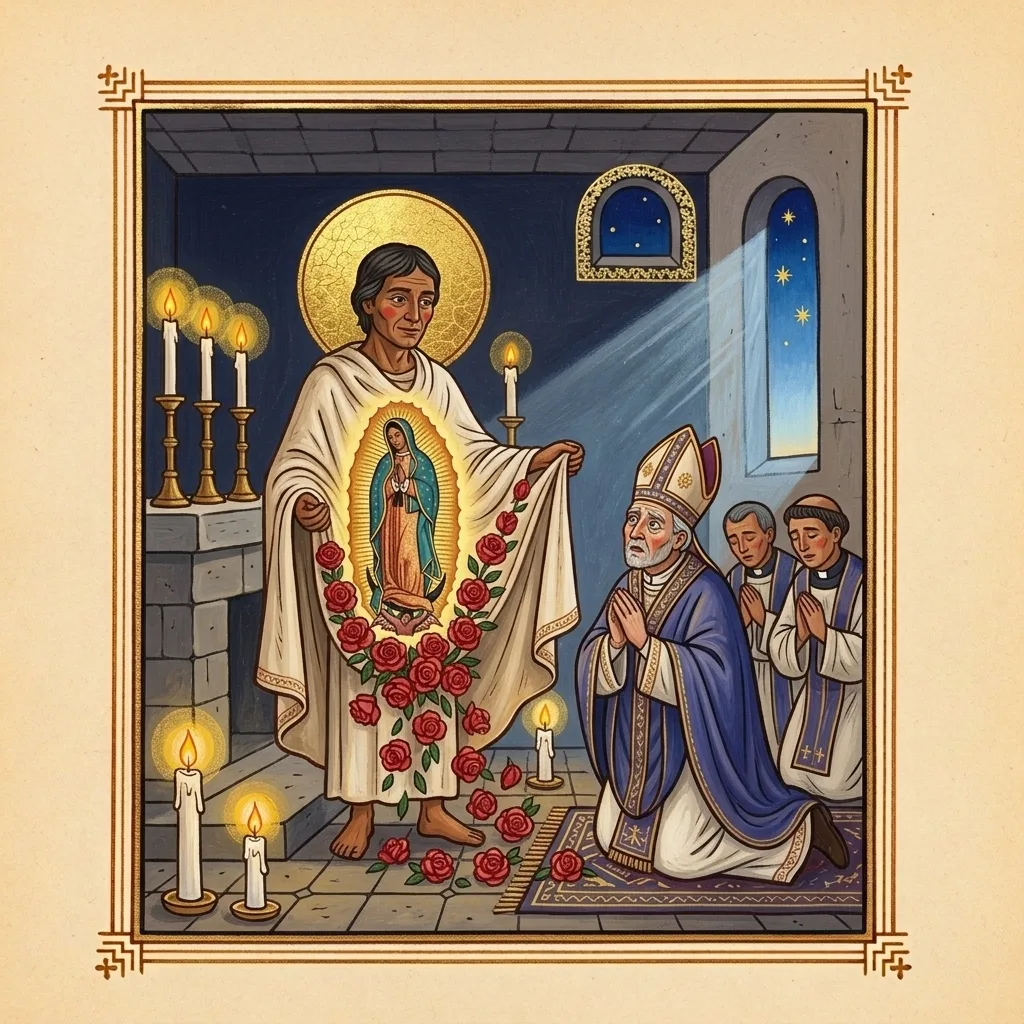
1A poor farmer opens his rough cotton cloak before a stunned bishop — and roses cascade to the stone floor. Beneath them, on the inside of the cloth, glows a portrait no human hand ever painted. One moment. One man. A continent changed forever.
 2
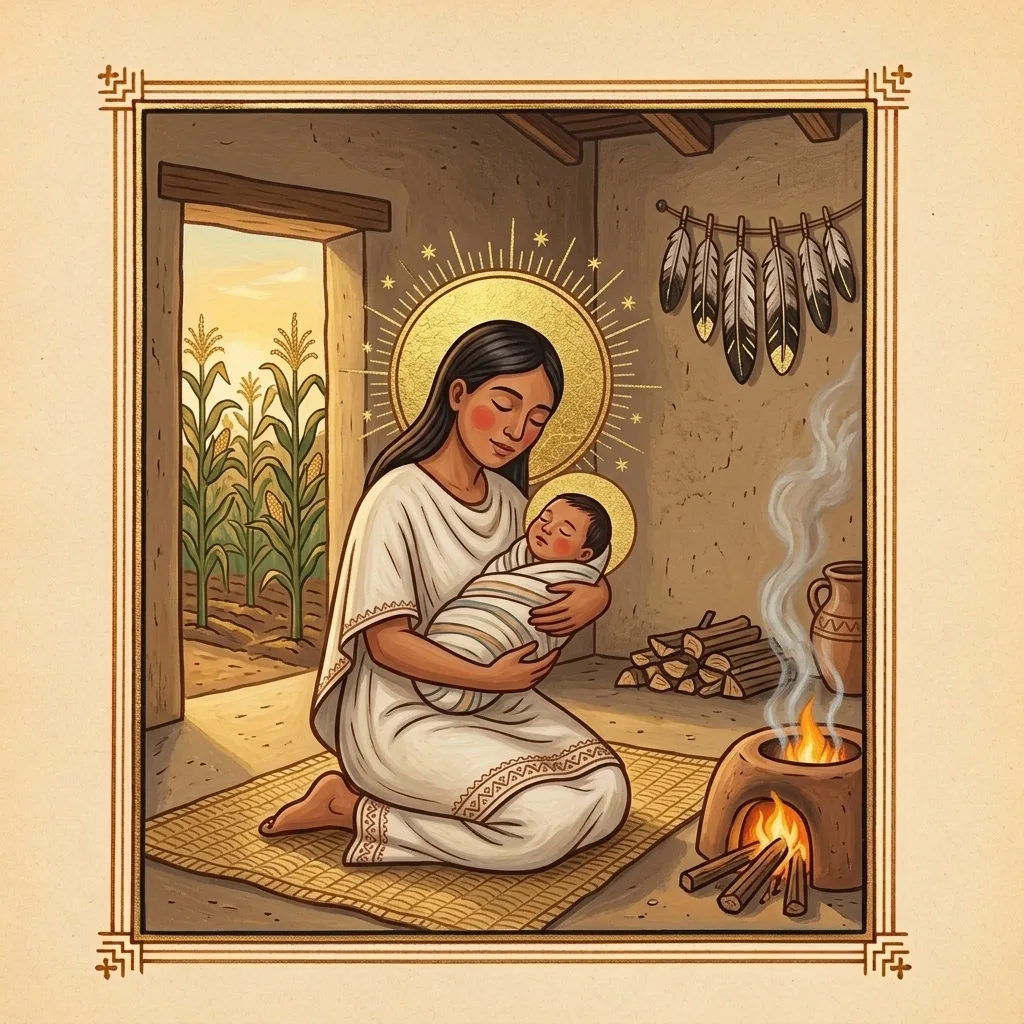
2He is born around 1474 in a Nahua village near Cuautitlán, given the name Cuauhtlatoatzin — 'He who speaks like an eagle.' The Aztec empire rules his world. The old gods demand blood at the pyramid summits. Into this world, one quiet man is quietly being prepared.
 3
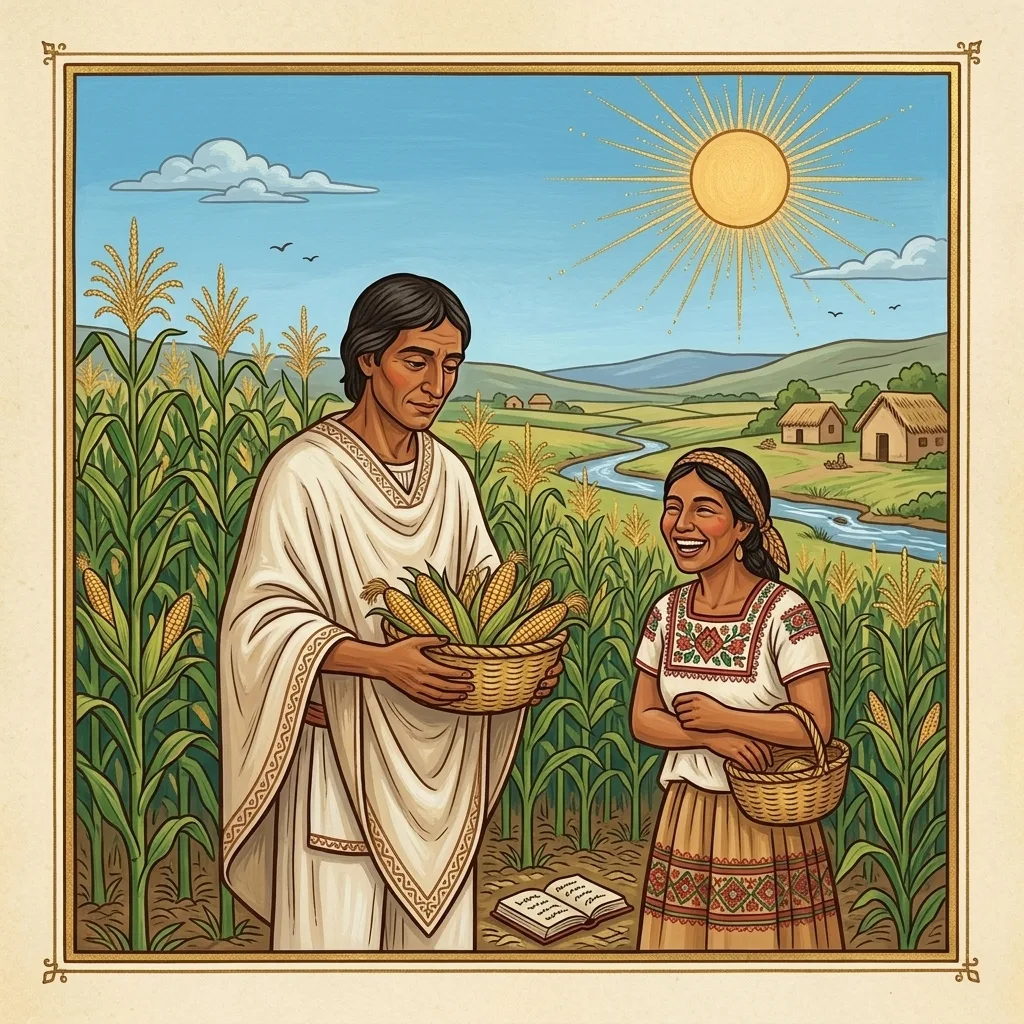
3He farms the valley floor and weaves mats from rushes. He marries a woman named María Lucía and builds a small life in the shadow of great events. They are entirely ordinary people. That, it turns out, is exactly the point. God was already watching.
 4
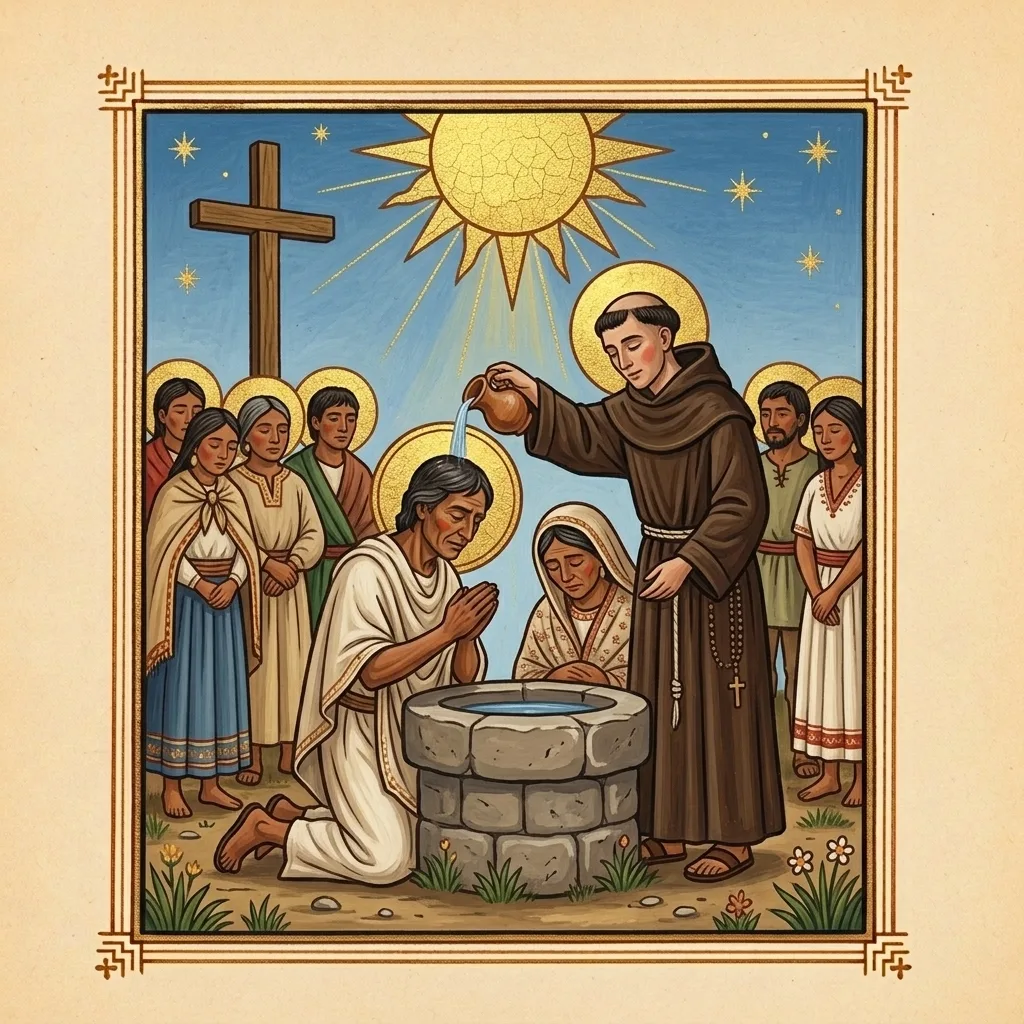
4In 1524, Franciscan missionaries arrive and begin preaching through the valley. Juan Diego and María Lucía attend, listen, and feel something stir that neither can name. Around the age of fifty, they are both baptized — old enough to understand exactly what they are choosing.
 5
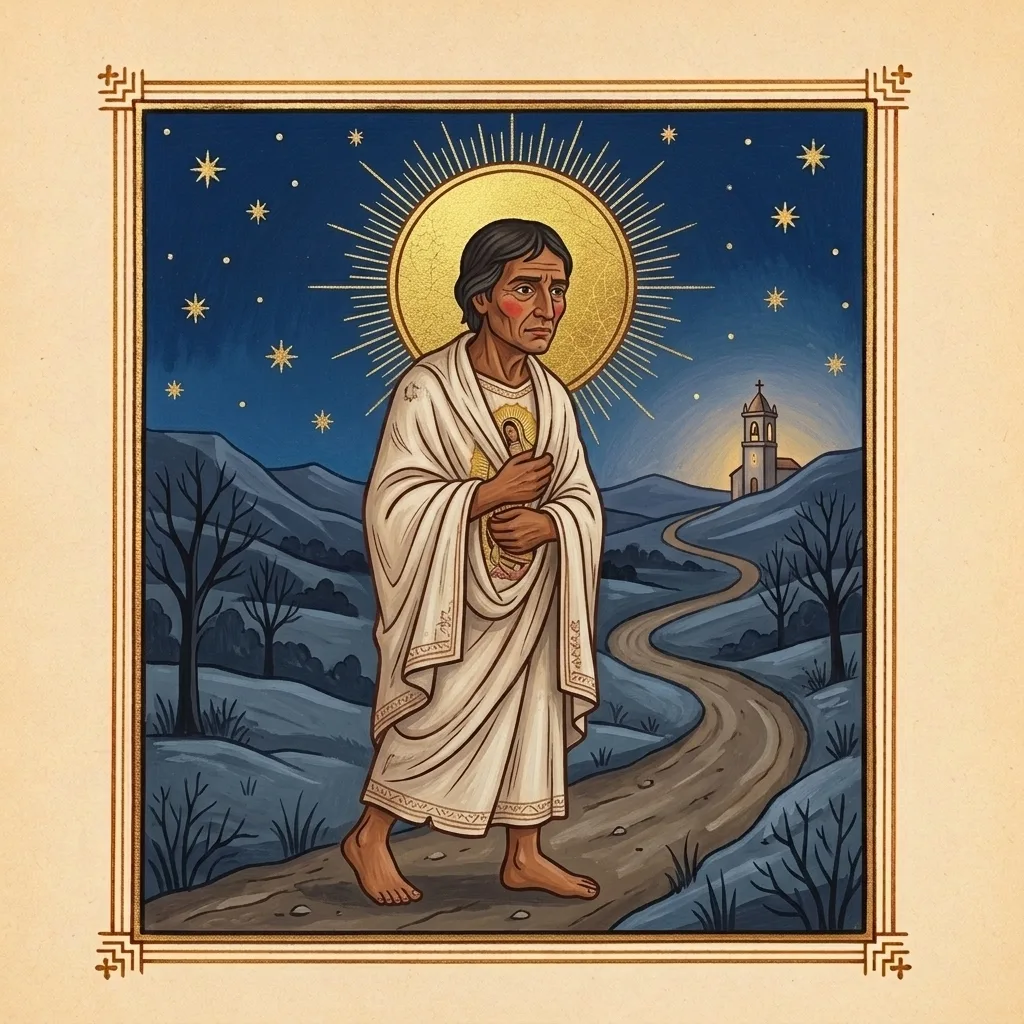
5Then María Lucía dies, and grief strips everything ordinary from his life. Alone in his small house, Juan Diego begins walking fifteen miles each way to Mass in Tlatelolco — barefoot, before dawn, every single day. His sorrow becomes, slowly, a road.
 6
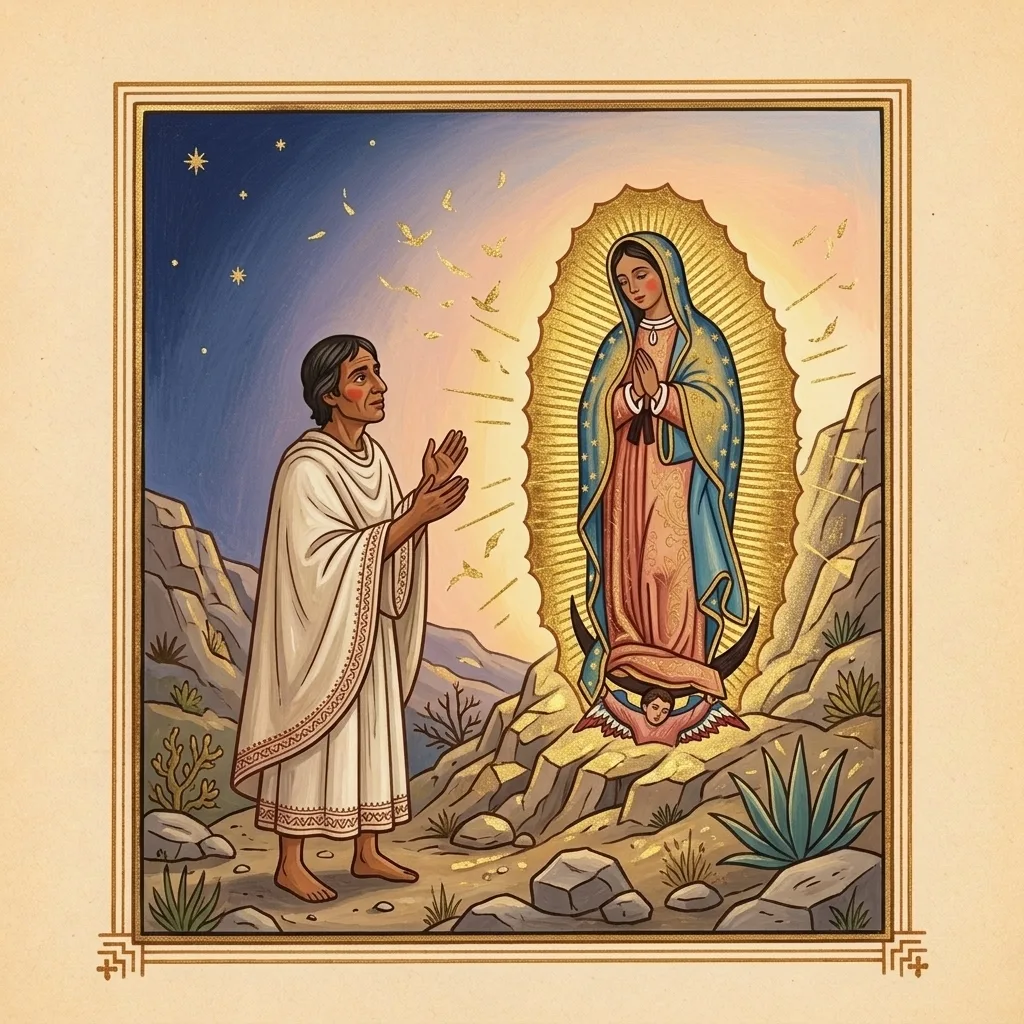
6December 9, 1531. Juan Diego is walking to Mass before dawn when he hears music rising from Tepeyac Hill — a chorus so beautiful he stops walking. Then he sees her: a young woman, radiant, surrounded by golden light, speaking to him in Nahuatl, his own tongue.
 7
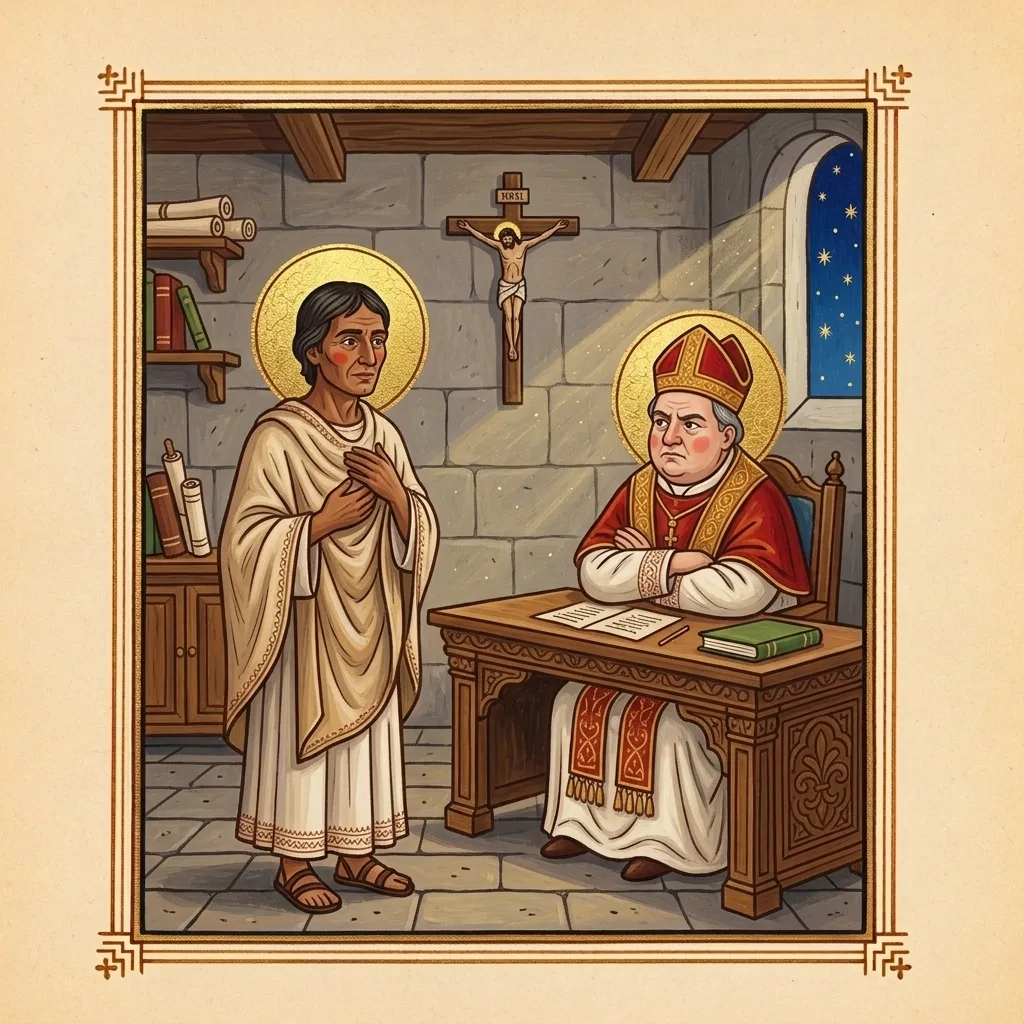
7She calls herself the Virgin Mary and asks Juan Diego to carry a message to the Bishop of Mexico City: build a chapel on this hill. He goes — a poor, aging indigenous man, walking unannounced into the bishop's residence. He knows he is nobody. He goes anyway.
 8
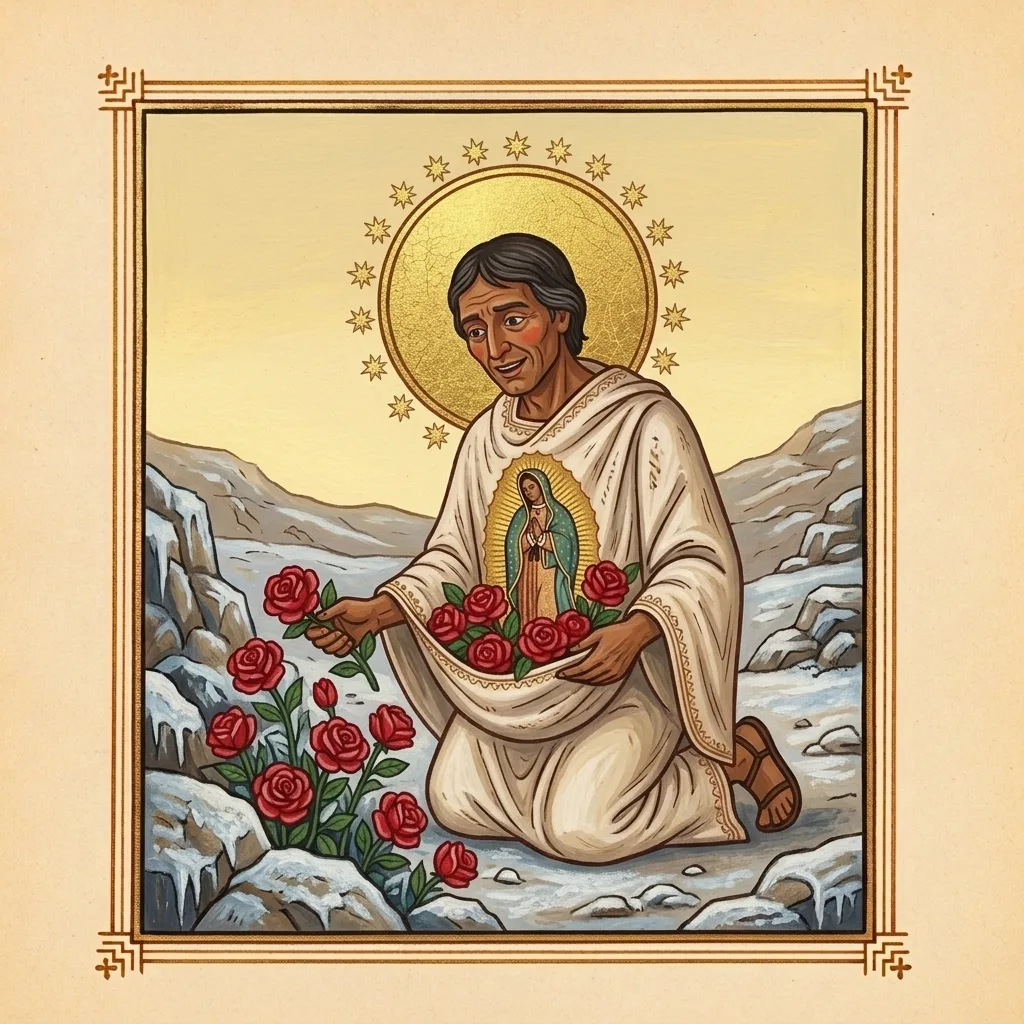
8The bishop asks for a sign. Back on the hill, Mary tells Juan Diego to climb to the rocky summit and gather flowers. It is December, and the hillside of Tepeyac grows nothing but cactus and scrub. He finds Castilian roses, vivid and perfect, in full bloom.
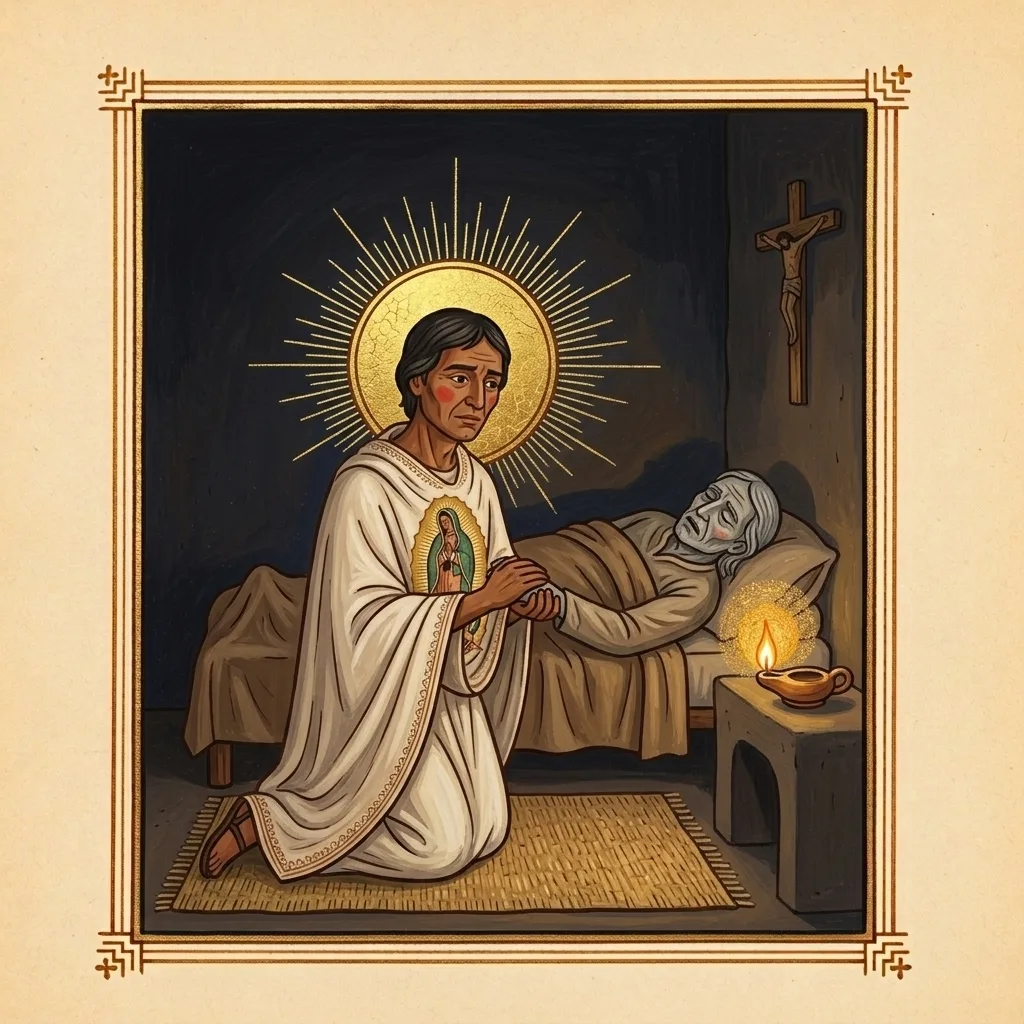 9
9That same night, his uncle Juan Bernardino falls gravely ill — dying. Juan Diego tries to slip past Tepeyac the next morning without being seen, not wanting to delay the bishop's sign when his uncle needs a priest first. Mary appears anyway, on the path, and finds him.
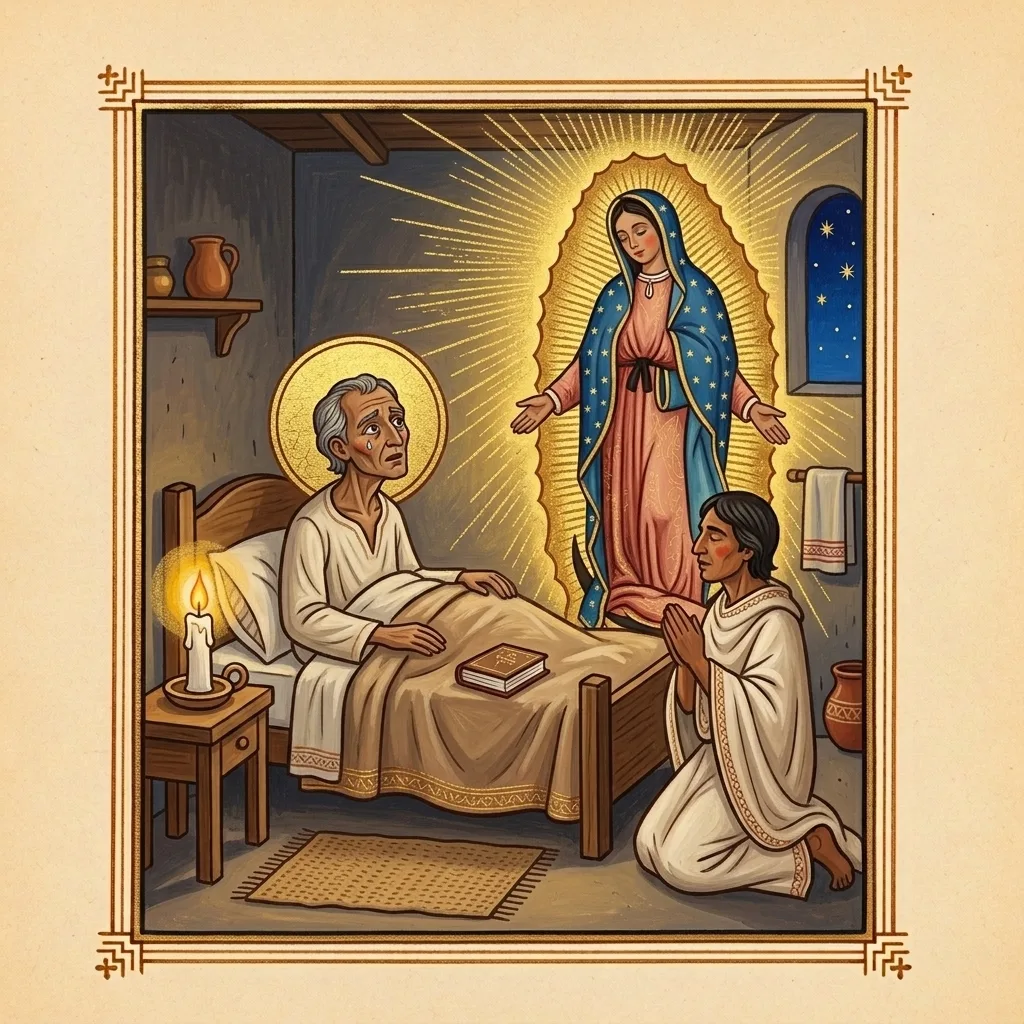 10
10Mary tells Juan Diego not to worry — she has already appeared to Juan Bernardino and healed him. Then she says something that has echoed for five centuries: 'Am I not here, I who am your Mother? Are you not under my shadow and protection? What else do you need?'
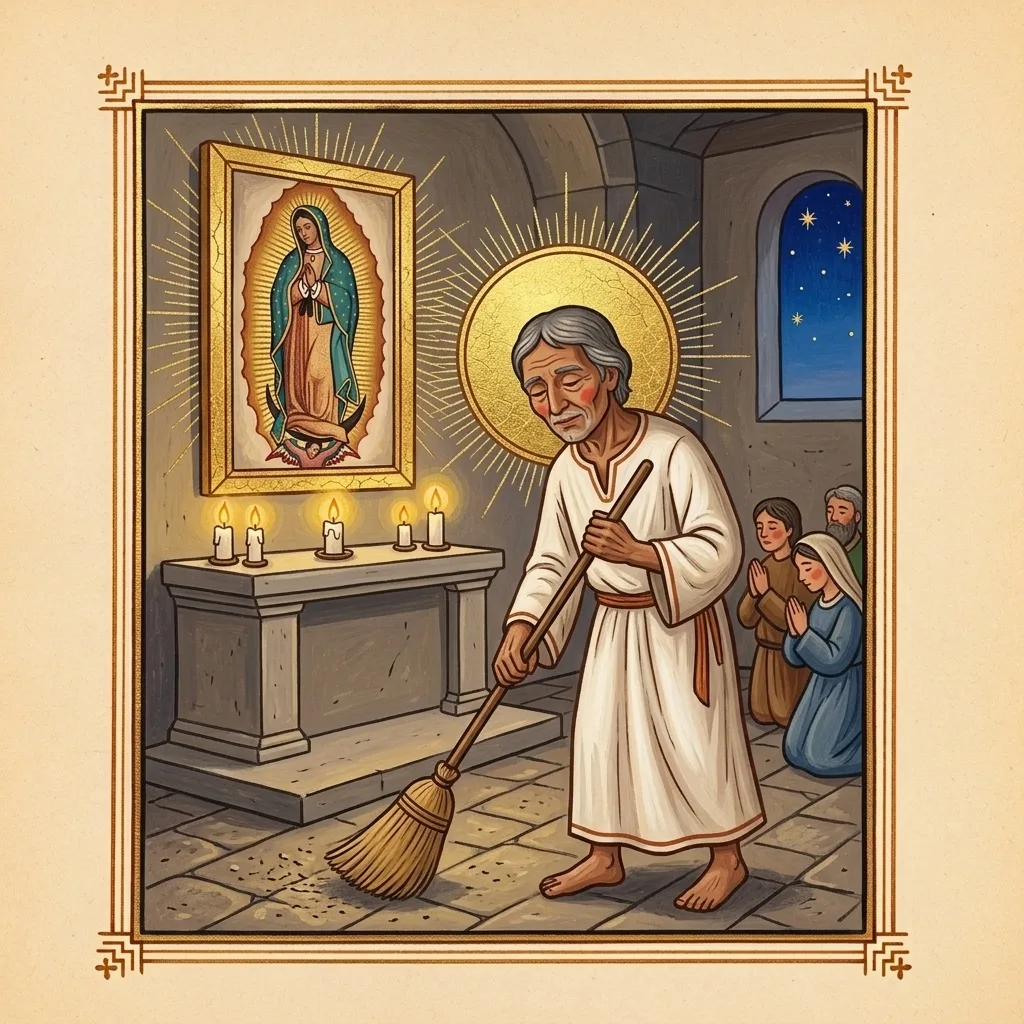 11
11After the apparition, Juan Diego gives away his land, moves into a small cell beside the new chapel, and becomes its first guardian. For seventeen years until his death in 1548, he tends the image, welcomes pilgrims, and tells the story of Tepeyac again and again.
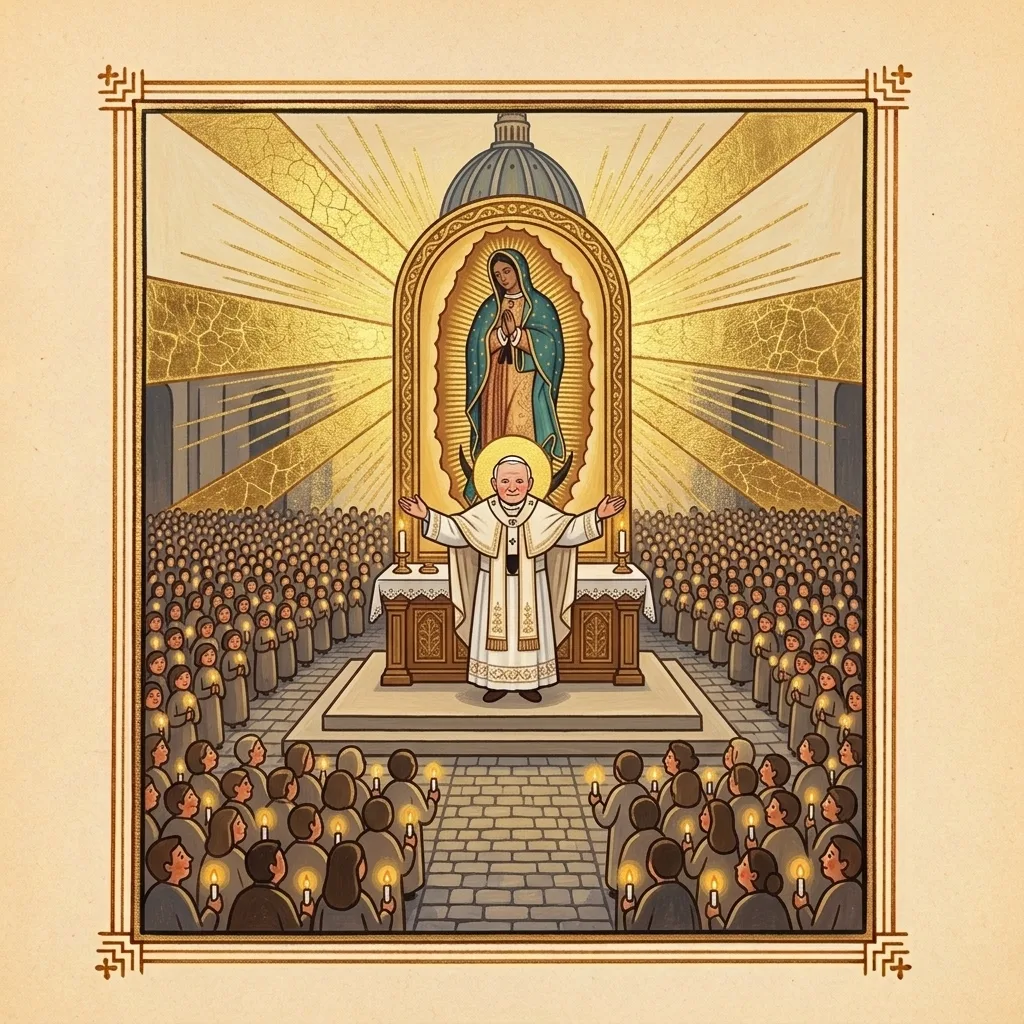 12
12Nine million indigenous people were baptized within seven years of the tilma's appearance — the greatest mass conversion in recorded history. In 2002, Pope John Paul II canonized Juan Diego in Mexico City: the first indigenous saint of the Americas.
 13
13You do not have to be powerful, educated, or well-connected for God to choose you. Juan Diego was a barefoot indigenous farmer who walked fifteen miles a day to Mass. Heaven chose him. Your smallness is not an obstacle — it may be the entire reason.
Life & Times
Early Life
After his wife's death in 1529, Juan Diego walked roughly fourteen miles each way to Tlatelolco for Mass and catechesis.
Turning Point
In December 1531, the Virgin Mary appeared to him four times on Tepeyac Hill, commissioning him as her messenger to the bishop.
Legacy
Juan Diego lived as a hermit-caretaker of the first Guadalupe chapel until his death in 1548, tending the tilma image and welcoming pilgrims.
Historical Context
Sources & historical notes
Dates and later-life details are left uncertain where the sources do not establish them. Historical summaries are secondary overviews; Scripture and Church documents are linked separately where available.
Words & Wisdom
Saint Juan Diego, you were chosen by Our Lady of Guadalupe as an instrument of peace and joy. You teach us that every person is of great value in the eyes of God. Pray that we may deeply realize that we are beloved children of God and that we may share this love with others. Recommend our prayers to your Mother, so that she may present them to her Son, Jesus. Amen.
Related Saints
Connections in the communion of saints