Sanctified Life
AD 10 — AD 84
Also Known As
Patronage
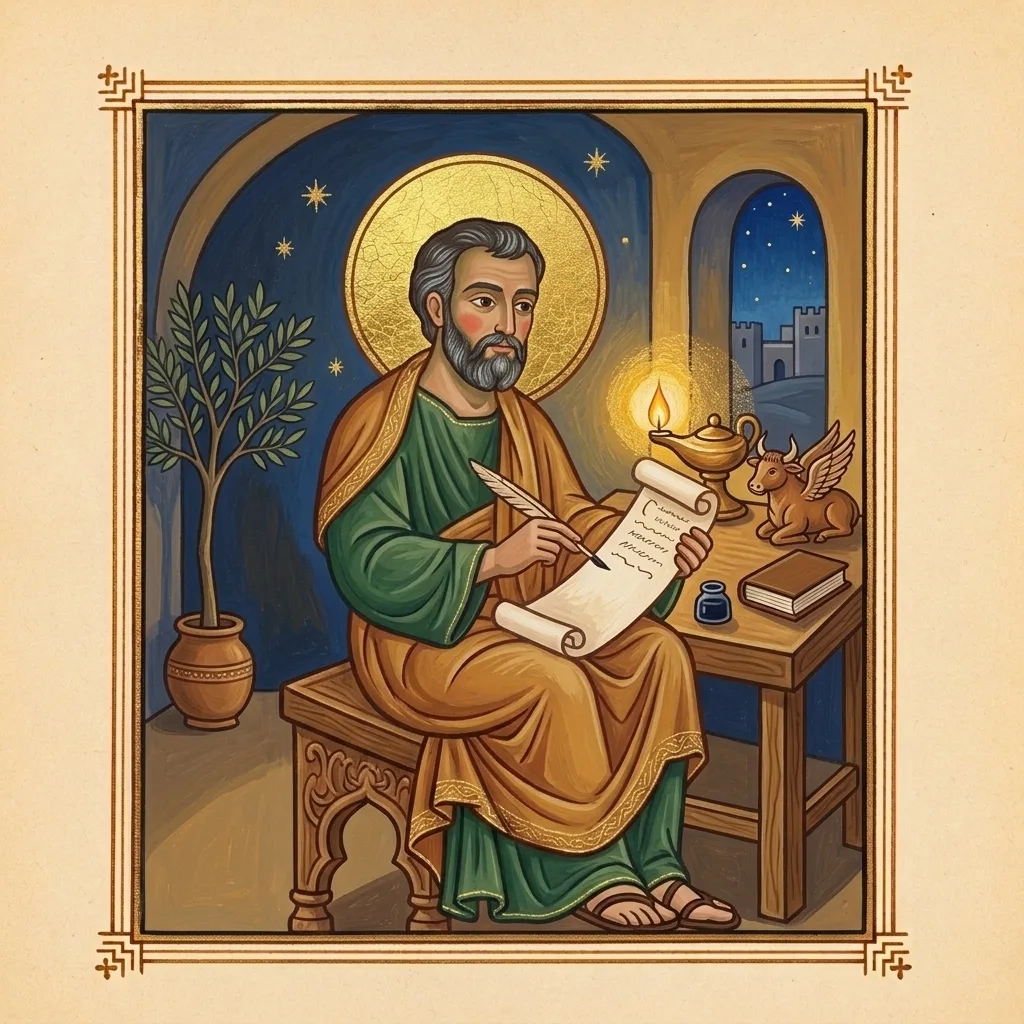
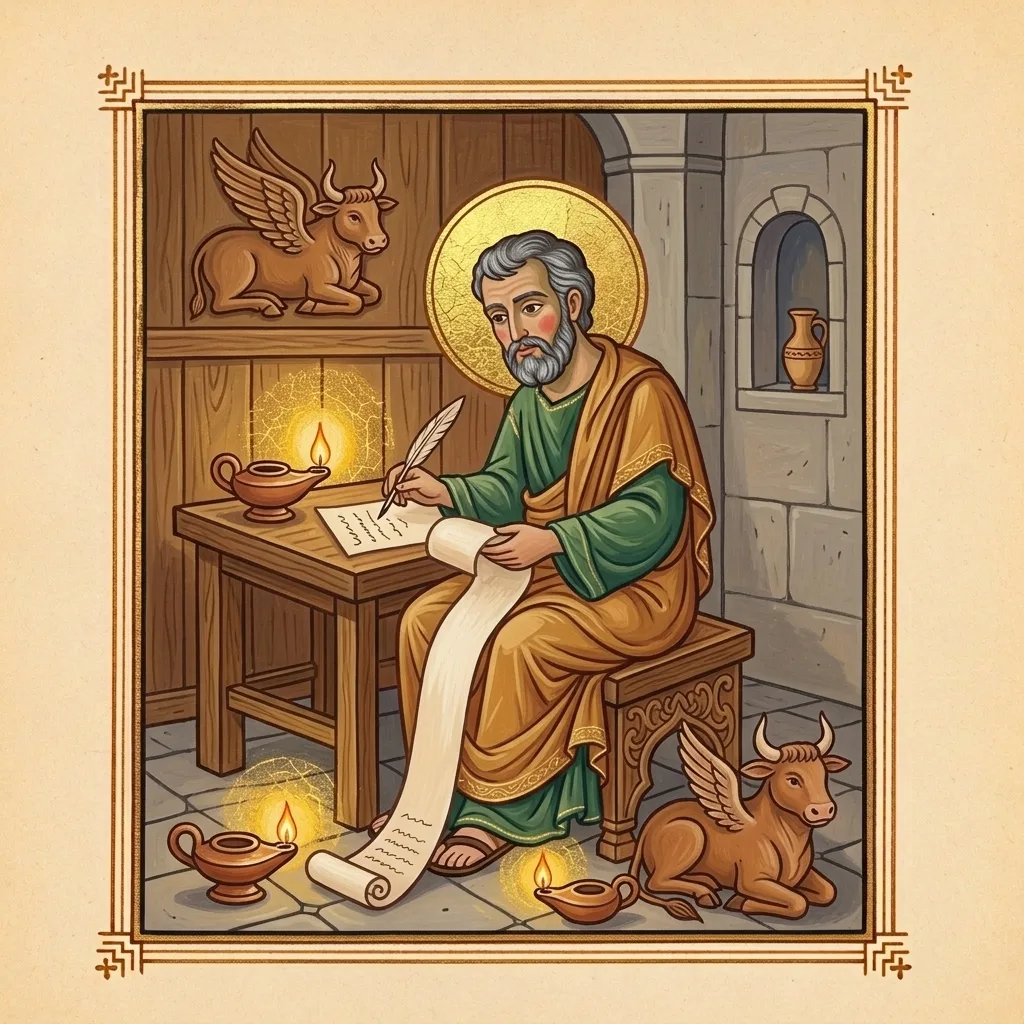
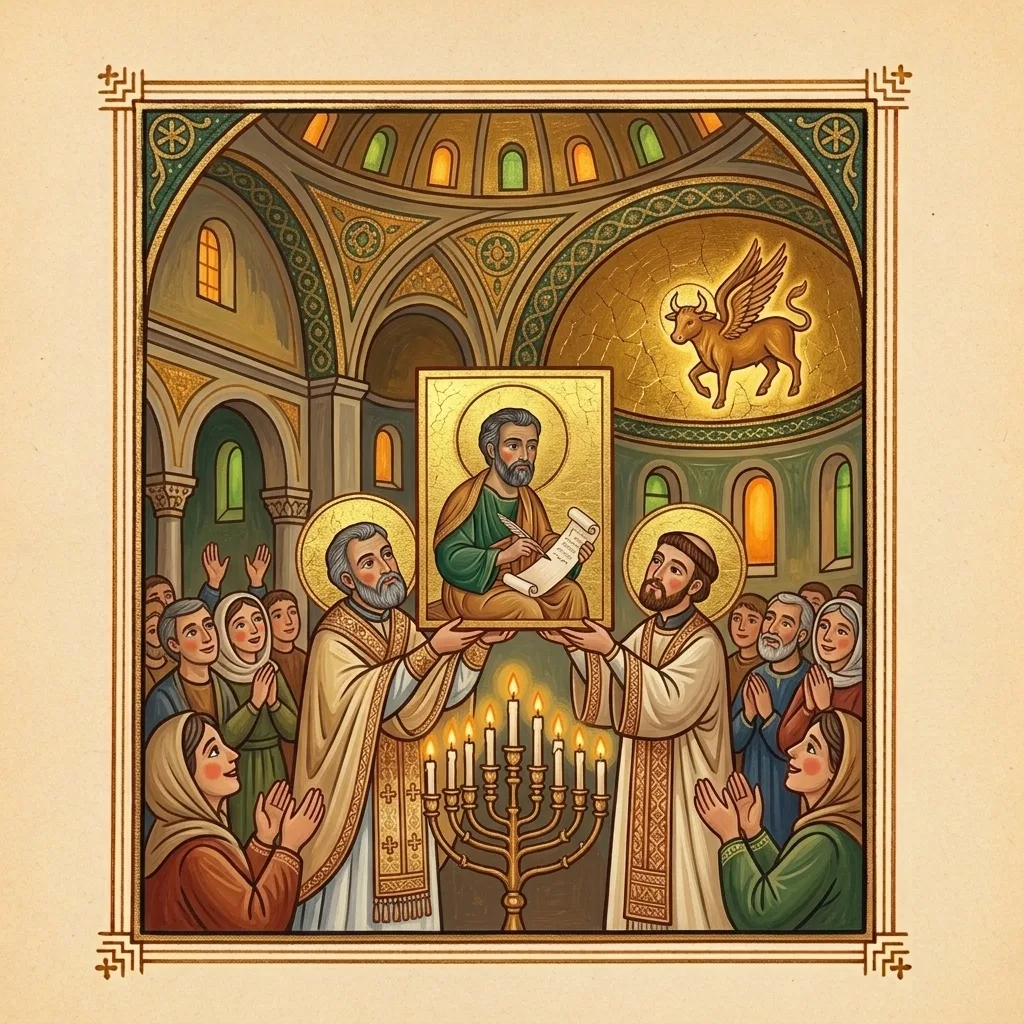
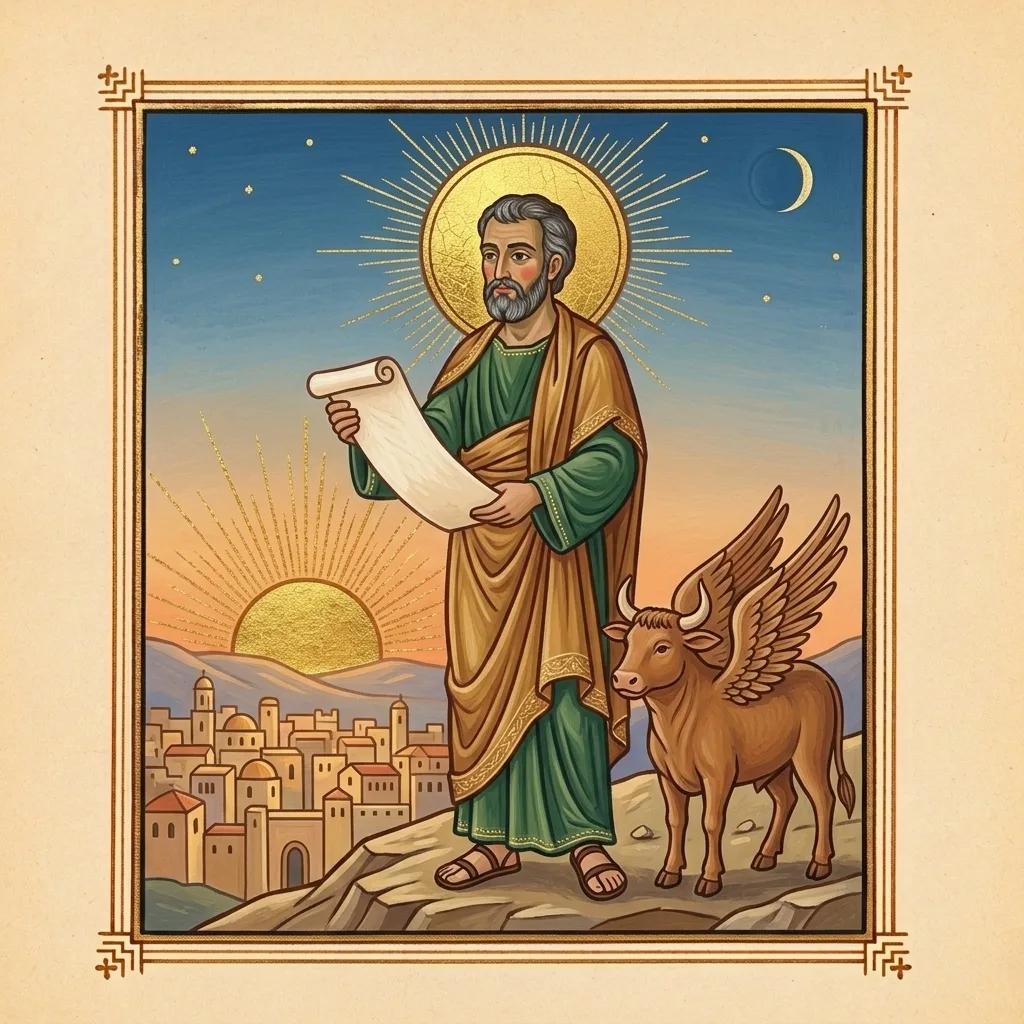
The 'Beloved Physician' and companion of St. Paul, Luke authored both the third Gospel and the Acts of the Apostles — together about a quarter of the New Testament. His Gospel stands out for its literary polish and its sustained attention to Christ's mercy toward the poor, the outcast, and women. He is symbolized by the winged ox, representing the priestly and sacrificial character of his Gospel's opening scene.

Interactive Lesson
The Illustrated Life
Luke the Evangelist's story in 13 illustrated moments — tap any scene to begin there.
 1
1One man wrote a quarter of the New Testament — and he wasn't even Jewish. Luke was a Greek doctor from Antioch, an outsider who became the voice the whole world needed to hear the story of Jesus.
 2
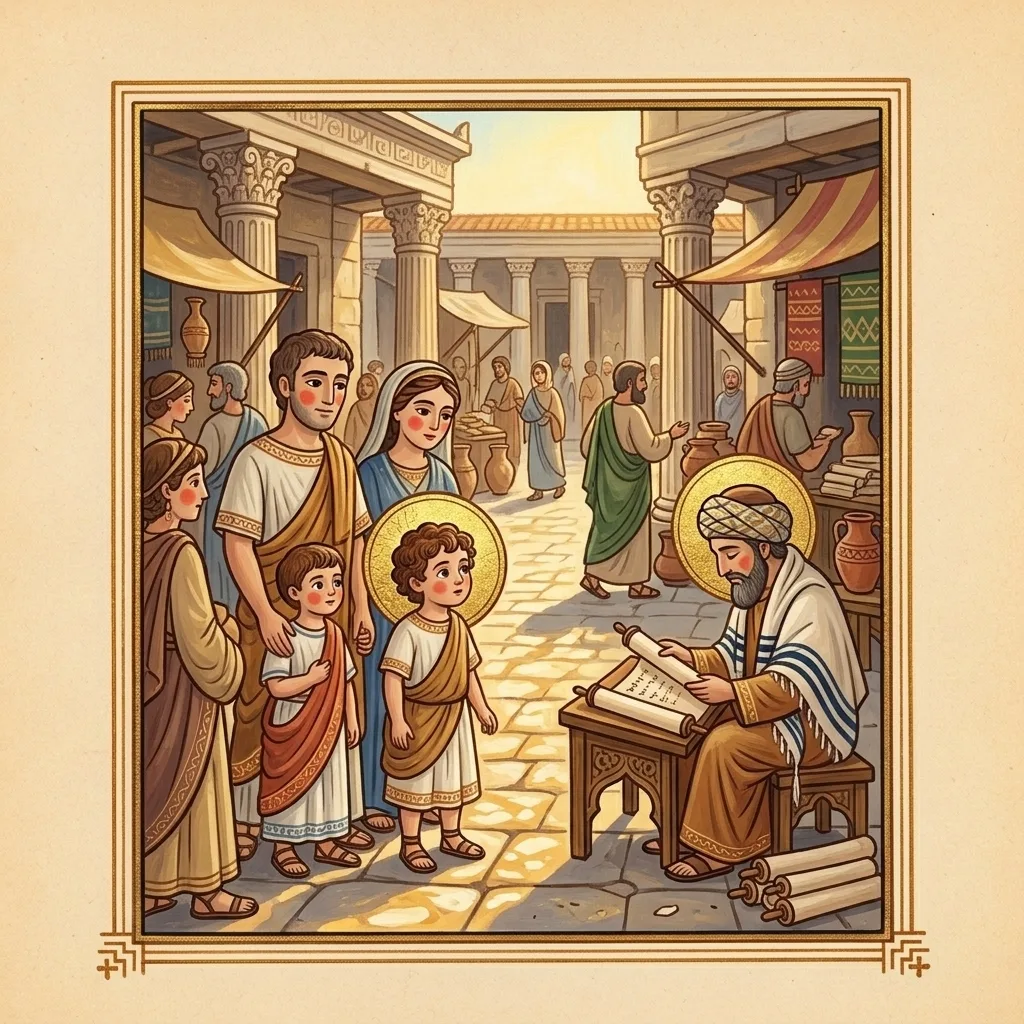
2Around AD 10, a boy is born in Antioch — a great cosmopolitan city where Greek, Roman, and Jewish worlds collide. His family is Gentile, his language Greek, his world one of markets, temples, and ideas.
 3
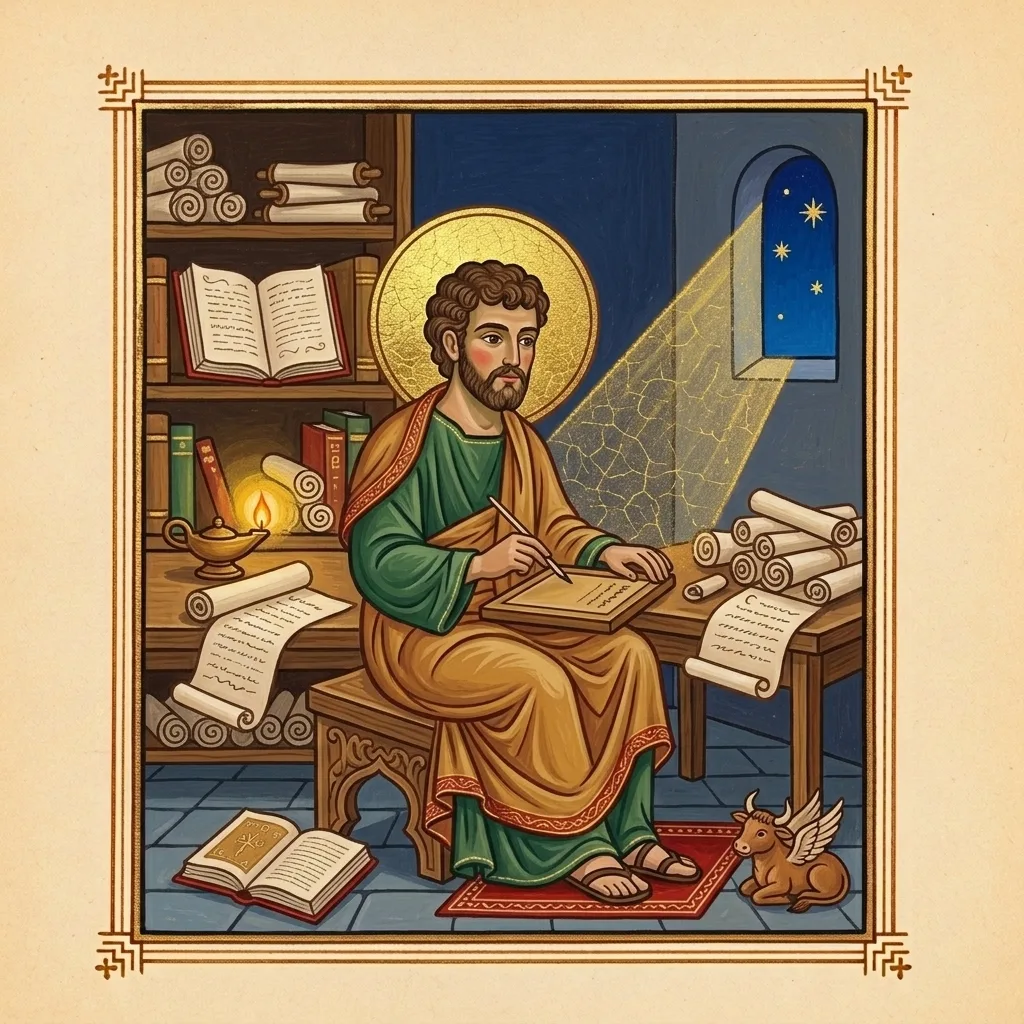
3Luke studies medicine and the great Greek writers — Hippocrates, Thucydides. He learns to observe carefully, to record truthfully. These skills, meant for healing bodies, are quietly being shaped for something far greater.
 4
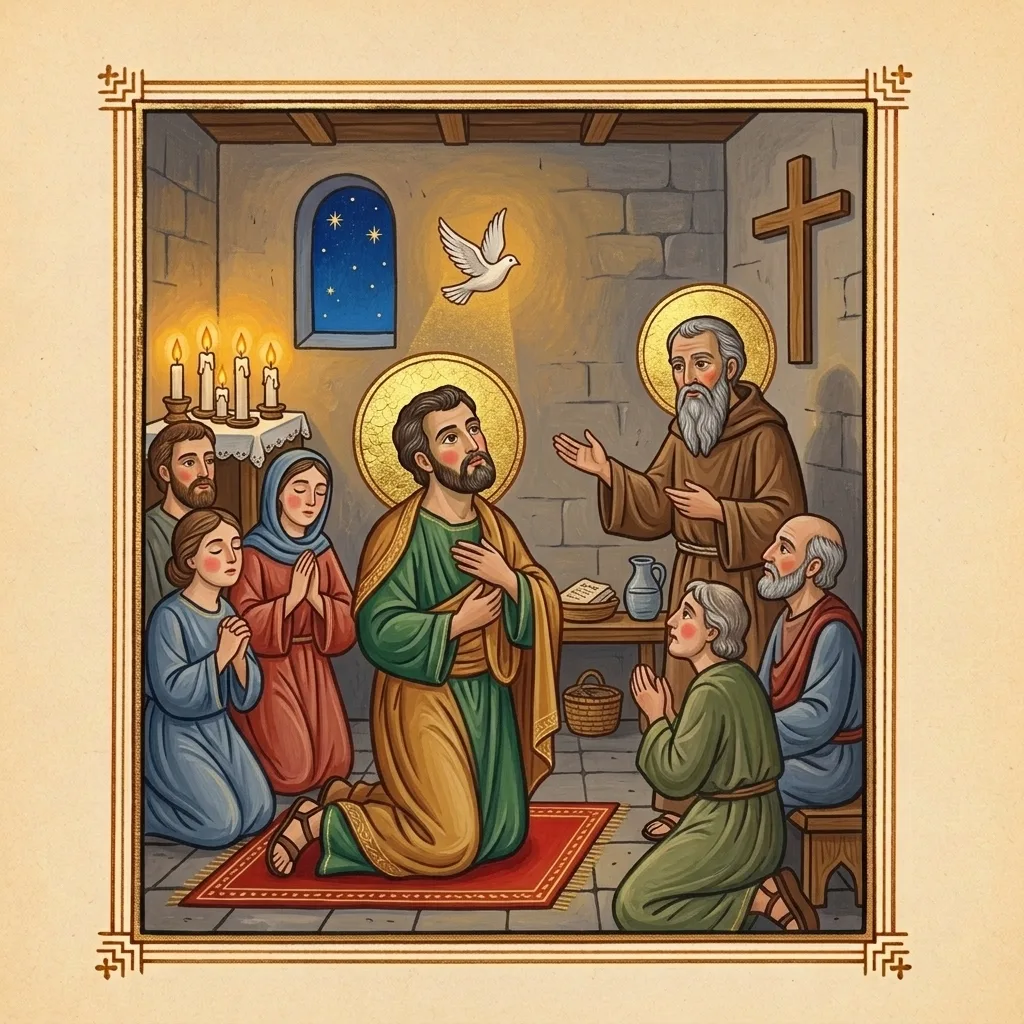
4Then he meets the followers of a crucified rabbi from Galilee. Something in the story of Jesus — his mercy, his healing, his love for the forgotten — breaks Luke open. A physician of the body becomes a witness to something that heals the soul.
 5
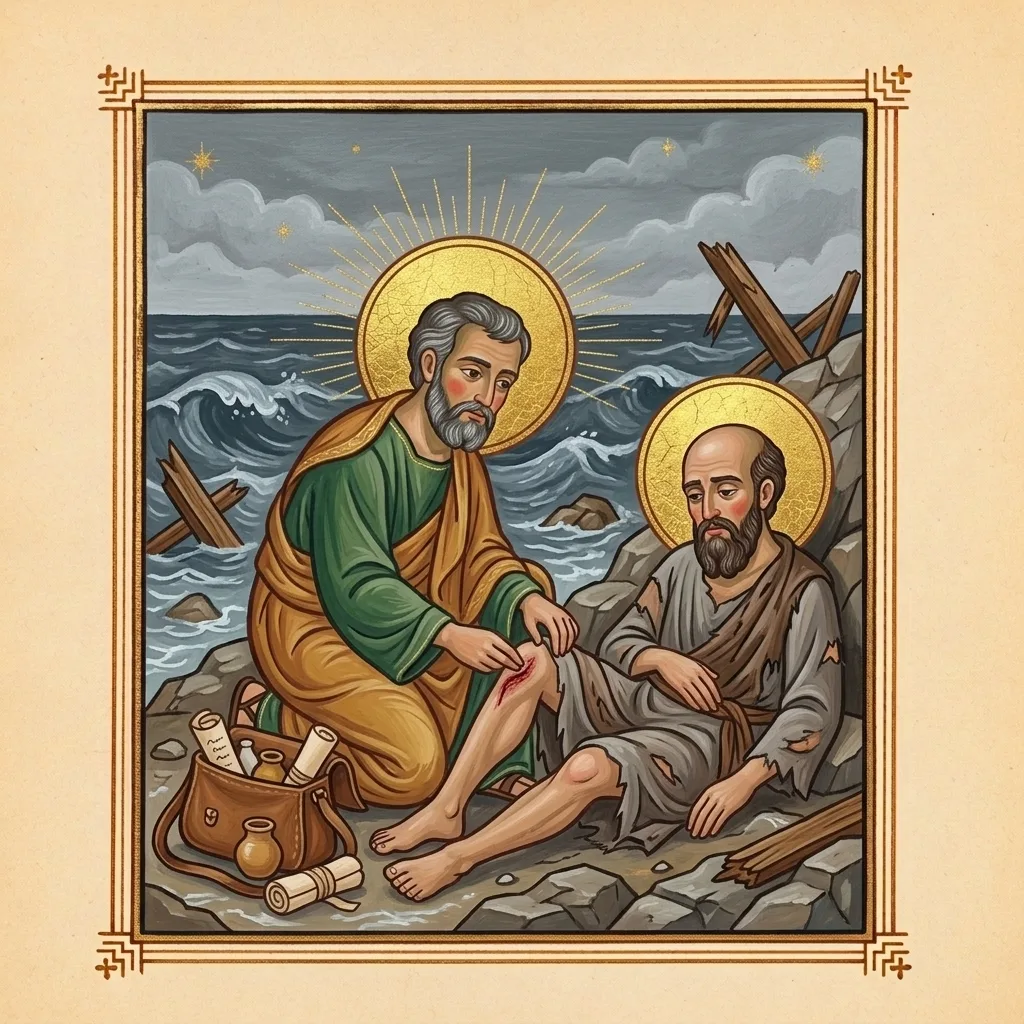
5He joins Paul — a bold, tireless, sometimes exhausting apostle — and the road is hard. Shipwrecks, imprisonments, beatings, hostile crowds. Luke patches wounds and keeps walking. He will not leave his friend's side.
 6
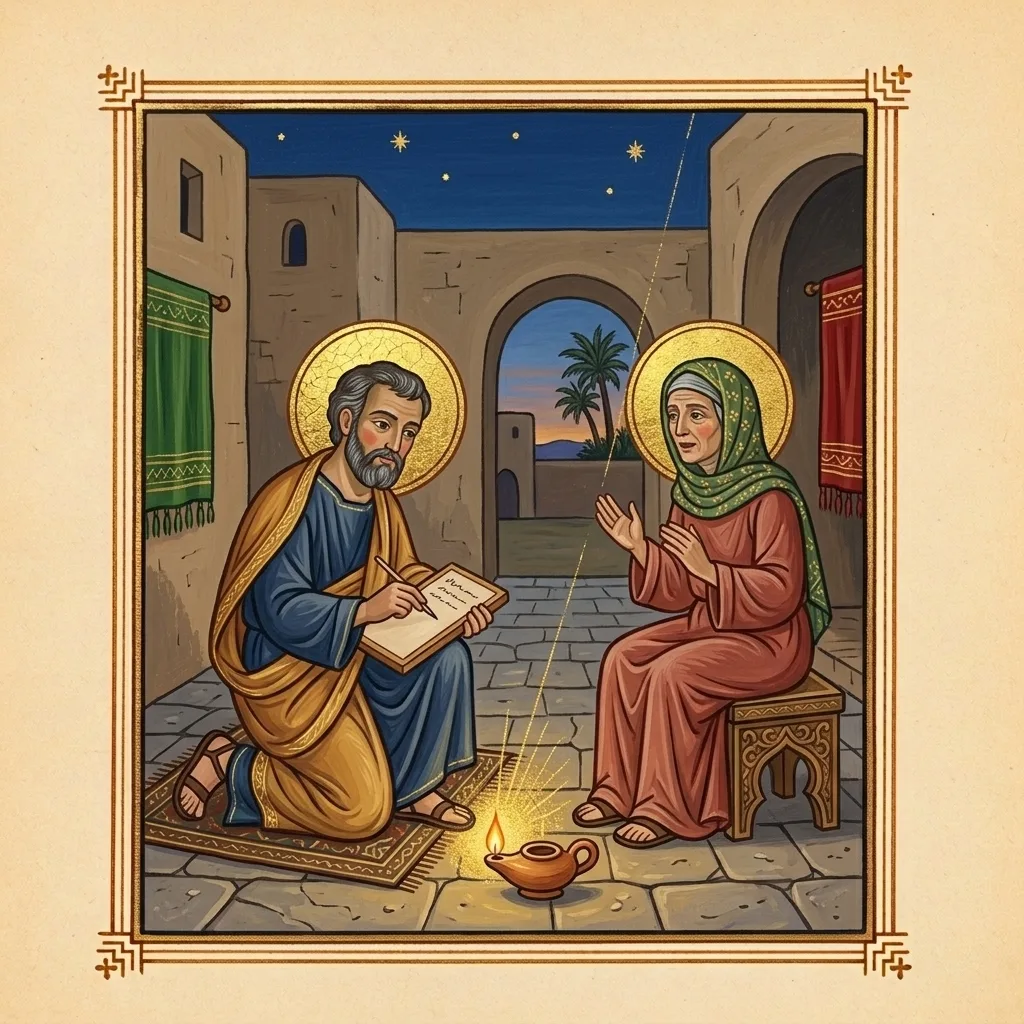
6Luke doesn't just follow Paul — he listens. He interviews eyewitnesses, questions Mary's companions, talks to those who saw the risen Christ. He is writing something. Every wound endured, every road walked, is gathering into a story.
 7
7He writes the Gospel of Luke — and then Acts of the Apostles. No other ancient writer gives us the Magnificat, the Good Samaritan, the Prodigal Son. A quarter of the New Testament flows from a Greek doctor's careful, compassionate pen.
 8
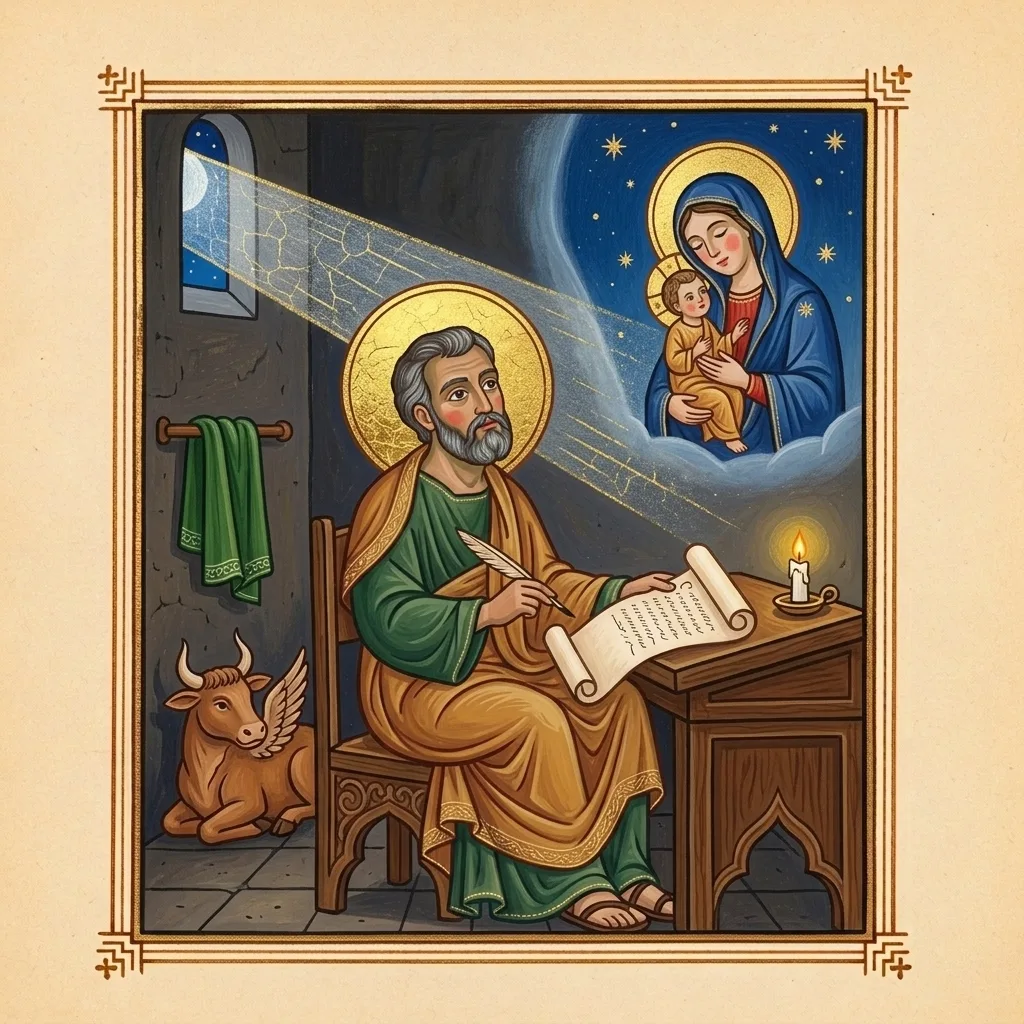
8Here is the surprise: Luke never met Jesus. He wasn't at the Sermon on the Mount or the Last Supper. Yet he wrote the most beloved birth story ever told — the manger, the shepherds, the angels singing at night. A witness who never saw became the one who made us all see.
 9
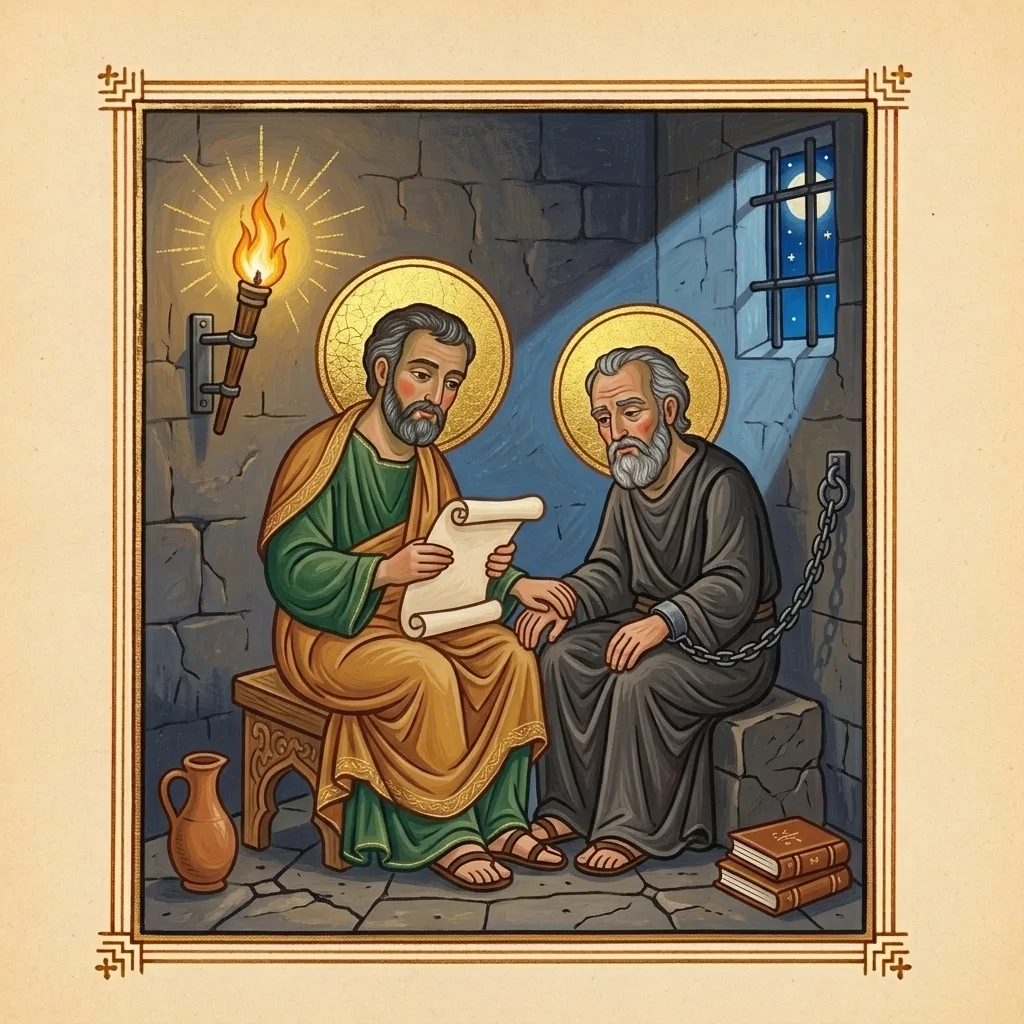
9In Rome, the other companions drift away. Paul writes to Timothy from prison: 'Only Luke is with me.' One man stays. The beloved physician sits in the shadow of a prison wall, faithful to the end, when faithfulness costs everything.
 10
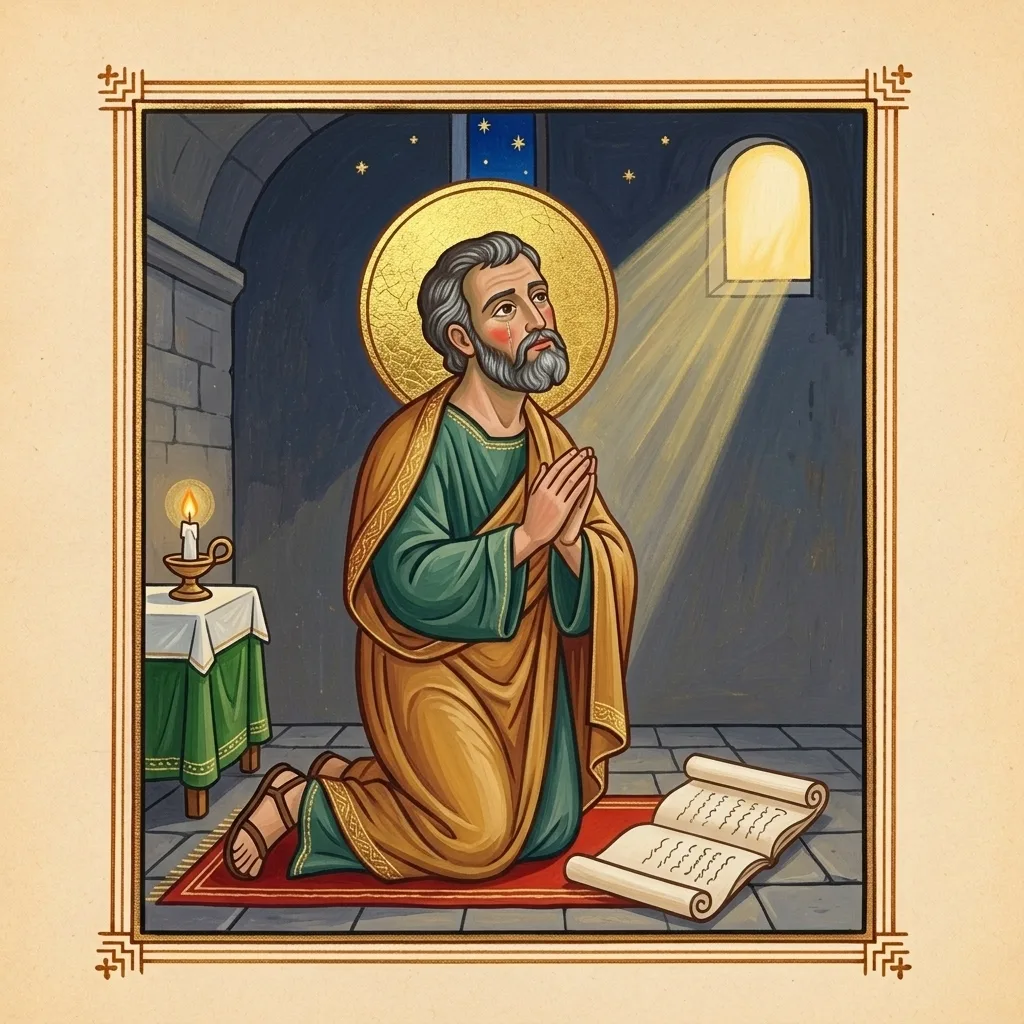
10Luke's Gospel is itself his deepest prayer. In it, Jesus weeps, touches lepers, praises a widow's last coin. Luke doesn't describe a distant God — he shows us a God who kneels down. Writing this was his way of seeing the face of Christ.
 11
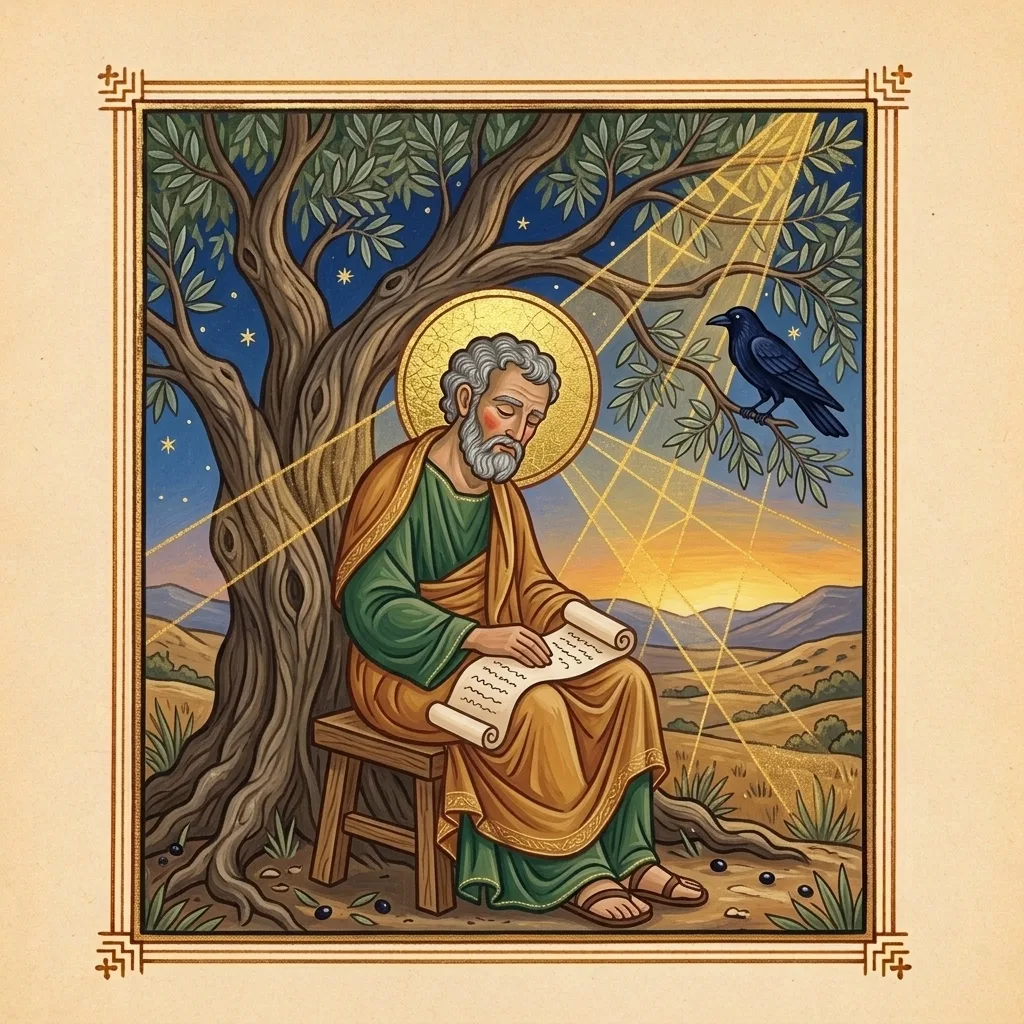
11Tradition says Luke lives to about 84 and dies in Boeotia, Greece. Some accounts say martyr, hanged from an olive tree. Others say a peaceful death, pen finally at rest. Either way, he gave his whole life — and left the world richer for it.
 12
12Doctors, surgeons, and artists all claim him as their patron. Byzantine painters say he painted the first icon of Mary. His feast day fills October 18 in both East and West. A Greek outsider became the Church's greatest storyteller.
 13
13Luke's gift to you is this: you don't have to be an insider to tell the most important story. Bring what you have — your training, your compassion, your careful attention — and watch God make it into something that outlasts you by millennia.
Life & Times
Early Life
Born a Greek Gentile in Antioch, Luke trained as a physician and received a classical Hellenistic education that shaped his literary style.
Turning Point
Converting to Christianity, he became a steadfast companion of Paul, accompanying him on missionary journeys and remaining with him through his final Roman imprisonment.
Legacy
He authored the Gospel of Luke — preserving the infancy narratives, the Magnificat, and parables found nowhere else — and the Acts of the Apostles, the only continuous history of the early Church.
Historical Context
Sources & historical notes
Dates and later-life details are left uncertain where the sources do not establish them. Historical summaries are secondary overviews; Scripture and Church documents are linked separately where available.
Life Locations
Words & Wisdom
Most charming and saintly Physician, you were animated by the heavenly Spirit of love. In faithfully detailing the humanity of Jesus, you also showed his divinity and his genuine compassion for all human beings. Inspire our physicians with your professionalism and with the divine compassion for their patients. Enable them to cure the ills of both body and spirit that afflict so many in our day. Amen.
Related Saints
Connections in the communion of saints