"The beginning of the Gospel of Jesus Christ, the Son of God."
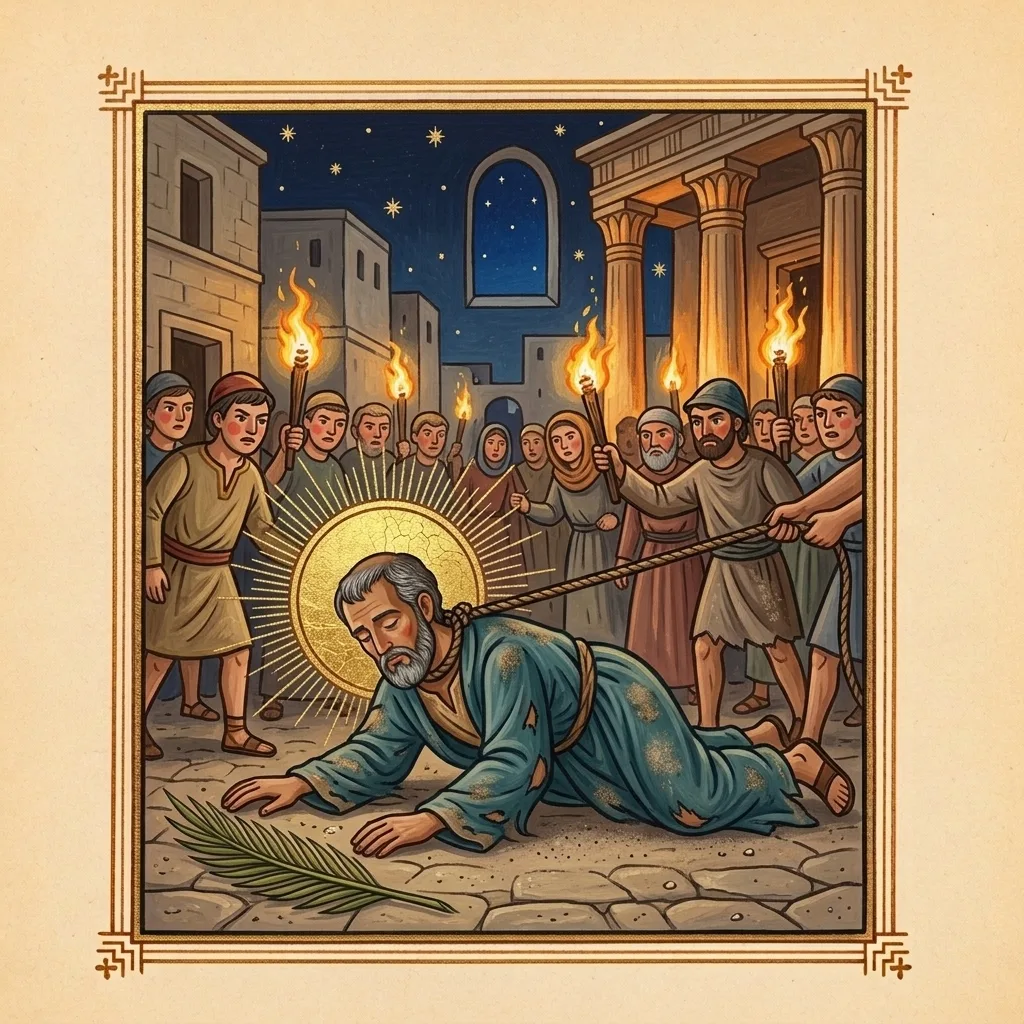
Author of the earliest Gospel, Mark worked as Peter's interpreter in Rome, shaping Peter's eyewitness preaching into the swift, action-driven narrative that Matthew and Luke would later expand. He founded the Church in Alexandria and became its first bishop before being martyred there around AD 68, dragged through the streets during a pagan festival.

Interactive Lesson
The Illustrated Life
Mark the Evangelist's story in 13 illustrated moments — tap any scene to begin there.
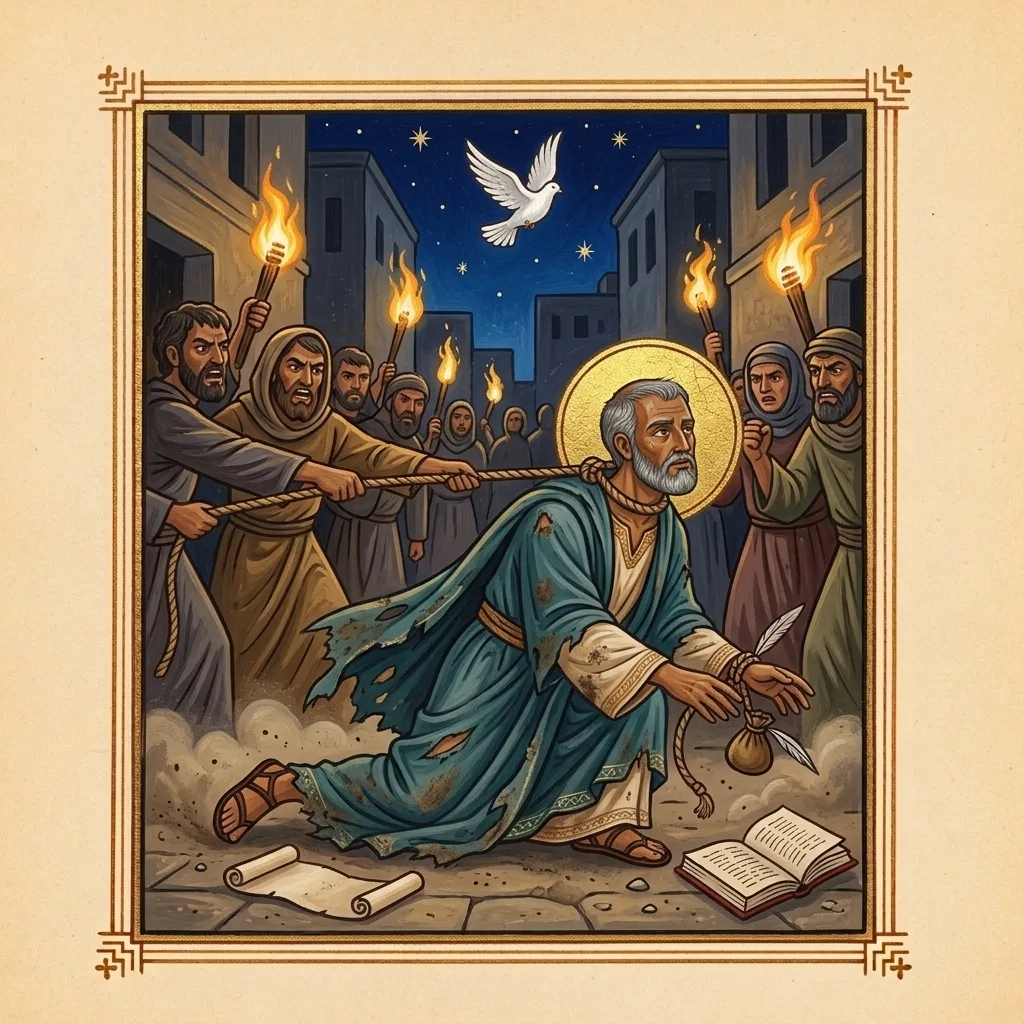 1
1A man is dragged through the streets of Alexandria by a rope around his neck. It is AD 68, and the crowd is celebrating a pagan festival. The man's name is Mark — and he wrote the world's first Gospel.
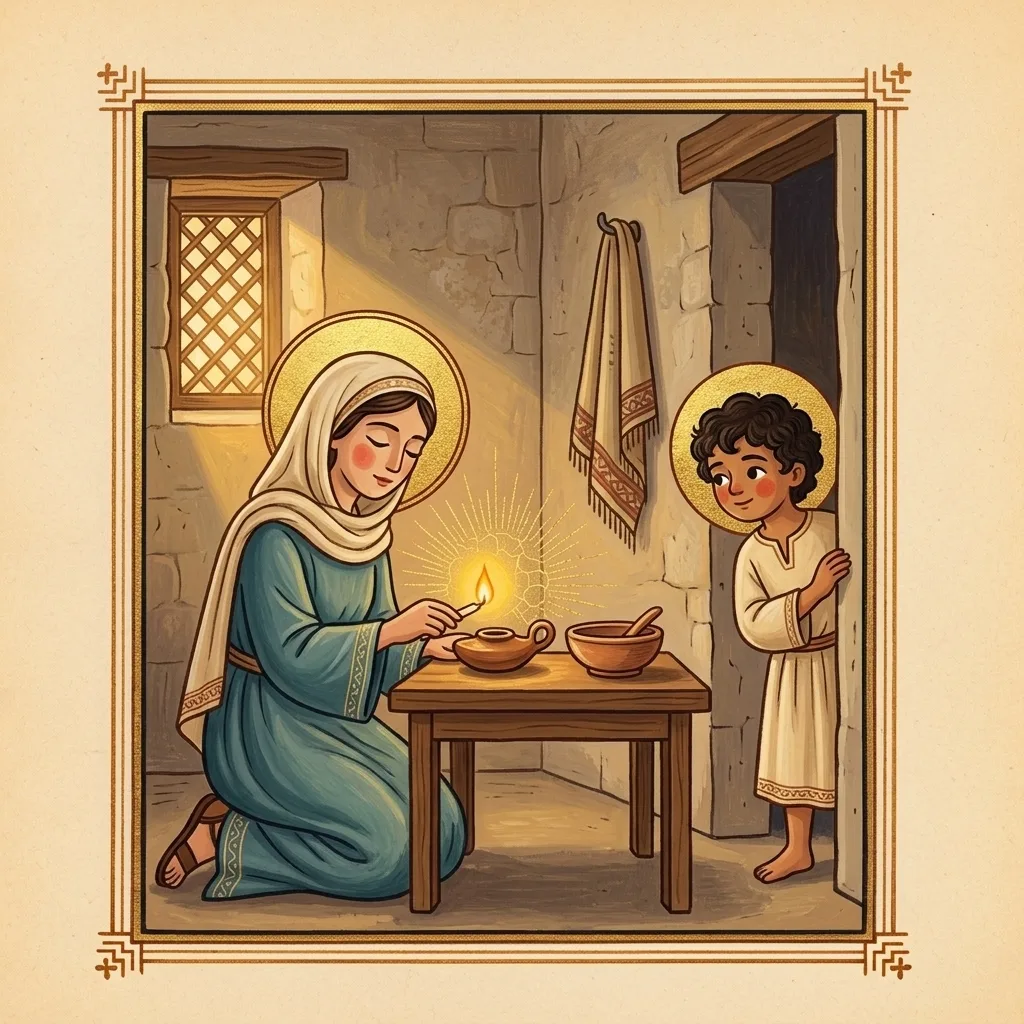 2
2John Mark is born around AD 12 in North Africa, into a Jewish family with deep roots in Cyrene. His mother Mary is a woman of means — and her Jerusalem home will one day become the heartbeat of the earliest Church.
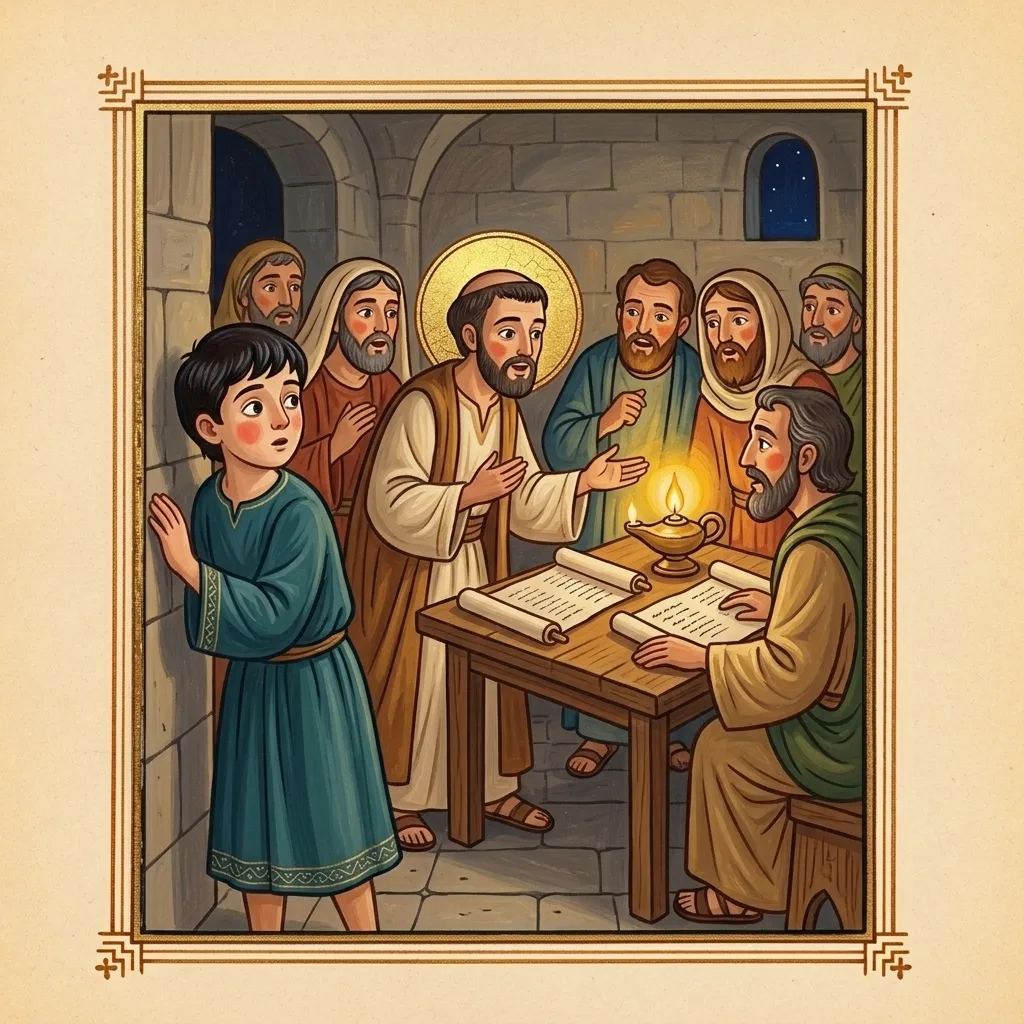 3
3Mark grows up at the crossroads of worlds — Jewish faith, Greek language, Roman rule. His mother's house becomes a meeting place for disciples after Pentecost. From boyhood, he breathes the air of resurrection.
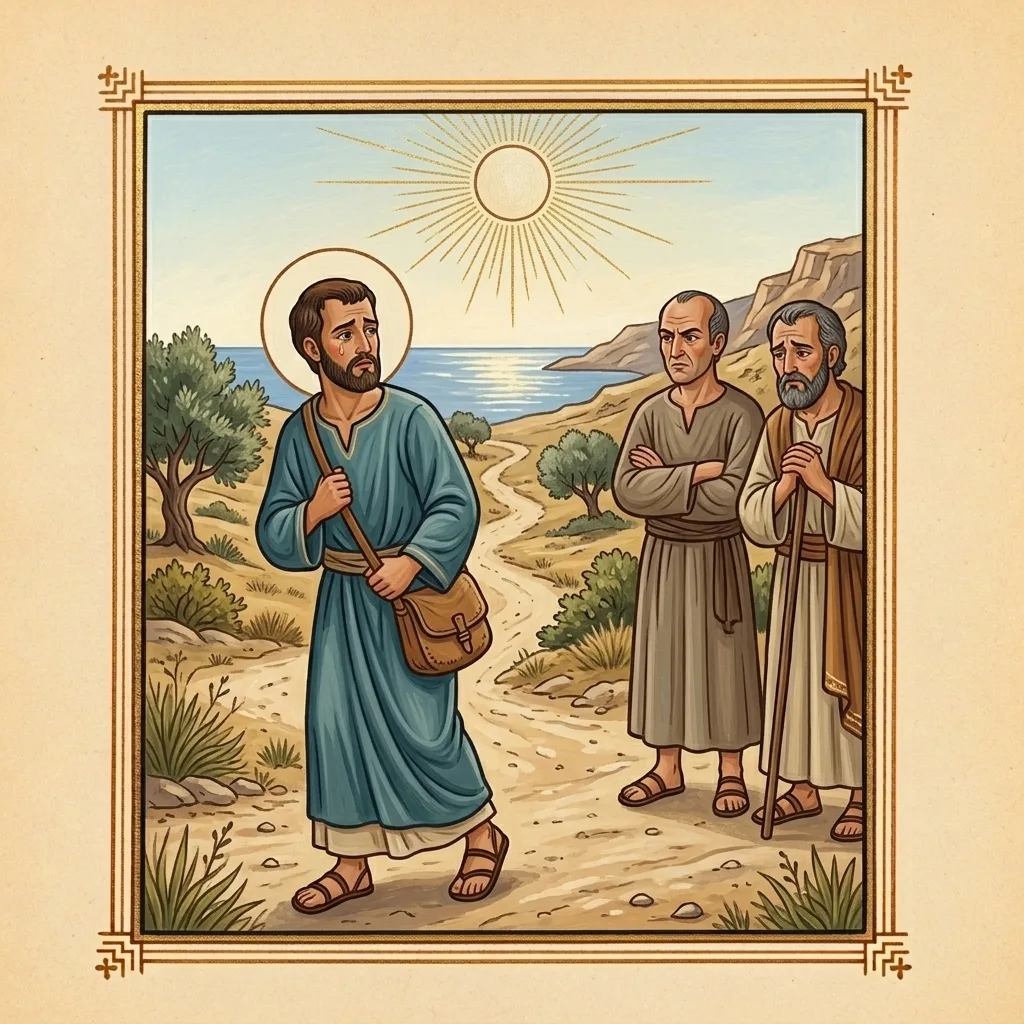 4
4Midway through a dangerous mission with Paul and Barnabas, Mark turns back. We don't know exactly why — fear, illness, homesickness. But when Paul sets out again, he refuses to take Mark. The wound between the apostles runs deep.
 5
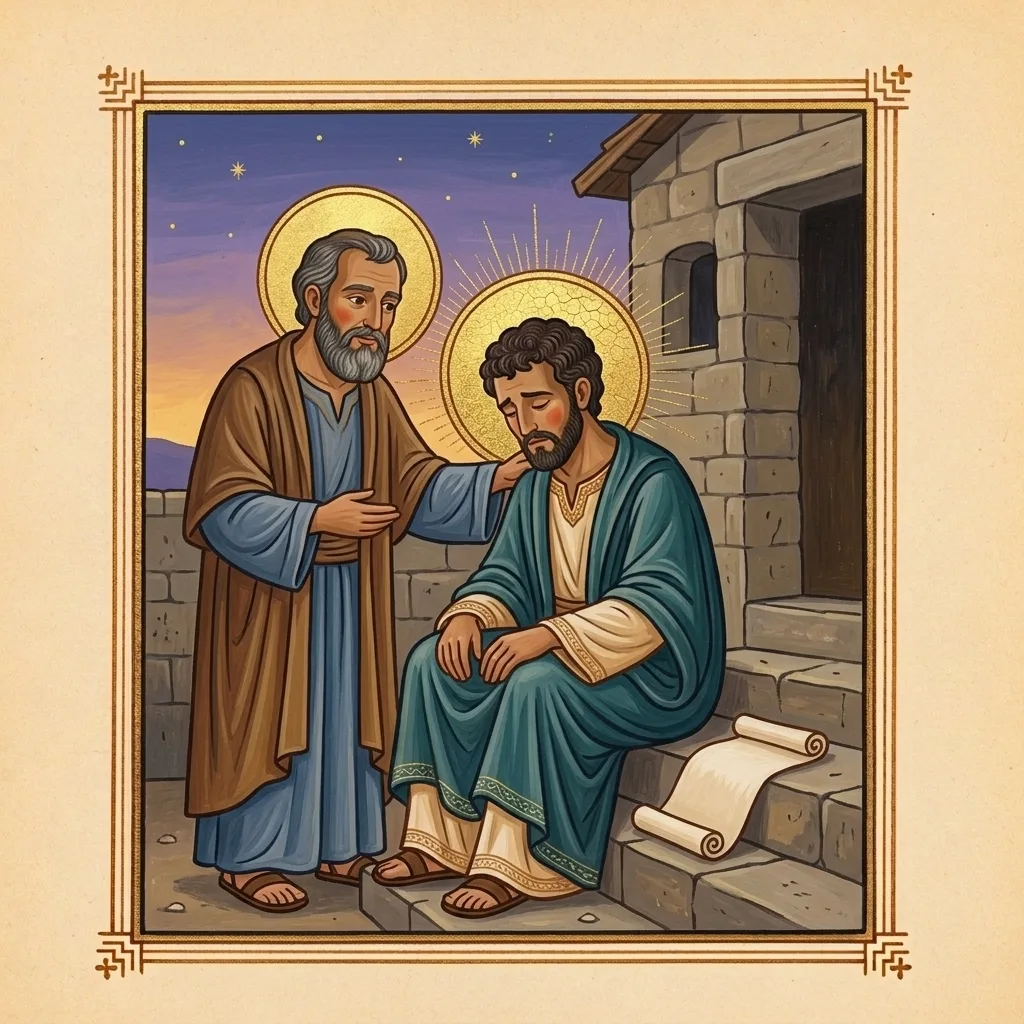
5For years Mark carries the weight of that failure. He had walked away. Paul would not forget it. But his cousin Barnabas believed in him — and sometimes one person's stubborn faith is enough to keep a life on course.
 6
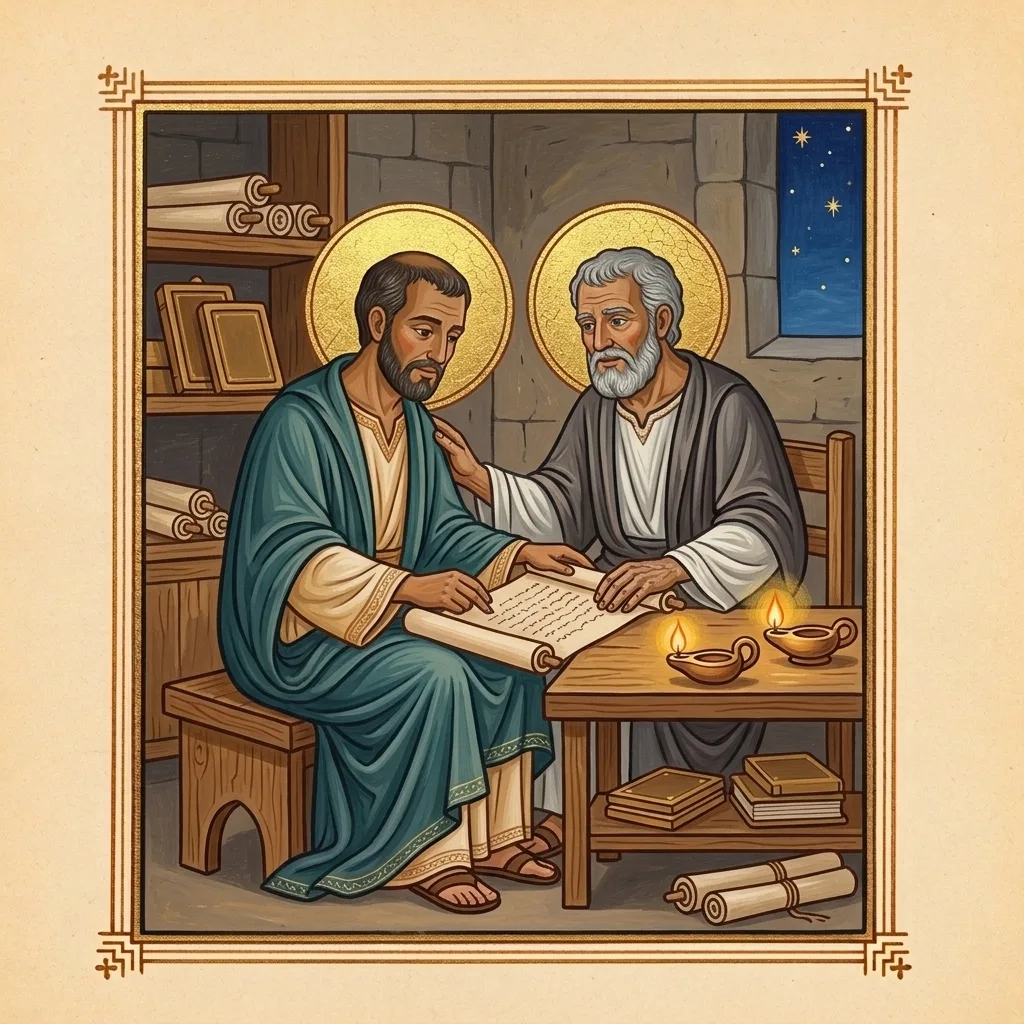
6Reconciliation comes. Paul, writing from prison, calls Mark 'useful to me for ministry.' The man who once turned back has become indispensable. Then Peter himself draws Mark close, treating him like a son.
 7
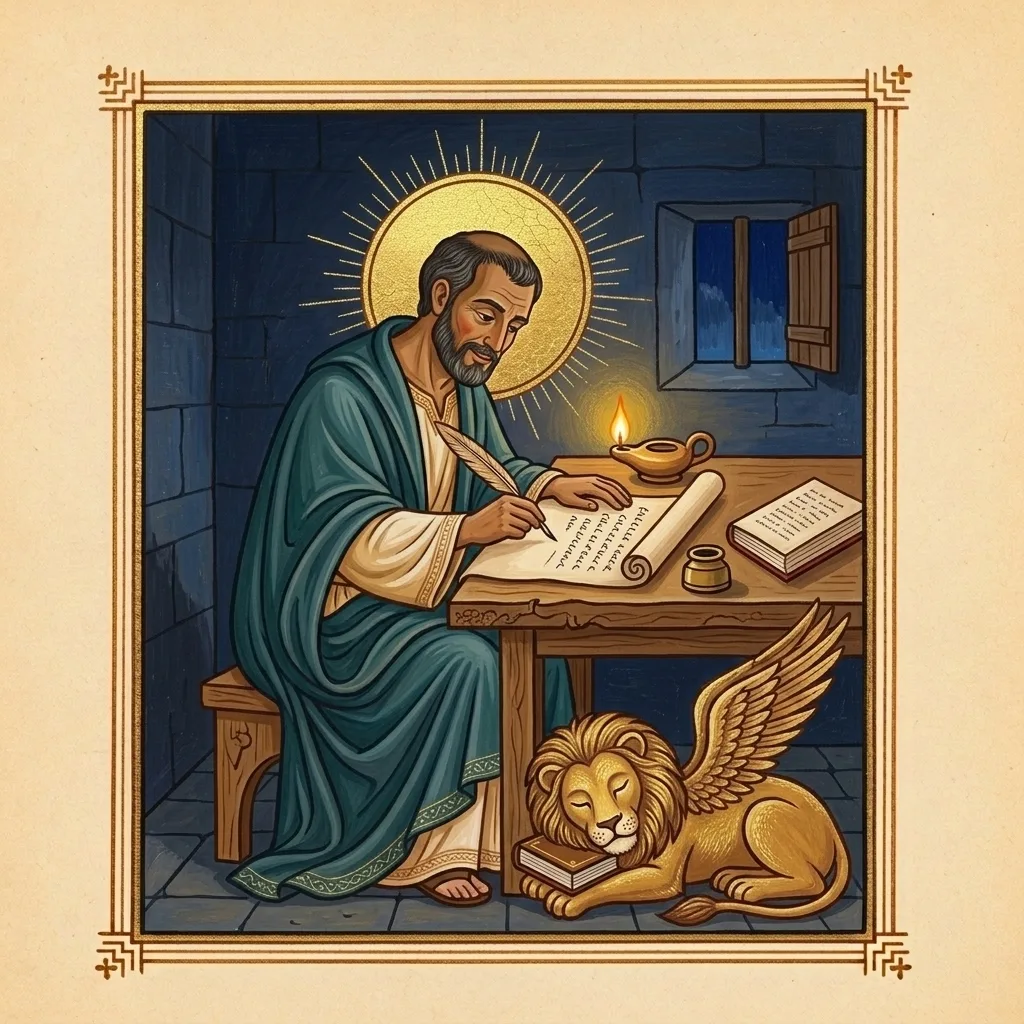
7'The beginning of the Gospel of Jesus Christ, the Son of God.' With those words, Mark launches into the fastest, most urgent story ever told. No birth narrative. No genealogy. Just Jesus — moving, healing, casting out evil — immediately.
 8
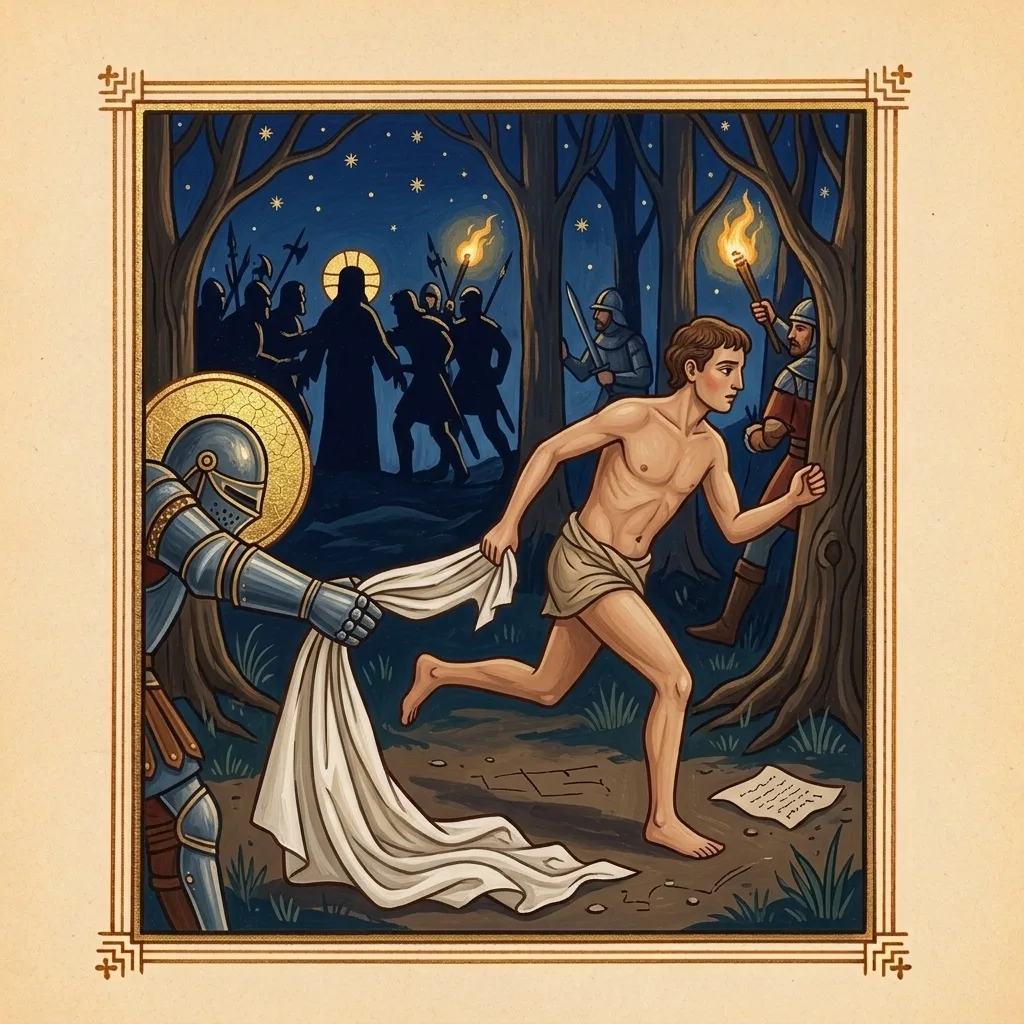
8Here is the surprise: the shortest Gospel says the most about failure. Disciples who misunderstand. Peter who denies. A young man who flees naked into the night. Mark does not spare the people he loves most — not even himself.
 9
9In Alexandria, Mark builds a church from nothing — in Egypt, a land of ancient gods and fierce resistance. Around AD 68, during the feast of Serapis, a pagan mob seizes him. A rope goes around his neck. The streets become his via crucis.
 10
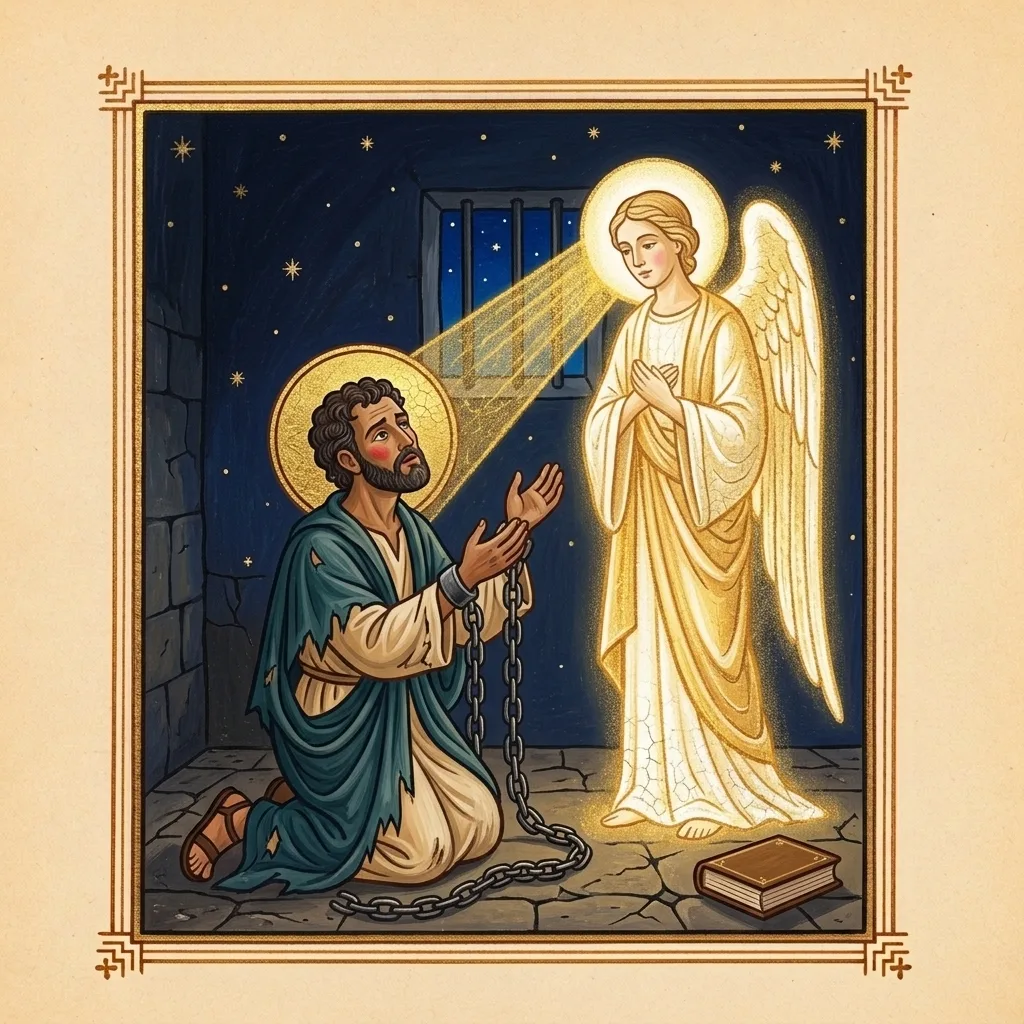
10Tradition says Mark survived one night in prison, and that an angel visited him there. In chains, broken, he heard the voice that had driven every word of his Gospel: 'Peace be with you, Mark.' His fear gave way to something stronger.
 11
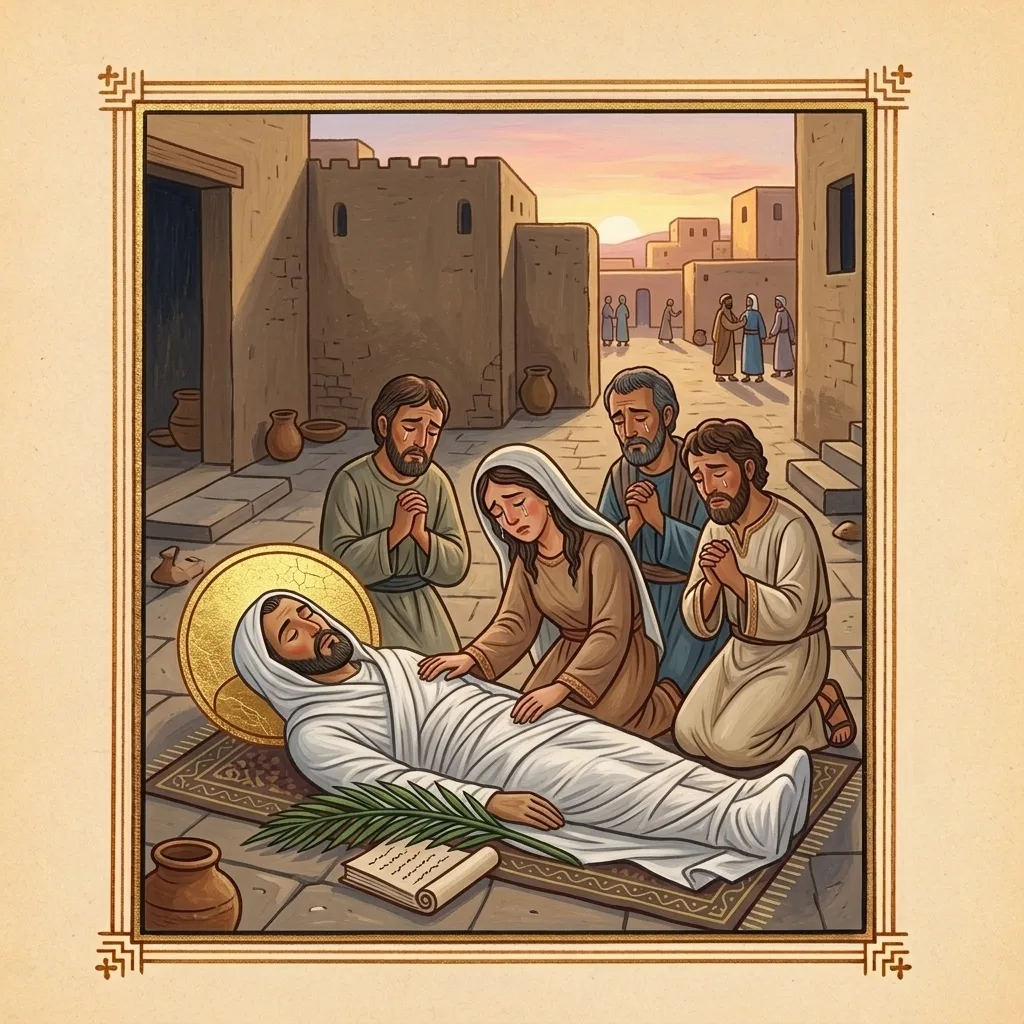
11Mark dies the next day, still dragged through the streets until his body gives out. He is buried in Alexandria. He had come not to be served but to serve — and to give his life, just as Jesus had foretold in his own Gospel.
 12
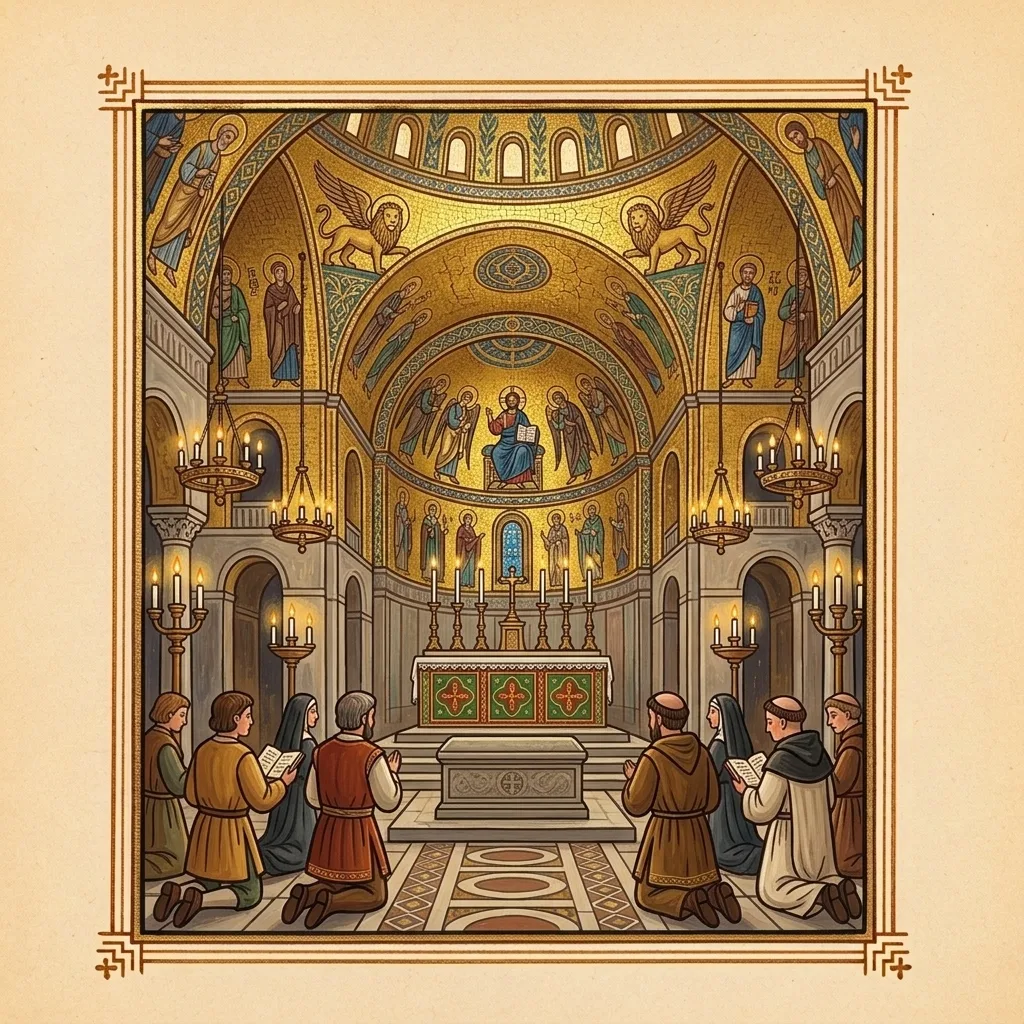
12In 828, Venetian merchants carry Mark's relics to Venice. A great basilica rises in his honor. His winged lion becomes the symbol of one of history's greatest cities. In Egypt, the Coptic Church still calls him their founding father.
 13
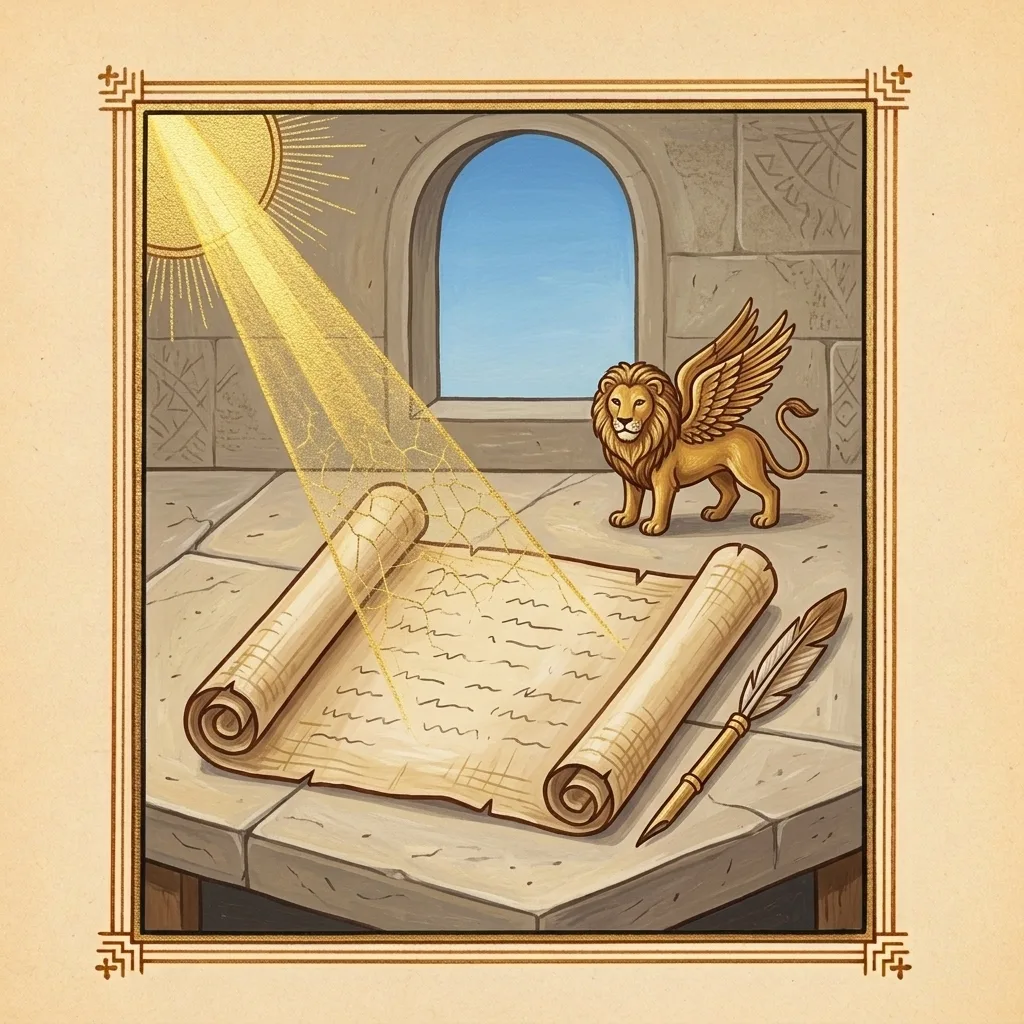
13Mark turned back once — and came back anyway. His Gospel begins with one word: immediately. You don't need a perfect record to carry Good News. You just need to get up, pick up the pen, and keep moving. That's enough.
Life & Times
Early Life
John Mark's mother Mary owned a house in Jerusalem that served as a gathering place for the earliest Christians; it was to her door that Peter came after his miraculous release from prison (Acts 12:12). Mark was cousin to Barnabas.
Turning Point
After leaving Paul and Barnabas mid-mission — a departure that caused a lasting rift between the two apostles — Mark was later reconciled with Paul and became the close companion and interpreter of Peter in Rome.
Legacy
In Rome he committed Peter's preaching to writing as the Gospel of Mark. He then travelled to Alexandria, founding the church there and serving as its first bishop until his martyrdom around AD 68.
Historical Context
Sources & historical notes
Dates and later-life details are left uncertain where the sources do not establish them. Historical summaries are secondary overviews; Scripture and Church documents are linked separately where available.
Life Locations
Words & Wisdom
“For the Son of Man also came not to be served but to serve, and to give his life as a ransom for many.”
O God, who exalted blessed Mark, your Evangelist, with the grace of preaching the Gospel, grant, we pray, that we may so profit by his teaching as to follow faithfully in the footsteps of Christ. Who lives and reigns with you in the unity of the Holy Spirit, one God, for ever and ever. Amen.
Related Saints
Connections in the communion of saints
Peter the Apostle
Mark's Gospel is traditionally considered to be Peter's testimony, recorded by his disciple.
Paul the Apostle
Mark accompanied Paul and Barnabas on the first missionary journey.
Luke the Evangelist
Fellow Gospel writers who chronicled the life of Christ and the early Church.